
长三角一体化高质量发展

Search documents
让江南文脉赋能产业创新 解放日报第83届文化讲坛举行
Jie Fang Ri Bao· 2025-11-16 00:04
Core Insights - The 83rd Cultural Forum held by Jiefang Daily focused on the theme "Integration and Coexistence: Cultural Empowerment of the Yangtze River Delta Industrial Innovation Belt" to provide suggestions for high-quality development in the Yangtze River Delta region [1][2] Group 1: Cultural Perspectives - Historian Ge Jianxiong presented the concept of "Cultural Convergence Theory," emphasizing historical confidence derived from the 3,000-year civilization of Jiangnan [1] - Wang Zhan highlighted the interconnection between urban circles and the innovation belt, identifying it as a strong engine for high-quality development in the Yangtze River Delta [1] Group 2: Media and Brand Development - Shuang Chuanxue discussed the cultural interpretation of "Su Chao" and revealed "traffic passwords" through popular IPs, providing insights for cultural brand building [1] - The forum included the launch of a media matrix for the Yangtze River Delta Industrial Innovation Belt, with multiple media outlets contributing to collaborative development [2]
沪苏浙皖研讨新时代统战工作
Jie Fang Ri Bao· 2025-11-02 02:12
Core Viewpoint - The Fifth Yangtze River Delta United Front Work Seminar was held in Shanghai, focusing on implementing the spirit of the 20th National Congress of the Communist Party and enhancing cooperation among Jiangsu, Zhejiang, Anhui, and Shanghai to support high-quality development in the Yangtze River Delta region [1] Group 1: Seminar Themes and Objectives - The seminar emphasized the importance of the United Front Work in serving youth innovation and entrepreneurship, developing an international discourse system, and addressing the intergenerational inheritance of private enterprises [1] - Experts from the four regions shared research findings on the cultural foundations and practical orientations of the United Front Work in the new era [1] Group 2: Practical Innovations and Experiences - Officials from local United Front departments presented innovative practices that align with the central objectives, providing references for high-quality development in the United Front Work [1] Group 3: Site Visits - Participants visited several significant sites, including the Memorial Hall of the Second National Congress of the Communist Party of China and various cultural and technological centers, to gain insights into the United Front Work and its applications [1]
杭温高铁开通一周年 运送旅客超1600万人次
Xin Hua She· 2025-09-06 09:00
Core Points - The Hangzhou-Wenzhou High-Speed Railway has been in operation for one year, transporting over 16 million passengers, establishing itself as a vital rapid passenger transport corridor in Zhejiang Province [1] - The railway spans 276 kilometers with a design speed of 350 km/h, featuring nine stations, and has significantly increased its daily train operations from a maximum of 38 to 96 trains since the implementation of the new schedule on July 1 [1] - The railway contributes to the "one-hour traffic circle" in Zhejiang, enhancing connectivity among major urban areas and supporting the high-quality development of the Yangtze River Delta integration [2] Summary by Sections Operational Performance - The Hangzhou-Wenzhou High-Speed Railway has transported over 16 million passengers in its first year of operation [1] - The maximum number of daily train services increased from 38 to 96, improving service for local commuters [1] Infrastructure and Design - The railway is 276 kilometers long with a design speed of 350 km/h and includes nine stations [1] - Travel times from Hangzhou to key destinations are now significantly reduced, with the fastest connections to Yiwu, Wenzhou North, and Wenzhou South taking 34 minutes, 85 minutes, and 84 minutes respectively [1] Economic and Social Impact - The railway serves as a model for encouraging social capital investment in railway construction, highlighting its importance in expanding financing channels for railway projects [1] - It facilitates the development of tourism resources and enhances the overall transportation network in the region, contributing to the integration of the Yangtze River Delta [2]
上海松江区党政代表团来苏州考察
Su Zhou Ri Bao· 2025-06-10 00:21
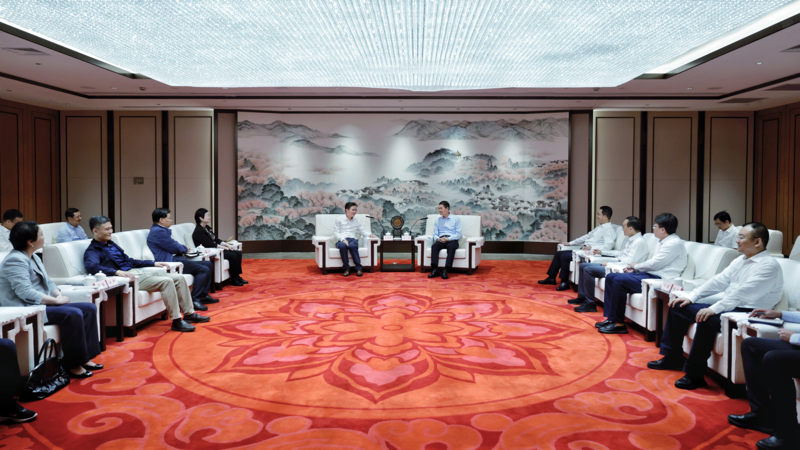
Group 1 - The meeting between the Suzhou and Songjiang delegations focused on strengthening cooperation and collaboration in innovation and industrial development, particularly through the G60 Science and Technology Innovation Corridor [3][4] - Suzhou officials expressed gratitude for Songjiang's support and highlighted the importance of learning from Songjiang's successful development practices [3][4] - Both parties emphasized the need for ongoing cultural exchanges and the establishment of long-term mechanisms to facilitate high-quality development in the Yangtze River Delta region [3][4] Group 2 - Songjiang officials acknowledged Suzhou's significant achievements in high-quality development and expressed a desire to adopt similar strategies [4] - The meeting underscored the importance of leveraging the opportunities presented by the Hongqiao International Open Hub to enhance industrial chain collaboration [4] - Both sides committed to deepening cooperation and enhancing the brand of the G60 Science and Technology Innovation Corridor to contribute to the integrated high-quality development of the Yangtze River Delta [4]

同心共富,长三角牵手“谋幸福”——深入推进长三角一体化高质量发展综述(下)
Xin Hua Ri Bao· 2025-06-04 23:36
Group 1: Population and Economic Development - The permanent population of the Yangtze River Delta region is projected to reach 237.99 million by the end of 2024, accounting for approximately 16.9% of the national population [1] - The region has maintained annual population growth since the integration development was elevated to a national strategy, indicating strong attraction [1] - The income disparity between urban and rural residents in the three provinces and one city is continuously narrowing, with significant improvements in per capita disposable income [1] Group 2: Regional Cooperation and Economic Integration - The underdeveloped northern Anhui region, which occupies 14.8% of the Yangtze River Delta's total area but contributes less than 5% to its economic output, is targeted for accelerated development through a 10-year cooperation plan with Jiangsu, Zhejiang, and Shanghai [2] - The average monthly shipment of electric current sensors from Anhui Xici Technology Co., Ltd. has increased from 500,000 to over 6 million, achieving a market share exceeding 30% in the new energy vehicle sector [2] - Over 20 mutual visits and nearly 50 cooperation agreements have been signed between Suzhou and Fuyang in the past three years, enhancing regional collaboration [2] Group 3: Common Prosperity Initiatives - The first cross-provincial common prosperity implementation plan was introduced in 2022, featuring 20 specific tasks aimed at promoting high-quality economic development and income growth [3] - The region aims to achieve a per capita GDP of 150,000 yuan and a rural-urban income ratio of less than 1.8 by 2025, with many targets already being met ahead of schedule [3] Group 4: Private Sector Growth - The private economy in the Yangtze River Delta is thriving, with 80% of "specialized, sophisticated" and "little giant" enterprises in Shanghai being privately owned [5] - The Long Triangle Entrepreneurs Alliance has formed 19 industry chain alliances, promoting cross-regional collaboration among private enterprises [5] - The 2024 list of China's top 500 private enterprises includes 225 from the Yangtze River Delta, highlighting the region's robust private sector [6] Group 5: Public Services and Healthcare Integration - The Yangtze River Delta has implemented a one-stop service for cross-provincial household registration, allowing residents to handle migration processes without returning to their registered locations [8] - A pilot program for direct settlement of outpatient medical expenses across the region has been established, covering over 20,000 medical institutions [7] - The integration of public services has been recognized as a model for governance, benefiting over 200 million residents in the region [9]