民营经济发展

Search documents
华宝期货晨报成材-20260305
Hua Bao Qi Huo· 2026-03-05 02:56
Group 1 - Report industry investment rating: Not mentioned Group 2 - Core view: The steel price is expected to move in a volatile manner [3] Group 3 - Key points from the report: The steel market continued to fluctuate yesterday, with the current market focus on the energy and chemical sectors and the black market remaining relatively calm. Steel prices have been adjusting laterally in a narrow range in the past few trading days. The turmoil in the Middle East has little impact on the domestic steel sector. Attention should be paid to the verification of demand and whether there are major macro - policies during the Two Sessions that could affect steel prices [2] - Information from the 14th National People's Congress: This year, China will adhere to the strategic basis of expanding domestic demand, boost consumption, and formulate laws such as the Law on Nursery Services. The basic policies of the Party and the state to promote the development of the private economy will remain unchanged. The central government will introduce more policies to benefit Hong Kong. China and the US should respect each other, coexist peacefully, and achieve win - win cooperation. China - EU economic and trade relations are based on complementary advantages and mutual benefit. China is highly concerned about the situation in Iran and calls for an immediate stop to military actions and the resumption of dialogue and negotiation to maintain peace and stability in the Middle East [2] - Cost and price changes: This week, the average tax - free hot metal cost and the average tax - included billet cost of mainstream sample steel mills in Tangshan increased slightly compared with last week. The billet ex - factory price rose, and the loss decreased to about 70 yuan/ton [2] - Later concerns: Macro policies and downstream demand conditions [3]
万联晨会-20260305
Wanlian Securities· 2026-03-05 01:03
Core Insights - The A-share market experienced a collective decline on Wednesday, with the Shanghai Composite Index falling by 0.98%, the Shenzhen Component Index by 0.75%, and the ChiNext Index by 1.41%. The total market turnover was 2.39 trillion yuan, a decrease of 769.6 billion yuan compared to the previous day, with over 3,600 stocks declining [3][9]. Market Performance - The closing figures for major domestic indices are as follows: Shanghai Composite Index at 4,082.47 (-0.98%), Shenzhen Component Index at 13,917.75 (-0.75%), CSI 300 at 4,602.62 (-1.14%), STAR 50 at 1,381.56 (-0.49%), ChiNext Index at 3,164.37 (-1.41%), and Shanghai 50 at 2,974.21 (-1.33%) [6]. Important News - The first press conference of the 14th National People's Congress highlighted significant economic strategies, including the approval of the "14th Five-Year" plan, a focus on expanding domestic demand, and the promotion of private economic development. The emphasis was placed on the importance of core technology being self-controlled and the introduction of more favorable policies for Hong Kong [4][9]. - The National Committee of the Chinese People's Political Consultative Conference reported that China's economy has shown resilience and vitality, with a total economic output surpassing 140 trillion yuan. Domestic tourism consumption exceeded 803.4 billion yuan during the longest Spring Festival holiday, reflecting a robust market [5][10].
回应中美关系、伊朗局势等热点问题,人大首场发布会重点来了
21世纪经济报道· 2026-03-04 09:00
Core Points - The 14th National People's Congress (NPC) will open on March 5 and close on March 12, with a total of 8 days and 11 agenda items [4][3] - The government work report and the 15th Five-Year Plan draft will be reviewed during the session [11][7] - The NPC aims to boost domestic consumption and support the private economy as part of its strategic focus [12][13] Agenda Summary - The session will review the government work report and the draft of the 15th Five-Year Plan [7] - It will also examine the execution of the 2025 national economic and social development plan and the draft for 2026 [7] - The budget execution for 2025 and the draft budget for 2026 will be scrutinized [7] - The session will consider several legislative proposals, including the Ecological Environment Code and the National Development Planning Law [11][16][17] Economic Focus - The NPC will emphasize expanding domestic demand and enhancing consumer confidence [12] - There will be a focus on increasing the supply of quality consumer goods and services [12] - The government plans to implement laws related to social assistance, medical security, and childcare services to support the population [12] Private Economy - The NPC reaffirms its commitment to policies that support the private economy, emphasizing the importance of the Private Economy Promotion Law [13] - The government believes that the implementation of this law will enhance confidence and motivation among private enterprises [13] International Relations - The NPC will address international relations, emphasizing mutual respect and cooperation, particularly in the context of U.S.-China relations [21] - The importance of maintaining peace and stability in the Middle East will also be highlighted, with calls for dialogue regarding the situation in Iran [22] - The NPC will discuss the significance of cooperation with European countries, highlighting mutual benefits in economic relations [24]


两会|人大会议首场发布会,要点速览→
证券时报· 2026-03-04 07:36
Core Viewpoint - The 14th National People's Congress (NPC) will hold its fourth session from March 5 to March 12, 2023, focusing on economic development, social welfare, and foreign policy [2][12]. Agenda Summary - The NPC session will include 11 main agenda items, such as reviewing the execution of the 2025 national economic and social development plan and the draft for 2026 [4]. - The session will also discuss the budget execution for 2025 and the draft budget for 2026 [4]. - Key legislative proposals include the Ecological Environment Code, the National Development Planning Law, and the Ethnic Unity and Progress Promotion Law [4][6][9]. Legislative Focus - The Ecological Environment Code aims to integrate existing environmental laws into a cohesive framework to enhance legal effectiveness in promoting green development [8]. - The Ethnic Unity and Progress Promotion Law is intended to ensure comprehensive leadership of the Party in ethnic affairs and to strengthen national unity [9]. - The government will also focus on laws related to childcare services, social assistance, and medical security to improve public welfare [7]. Economic Policies - The government emphasizes the importance of expanding domestic demand and boosting consumption as a strategic priority for economic growth [7]. - The basic policies for promoting the development of the private economy will remain unchanged, aiming to enhance confidence and momentum in the private sector [10]. International Relations - The NPC spokesperson highlighted the importance of mutual respect and cooperation in Sino-American relations, emphasizing the need for dialogue and collaboration [12]. - The spokesperson also noted that cooperation between China and Europe is beneficial for both parties, with a focus on economic development and addressing global challenges [13][14]. - The stance on Taiwan was reiterated, emphasizing that it is a core interest of China and rejecting any external interference in domestic affairs [15].
党和国家促进民营经济发展的基本方针政策不能变也不会变
财联社· 2026-03-04 05:22
Core Viewpoint - The fundamental policies for promoting the development of the private economy in China remain consistent and will not change, emphasizing the importance of the Private Economy Promotion Law as a foundational legal framework for the sector [1]. Group 1 - The implementation of the Private Economy Promotion Law is expected to enhance the confidence, strength, and motivation of private enterprises and entrepreneurs, leading to a broader outlook for the private economy [1].
全国政协委员齐向东:民营科技企业融资的春天到来了
第一财经· 2026-03-03 13:13
Core Viewpoint - The article emphasizes the significant support for the private economy in China, particularly through the implementation of the "Private Economy Promotion Law," which aims to provide financial backing and improve the financing environment for private tech enterprises [3][5]. Group 1: Financial Support and Challenges - The national government has initiated a 100 billion yuan fund to encourage social capital participation in private tech enterprises, marking a new era of financing opportunities for these companies [3][4]. - Despite the supportive policies, private tech enterprises still face challenges such as high financing costs, averaging between 8% to 15%, with some exceeding 20%, compared to state-owned enterprises that can secure loans at rates below 3% [3][4]. Group 2: Policy Implementation and Recommendations - There is a need for precise financial support measures, including expanding the coverage of loans secured by intellectual property and equity, and establishing a financing guarantee fund for tech enterprises [4]. - The article highlights the importance of effective policy execution, noting that some policies face challenges in local implementation, which can undermine long-term investment and innovation confidence [5]. - Recommendations include enhancing monitoring of private enterprise needs, improving policy coordination, and increasing subsidies for public service platforms to support R&D and digital transformation efforts [5].

助力民营经济发展|蔡彩红建议:打造万亿产业基金集群,破解科创企业融资难题
Sou Hu Cai Jing· 2026-02-27 22:11
Background - Quanzhou's private economy has significantly improved, contributing approximately 80% of the city's GDP and 90% of technological innovation results [1] - By the end of 2025, Quanzhou aims to establish a "1+N" tiered fund matrix, with a government-guided mother fund exceeding 60 billion yuan, driving the city's fund industry scale to surpass 300 billion yuan [1] Issues - Quanzhou's industrial funds face three main shortcomings: insufficient scale, with the current 300 billion yuan not matching the trillion-level industrial upgrade demand; inadequate focus on emerging industries, with only 35% of investments directed towards them; and poor ecological collaboration, with an imperfect mechanism for connecting industry, academia, and finance [3] Recommendations - To address the financing challenges for innovative enterprises, it is suggested to create a trillion-yuan industrial fund cluster [4] - Expand the capital pool by integrating special fiscal funds, state-owned capital transfers, and industrial development funds, increasing the municipal equity investment fund from 1.053 billion yuan to 100 billion yuan [4] - Establish a 50 billion yuan "Quanzhou Business Return" special fund, offering a 20% profit-sharing incentive for overseas Chinese capital participation [4] - Develop a county-level sub-fund system focusing on key industrial chains, with sub-fund scales of no less than 20 billion yuan in strong industrial areas [4] Investment Strategy - Establish a binding mechanism between "chain clusters + funds," setting up 20 specialized funds focused on nine industrial clusters and 14 emerging tracks, with at least 60% allocated to new industries like integrated circuits [5] - Increase early-stage investments by creating a 30 billion yuan angel mother fund, with at least 40% of the fund's scale directed towards seed and startup tech enterprises [6] - Implement a "fund + investment attraction" strategy, allocating 30% of fund scale for industrial chain mergers and acquisitions [6] Operational Efficiency - Promote market-oriented and professional management by selecting top teams through a "mother fund + GP/LP" model [8] - Establish a comprehensive post-investment service ecosystem, including a service center for the trillion-yuan fund cluster [8] - Create a regional equity trading platform to support exits through IPOs, mergers, and share transfers, with a 10 billion yuan exit guidance fund to provide liquidity support [8] Policy Support - Increase fiscal support by allocating no less than 2 billion yuan annually for risk compensation and profit-sharing [9] - Optimize resource allocation by planning a "fund + innovation" complex in the new science and technology city [9] - Establish a risk prevention system with a 50 billion yuan risk mitigation fund to address systemic investment risks [9]
解决急难愁盼服务民营经济
Xin Lang Cai Jing· 2026-02-26 21:46
Core Viewpoint - The recent conference in Hunan emphasizes the importance of supporting the private economy, marking a strategic commitment to enhance enterprise services and address specific issues faced by businesses [1][2]. Group 1: Economic Contribution and Growth - The private economy in Hunan contributes approximately 50% of the province's tax revenue, 70% of GDP, over 90% of technological innovations, and 90% of new urban employment [1]. - By 2025, the added value of Hunan's private economy is projected to reach 3.80 trillion yuan, with a year-on-year growth of 4.8% [1]. - Private investment accounts for 65.2% of total investment in Hunan, positioning the province among the top in the nation [1]. Group 2: Government Service Strategy - The government aims to shift its service approach from "what I want to serve" to "what enterprises need," focusing on addressing the real pain points of businesses [2]. - Key areas of focus include enhancing the perception of supportive policies, clearing overdue payments, reducing resource costs, and promoting fair competition [2]. - The government is encouraged to transform the "problem list" of enterprises into a "performance list" for its duties, ensuring effective service delivery [2]. Group 3: Long-term Mechanism Development - The initiative for enterprise service is intended to be institutionalized and normalized, creating a comprehensive service system that addresses issues throughout the entire lifecycle of businesses [3]. - Hunan's approach to service, centered on problem-solving, aims to enhance its competitive edge in attracting and retaining businesses [3]. - Continuous focus on addressing issues will ensure that enterprises can operate successfully, hire effectively, and achieve profitability while being respected [3].
助力乡村振兴 扎根基层做大做强民营企业
Xin Lang Cai Jing· 2026-02-26 18:39
Group 1 - The core viewpoint of the articles highlights the successful launch of the "Yuwai 360 Bowl" food street in Chongqing, which is expected to enhance consumer spending and promote local cuisine [2] - The investment of over 20 million yuan in the new consumption scene reflects the commitment to developing the "Yuwai 360 Bowl" brand and improving the local food industry [2] - The food street features 15 experiential halls representing different districts of Chongqing, showcasing local dishes and cultural experiences, thus becoming a new benchmark for cultural tourism in the region [2] Group 2 - The representative, Yan Qi, emphasizes the importance of supporting the private economy and improving financing conditions for private enterprises, which has received positive responses from relevant departments [1] - Yan Qi plans to actively fulfill her responsibilities as a representative and contribute to the modernization of China, particularly in the context of the 14th Five-Year Plan [2]
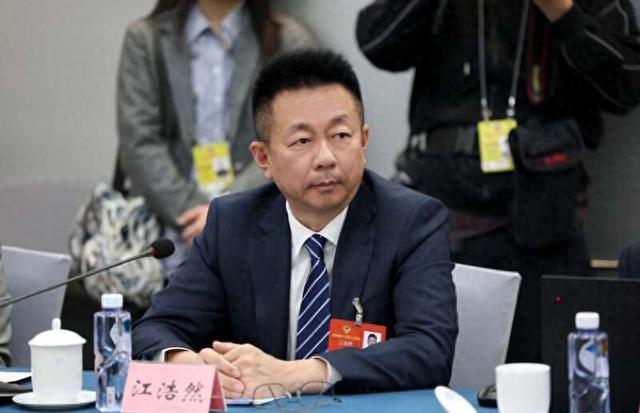
代表委员履职故事|全国政协委员江浩然:盯住民企发展的关键问题持续发力
Zhong Guo Qing Nian Bao· 2026-02-26 09:00
Core Viewpoint - Jiang Haoran, a member of the National Committee of the Chinese People's Political Consultative Conference and chairman of Hengyin Financial Technology Co., has successfully proposed numerous suggestions aimed at promoting the development of the private economy, many of which have been adopted by the government [1][3]. Group 1: Suggestions and Proposals - Jiang has submitted over 30 proposals focused on the development of the private economy, with some recognized as outstanding proposals by the National Committee [1]. - His suggestion to change the corporate R&D expense deduction policy from annual to quarterly or semi-annual prepayment was adopted within 18 days, benefiting 320,000 enterprises that year [3]. - In 2024, he proposed lowering social insurance rates to alleviate financial pressure on small and medium-sized enterprises, which received significant attention from multiple government departments [5]. Group 2: Engagement and Impact - Jiang actively engages in grassroots research and discussions, focusing on key issues in the economy, technology, and people's livelihoods, and often speaks at various national meetings [3][6]. - His proposals have led to direct communication with government agencies, including the National Development and Reform Commission and the Ministry of Industry and Information Technology, indicating a responsive government approach to his suggestions [1][6]. - Jiang has organized meetings with hundreds of private entrepreneurs to promote the integration of private enterprises into national strategies, emphasizing the importance of collaboration among government, finance, and industry [6]. Group 3: Focus on Innovation and Development - Jiang emphasizes the need to stimulate the internal motivation of private enterprises, encouraging them to be confident and proactive in their development [7]. - He has been involved in research on the development of new quality productivity, recognizing the unique advantages of private enterprises in innovation and market responsiveness [9]. - Jiang's proposals advocate for a balanced approach to economic growth, urging the government to support traditional industries' transformation while avoiding a simplistic dichotomy between new and traditional sectors [9][10].