阿米巴经营模式

Search documents
阿米巴经营(华典智慧)如何协作破局
Sou Hu Cai Jing· 2025-07-23 06:26
Core Insights - The article discusses the challenges of inter-departmental collaboration within companies and introduces the Amoeba Management Model as a potential solution to enhance efficiency and competitiveness. Group 1: Rapid Market Response - The Amoeba Management Model features a flat organizational structure and flexible operating mechanisms, enabling companies to quickly sense market changes and adjust strategies accordingly [3] - Each Amoeba unit directly engages with the market, allowing for timely acquisition of customer needs and competitor dynamics, which facilitates swift decision-making [3] Group 2: Enhanced Responsibility - By dividing the company into multiple Amoeba units, each with clear operational goals and responsibilities, employees are empowered to act as "managers," fostering a sense of ownership and engagement [3] - This shift in identity encourages employees to actively participate in business operations, leading to increased enthusiasm and creativity in their work [3] Group 3: Marketization of Internal Transactions - The Amoeba Management Model breaks down traditional departmental barriers, fostering close collaboration among different Amoeba units [4] - Each Amoeba understands its role and responsibilities while being aware of the processes and needs of other units, promoting mutual support to achieve overall business objectives [4] Group 4: Cultivating a Shared Philosophy - The model emphasizes the concept that "everyone is a manager," encouraging employees to understand the company's business philosophy and values through training and meetings [4] - This collective mindset helps dissolve departmental barriers, as employees focus on the overall interests of the company rather than individual gains [4] Group 5: Precision Management - The Amoeba Management Model advocates for independent accounting for each Amoeba, allowing for precise analysis and control of costs, revenues, and profits [5] - By analyzing cost data, companies can identify wasteful practices and implement cost-reduction measures, while revenue and profit analysis helps assess the profitability of each business unit [5] - This precision management enhances operational efficiency and strengthens the company's competitive position in the market [5]


百年松下方法论
Zhong Guo Jing Ying Bao· 2025-05-16 21:12
Core Viewpoint - Panasonic announced a global layoff of 10,000 employees, reflecting its struggle and transformation in the face of changing market dynamics and a 17.5% year-on-year decline in net profit for the fiscal year 2024 [2][13]. Group 1: Company Performance and Strategy - The net profit for Panasonic in the fiscal year 2024 was 360 billion yen, significantly impacted by underperforming consumer electronics segments such as televisions and kitchen appliances [2]. - The company is shifting its focus towards high-growth areas, with its home appliance business now accounting for only 40% of total revenue, while 60% comes from B2B sectors like electric vehicle batteries and residential security [7][19]. - Panasonic's proactive adjustments indicate a commitment to optimizing its business philosophy in response to contemporary challenges [2][18]. Group 2: Historical Context and Business Philosophy - Panasonic was founded by Konosuke Matsushita, who emphasized a philosophy of "selfless service" and "water-like" pricing strategies, aiming to provide affordable products to enhance societal well-being [6][20]. - Matsushita's principles, including the "self-creation" philosophy and the importance of nurturing talent, have been foundational to Panasonic's growth from a small workshop to a global giant [4][9]. - The company has historically prioritized employee welfare, exemplified by its commitment to not laying off workers during economic downturns, fostering a strong organizational culture [10][11]. Group 3: Corporate Culture and Social Responsibility - Panasonic's corporate culture is built on principles such as social responsibility, integrity, teamwork, and continuous improvement, which guide its operations and employee relations [14][15]. - The company promotes a philosophy of "coexistence and co-prosperity," emphasizing the importance of mutual benefit among stakeholders [14][20]. - Matsushita's legacy continues to influence modern corporate practices, highlighting the significance of human-centric management and corporate social responsibility in achieving long-term success [20].

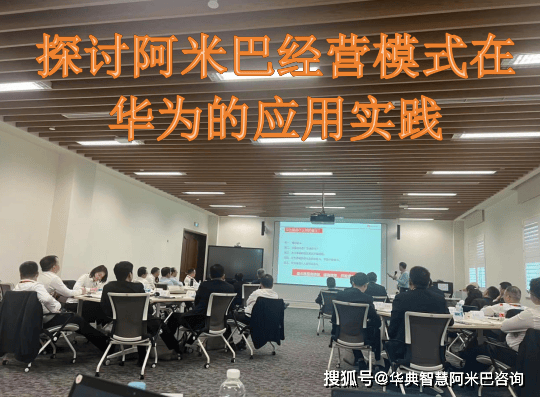
阿米巴经营(华典智慧) 探讨阿米巴经营模式在华为的应用实践
Sou Hu Cai Jing· 2025-04-17 00:53
Core Insights - The article discusses the application of the Amoeba Management Model at Huawei, which was introduced in 2014 and has become a key factor in enhancing organizational vitality and maintaining competitive advantage. Group 1: Alignment between Huawei and the Amoeba Model - Huawei's management system aligns well with the Amoeba model, as both emphasize small, independent units for operational efficiency. Huawei's "Iron Triangle" teams, consisting of customer managers, solution experts, and delivery experts, operate similarly to the Amoeba units, allowing for quick responses to customer needs [2] - The incentive mechanisms in both models are comparable, with the Amoeba model using time-based performance metrics and Huawei employing employee stock ownership and project bonuses to align employee interests with company goals [2] Group 2: Empowerment through the Amoeba Model - The Amoeba model injects continuous vitality into Huawei by allowing frontline teams to adapt strategies based on market changes without lengthy approval processes, significantly enhancing efficiency [3] - The model enhances organizational flexibility, enabling Huawei to quickly adjust strategies and resource allocation in response to market demand changes, thus maintaining a competitive edge [4] Group 3: Employee Engagement and Innovation - The Amoeba model transforms employees from passive executors to proactive managers, fostering a sense of ownership and encouraging them to contribute actively to team success [6] - It promotes innovation and collaboration among teams, as they seek partnerships to develop new products and explore new markets, creating a dynamic environment for continuous improvement [7] Group 4: Structural and Operational Changes - Huawei integrates the Amoeba model with its corporate culture, creating a unique "班长的战争" (Team Leader's War) autonomous management model, where small teams operate like independent Amoebas with decision-making authority [8] - A refined operational accounting system quantifies the performance of each Amoeba, holding them accountable for costs, revenues, and profits, which encourages teams to seek efficiency improvements [9] Group 5: Talent Development and Incentives - The application of the Amoeba model at Huawei fosters talent development, as team leaders are expected to possess comprehensive management skills, akin to small business operators [10] - Huawei has established incentive mechanisms linked to the performance of the Amoeba units, aligning team and individual rewards with operational outcomes to stimulate employee motivation and creativity [10]