高品质住宅建设

Search documents
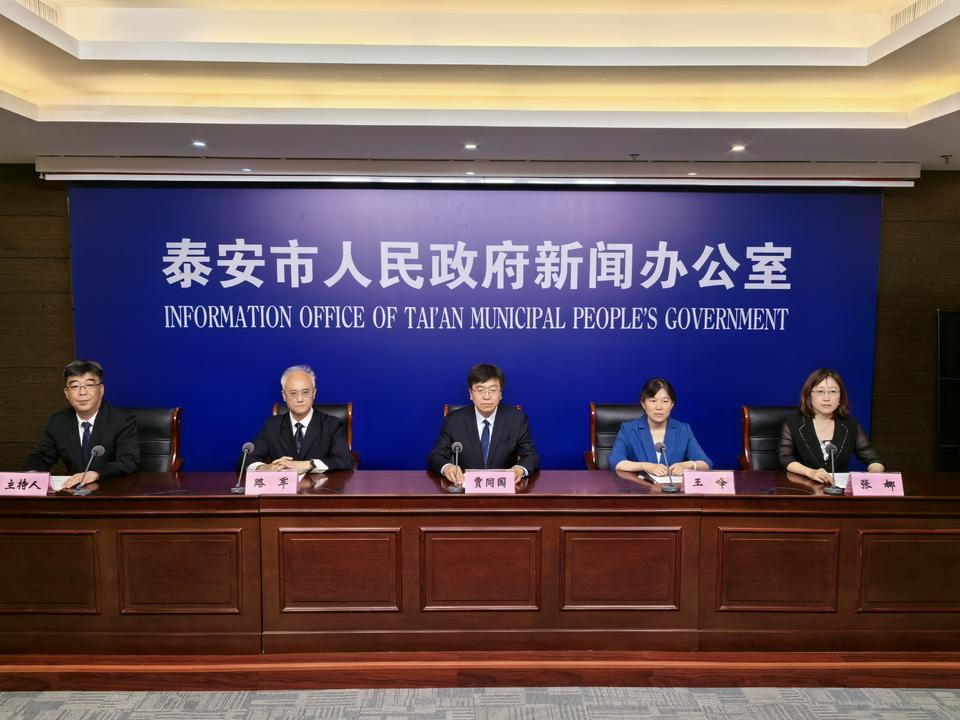
泰安市创新规划管理举措,助推高品质住宅建设
Qi Lu Wan Bao Wang· 2025-05-21 09:50
Group 1 - The core viewpoint of the news is the introduction of innovative planning management measures by the Tai'an government to promote high-quality residential construction [1] - The Tai'an Natural Resources and Planning Bureau has developed the "Tai'an High-Quality Residential Planning and Design Guidelines" to encourage courtyard settings, increase public service facilities, diversify residential product types, implement floor area ratio incentives, and allow site elevation [3] - The bureau has also issued supplementary regulations to address practical challenges in project construction, clarifying procedures for modifying planning conditions related to building height and other factors [3] Group 2 - The city has initiated the development of policies such as the "Tai'an Building Engineering Floor Area Ratio Calculation Regulations (Trial)" and "Tai'an Building Spacing and Daylight Analysis Planning Management Regulations (Trial)" to strengthen construction project planning management [4] - These regulations specify the calculation methods for floor area ratios, building spacing, and daylight analysis, including conditions under which floor area ratios are not calculated and requirements for spacing between buildings [4] - The regulations also set standards for daylight management for residential buildings, ensuring compliance with planning requirements [4]

住建部,最新发文!重点整治这些问题
券商中国· 2025-04-14 11:58
Core Viewpoint - The Ministry of Housing and Urban-Rural Development (MHURD) has initiated a focused rectification of quality issues in urban residential construction, particularly addressing sound insulation, odor transmission, and leakage problems, following the release of new residential construction standards [2][3][6]. Summary by Sections Quality Issues Focus - The rectification will concentrate on three major quality issues: sound insulation, odor transmission, and leakage in urban residential projects [3][6]. - The notification outlines five specific requirements to ensure compliance with standards, including strict adherence to design, materials, and construction practices [2][3]. Implementation of New Standards - New residential projects must comply with the newly established standards, and local authorities are tasked with ensuring that construction units adhere to mandatory engineering standards [3][4]. - Design units are prohibited from lowering standards under the guise of "optimized design," and construction units must not violate technical standards [3][4]. Material Inspection and Testing - There will be a stringent inspection of materials entering construction sites to prevent substandard materials from being used [4][5]. - A system of pre-use inspections for building materials will be enforced, with increased sampling rates for critical materials such as windows and drainage systems [4][5]. Performance Testing - Entities are required to conduct performance testing for sound insulation, odor prevention, and waterproofing before project completion, with results to be included in the residential quality guarantee [4][6]. - Specific focus areas for testing include the sound insulation of doors and windows, as well as the waterproofing and drainage systems [4][6]. Comprehensive Supervision - A full-chain supervision mechanism will be established to monitor design, materials, construction, and acceptance processes, with strict penalties for non-compliance [5][6]. - Local authorities are encouraged to strengthen leadership and adapt strategies to address quality issues effectively [5][6]. Market Opportunities - The rectification initiative is expected to create significant market opportunities in the building materials and housing inspection sectors, particularly for companies focusing on sound insulation, odor prevention, and leakage solutions [6][7]. - Demand for third-party testing services is anticipated to rise, as more rigorous testing becomes a requirement [7].