高层建筑消防安全

Search documents
香港火灾敲响警钟,全国开展排查整治高层建筑消防安全隐患
Nan Fang Du Shi Bao· 2025-11-29 11:32
Core Viewpoint - The State Council's Work Safety Committee has initiated a comprehensive inspection and rectification action focusing on major fire risks in high-rise buildings, particularly those under renovation, to enhance fire safety management and protect public safety [1][2]. Group 1: Inspection Focus Areas - The inspection will prioritize high-rise buildings undergoing external wall renovations, specifically checking for the use of flammable materials and prohibited construction practices [2]. - Internal renovations in high-rise buildings will also be scrutinized, focusing on compliance with safety regulations during minor works and the use of flammable materials [2]. - Fire safety equipment in high-rise buildings will be assessed, including the functionality of fire hydrants, sprinkler systems, and fire alarm systems [2]. - Daily fire safety management practices will be evaluated, including the clearance of flammable materials, accessibility of fire lanes, and the condition of electrical wiring [2]. Group 2: Implementation and Accountability - Local authorities are required to organize self-inspections and conduct random checks to ensure thoroughness and prevent superficial compliance [3]. - Immediate rectification of identified safety hazards is mandated, with strict accountability measures for severe violations [3]. - There will be an emphasis on public education and the establishment of a reporting reward system to encourage the identification of safety risks by the community [3].
香港高楼火灾后,高层住宅何去何从
吴晓波频道· 2025-11-28 00:29
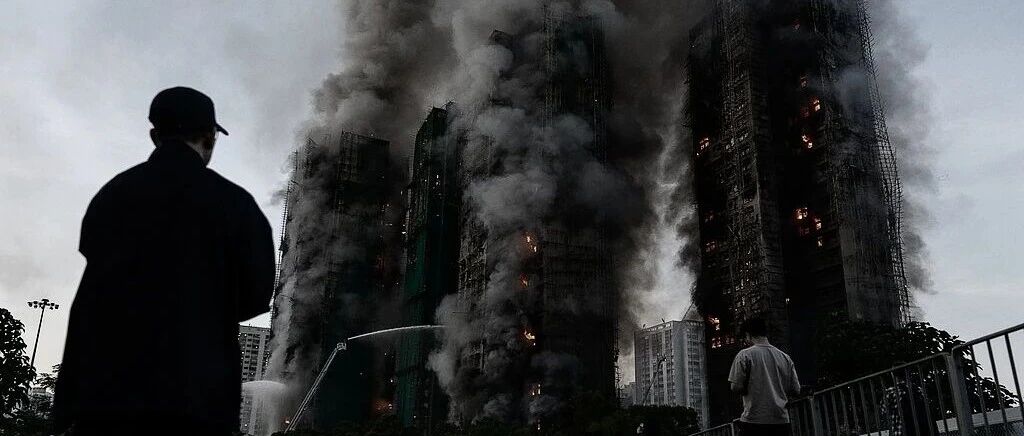
Core Viewpoint - The article discusses the tragic fire incident at Hong Kong's Mong Kok, highlighting the safety concerns associated with high-rise buildings and the systemic failures in fire safety management and building regulations that contributed to the disaster [4][23][25]. Group 1: Incident Overview - On November 26, a fire broke out at Mong Kok's Hong Fu Court, escalating to a level 5 fire alarm, resulting in at least 75 fatalities and over 200 missing individuals [4][5]. - The fire is noted as the deadliest in Hong Kong since 1948, raising significant concerns about high-rise residential safety [4][5]. Group 2: Building Safety Regulations - High-rise buildings are required to have smoke-proof stairwells, refuge floors, and automatic fire alarm systems, with firewalls having a fire resistance of at least 3 hours [5]. - The construction standards for high-rise buildings include specific evacuation width calculations based on occupancy [5]. Group 3: Fire Dynamics in High-Rise Buildings - High-rise buildings are prone to rapid fire spread due to the "chimney effect," where smoke and heat rise quickly, exacerbated by the building's design and external conditions [8][12]. - The proximity of buildings and high winds can facilitate the rapid spread of fire, as seen in the Mong Kok incident [9]. Group 4: Challenges in Firefighting - Firefighting efforts are hampered by the height of buildings, with existing equipment having limited operational heights, leaving significant areas inaccessible for rescue operations [14][15]. - The average effective rescue height of most firefighting equipment in China is around 50 meters, which is insufficient for many high-rise structures [15]. Group 5: Aging Infrastructure and Fire Risks - The Mong Kok complex, built in 1983, was undergoing extensive renovations, raising concerns about the presence of flammable materials and inadequate fire safety measures during construction [17][20]. - The presence of combustible materials used in construction, such as bamboo scaffolding and plastic sheeting, contributed to the fire's rapid escalation [20]. Group 6: Emergency Preparedness and Response - Residents reported a lack of effective fire alarm systems and emergency communication during the incident, highlighting deficiencies in emergency preparedness [21][22]. - Previous fire drills and safety training were insufficient, with many residents unaware of evacuation procedures [21][22]. Group 7: Regulatory and Systemic Issues - The incident revealed systemic failures in building safety regulations, with calls for stricter enforcement of fire safety standards and better oversight of construction materials [23][36]. - Legal experts emphasized the need for comprehensive risk assessments and improved regulatory frameworks to prevent similar tragedies in the future [36][39]. Group 8: Implications for Future Urban Development - The fire serves as a warning for urban development practices, particularly regarding the safety of high-rise buildings and the need for rigorous safety standards in construction and renovation [41]. - The incident has prompted discussions on the importance of integrating fire safety into urban planning and building design to enhance community safety [41].

香港大火为老旧楼宇敲响警钟,高层火灾救援是“世界级难题”
第一财经· 2025-11-27 10:13
Core Viewpoint - The article discusses the recent fire incident at Hong Kong's Mong Fuk Court, highlighting the challenges of high-rise fire rescue and the urgent need for improved fire safety measures in high-rise buildings across Hong Kong and mainland China [3][5][8]. Summary by Sections Incident Overview - A fire broke out at Mong Fuk Court on November 26, 2023, escalating to a level 5 fire alarm, marking the first occurrence of such a high-level alarm since 2008 [3][4]. - The fire resulted in 55 fatalities and 72 injuries, with ongoing rescue operations [3][4]. Building and Fire Safety Issues - Mong Fuk Court, built in 1983, consists of 8 towers with a total of 1,984 units, currently undergoing major renovations [4]. - The fire spread rapidly due to the presence of construction materials and inadequate fire safety standards, including flammable insulation materials and narrow spacing between buildings [4][6]. Challenges in High-Rise Fire Rescue - High-rise fire rescue is complicated by the limitations of firefighting equipment, such as aerial ladders that typically reach only up to 50 meters, making it difficult to combat fires in buildings taller than 18 stories [5][9]. - The design of high-rise buildings often relies on internal fire safety systems, which, if compromised, leave external rescue efforts severely hampered [10][11]. Regulatory and Safety Measures - Hong Kong has implemented mandatory building inspections for structures over 30 years old since 2012, but many buildings still pose significant fire risks due to aging infrastructure [7][8]. - The article emphasizes the need for stricter regulations on fire safety materials and better design practices to enhance fire prevention and rescue capabilities in high-rise buildings [10][12]. Recommendations for Improvement - Experts suggest several measures to improve fire safety in high-rise buildings, including the use of non-combustible materials, the establishment of fire compartments, and the installation of adequate fire-fighting systems [11][12]. - There is a call for better planning of evacuation routes and the provision of dedicated rescue access points to facilitate emergency response [12].
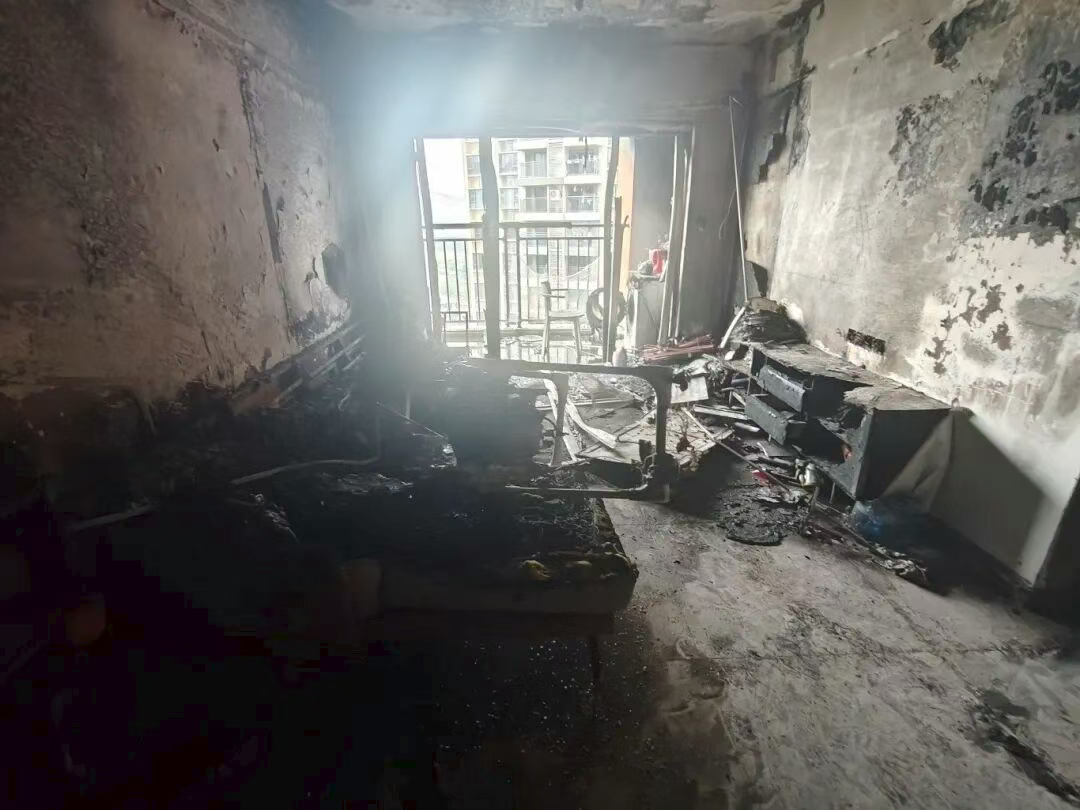
17层住宅凌晨起火 他们科学自救成功逃生
Yang Shi Xin Wen· 2025-11-18 02:54
Core Points - A fire broke out in a 17-story residential building in Sanxiang Town, Zhongshan City, Guangdong Province, but fortunately, there were no casualties due to the residents' prior fire safety training [1][3] - The cause of the fire is currently under investigation [1] Group 1: Fire Incident Response - The homeowner discovered the fire and promptly woke up family members, and after realizing they could not extinguish the fire, they evacuated to the ground and called for help [3] - Firefighters quickly arrived and utilized indoor fire hydrants to suppress the fire and conducted a search and rescue operation, successfully evacuating a trapped resident from a neighboring unit [3][5] Group 2: Self-Rescue Actions - A trapped resident closed her door and used a wet towel to block smoke from entering, while sending a distress message via her phone, which bought her valuable time for rescue [5] - Other residents on the upper floors noticed the fire and, while visibility was still normal, covered their mouths and noses and evacuated down the stairs in an orderly manner [7] Group 3: Fire Hazards in High-Rise Buildings - High-rise buildings have multiple fire hazards due to their complex functions and the presence of combustible materials, making fire safety management critical [7] - The rapid spread of fire is a significant risk, especially when flammable materials are improperly stored [8] - Evacuating from high-rise buildings can be challenging due to the long vertical distance and potential smoke intrusion in stairwells [9] Group 4: Fire Safety Tips - In case of a fire below, residents should evacuate downwards if the stairwell is not filled with smoke [10][11] - If trapped by smoke or fire, residents should stay in their units, close the door, seal gaps with wet towels, and call for help [18][37]