3D printing

Search documents
This 3D Printed Sneaker Really Works (But It’s So Ugly!) | Prove It
CNET· 2025-11-20 13:00
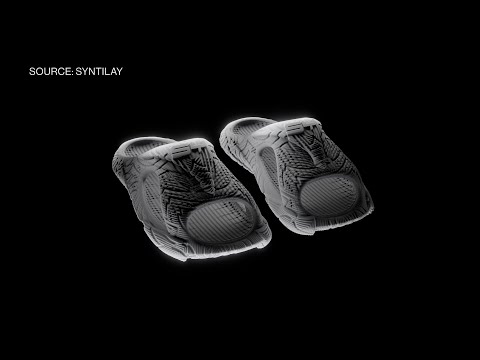
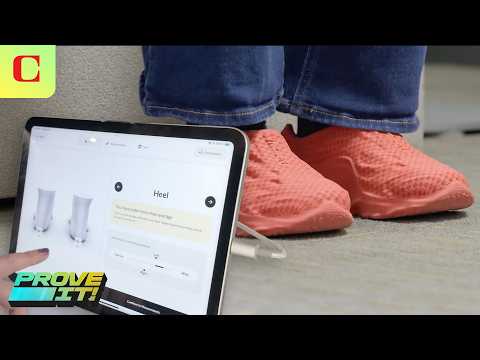
Product Evaluation - Syntilay's 3D printed shoes offer custom fit through foot scanning technology, available in-store and via a phone app [2][3][6] - The initial AI-designed sneaker model received mixed reviews regarding its aesthetic appeal, with concerns about style and sock visibility [8][15][16] - The shoe's comfort and functionality were generally positive, suitable for everyday errands but not recommended for sports [11][12][13][14][17] - The production process, involving 3D printing in Germany, initially resulted in a 25-day delivery timeframe [9][11] - The cost of a pair of Syntilay shoes is $190, with a one-time free reprint offered within the first 30 days for fit issues [5] Market Strategy & Future Potential - Syntilay aims to expand its in-person scanning experiences to malls and traditional shoe stores [6][7] - The company emphasizes the value of custom-made shoes, particularly for individuals with different sized feet [7][8][18] - Syntilay plans to introduce new shoe designs beyond the initial AI-generated model [16][19] - Zellerfeld, Syntilay's 3D printing partner, intends to open more factories in the US to improve production speed [9] - The technology demonstrates the potential for on-demand, custom-printed fashion, though current designs may not appeal to all consumers [20]

奥比中光-中国投资者论坛 - 核心要点
2025-11-18 09:41
Summary of Orbbec Inc. Conference Call Company Overview - **Company**: Orbbec Inc. - **Ticker**: 688322.SS - **Industry**: Technology, specifically in 3D vision sensors and robotics Key Points Industry and Market Position - Orbbec is experiencing strong growth momentum, driven by increasing penetration in payment systems and 3D printing applications [1][2] - The company has a commanding market share of approximately 50-70% in China's robotics vision market and similar dominance in Korea [2] Technological Advancements - Orbbec maintains core technological advantages in payment systems through high-precision 3D sensing solutions, particularly in facial recognition applications [1] - The company has built deep expertise in 3D printing applications, leveraging structured light and stereo vision cameras for high-accuracy scanning and quality control [2] Financial Performance and Projections - The company has reiterated a "Buy" rating and raised the target price (TP) to CNY 110 from CNY 105, reflecting a positive outlook on its payment and 3D printing business [3] - Revised sales forecasts for FY2026 and FY2027 are CNY 1,706 million and CNY 2,609 million, respectively, with EPS estimates raised to CNY 0.96 and CNY 1.54 [3][4] - The stock currently trades at 18x 2026F P/S, with a new TP based on 26x 2026F P/S, which is +0.3x standard deviation of its historical average [3][13] Revenue and Profitability - Revenue projections show significant growth from CNY 564 million in FY24 to CNY 2,609 million in FY27, indicating a CAGR of 67% from 2024 to 2026 [4][10] - Normalized net profit is expected to turn positive by FY25, reaching CNY 170 million, and further increasing to CNY 616 million by FY27 [4][10] Risks and Challenges - Potential risks include slower ramp-up from the robotics business, intensified competition affecting prices and market shares, and softening demand in the biometrics market [14][23] ESG Commitment - Orbbec demonstrates a commitment to ESG by advancing 3D vision technologies that contribute to environmental sustainability through improved automation and reduced resource waste [15] Market Capitalization and Performance - As of November 14, 2025, Orbbec's market cap is approximately USD 4.3 billion, with an implied upside of 44.6% based on the new target price [5][19] Conclusion - Orbbec Inc. is well-positioned for growth in the technology sector, particularly in payment systems and 3D printing, with strong financial projections and a commitment to innovation and sustainability. However, the company must navigate potential risks that could impact its market performance.

Steakholder Foods Announces Acquisition of Twine Solutions
Globenewswire· 2025-11-04 13:00
Core Insights - Steakholder Foods Ltd. has acquired Twine Solutions Ltd., enhancing its digital printing capabilities in the foodtech industry and positioning itself as a leader in smart manufacturing and supply chain optimization [1][2][3] - The acquisition allows Twine's shareholders to retain a minority stake of approximately 20% in Steakholder Foods, reflecting a strategic partnership aimed at innovation and growth [1][5] Company Overview - Steakholder Foods specializes in 3D printing technologies for alternative proteins, aiming to transform the food industry with advanced production methods [6][7] - Twine Solutions is known for its proprietary waterless dyeing technology, which is revolutionizing the $120 billion textile thread and yarn industry by enabling on-demand dyeing solutions [4][8] Strategic Goals - The acquisition is intended to create a global digital technology powerhouse that can innovate across multiple industries, including food and textiles [2][3] - Both companies aim to explore commercial applications that emphasize speed, personalization, sustainability, and scalability [3] Technological Advancements - Twine has developed the world's first digital thread and yarn dyeing system that utilizes a waterless process, supported by 10 granted and pending patents [3] - The combined technological capabilities of Steakholder and Twine are expected to enhance operational efficiency and environmental sustainability in textile production [4][8] Market Positioning - The acquisition positions Steakholder Foods to expand its market reach beyond foodtech into adjacent industries with significant growth potential [5] - Twine's partnerships with major brands like Zara and COATS Group highlight its influence and strategic importance in the textile sector [4]


This founder went from designing Happy Meal toys to making prosthetic skulls for a living—and her company now rakes in $20 million a year
Yahoo Finance· 2025-11-02 12:05
Core Insights - The article highlights the transformative journey of Nancy Hairston, who transitioned from toy design to founding MedCAD, a company focused on 3D-printing surgical solutions that significantly improve patient outcomes [1][5]. Company Overview - MedCAD was founded in 2007 by Nancy Hairston, leveraging 3D-printing technology to create surgical solutions, particularly cranial implants, which help patients regain their self-image [1][5]. - The company initially focused on toy design before pivoting to healthcare, recognizing the potential of 3D modeling in medical applications [2][3]. Industry Context - The late 2000s saw a shift in the design industry, with many roles moving to Asia, while opportunities in medical and aerospace sectors remained in the U.S. [3]. - The rise of younger surgeons familiar with advanced technology and 3D animation has created a demand for innovative solutions in healthcare, which MedCAD aims to fulfill [5]. Key Developments - Hairston began adapting toy-development software for medical applications, specifically for orthognathic surgery, which laid the groundwork for MedCAD's future innovations [5]. - A pivotal moment occurred when a surgeon reached out to Hairston for a cranial implant, marking the beginning of MedCAD's focus on surgical solutions [6].
Materialise NV: My DCF Valuation Indicates Upside Potential
Seeking Alpha· 2025-10-25 10:32
Group 1 - Materialise is a Belgium-based company that specializes in 3D printing services, producing on-demand prototypes and production parts [1] - The 3D printing industry is anticipated to offer advantages such as customized manufacturing, which may support partial supply-chain relocalization, waste reduction, and lower carbon emissions [1] Group 2 - The investment focus is on growth companies, particularly in the mid-cap segment, with an emphasis on sectors like biotechnologies, computer chips, cloud technology, energy, and commodities [1] - A systematic balance sheet analysis will be conducted, as growing businesses often struggle with funding, while a stress test will be utilized to evaluate the safety of each business model [1] - Long-term capital appreciation is prioritized over short-term speculation [1]


Reimagining Home: The Innovation Revolution In Housing | Aashka Kancharla | TEDxVandegrift HS
TEDx Talks· 2025-10-13 16:03
The Problem of Affordable Housing - The average housing cost in Austin, Texas is over $560,000, while over 580,000 people in the United States remain unhoused [2] - Over 37% of the homeless population endures substance abuse, making it difficult to break the cycle without stability and safety [3] - Affordable housing faces challenges from skyrocketing land costs, restrictive zoning laws, and expensive construction materials [4] Innovative Solutions - Tiny homes, costing $20,000 or $200,000, are efficient, sustainable, and affordable solutions to homelessness [4][5] - Community First Village in Austin, Texas, provides a neighborhood for people coming out of chronic homelessness, offering job training and mental health support [5][6] - Companies like ICON are 3D printing homes using a durable and weather-resistant material called Lavarete [7][8] The Evolution of Housing - Post-World War II, mass-produced homes (Levittowns) were affordable but lacked individuality and sustainability [8] - In the 1970s, modular housing allowed for faster and cheaper construction [9] - Current innovations include solar-powered homes, upcycled shipping containers, and recyclable construction materials [9] Call to Action - Advocate for affordable housing policies, support organizations like Community First, and educate oneself about companies like ICON [11] - Challenge the status quo and take action to create a world where no one is left behind [10][12]

Extreme Costumes Breaks Down $35,000 Galactus Cosplay
CNET· 2025-10-13 15:06
Product & Innovation - The company designs costumes with flexibility, enabling a wide range of motions and lifelike actions [4] - The company utilizes 3D printing technology in costume construction, including housings for fingers [2] - The company incorporates innovations such as generated motors for spinning parts in costumes [1] Scale & Manufacturing - The company manufactures a variety of costumes, including Bumblebee, Galactus, Squirrel Girl, and Red Ronin [4] - The company's creations include large-scale mobile costumes, with one reaching 10 feet 8 inches (approximately 325 cm) in height [3] - The company's previous largest mobile costume was 10 feet 3 inches (approximately 312 cm) tall [3] Logistics & Assembly - The company designs costumes for quick reassembly and disassembly, facilitating transportation to events like San Diego Comic-Con [2][3] - The company's costumes feature special hinges that allow for easy arm removal and reattachment [2] Cost - One costume, Galactus, cost $35,000 [1]

How to trade the health care break out
Youtube· 2025-10-06 18:24
Core Viewpoint - The healthcare sector is experiencing a significant turnaround, with a notable increase in large-cap healthcare ETFs, indicating a potential shift towards quality investments in the industry [1][2]. Group 1: Market Sentiment and Investment Strategies - The recent Pfizer deal has generated positive sentiment in the healthcare space, leading to increased bullishness and new investments in companies like Merck [2][11]. - There is a belief that the market will shift from momentum-based investments to quality-focused investments, particularly in healthcare [2][3]. - The XBI ETF is seen as a promising investment opportunity, with expectations of a multi-year breakout [3][9]. Group 2: Industry Challenges and Opportunities - The healthcare system is perceived as "broken," similar to the technology sector during the rise of the internet, suggesting that technology-driven companies will thrive [5][6]. - Companies like Viva Systems, which leverage technology in healthcare, are expected to succeed as the industry transitions to value-based care models [6][8]. - The pharmaceutical sector faces challenges, particularly larger companies needing to discover new drugs, but recent events may have created a more favorable investment environment [10][11]. Group 3: Investment Preferences and Risks - There is a preference for investing in contract research organizations that support pharmaceutical and biotech companies, avoiding direct drug risk [12]. - The medtech field is gaining interest, particularly companies utilizing 3D printing for orthopedic implants, indicating innovation within the sector [13].

4 Computer Peripheral Equipment Stocks in Focus in a Thriving Industry
ZACKS· 2025-09-29 13:05
Industry Overview - The Zacks Computer-Peripheral Equipment industry includes companies that provide input, output, and storage devices, such as keyboards, mice, LCD panels, smart glasses, and gaming accessories [3] - The industry is characterized by intense competition, driving innovation and product development to meet current demand trends [3] Growth Drivers - Increasing demand for professional gaming accessories, touchscreen and wireless devices, smart glasses, and RFID solutions is expected to benefit key players like Logitech, Immersion, Identiv, and TransAct Technologies [1] - The shift in consumer preference from mobile gaming to professional gaming experiences, along with the rise of e-sports leagues, is a significant growth catalyst [4] - The 3D printing market is also seen as a long-term investment opportunity, with growing adoption across various industries [4] Market Dynamics - The demand for commercial PCs is anticipated to rise, driven by interest in AI-equipped devices and the beginning of a PC refreshment cycle [6] - The industry is currently facing macroeconomic challenges, including inflation and high interest rates, which are impacting IT spending and consumer demand [2][7] - New U.S. tariff policies may increase costs for suppliers and end-users, adding to the industry's near-term uncertainties [2][7] Financial Performance - The Zacks Computer-Peripheral Equipment industry has outperformed the S&P 500, with a 20.4% increase over the past 12 months, compared to 17.2% for the S&P 500 and 28.3% for the broader technology sector [13] - The industry is currently trading at a forward 12-month price-to-sales (P/S) ratio of 0.90X, significantly lower than the S&P 500's 5.40X and the technology sector's 7.01X [16] Company Highlights - **TransAct Technologies**: Focuses on transaction-based printers and is benefiting from digital transformation trends. The Zacks Consensus Estimate for 2025 indicates a loss of 15 cents per share, an improvement from previous estimates [19][21] - **Identiv**: Specializes in RFID and IoT devices, with a positive outlook due to successful design agreements. The 2025 loss estimate is projected at 95 cents per share, narrower than earlier forecasts [25][26] - **Immersion**: A leader in haptic technology, with strong demand and a robust patent portfolio. The fiscal 2026 earnings estimate remains at 42 cents per share [29][31] - **Logitech**: A global leader in peripherals, showing recovery with six consecutive quarters of sales growth. The fiscal 2026 earnings estimate has been revised upward to $5.04 per share [34][37]





Seeing A 'Disruption' in Footwear: Reebok Co-Founder
Bloomberg Television· 2025-09-13 16:04
Product & Technology - A first-of-its-kind experience in Times Square allows scanning feet to create 3D models, capturing detailed information for custom orthotics and shoes [1][2] - The company offers fully custom-made 3D printed shoes, delivered in 4 to 6 weeks, representing a game changer for footwear sizing [3] - The company's Luminaires sneaker, a fully custom-made shoe, is priced at $189, competitive with traditional sneakers [20] - The company also offers slides, with the version one priced at $119, making personalized footwear more accessible [21] Manufacturing & Geopolitics - 3D printing enables manufacturing shoes anywhere, including America, potentially disrupting tariffs and traditional production models [5][6] - The company is actively planning to produce 100% American-made footwear using 3D printing, reducing reliance on labor force [7][8][9] - The company aims to improve 3D printing speed, targeting a reduction in printing time per shoe from approximately 12 hours to 1 hour [14] Market & Consumer Trends - There's a shift in consumer preferences towards comfort and personalized fit, moving beyond just styling [4][17] - The company focuses on comfort and easy-to-wear footwear like slides and clogs, offering personalized measurements [17] - The company is exploring different variations of 3D printed shoes, including performance and comfort options [18]