Birthright citizenship

Search documents
BREAKING: Federal judge blocks Trump's birthright citizenship order
MSNBC· 2025-07-10 16:18
Legal & Policy Developments - A federal judge in New Hampshire issued a nationwide block against President Trump's order to end birthright citizenship [1] - The judge granted class action status to the plaintiff but excluded parents of children whose citizenship is threatened from the protected class [1][8] - The ACLU filed a class action lawsuit following a Supreme Court decision limiting nationwide injunctions [6] - The ruling is expected to protect over 150,000 children born in the US this year, ensuring their constitutional birthright citizenship [7] Immigration Raids & Conditions - Several groups, including the city of Los Angeles, are suing the Trump administration over immigration raids [2] - Individuals are reportedly being racially profiled and swept up in immigration raids, with constitutional rights being violated [16][17] - Detainees are allegedly held in deplorable conditions, with limited access to water and counsel [18][19] - Lawyers have faced force, including tear gas, while trying to protect people's rights [19] Potential Consequences & Concerns - There are concerns about potential chaos and a humanitarian crisis if 28 states start revoking birthright citizenship [11] - The question of what happens to stateless individuals, particularly those who cannot be repatriated, is raised [12] - Concerns are expressed about the dehumanization of people and the potential for the administration to deprive people of their citizenship [14] - Comparisons are being made between ICE force and vigilantes or Gestapo due to perceived impunity [23]

BREAKING: Judge blocks Trump's order restricting birthright citizenship
MSNBC· 2025-07-10 16:11
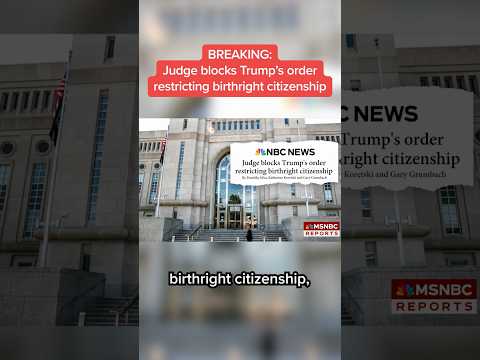
Legal & Policy Updates - A federal judge in New Hampshire issued a nationwide block against President Trump's order to end birthright citizenship [1] - The judge granted class action status to the plaintiff but excluded parents of children whose citizenship is threatened from the protected class [1] - The Supreme Court previously limited lower courts' power to issue nationwide injunctions but allowed seeking blocks through class action lawsuits [2] Immigration Raids Lawsuit - Several groups, including the city of Los Angeles, are suing the Trump administration over immigration raids [2] - A hearing on the case will be held in California [2]
Trump again floats deporting U.S. citizens: ‘Maybe that’ll be the next job’
MSNBC· 2025-07-02 01:45
Constitutional & Legal Analysis - The Supreme Court's decision allows the Trump administration to implement an order on birthright citizenship, potentially violating the 14th Amendment [1][4] - The administration plans to deport individuals subject to this order starting July 27th [1] - The 14th Amendment, ratified in 1868, aimed to ensure full citizenship for formerly enslaved Black people and center equality and justice [5] - The executive order attempts to circumvent the 14th Amendment's explicit language on birthright citizenship [8] - Immigrant rights groups in 22 states with Democratic leadership have sued over the citizenship order [8] - Three federal district courts vacated the policy, but in 28 states that did not challenge the order, it can go into effect [9] Sociopolitical Implications - The administration's actions are seen as an attack on the foundational ideas of the Reconstruction Amendments and the concept of American citizenship [2][4] - There are concerns about the creation of a second-class non-citizenship status, potentially administered in hospitals [9] - Masked ICE agents are reportedly deporting people and sending them to third-party countries [11] - There are fears that the administration may extend these policies to target critics of the government, not just immigrants [16][18]
Tech Sector Impacted by Birthright Citizenship Ruling
Bloomberg Technology· 2025-06-30 19:41
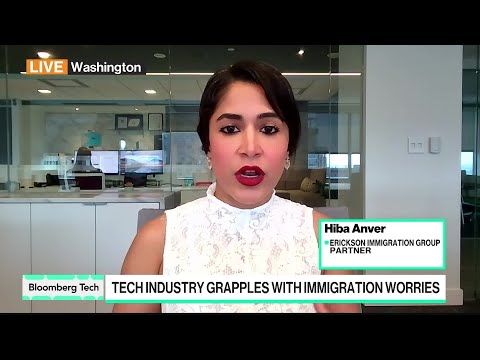
Legal & Policy Implications - The Supreme Court ruling limits nationwide injunctions, leading to potential inconsistencies in the enforcement of immigration policies across different states [1][2] - This ruling indirectly impacts tech companies, as the citizenship status of their employees' children may vary depending on the state where the employee resides or sues [2][4] - A decision regarding the constitutionality of the birthright citizenship executive order is expected in October, which could further influence the legal landscape [4][6] Impact on Tech Companies & Employees - Tech companies may face new employee questions and policy considerations related to relocation and potential accommodations for employees concerned about their child's citizenship [3][14][15] - The perception of instability in the U S immigration system could deter high-skilled immigrants from accepting job offers from U S companies, potentially leading to a loss of talent and innovation [10] - Tech companies heavily rely on H-1B visas to hire skilled immigrants, which is crucial for maintaining their competitiveness [8][9] Challenges & Considerations - Differing legal standards across states could create logistical, administrative, and bureaucratic challenges for both H-1B visa holders and the companies employing them [7][8] - Companies may need to address employee concerns about relocating to states where their child's citizenship might be questioned [14] - Companies will need to decide whether to offer accommodations or avoid the topic altogether, requiring new policy considerations [15]
Supreme Court's birthright citizenship ruling, explained
MSNBC· 2025-06-29 23:16
Legal Analysis - The Supreme Court's decision does not address the merits of birthright citizenship under the 14th Amendment, but restricts the power of lower courts [1] - Justice Jackson argues the decision creates two zones in America: one where court orders are followed, and a "zone of lawlessness" [1] - This "zone of lawlessness" disproportionately impacts the poor, uneducated, and unpopular, who may lack the resources to seek legal recourse [1] - The rule of law depends on equal treatment for everyone, regardless of status [2] Potential Societal Impact - The decision could lead to uneven application of the law, affecting those without the means to challenge executive actions [1] - Uneven application of the law undermines the foundation of society, which relies on equal treatment for all [1][2]
‘I don’t think Trump read the ruling’: Fmr. DOJ official on Trump claiming 'GIANT WIN' from SCOTUS
MSNBC· 2025-06-29 17:02
Supreme Court Ruling Impact - The Supreme Court ruled that federal judges can no longer issue nationwide injunctions blocking executive orders deemed unconstitutional [1] - This decision is seen as a victory for Trump, potentially expanding presidential power [1] - The ruling limits the ability of lower courts to check aggressive executive branch actions [2] Legal Analysis - One perspective suggests the reaction to the ruling is an overreaction, arguing nationwide injunction cases are relatively recent [3][4] - An alternative vehicle, rule 23b2 of the federal rules of civil procedure, allows class actions against illegalities affecting many people [5] - It's predicted that nationwide class actions will be certified quickly, potentially negating the impact of the Supreme Court ruling [6] - Concerns exist that class actions are more complicated and may require more effort and cost for individuals to redress grievances [7] Potential Consequences - President Trump believes the decision allows him to proceed with numerous policies, including ending birthright citizenship and sanctuary city funding [10][11] - There are concerns that the ruling could hinder the immediate halting of executive actions causing irreparable harm [12] - Certifying class actions takes time, potentially delaying responses to future unconstitutional actions by the executive branch [13][14]
SCOTUS guts nationwide blocks on Trump’s orders
MSNBC· 2025-06-28 19:23
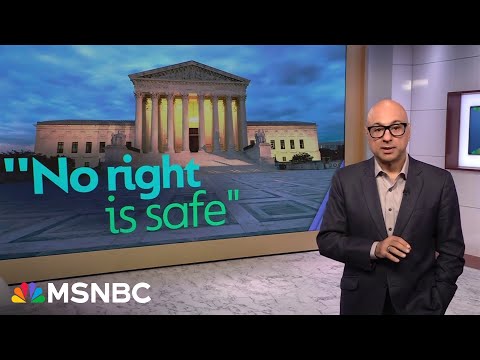
Supreme Court Ruling Impact - The Supreme Court's decision limits federal judges' ability to issue universal injunctions, potentially allowing unconstitutional policies to take effect nationwide [4][8][9] - This ruling impacts the enforcement of constitutional rights, making the presidency less accountable [13][14] - Justice Sotomayor warns that "No right is safe in the new legal regime that the court creates" [13] - The ruling could allow executive orders stripping voting rights or seizing guns to take effect, impacting various groups [12] Trump Administration Policies - The Trump administration's attempt to end birthright citizenship via executive order is at the center of the legal challenge [5] - Lower courts agreed that Trump's order was likely unconstitutional [6] - The ruling temporarily allows the Trump administration's executive order attacking birthright citizenship to take effect after 30 days [8] Legal and Constitutional Concerns - The Supreme Court's conservative majority is criticized for enabling potential authoritarianism by dismantling checks on executive overreach [10][20] - Universal injunctions are described as basic guard rails to stop illegal policies [7] - The decision is seen as an open invitation for the government to bypass the Constitution [18] - The court's actions may set dangerous precedents for attacks on fundamental rights [19][20]