Economic stimulus

Search documents
Standard Chartered Bucks Bearish Trend, Forecasts Oil Price Gains in 2026
Yahoo Finance· 2025-09-28 23:00
Group 1: Current Oil Market Conditions - Energy markets are experiencing bearish sentiment with Brent crude trading at $69.45 per barrel, over $10 below this year's peak of approximately $81 per barrel, and WTI crude at $65.05 per barrel compared to a January peak of $78.71 per barrel [1] - Oil prices in 2025 are projected to be around $15 per barrel lower than the previous year due to oversupply fears from OPEC+ unwinding production cuts, sluggish global economic growth, and heightened trade tensions [1] - Wall Street analysts warn of a potential surplus in oil markets, with Goldman Sachs predicting an oversupply of 1.9 million barrels per day in 2026 [1] Group 2: Contrasting Predictions - Commodity analysts at Standard Chartered predict that oil prices will rise in the coming year due to robust demand and economic stimulus measures [2] - StanChart acknowledges that U.S. supply has reached an all-time high but anticipates that producers will need to cut output due to low oil prices [3] Group 3: Demand and Geopolitical Factors - Expectations of weaker global demand in the final quarter of the year, influenced by trade wars and tariffs, may lead to economic stimulus measures in the U.S. and potential responses from China [3] - Ukraine's attacks on Russian energy infrastructure have resulted in increased crude exports from Russia, reaching a 16-month high of 3.62 million barrels per day in August [3] - Escalating tensions between Europe and Russia are likely to raise the risk premium for crude oil and natural gas [3]
China leaves benchmark lending rates unchanged as expected, despite Fed rate cut
CNBC· 2025-09-22 01:10
Core Points - The People's Bank of China (PBOC) has maintained its benchmark lending rates unchanged for the fourth consecutive month, with the one-year loan prime rate (LPR) at 3.0% and the five-year LPR at 3.5% [2][3][4] - This decision aligns with economists' expectations, as Chinese authorities are refraining from major stimulus measures despite signs of economic fatigue [3][5] - The PBOC's last rate cut occurred in May, where key lending rates were reduced by 10 basis points as part of efforts to support the economy [3][4] Economic Context - China's export growth slowed to 4.4% in August, the lowest rate since February, influenced by waning frontloading shipments and U.S. trade policies [5] - Policymakers are anticipated to implement marginal monetary easing later this year to achieve the government's annual growth target of around 5% [5]
Finally, the Fed
Yahoo Finance· 2025-09-17 04:32
Group 1 - The Federal Reserve is expected to cut its key interest rate by 25 basis points to the 4.00%-4.25% range, with further easing anticipated through the end of next year [2][3] - Global shares and gold have reached unprecedented highs due to expectations of a dovish Fed stance, while U.S. Treasuries and the dollar have weakened [3] - The Bank of Canada is also expected to cut rates amid trade frictions affecting labor markets [4] Group 2 - Japan's exports have declined for the fourth consecutive month, indicating the impact of tariffs imposed by the Trump administration on major economies [5] - Asian markets showed initial subdued performance but later improved, led by a 1.4% increase in Hong Kong's Hang Seng Index [5] - Key economic data releases include U.S. housing starts, British CPI, Euro zone CPI, and Germany's government debt auctions [6]
ETFs in Focus as China Exceeds Growth Expectations in Q2
ZACKS· 2025-07-15 11:01
Economic Performance - China's GDP grew by 5.2% in Q2 2025, surpassing the 5.1% forecast by economists, but down from 5.4% in Q1 [2] - The stronger-than-expected growth has alleviated immediate pressure on policymakers to implement further economic stimulus [1][3] Policy Outlook - Analysts suggest that additional stimulus measures may be delayed until September if economic momentum weakens further [3] - Previous stimulus efforts have shown partial effectiveness, with improvements in manufacturing activity and exports [4] Trade Relations - U.S. tariffs on Chinese imports were escalated to 145% in April, leading to supportive measures from Beijing [5] - A truce was reached in May, with both countries agreeing to roll back most tariffs, followed by a framework agreement in June [6] Economic Vulnerabilities - Economists have called for stronger fiscal action, recommending up to 1.5 trillion yuan in stimulus to support household spending and mitigate the impact of U.S. tariffs [7] - Despite signs of resilience, underlying vulnerabilities in the Chinese economy remain a concern [8] Investment Opportunities - Investors are encouraged to monitor China-based exchange-traded funds (ETFs) such as iShares MSCI China ETF (MCHI) and KraneShares CSI China Internet ETF (KWEB) [9]

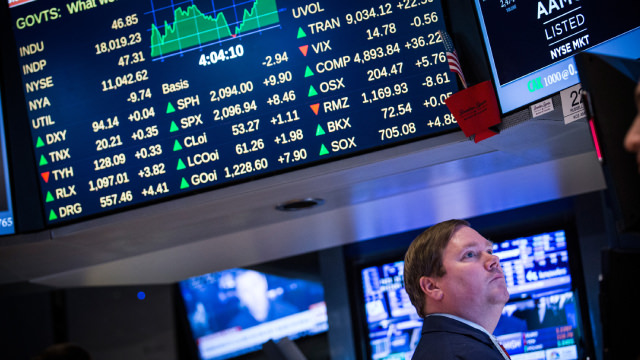
Why Are US-Listed Chinese Stocks Falling On Wednesday?
Benzinga· 2025-04-16 13:15
Group 1: Market Impact - U.S.-listed Chinese companies such as Alibaba, PDD Holdings, Baidu, NIO, Li Auto, and XPeng are experiencing a decline in stock prices due to new tariffs imposed by the Trump administration, which can reach as high as 245% on certain imports [1] - The trade war has led to a selloff of heavily foreign-owned Chinese tech stocks, with e-commerce firms being the most affected by the increased tariffs on small parcels [6] Group 2: Economic Growth and Forecasts - China's GDP grew by 5.4% in the first quarter, surpassing the analyst estimate of 5.2%, driven by consumer subsidies and strong export shipments [2] - Economists from major international banks, including UBS and Goldman Sachs, have reduced their forecasts for China's 2025 growth to approximately 4% or lower, indicating a potential struggle to meet the growth target of around 5% [4] Group 3: Tariff Dynamics - The tariff war began with a 20% tariff imposed by Trump, escalating to 104% and then to 125% in response to China's retaliatory actions, which included raising its tariffs by 84% [5][6] - The tariffs are expected to lead companies to increase product prices to maintain margins, which could negatively impact demand for lower-priced offerings from Chinese companies [5]