
Employment

Search documents
X @The Economist
The Economist· 2026-03-20 17:50
Youth unemployment in Britain overtook the EU average last year, for the first time this millennium. Nearly 1m people aged 16-24 are not in education, employment or training https://t.co/4OWPYlsQFT ...
Challenges and Opportunities for the Youth | A. Myilvaganan IPS | TEDxJeppiaar University
TEDx Talks· 2026-03-19 15:16
I thank professor for the institution for the invitation a warm reception and wonderful audience. Okay. This is an opportunity really given to me to know present something for the generation and uh the topic chosion is very important which is close to my heart.Wherever I go, I used to address one this specific topic uh youth building is one of my uh uh important I focusing on it. Now uh we are going to see uh things about you profile the challenges pos and the opportunities. There is a say that behind every ...


Fed votes to hold rates steady, notes 'uncertain' impacts from Iran war
CNBC Television· 2026-03-18 19:30
Today, the FOMC decided to leave our policy rate unchanged. We see the current stance of monetary policy as appropriate to promote progress toward our maximum employment and 2% inflation goals. The implications of developments in the Middle East for the US economy are uncertain.We will remain attentive to risks to both sides of our dual mandate. ...
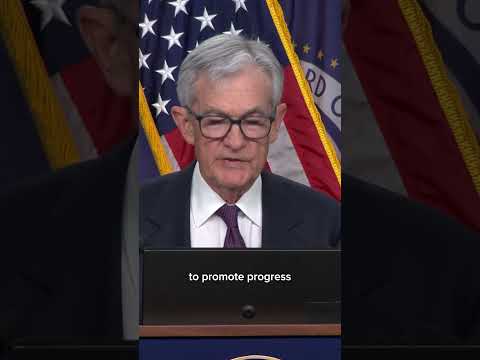
Fed Chair Powell: If no new Fed chair is confirmed by end of my term I will serve as 'chair pro tem'
Youtube· 2026-03-18 19:15
Employment and Inflation - Employment numbers have been revised down, with December showing a loss of 7,000 jobs and February reporting a loss of 92,000 jobs, indicating a greater risk on the employment side compared to inflation [1] - The unemployment rate has remained stable since September, suggesting that both supply and demand for workers have sharply decreased due to immigration policy [2] - Core inflation is currently at 3.0% and headline inflation at 2.8%, which is significantly above the target of 2%, raising concerns about the need to reduce inflation [3] Federal Reserve Leadership - In the event that a successor is not confirmed by the end of the current chair's term, the current chair will continue to serve in a provisional capacity until confirmation [5] - The current chair has no intention of leaving the board until an ongoing investigation is concluded with transparency [6] - A decision regarding continued service as a governor after the term ends will be based on what is deemed best for the institution and its stakeholders [7]
X @Forbes
Forbes· 2026-03-16 17:58
Nearly a quarter of workers over 50 feel like they're being pushed out of their jobs, according to a recent AARP survey. Many also worry that age discrimination will prevent them from landing their next role. These concerns often intensify when facing interview questions that seem designed to highlight age rather than qualifications.Here are six difficult interview questions you might face when you're over 50, along with strategies for answering them effectively: https://t.co/l9iuDUxBag ...
X @Forbes
Forbes· 2026-03-15 08:00
Nearly a quarter of workers over 50 feel like they're being pushed out of their jobs, according to a recent AARP survey. Many also worry that age discrimination will prevent them from landing their next role. These concerns often intensify when facing interview questions that seem designed to highlight age rather than qualifications.Here are six difficult interview questions you might face when you're over 50, along with strategies for answering them effectively: https://t.co/l9iuDUxBag ...
Wednesday's CPI Report Didn't Solve the Fed's Biggest Problem. History Says It's About to Get Worse.
Yahoo Finance· 2026-03-12 18:52
Inflation and Economic Indicators - February's Consumer Price Index (CPI) report showed a year-over-year price increase of 2.4%, aligning with Wall Street expectations, while core inflation was at 2.5% [1] - Rent experienced its smallest monthly increase since January 2021, indicating a potential easing in housing costs [1] - The Producer Price Index (PPI) rose by 0.8% in January, significantly exceeding Wall Street's expectations, suggesting that wholesale prices may soon impact future CPI readings [6] Labor Market Conditions - The U.S. labor market showed signs of weakness, with a loss of 92,000 jobs in February, marking the second negative print in three months [3] - December's job numbers were revised from a gain of 48,000 to a net loss of 17,000, indicating a troubling trend in employment [7] Federal Reserve's Challenges - The Federal Reserve faces a dual challenge of managing inflation and maintaining high employment, a situation that is not commonly encountered [5] - Current economic conditions, including sticky inflation and a deteriorating labor market, complicate the Fed's decision-making process [4]
Andrew Yang on AI's impact on jobs, Anthropic's battle with the Pentagon and NYC Mayor Mamdani
CNBC Television· 2026-03-11 14:12
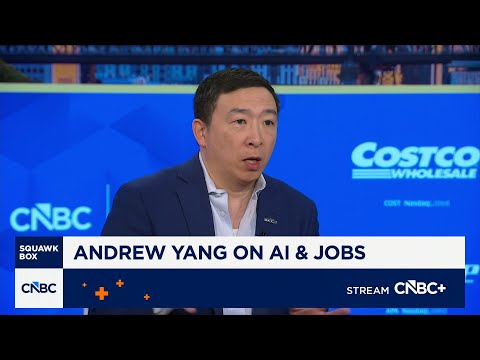
Joining us right now is Andrew Yang. He's the founder and CEO of Noble Mobile, a former Democratic candidate for president and New York City's uh mayor. He's also the author of Hey Yang, Where's My Thousand Bucks, which debuted last month.Good morning to you. You got the book uh right here. We got about a million things uh to talk to you about AI. We want to talk about New York. We're going to talk about taxes.Where do you want to start this morning. Um, I just came from an AI conference out west and holy c ...
Former Cleveland Fed Pres. Mester: High gas prices are salient for people's inflation perceptions
Youtube· 2026-03-11 14:08
Core Insights - The recent Consumer Price Index (CPI) data aligns with expectations, indicating stability in the economy, but does not significantly alter the outlook for inflation or economic trends [1][2][3] Inflation and Economic Impact - The ongoing war and its implications for inflation and the real economy are critical for the Federal Reserve's future decisions [3][5] - The Fed must consider various scenarios regarding the war's duration and the potential for sustained high energy prices, which could affect inflation and economic growth [5][6] - The impact of oil price shocks on growth may be less severe than in previous decades due to the U.S. being a net energy exporter and improved energy efficiency [7] Supply and Demand Dynamics - High oil prices create supply constraints that necessitate careful balancing of demand and supply, especially with fiscal stimulus measures in play [8][9] - The Fed must avoid underestimating the potential for lasting inflation stemming from supply and demand imbalances, particularly as consumer perceptions of inflation are influenced by rising gasoline prices [9][10] Fed's Current Position - The Fed is currently in a position to maintain its policy stance, with no immediate signs of significant labor market weakening, allowing for a wait-and-see approach [11][12] - Inflation remains above the Fed's target for an extended period, which could lead to less stable inflation expectations, necessitating a focus on inflation management in the near term [13][14]

X @The Wall Street Journal
The Wall Street Journal· 2026-03-08 05:27
A rough February jobs report exposed just how much the U.S. has relied on health workers. Here’s a look at some of the key trends in the latest Labor Department Report. https://t.co/JGyDoXXt3G https://t.co/ZBxd1ZmHBF ...