Generative Artificial Intelligence (AI)

Search documents
Retail Investors Love Palantir Stock. Wall Street Experts Don't. Who's Right?
Yahoo Finance· 2025-09-09 09:52
Core Insights - Palantir Technologies (NASDAQ: PLTR) is highly favored among retail investors, ranking as the seventh-most owned stock on Robinhood Markets despite not being in the top 25 U.S.-listed companies by market cap [1] Group 1: Retail Investor Sentiment - Retail investors have significantly driven Palantir's stock momentum, resulting in over 106% return year-to-date [2] - Despite warnings from Wall Street analysts regarding the sustainability of the current stock price, the stock continues to rise, leading to a bearish outlook among analysts, with only seven out of 29 rating it a buy or equivalent [2][7] Group 2: Business Growth and Strategy - Palantir is leveraging generative artificial intelligence (AI) to enhance its commercial business and secure large government contracts, which provide a stable revenue base [4] - The launch of its Artificial Intelligence Platform (AIP) in 2023 has been a significant growth driver, enabling users to interact with the software using natural language, thus broadening its user base [5] Group 3: Financial Performance - In the most recent quarter, Palantir reported a 48% increase in sales, with U.S. commercial revenue soaring by 93%, and an adjusted operating margin expansion to 46% from 44% [6] - The company's Rule of 40 score, which combines revenue growth rate and operating margin, stands at 94, indicating strong financial health [6] Group 4: Valuation Concerns - While Palantir's share price has more than doubled in 2025, concerns persist regarding its inflated valuation despite strong revenue growth and expanding operating margins [8]

1 Nuclear Energy Stock Up Over 900% in the Past 365 Days
The Motley Fool· 2025-08-26 07:05
Core Insights - Investor interest in nuclear energy stocks, particularly Oklo, has surged significantly, with Oklo's stock rising 940% over the past year due to various catalysts [3][4][5] Group 1: Market Dynamics - Nuclear energy investments, once considered a niche market, are now gaining traction as AI companies invest heavily in data center infrastructure to meet power demands [3] - Oklo has successfully grown its backlog, receiving letters of intent for up to 750 megawatts of power for data centers and an agreement to deploy 12 gigawatts of projects through 2044 [4] Group 2: Regulatory and Political Factors - The rise in Oklo's stock is also supported by executive orders signed by President Donald Trump aimed at promoting the nuclear energy industry [5] Group 3: Future Prospects - Oklo's stock could continue to rise if the company makes progress toward obtaining necessary certifications from the U.S. Nuclear Regulatory Commission and secures more agreements with data center companies [6] - Despite the potential for continued growth, Oklo is currently not generating revenue, and there is uncertainty regarding future profitability [7]


Amazon Eliminates Hundreds of Cloud Computing Jobs
PYMNTS.com· 2025-07-17 19:39
Core Insights - Amazon has cut hundreds of jobs in its Amazon Web Services (AWS) division, a decision made after a thorough review of organizational priorities [2][3] - The layoffs are part of a broader trend among tech giants, including Microsoft and Meta, who have also announced job cuts this year [5] - CEO Andy Jassy indicated that the adoption of generative AI would lead to workforce reductions, emphasizing the need for employees to adapt to AI technologies [6][7] Job Cuts Details - The layoffs occurred on July 17, with employees receiving notifications via email that their roles were eliminated [4] - At least one group, referred to as "specialists," who assist customers in product development and service sales, was affected by the cuts [4] - Amazon stated that the job cuts were not directly related to AI but were a result of a review aimed at streamlining operations [3] Future Workforce Strategy - Jassy has communicated that employees proficient in AI will be better positioned for future roles within the company [6] - The company continues to hire in other areas, indicating a focus on innovation and resource optimization despite the layoffs [3] - Research indicates that a significant portion of the workforce perceives generative AI as a risk for job displacement, with 54% expressing concerns about widespread job loss [7]

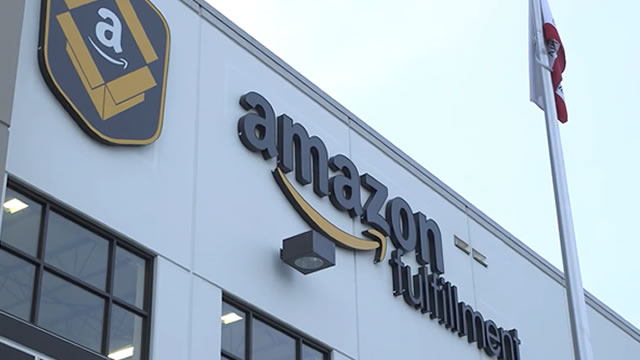
Will $5,000 Invested in Amazon Stock Make You $100,000 in a Decade?
The Motley Fool· 2025-06-14 08:12
Group 1: Stock Performance and Analyst Sentiment - Amazon's stock has decreased by 3% year to date, while the S&P 500 has increased by 3% [1] - Analysts have a median target price of $240 per share for Amazon, indicating a potential upside of 13% from the current price of $212 [1][2] Group 2: Market Position and Growth Potential - Amazon holds a strong position in e-commerce, advertising, and cloud computing, being the largest online retailer by revenue and the largest public cloud provider [4] - The company is expected to achieve double-digit sales growth annually through the end of the decade, driven by the expansion of its core industries [5][6] Group 3: Profitability and Margin Improvement - Amazon's advertising and cloud computing segments are experiencing double-digit sales growth, while retail segments are growing at a slower pace [7] - The company is developing over 1,000 generative AI applications to enhance operational efficiency, which is expected to improve profit margins over time [5][8] Group 4: Long-term Investment Outlook - Despite potential challenges from tariffs affecting a significant portion of its marketplace sellers, Amazon has a history of navigating complex environments successfully [8] - The company is projected to see earnings growth of 10% annually through 2026, although current valuations may appear high at 35 times earnings [8] - Amazon has outperformed the S&P 500 by 40 percentage points over the last three years, with expectations for continued outperformance [10]

Can $10,000 Invested in Amazon Stock Turn Into $1 Million by 2035?
The Motley Fool· 2025-06-07 08:43
Core Insights - Amazon has established itself as a dominant player in the e-commerce sector, accounting for 40% of all U.S. e-commerce sales, significantly ahead of competitors like Walmart, which holds about 6% [4] - The company is continuously enhancing its platform and logistics to maintain its competitive edge and improve delivery speeds, achieving record same- or next-day delivery rates in Q1 2025 [5] - Amazon's growth is driven by its cloud services (AWS) and generative AI offerings, positioning it well for future market shifts as 85% of global IT spending remains off the cloud [6][7] Growth Drivers - Amazon's advertising segment is its fastest-growing area, with a 19% year-over-year increase in Q1, alongside new opportunities in ad-supported streaming and third-party outlets [9] - The company is exploring new industries such as physical retail and healthcare, demonstrating its ability to identify and dominate emerging markets [9] Investment Potential - While Amazon has historically provided substantial returns, turning a $10,000 investment into $1 million (a 10,000% increase) is unlikely given its current size and growth rate, which has slowed over time [10][11] - The stock has increased by 840% over the past decade, but future growth rates are expected to be lower due to the company's larger market base [11] - Even a hypothetical 10-fold increase in stock price would imply a market cap exceeding $21 trillion, suggesting an unrealistic compound annual growth rate of 26% [12] Conclusion - Amazon remains a highly recommended stock with growth prospects for shareholders, but it is not expected to deliver the extraordinary returns typical of younger growth stocks [13]

2 No-Brainer Warren Buffett Stocks to Buy Now
The Motley Fool· 2025-05-10 10:45
Core Insights - Warren Buffett plans to retire this year after achieving over 5,000,000% return for long-term investors through Berkshire Hathaway, which has a market capitalization of $1.12 trillion, indicating that future growth may not replicate the past six decades [1] Group 1: Amazon - Berkshire Hathaway owns $1.89 billion in Amazon shares, representing 0.7% of its portfolio, highlighting Buffett's late recognition of Amazon's potential [3] - Amazon's economic moat is significant, with its size attracting more buyers and sellers, enhancing competition and product variety, while also achieving economies of scale in logistics [4] - Amazon Web Services (AWS) contributes around half of Amazon's operating income, providing a buffer against consumer spending fluctuations and positioning the company to benefit from long-term growth in generative AI [6] - Challenges from new tariffs may impact Amazon, but its third-party business model can mitigate these effects by shifting costs to marketplace sellers [5] Group 2: BYD - Berkshire Hathaway has a $2.68 billion stake in BYD, showcasing its support for the Chinese EV maker since 2008, which has established a strong economic moat [7] - BYD's vertical integration allows it to control its supply chain, from battery production to lithium mining, enabling cost reduction and rapid production scaling [8] - BYD became the top-selling EV brand globally in 2024 with revenue of $107 billion, surpassing Tesla [8] - Despite heavy tariffs limiting BYD's entry into the U.S. market, the company aims to double international sales to 800,000 by 2025 through local manufacturing [9] - BYD's shares have a forward P/E of 21, making them relatively affordable compared to Tesla's forward P/E of 127 [10] Group 3: Berkshire Hathaway's Cash Position - Berkshire Hathaway holds a record cash pile of $334 billion as of the end of 2024, following the sale of $134 billion in stocks last year, indicating a cautious investment strategy [11] - Buffett's defensive posture may reflect concerns about overall market volatility, particularly related to trade policies [12]


Could Investing $10,000 in Amazon Stock Make You a Millionaire?
The Motley Fool· 2025-05-02 07:50
Core Insights - Amazon's stock is down 14% in 2025, significantly underperforming the S&P 500, which is down 6% [1] - Current valuations for Amazon stock are the lowest in over a decade, presenting a potential investment opportunity [2] - Amazon holds a dominant position in e-commerce, accounting for approximately 38% of U.S. e-commerce sales [2] Group 1: Business Strategy and Growth - Amazon is actively restructuring its distribution channels and utilizing robotics to enhance fulfillment efficiency, achieving a 25% faster processing rate and expected 25% cost savings [3] - The e-commerce sector continues to grow, and Amazon's ongoing product additions and delivery improvements make it an attractive option for consumers transitioning to online shopping [4] - Significant investments in generative AI, with expectations to spend over $100 billion this year, are seen as a major growth driver for Amazon Web Services (AWS) [4][5] Group 2: Financial Performance - Despite a slowdown in sales growth, Amazon reported an 11% increase in sales for 2024, with operating income rising by 86% [6] - Amazon's stock is currently trading at a price-to-earnings (P/E) ratio of 34, just above a 10-year low, indicating potential value for investors [10] Group 3: Market Challenges - New tariffs pose a risk to Amazon's business, particularly affecting sellers from China, which could impact Amazon's online store performance [7][8] - Amazon's diversified supply chain and business segments, such as AWS and advertising, provide some protection against the negative effects of tariffs [9]

Stock Market Sell-Off: The Best Warren Buffett Stock to Buy Now
The Motley Fool· 2025-04-23 11:35
Core Viewpoint - Amazon is positioned as a strong long-term investment opportunity, particularly in the context of its competitive advantages and growth in cloud computing through AWS [1][3]. Company Analysis - Warren Buffett's investment in Amazon began in 2019, with Berkshire Hathaway now holding approximately $1.7 billion in shares, after initially passing on opportunities in the 1990s [2]. - Amazon's competitive advantages include its scale, which allows for cost efficiencies and a network effect that attracts more customers and merchants [4]. - The company leads in cloud computing with AWS, holding a 30% global market share, and is leveraging this position to become a leader in generative AI [5]. Financial Performance - Amazon's first-quarter revenue increased by 10% year over year to $187.7 billion, driven by strong performance in AWS [6]. - The fourth-quarter operating income rose by 61% to $21.2 billion, with about half of this income coming from the AWS segment [9]. - Amazon is implementing cost-cutting measures, including the reduction of approximately 14,000 managerial positions, aiming to save between $2.1 billion and $3.6 billion annually [9]. Market Challenges - The company faces near-term challenges from macroeconomic uncertainties, including potential impacts from tariffs that could affect consumer prices and demand [10]. - Despite these challenges, Amazon's reliance on AWS provides a buffer against tariff-related uncertainties, and its forward price-to-earnings multiple of 26 suggests a valuation that reflects these risks [11].

Nasdaq Bear Market: 3 Unstoppable Stocks You Can Buy With $300 Right Now
The Motley Fool· 2025-04-14 07:06
Core Viewpoint - The recent volatility in Wall Street, driven by tariff and trade uncertainties, has created opportunities for investors to capitalize on industry leaders during a bear market, particularly with a small investment amount like $300 [1][3][4]. Market Overview - The Dow Jones Industrial Average, S&P 500, and Nasdaq Composite experienced significant fluctuations, with the Nasdaq entering a bear market, sitting 18.8% below its all-time high as of April 10 [2][3]. - The Nasdaq's volatility included its largest single-session point gain followed by one of its largest declines, indicating extreme market conditions [2]. Investment Opportunities Alphabet (GOOGL) - Alphabet, the parent company of Google, YouTube, and Google Cloud, is highlighted as a strong investment despite concerns over a potential recession impacting advertising revenue, which constitutes 75% of its sales [6][7]. - Historically, U.S. recessions have been short-lived, and Alphabet's dominant market position in internet search (89% to 93% share) supports its advertising pricing power [8][9]. - The growth of Google Cloud and its cash-rich balance sheet ($95.7 billion) position Alphabet well for future investments and stock buybacks, making it an attractive buy at a forward earnings multiple of 15 times [10][11][12]. AstraZeneca (AZN) - AstraZeneca is presented as a resilient investment in the pharmaceutical sector, which remains stable during market volatility due to consistent demand for medications [13][14]. - The company has shown strong sales growth across its core areas, particularly in oncology (24% growth) and cardiovascular (20% growth) sectors [15]. - AstraZeneca's acquisition of Alexion Pharmaceuticals enhances its portfolio in rare diseases, providing pricing power and long-term cash flow stability, with the stock trading at less than 11 times forecast EPS [16][17]. The Trade Desk (TTD) - The Trade Desk, an adtech company, is noted for its potential despite the challenges posed by market volatility and recession fears affecting advertising budgets [18][19]. - The company is positioned to benefit from the shift towards digital advertising, with expected revenue growth of around 20% annually and a historically low valuation at 22 times forward-year EPS [21][23]. - The adoption of Unified ID 2.0 technology by digital companies enhances The Trade Desk's role in the evolving advertising landscape, particularly in connected TV platforms [22].




Why Amazon, Walmart, and Target Stocks Dropped More Than 10% in March
The Motley Fool· 2025-04-02 11:14
Core Insights - The stocks of Amazon, Walmart, and Target fell over 10% last month due to market concerns over tariff discussions, with the S&P 500 dropping 5% in March [1][2] - Target experienced the largest decline at 16%, struggling with decreased discretionary spending and profitability, while Amazon and Walmart, despite their declines, have other business segments that may mitigate tariff impacts [3][4] Company Performance - Target's comparable sales increased by 1% in fiscal 2025, but its earnings per share (EPS) dropped by 19%, indicating ongoing challenges in generating sales and profitability [3] - Amazon's sales growth was driven by a 19% increase in AWS sales, contributing to an overall company sales growth of 11% [4] - Walmart's sales increased by 5.1% in fiscal 2025, with EPS up 13%, benefiting from its strong grocery segment and e-commerce growth [5] Investment Opportunities - All three companies are viewed as potential additions to investment portfolios, with Amazon offering exposure to AI and e-commerce, Walmart as a solid value play, and Target as a turnaround opportunity [6] - Currently, Amazon and Target stocks are trading at discounts to their average P/E ratios, while Walmart is not considered cheap by its historical standards [7] Market Outlook - Despite short-term disturbances due to economic volatility, all companies are expected to absorb tariff impacts and potentially rebound strongly in the long term [8][9]