Neutral Rate

Search documents
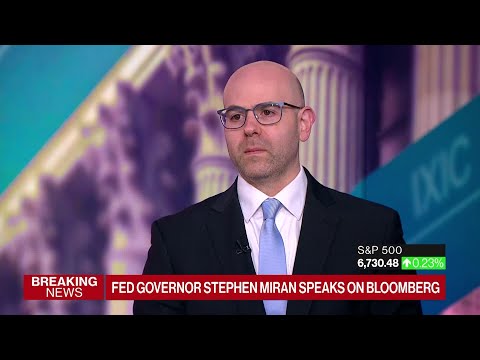
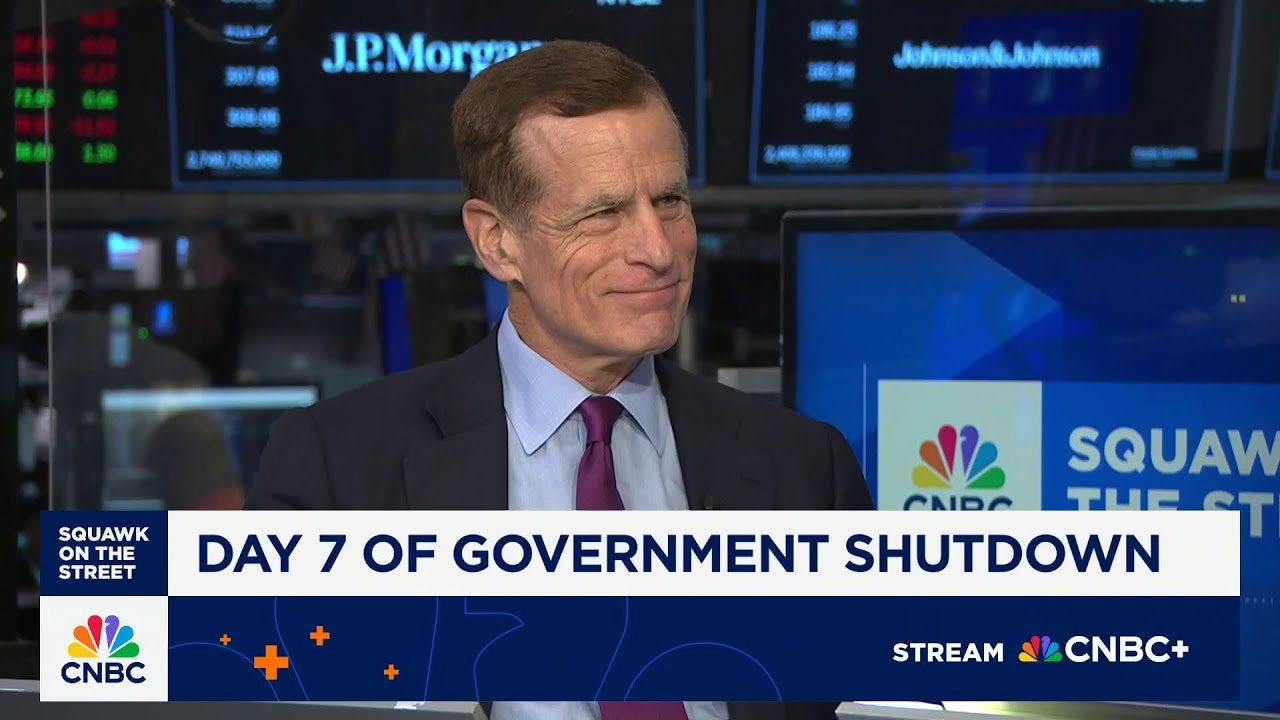
Fed's Stephen Miran Sees Neutral ‘Quite a Ways Below' Current Policy
Youtube· 2025-11-03 13:04
Core Viewpoint - The Federal Reserve's current monetary policy is considered too restrictive, with a neutral rate that is believed to be significantly lower than the current policy stance [1][2][14]. Group 1: Monetary Policy and Economic Outlook - The argument for maintaining a less restrictive policy is based on a more optimistic view of inflation compared to other committee members, suggesting that prolonged restrictive policies could lead to an economic downturn [2][16]. - The concept of "passive tightening" is introduced, indicating that as neutral rates shift, the existing policy can become tighter without any active changes [14][15]. - The discussion highlights that financial market conditions may appear easier, but this does not necessarily reflect the true stance of monetary policy, as various factors influence market dynamics [4][7][8]. Group 2: Financial Conditions and Market Dynamics - Financial conditions affecting housing and private credit markets are noted to be tighter, contrasting with the perception of easier conditions in stock markets [8][31]. - The impact of alternative data on the labor market is acknowledged, suggesting that it indicates a decline in demand, which aligns with the view that current policy is too tight [28][30]. - Concerns are raised about the potential for unrecognized distress in private markets, which could signal broader issues related to the restrictive stance of monetary policy [31][33].

Fed’s Stephen Miran Sees Neutral ‘Quite a Ways Below’ Current Policy
Bloomberg Television· 2025-11-03 13:04
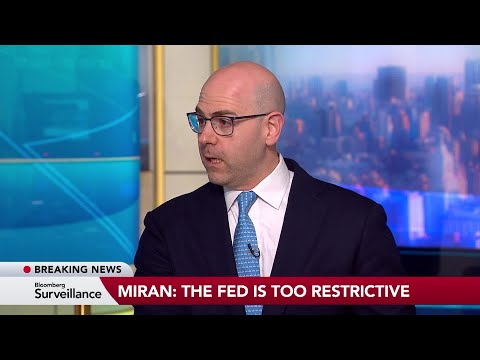
Monetary Policy Stance - The Fed is considered too restrictive, with neutral rates significantly below current policy [1] - Maintaining a restrictive policy for an extended period risks causing an economic downturn [2][16] - Financial markets are influenced by various factors beyond monetary policy, including technological advancements [4][5] - It's a mistake to automatically infer the stance of monetary policy solely from financial conditions [7] - Housing market conditions are tighter and have a greater impact on the economy's cyclical position than the stock market or credit spreads [8] - Policy passively tightened through 2025 due to shocks driven by economic policies outside the Fed, pushing neutral rates higher last year and lower this year [9][10][14] Neutral Rate and Economic Factors - Population growth rate is a major driver of neutral rates, experiencing 30 years' worth of change in only three years [11][12][13] - Changes in neutral rate accelerate over time, impacting the stance of monetary policy [14][15] Data Dependency and Economic Forecasts - Being excessively data-dependent makes the analysis backward-looking; forecasts should be prioritized [23] - Confidence in forecasts is high due to known shocks like population growth, minimizing the need for data dependency [24] - Alternative data on the labor market indicates a continual ebbing of demand, signaling that policy is too tight [27][28] Private Credit Market - Distresses in private markets suggest financial conditions have been tighter than perceived [9][31] - Uncorrelated credit problems can indicate a restrictive monetary policy [33][34]
Fed ‘Chorus’ Comes Out Against Latest Cut, Citing Inflation
Yahoo Finance· 2025-10-31 20:38
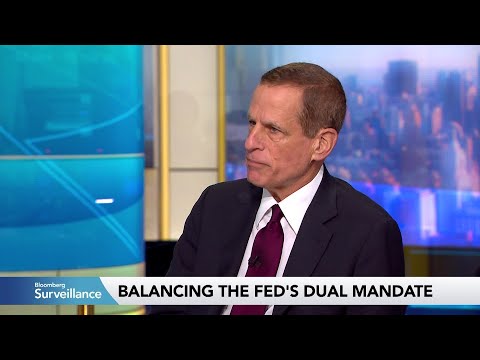
Core Viewpoint - Three Federal Reserve officials expressed their opposition to the recent interest rate cut, citing persistent inflation concerns [1][2][3] Group 1: Officials' Opinions - Dallas Fed President Lorie Logan and Cleveland Fed President Beth Hammack preferred to maintain current rates rather than cut them [2][3] - Kansas City Fed President Jeff Schmid also dissented against the rate cut, emphasizing the need to address inflation [2][3][8] - Logan indicated that further rate cuts in December would be challenging without clear evidence of falling inflation or a cooling labor market [4][5] Group 2: Market Reactions - The recent rate cut by the Fed, a quarter percentage point for the second consecutive month, was influenced by concerns over a slowdown in hiring [5] - Following the rate cut announcement, there was a significant adjustment in the bond market, as investors had anticipated another cut in December [6] Group 3: Future Outlook - The upcoming six weeks are expected to feature intense discussions among Fed officials regarding the balance between supporting the labor market and controlling inflation [3] - The debate includes differing views on the neutral rate, which is the interest rate level that neither stimulates nor restrains economic growth [9]
Fed Getting Closer to Neutral Rate, Says Goldman's Kaplan
Bloomberg Television· 2025-10-28 16:42
Let's talk about the data if we can. You're in a position now where you've got a ton of data yourself. What's it like at the Federal Reserve.Just this idea of flying blind without having that official data. What does that mean. On the margin, they can still use private sources and they can talk to businesses.The sense is that hiring is sluggish. I think you hear that from business. You also hear from business.We're not we may be belt tightening, but we're not firing significantly either. And so the reason t ...
X @Investopedia
Investopedia· 2025-10-17 22:30
Economists and Fed officials are divided on the neutral rate, a critical factor that could determine the future of borrowing and economic growth. https://t.co/jMLwXc54lk ...
Fed Governor Christopher Waller with Bloomberg's Tom Keene at CFR (Full Q&A)
Youtube· 2025-10-16 18:46
Group 1 - The Federal Reserve (Fed) is criticized for groupthink, where policy decisions often result in unanimous votes, suggesting a lack of diverse opinions [1][4][6] - Public speeches by Fed officials are seen as a way to express differing views on policy, which is beneficial for demonstrating diversity of opinion [2][3] - The need for compromise in decision-making is emphasized, as the Fed must make consistent policy decisions every six weeks [3][4] Group 2 - The Fed's approach to dissent is discussed, with some advocating for more open disagreement to reflect independent views within the committee [6][7][95] - The historical context of consensus voting during the Greenspan era is noted, where unanimous votes were seen as a sign of clear policy direction [6][40] - The Fed's balance sheet and quantitative tightening are addressed, indicating a return to ample reserves and the need to adjust the composition of the balance sheet post-quantitative easing [25][27] Group 3 - The current labor market dynamics are analyzed, highlighting a decline in labor demand masked by a decrease in labor supply, leading to potential misinterpretations of unemployment rates [10][12][15] - The impact of immigration on labor supply and demand is discussed, with a focus on how it affects employment and wage trends [10][11][13] - The relationship between technological advancements and labor productivity is examined, suggesting that while jobs may be lost, new opportunities typically arise [60][64][66] Group 4 - The Fed's stance on fiscal policy is clarified, indicating that while it does not directly influence fiscal decisions, unsustainable deficits could have long-term implications for monetary policy [53][55] - The discussion includes the challenges posed by income inequality and how it complicates the Fed's ability to address specific economic disparities [71][72] - The potential effects of tariffs and trade policies on U.S. competitiveness in manufacturing are acknowledged, with a recognition of the complexities involved in reshoring jobs [75][78]

Australia's central bank sees signs of financial conditions loosening after rate cuts
Yahoo Finance· 2025-10-15 21:16
Core Insights - The Reserve Bank of Australia (RBA) is observing signs of loosening financial conditions following three interest rate cuts this year, with credit becoming more accessible for households and businesses [1][2] - Recent economic data has shown stronger-than-expected results, with disinflationary trends stalling and consumer spending remaining robust, particularly in the housing market where prices have reached record highs [2] - The RBA Assistant Governor Christopher Kent expressed skepticism about the concept of a neutral interest rate, indicating that estimates vary widely and that current cash rates may not provide clear guidance on monetary policy [3] Financial Indicators - The RBA is monitoring various financial indicators, including banks' funding costs, household credit, and business debt, which are beginning to show responses to the recent rate cuts [4]
X @Bloomberg
Bloomberg· 2025-10-09 08:03
Interest Rate Analysis - The report focuses on "discovering the true neutral rate" [1] - The industry is concerned with understanding the equilibrium interest rate that neither stimulates nor restrains economic growth [1]
Goldman Sachs' Robert Kaplan: Expectations for economic re-acceleration are reasonable
Youtube· 2025-10-07 15:50
Economic Impact of the Shutdown - The current economic slowdown is influenced by the government shutdown, but the market is primarily driven by expectations of future tech investments and regulatory relief [1][2] - There is a mismatch in the job market, with many open positions in sectors like construction, but a lack of qualified candidates willing to take those jobs [3] Inflation Trends - Inflation is currently running above the target rate, with services inflation remaining particularly high due to factors like rents and a tight labor market [4][5][6] - The impact of tariffs is expected to intensify, leading to margin erosion for companies, especially small businesses reliant on imports [7][8][9] Federal Reserve's Position - The Federal Reserve is advised to be cautious with further rate cuts given the inflation levels, with the neutral rate estimated to be around 3.5% to 3.75% [10][11][12] - The ongoing inflation is seen as a regressive tax affecting lower-income workers, who have lost significant purchasing power [12][13]
Fed's Miran Says He's Ready to Change His View on Inflation If Housing Jumps
Bloomberg Television· 2025-10-03 14:48
Monetary Policy & Economic Data - The FOMC (Federal Open Market Committee) typically meets every six weeks to vote on monetary policy [3] - Access to high-quality data is crucial for monetary policy decisions, but decisions aren't made daily [2] - The industry emphasizes forward-looking policies, considering future expectations for inflation and output gap [4][17] - Financial conditions are the channel through which monetary policy operates [27] - Monetary policy works with lags, making it inappropriate to solely rely on backward-looking data [16][17] Inflation & Housing - The industry expects a significant disinflation in the services component of inflation indices, driven by shelter costs [7] - Housing costs, particularly rent surges and shelter cost increases, are a major component of inflation indices [5][6] - Immigration shocks have impacted housing rents, initially pushing them up and potentially reversing to negative net migration [35] - Services inflation, particularly driven by housing/shelter costs, is considered the most persistent and sticky part of inflation [33] Neutral Rate & Economic Growth - The speaker's conception of the neutral rate is around 05% (a half), based on a weighted average of model-implied and market-implied rates [9] - Policies like deregulation can expand the potential output of the economy faster than actual output, creating a positive output gap [13][14] - Fiscal deficits in February through August are about $400 billion at an annualized rate below the comparable period in the previous fiscal year [28] Tariffs & Trade - The elasticity of demand in imports is much higher than the elasticity of supply, suggesting foreign producers bear the burden of tariffs [40] - Flat import prices could be due to a weaker dollar offsetting the decrease in dollar prices from tariffs [45] - The speaker compares prices of import-intensive core goods to overall core goods to assess the impact of tariffs on inflation [54]