
Oil price fluctuations

Search documents
Asia shares are mixed following Wall Street's losses, as oil edges lower
ABC News· 2026-03-06 07:18
Market Overview - Asian shares exhibited mixed performance following a mild retreat on Wall Street, with South Korea's Kospi index experiencing significant volatility, including a 12% loss on Wednesday and a nearly 10% rebound on Thursday [2][3] - The Nikkei 225 index in Tokyo gained 0.4%, while Hong Kong's Hang Seng jumped 1.6%. Conversely, Australia's S&P/ASX 200 declined by 1.1% [3] Oil Market Dynamics - Oil prices fell more than $1 after reaching the highest levels since summer 2024, with U.S. crude dropping 1.2% to $80.07 per barrel and Brent crude losing 1% to $84.59 per barrel [4] - Analysts noted that if oil prices were to spike to $100 per barrel and remain there, it could pose significant challenges for the global economy [5] - A temporary waiver from the U.S. allowing Indian refiners to purchase Russian oil was seen as a factor in the easing of crude prices, although it was not considered a major game-changer [6] Financial Market Reactions - The S&P 500 and Dow Jones futures showed slight gains amid ongoing geopolitical tensions, with the S&P 500 futures up 0.2% and Dow futures up 0.3% [2] - Airline stocks faced significant losses due to rising fuel costs linked to higher oil prices, with American Airlines down 5.4%, United Airlines down 5%, and Delta Air Lines down 3.9% [8] Currency and Precious Metals - The U.S. dollar strengthened against the Japanese yen, rising to 157.80 from 157.56, while the euro remained unchanged at $1.1611 [9] - Prices for gold and silver increased, with gold rising by 1.1% and silver climbing by 2.7% [10]



Crude Oil Prices Surge as Iran War Upends Global Crude Flows
Yahoo Finance· 2026-03-05 20:19
Group 1: OPEC+ Production Changes - OPEC+ plans to increase crude output by 206,000 bpd in April, exceeding estimates of 137,000 bpd, as part of efforts to restore a total of 2.2 million bpd production cut made in early 2024, with nearly 1.0 million bpd still to be restored [1] - OPEC's January crude production decreased by 230,000 bpd to a five-month low of 28.83 million bpd [1] Group 2: Geopolitical Events Impacting Oil Supply - An intercepted Iranian drone caused a significant fire at Fujairah, a major oil-trading hub, and Iranian drone attacks led to the shutdown of Saudi Arabia's Ras Taura refinery, which has a capacity of 550,000 bpd [2] - The closure of the Strait of Hormuz has halted most energy shipments from the Persian Gulf, with Iran's Islamic Revolutionary Guard Corps warning ships of potential risks, leading to stockpiling of crude by Gulf producers [3] - Goldman Sachs estimates a real-time risk premium for crude oil at $18 per barrel due to the impact of a six-week halt to tanker traffic in the Strait of Hormuz [3] Group 3: Price Movements and Market Reactions - Crude oil and gasoline prices surged, with crude reaching a 19.5-month high and gasoline a 1.75-year high, driven by ongoing conflict in the Middle East and the closure of the Strait of Hormuz [4] - China's directive to suspend diesel and gasoline exports due to the escalating conflict is expected to tighten global fuel supplies, further increasing fuel prices [4] Group 4: Supply Dynamics and Storage - Approximately 290 million barrels of Russian and Iranian crude are currently in floating storage, over 50% higher than a year ago, due to blockades and sanctions [5] - Venezuelan crude exports increased to 800,000 bpd in January from 498,000 bpd in December, contributing to a rise in global oil supplies [6] Group 5: US Production and Inventory Reports - The EIA raised its 2026 US crude production estimate to 13.60 million bpd and energy consumption estimate to 96.00 quadrillion btu [7] - The latest EIA report indicated that US crude oil inventories were 2.7% below the seasonal five-year average, while gasoline inventories were 4.4% above [10] - The number of active US oil rigs fell by 2 to 409 rigs, remaining just above a 4.25-year low [11]
Oil to hold near $80 amid Strait of Hormuz threats - Analyst
Youtube· 2026-03-02 08:46
Core Insights - Crude oil prices are surging, with Brent crude trading above $78 a barrel, reflecting market reactions to geopolitical tensions in the Strait of Hormuz [3][24] - The Strait of Hormuz is a critical transit route for oil, with approximately 30 million barrels per day passing through, accounting for about 31% of global seaborn oil flows [2][4] - Analysts express caution regarding the energy market, noting that while there have been no direct hits to energy infrastructure, sporadic attacks on tankers and ports are causing disruptions [5][8] Oil Market Dynamics - The current oil price stabilization around $80 is attributed to the lack of direct attacks on energy infrastructure, although the situation remains volatile due to regional tensions [4][10] - Saudi Arabia has implemented contingency plans to transport oil through alternative routes, such as the East-West pipeline, but significant volumes remain at risk due to logistical challenges [6][20] - OPEC Plus has agreed to a modest output increase of 26,000 barrels per day, but logistical issues and production capacity constraints limit the effectiveness of this decision [19][22] Geopolitical Risks - The potential for Iran to formally close the Strait of Hormuz is considered low, as it would provoke a strong military response from the US and Israel [7][24] - Despite the low likelihood of a complete closure, the market remains cautious due to the risk of sporadic attacks on shipping, which can disrupt oil flows [8][9] - Analysts are monitoring the situation closely, as any significant damage to energy infrastructure could lead to a spike in oil prices, with some forecasts suggesting prices could reach $100 per barrel under sustained conflict conditions [24][25] Future Scenarios - The possibility of regime change in Iran could lead to an increase in Iranian oil exports, which currently stand at 1.5 million barrels per day primarily to China [16][18] - If sanctions are lifted, Iranian oil could return to European markets, altering trade dynamics and potentially increasing competition for oil supplies [17][18] - The medium-term outlook includes scenarios where Iranian oil production could increase, but significant investment and time would be required to achieve higher export levels [16][17]
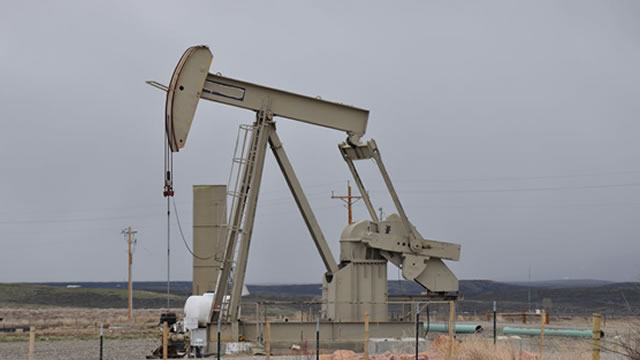
Should You Buy Occidental Petroleum Stock Before Feb. 18?
The Motley Fool· 2026-02-16 08:14
Core Viewpoint - Occidental Petroleum is expected to report its fourth-quarter and full-year earnings on February 18, which could act as a catalyst for its stock price [1] Group 1: Recent Performance - In the third quarter, Occidental Petroleum reported strong financial results, with oil and gas output reaching nearly 1.5 million barrels of oil equivalent per day, exceeding guidance [4] - The company achieved an adjusted net income of $0.64 per share, surpassing analysts' consensus estimate by $0.12 [4] - Higher oil and gas prices contributed to the strong performance, with oil sold at an average of $64.78 per barrel, a 2% increase from the previous quarter, and natural gas prices up 11% [5] Group 2: Market Reactions and Expectations - Despite strong quarterly results, Occidental's stock price showed minimal movement post-earnings, dipping initially before rising over 10% in January due to oil price increases and strategic progress [7] - Analysts predict a challenging fourth quarter for Occidental, with oil prices declining by about 10%, leading to a consensus earnings estimate of only $0.19 per share [9] - Historically, Occidental has beaten analysts' estimates for three consecutive quarters, suggesting the potential for a positive surprise in the upcoming report [10] Group 3: External Factors Influencing Stock Price - Changes in oil prices are currently more significant for Occidental's stock than earnings reports, with potential supply disruptions related to Iran possibly driving crude prices higher [11] - Military action against Iran could lead to a surge in crude prices, positively impacting Occidental's stock [11] - Investors may consider purchasing Occidental shares before the earnings report if they anticipate a spike in oil prices [12]


Oil falls nearly 2% after Trump signals he could hold off on attacking Iran
CNBC· 2026-01-14 20:54
Group 1 - Oil prices fell more than 2% following President Trump's indication that he might not attack Iran, with U.S. crude oil dropping by $1.81 (2.96%) to $59.34 per barrel and Brent crude decreasing by $1.84 (2.81%) to $63.63 per barrel [1][2] - The oil market reacted positively to Trump's comments about the cessation of killings in Iran, interpreting them as a sign that military action may not be imminent [2] - Iran, as a significant crude oil producer and OPEC member, is under scrutiny as social unrest could potentially disrupt oil supplies, especially with reports of large-scale demonstrations and government crackdowns [3]

Crude Prices Sharply Lower on Prospects of Larger Global Oil Supplies
Yahoo Finance· 2025-09-29 19:22
Group 1: Crude Oil and Gasoline Prices - November WTI crude oil closed down -2.27 (-3.45%) and November RBOB gasoline closed down -0.0471 (-2.37%) due to expectations of increased crude production from OPEC+ [1] - OPEC+ is considering raising its crude output level by +137,000 bpd starting November 1, which is expected to boost global oil supplies [1] - The outlook for higher crude production in Iraq, with a potential addition of 500,000 bpd to global markets, is also bearish for crude prices [2] Group 2: Demand and Supply Dynamics - Reduced crude demand from India, with August imports falling -2.9% y/y to 19.6 MMT, negatively impacts oil prices [3] - An increase in crude oil held on stationary tankers rose by +3.7% w/w to 81.95 million bbl, indicating a bearish trend for oil prices [3] Group 3: Geopolitical Factors - Concerns over the ongoing war in Ukraine may lead to additional sanctions on Russian energy exports, potentially reducing global oil supplies [4] - Ukraine's increased attacks on Russian refineries have curbed Russian crude exports, tightening global oil supplies, with flows dropping to 1.94 million bpd in early September, the lowest in over 3.25 years [5]
Crude Oil Prices Rally on Russian Tensions and Tighter EIA Inventories
Yahoo Finance· 2025-09-24 19:36
Group 1: Ukraine's Impact on Oil Prices - Ukraine has intensified attacks on Russian oil infrastructure, leading to a reduction in Russian crude exports and tightening global oil supplies [1] - Recent attacks have halted approximately 300,000 bpd of refining capacity and damaged key refineries, resulting in a significant drop in Russia's refined-product flows to 1.94 million bpd, the lowest in over 3.25 years [1] Group 2: Global Oil Supply Concerns - Ongoing war in Ukraine raises concerns about potential additional sanctions on Russian energy exports, which could further reduce global oil supplies [2] - The US has proposed imposing tariffs on countries purchasing Russian oil to pressure Russia to end the conflict [2] Group 3: Crude Price Movements - Crude oil and gasoline prices have surged, with crude reaching a three-week high due to concerns over Russian supplies and a drop in US crude inventories to an eight-month low [3][7] - EIA reported a surprising decline in crude inventories by 607,000 bbl, contributing to bullish sentiment in the market [7] Group 4: OPEC+ Production Adjustments - OPEC+ has agreed to increase crude production by 137,000 bpd starting in October, which is less than previous increases, indicating a cautious approach to market conditions [6] - OPEC's crude production rose by 400,000 bpd to 28.55 million bpd, the highest level in over two years [6] Group 5: Other Supply Factors - Iraq's agreement to resume oil exports from the Kurdish region could add at least 230,000 bpd to global supplies, which may exert downward pressure on prices [4] - A decrease in crude demand from India, along with an increase in crude oil stored on tankers, is seen as bearish for oil prices [5]
Russian Gas Producer Reroutes Exports Due to Drone Strike
Yahoo Finance· 2025-09-18 20:00
Core Insights - Novatek has rerouted approximately 70,000 metric tons of gas condensate to the Black Sea port of Novorossiisk due to a shutdown at its Ust-Luga gas condensate complex [1] - The shutdown was caused by a drone attack on August 24, which ignited a fire at the Ust-Luga facility, incapacitating all operations [2] - Although partial operations resumed later in August, two of the three processing units at Ust-Luga remain offline, limiting the facility's ability to refine condensate into key derivative fuels [2] Company Operations - With Ust-Luga down, Novatek has resumed exporting raw condensate and is seeking alternative routes for shipments [3] - A shipment of around 140,000 tonnes was loaded on September 16, with half of that cargo being redirected condensate blended with crude from CenGeo [3] Market Impact - Observers are monitoring the speed at which Novatek can restore its Ust-Luga units and whether other export hubs like Novorossiisk can handle sustained flows [4] - Oil prices are fluctuating, with Brent crude trading at $67.42 and West Texas Intermediate (WTI) at $63.58, as traders assess U.S. economic data against the potential loss of Russian oil from the market [5]