employment

Search documents
Fed Chair Powell suggests rate cuts are likely to continue
CNBC Television· 2025-10-14 18:07
Federal Reserve Policy - The yield on the 10-year Treasury note fell below 4%, reaching its lowest level since September 17th [1] - Fed Chair Powell suggested, but did not explicitly state, that rate cuts are likely to continue [3] - The Fed judged it appropriate to take another step toward a more neutral policy stance at its September meeting [4] - Powell indicated the Fed might soon halt the reduction of its balance sheet (QT) due to signs of tightening liquidity conditions [6] - Powell's comments did not decisively endorse future rate cuts, but he also did not push back against market expectations for two cuts this year [8] Economic Outlook - Rising downside risks to employment have shifted the Fed's assessment of the balance of risks [4] - Data suggests higher downside risks for employment and inflation, primarily due to tariffs rather than a broader inflation issue [5] - Prior to the shutdown, data indicated the economy was on a firmer growth path [5] - The Fed is monitoring liquidity conditions, including repo rates [6] Market Observations - The market reacted positively to Powell's comments regarding the potential halt of balance sheet reduction [6] - The market firmly expects two rate cuts this year [8]

The Federal Reserve should not have two mandates, says Komal Sri-Kumar
CNBC Television· 2025-10-09 11:06
Federal Reserve Policy & Interest Rates - The Federal Reserve (Fed) considered lowering interest rates, with debate primarily focused on the number of cuts this year, potentially two or three [1] - The Fed decided to lower interest rates by 25 basis points (0.25%) on September 17th [1] - One expert suggests the Fed should not cut interest rates and should have considered hiking them by 0.25% [2] - There are concerns that the Fed's September to December rate cuts last year were premature, based on a potentially flawed assessment of inflation [3] - All 12 voting members cut interest rates by 0.25%, raising questions about the Fed's priorities [4] Dual Mandate & Economic Objectives - The Fed's dual mandate (controlling both inflation and employment) is seen as an inconsistency, hindering its ability to effectively manage either objective [5][6] - The European Central Bank's single objective (inflation) is contrasted with the Fed's dual mandate [6] - The current administration is focused on maintaining a strong economy and low unemployment [7] - There's a divergence between the administration's focus on economic growth and the Treasury Secretary's desire to reduce the Fed's balance sheet, potentially creating conflicting objectives [8] Economic Strength & AI Impact - While growth numbers suggest a strong economy, employment figures may not reflect this strength [9] - The AI sector is significantly supporting the economy, but there are concerns about the sustainability of this boom and the potential for a "hiccup" [10] - AI is expected to be a significant long-term phenomenon, but there will be failures along the way, with potential hype exceeding actual value [12] - A potential failure of some AI companies in the next six months could have a stock market-wide impact [13] - The non-AI economy is underperforming, raising concerns about stagflation (weak economy with rising inflation) [13] Inflation & Monetary Policy - The Fed's 2% inflation target is not being met, with inflation running at 3% [13] - The New York Fed's survey of consumers indicates an increase in inflation expectations from 3.2% to 3.4% over the next year [13] - The Fed should prioritize dollar stability by maintaining a low and stable inflation rate [14][15] - Employment should be the responsibility of the US Treasury [15]

X @Bloomberg
Bloomberg· 2025-10-09 10:38
Monetary Policy - Federal Reserve Bank of New York President John Williams supported further interest-rate cuts this year [1] Economic Indicators - The Federal Reserve is closely monitoring US employment [1]
Fed minutes: Most participants say it would be appropriate to ease further to end the year
CNBC Television· 2025-10-08 18:50
Monetary Policy Stance - The Federal Reserve (Fed) officials initially agreed on further easing after a quarter-point interest rate cut, though some expressed caution [1] - The Fed's decision to cut rates was influenced by a perceived shift in the balance of risks, with downside risks to employment increasing and inflation risks either diminishing or remaining unchanged [2] - A balanced approach is needed when addressing employment and inflation, focusing on the side of the mandate that is further from the goal [4] - There is an ongoing debate regarding how restrictive the Federal Reserve's policy is, influencing market perceptions [3][9][10] - The consensus leans towards future rate cuts, with the primary question being the extent of these cuts [9][10] Inflation Outlook - Some believe productivity and lower net migration will exert downward pressure on inflation, with employment not being a significant source of inflation [5] - Concerns about inflation stem from tariffs and elevated inflation expectations, with businesses planning to pass on tariff increases to consumers; most expect tariff effects to materialize by the end of next year [6] Economic Factors - Artificial intelligence (AI) is being closely monitored for its significant impact on GDP and investment, as well as its potential to reduce employment [7]
X @Bloomberg
Bloomberg· 2025-10-03 13:20
Monetary Policy - Federal Reserve Bank of Chicago President Austan Goolsbee suggests officials should proceed carefully with rate cuts [1] - The Federal Reserve faces pressure regarding both inflation and employment goals [1]
X @Bloomberg
Bloomberg· 2025-09-29 18:34
Federal Reserve Bank of New York President John Williams said inflation risks have receded, while those for employment have moved up https://t.co/7wY6zkG3X7 ...
Summers Says Fed Policy Is 'On the Loose Side'
Bloomberg Television· 2025-09-18 12:42
Monetary Policy Stance - Financial conditions suggest monetary policy is currently perceived as slightly looser than generally believed [1] - The balance of risks is leaning towards inflation rather than employment [1] - Current monetary policy and its signaling are considered somewhat on the loose side, though the difference is marginal [1]
Pres. Trump wants a scapegoat for his base, says Fmr. Dallas Fed Pres. Fischer on feud with Powell
CNBC Television· 2025-09-17 22:01
Monetary Policy & Inflation - The former Dallas Federal Reserve president suggests that inflation is running closer to the 3% level, which should ideally lead to a positive real return to encourage capital formation for businesses [4] - The analysis indicates the current situation marks the first rate cut with the PCE (Personal Consumption Expenditures Price Index) and other inflationary measures at relatively high levels [10] - Some Fed members are perceived to be advocating for multiple rate cuts, potentially five cuts, indicating a divergence in views within the committee [6] Employment & Fiscal Policy - Weak employment statistics are attributed to fiscal and immigration policies [5] - The analysis suggests that presidents often prioritize employment data due to its impact on voter sentiment [10] Federal Reserve & Political Influence - A Fed member is perceived to be aligning with the president's wishes rather than adhering to objective central banking principles [6][14] - The analysis suggests this member's influence within the committee is minimal, which is considered a positive aspect [7][8] - The president's desire for rate cuts is linked to appealing to a specific demographic, those without higher education who are economically distressed, although the direct impact of Fed funds rate on their financial burdens is limited [13]
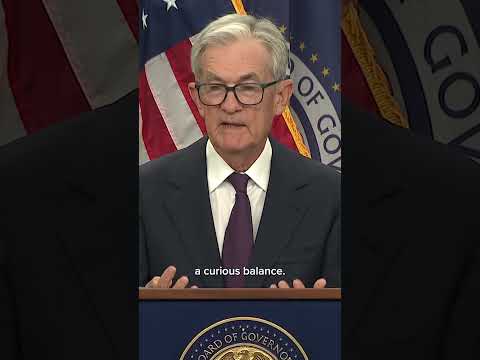
Powell: Both supply and demand for labor have come down 'quite sharply'
CNBC Television· 2025-09-17 19:30
Labor Market Dynamics - The labor supply has decreased significantly due to changes in immigration patterns [1] - Demand for workers has also decreased sharply [1] - A "curious balance" exists because both labor supply and demand have decreased substantially [2] - Demand has decreased slightly more than supply, leading to a slight increase in the unemployment rate [2]
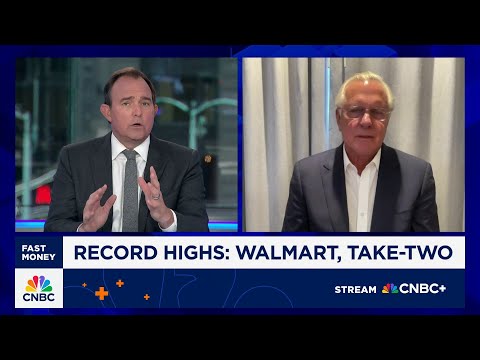
Fed meeting is main focus of next week, 25bps cut is likely, says Vital Knowledge's Adam Crisafulli
CNBC Television· 2025-09-12 21:47
on Thursday. Our next guest joins us with the catalyst he thinks will be the most important for investors next week. So, let's bring in vital knowledge founder Adam Chrysafouli.Adam, it's great to have you back on and let's start right there. Is this all about central bank decisions. Yeah, definitely think the Fed will be the most important um event of next week and we also have a lot of other central banks, BOJ, BOE, Bank of Canada, but the Fed will be the big highlight by far.Okay. And is it really about ...