中华民族共同体意识

Search documents
中共中央 全国人大常委会 国务院 全国政协 中央军委关于庆祝西藏自治区成立60周年的贺电
证监会发布· 2025-08-21 07:36
Core Viewpoint - The 60th anniversary of the establishment of the Tibet Autonomous Region marks significant achievements in ethnic regional autonomy, economic development, and social stability under the leadership of the Communist Party of China [2][3][4]. Group 1: Historical Context and Achievements - The establishment of the Tibet Autonomous Region in 1965 is highlighted as a milestone that initiated a new era of unity and prosperity among various ethnic groups in Tibet [2]. - Over the past 60 years, there has been a successful practice of the ethnic regional autonomy system, effective anti-secession efforts, and significant improvements in the economy and living standards of the Tibetan people [2][3]. Group 2: Recent Developments and Policies - Since the 18th National Congress, the central leadership has prioritized the development of Tibet, leading to comprehensive progress and historic achievements in various sectors [3][4]. - The region has achieved victory in poverty alleviation, ensuring that it aligns with the national goal of achieving a moderately prosperous society [3]. Group 3: Future Directions - The current period is deemed crucial for advancing national strength and ethnic revival, with a call for continued adherence to the leadership of the Communist Party and the principles of socialism with Chinese characteristics [5]. - Emphasis is placed on the importance of stability, development, ecology, and border security in the ongoing efforts to build a modern socialist Tibet [5].


受权发布丨王沪宁:在西藏自治区成立60周年庆祝大会上的讲话
Xin Hua She· 2025-08-21 07:13
Core Points - The speech celebrates the 60th anniversary of the establishment of the Tibet Autonomous Region, highlighting significant achievements in economic and social development over the past six decades [2][3][4] - The central government has provided substantial financial support to Tibet, with a total investment of 2.6 trillion yuan from 1965 to 2024, demonstrating the political advantages of the socialist system [4][5] - The focus is on continuing to promote high-quality development, ensuring national security, and enhancing ethnic unity in Tibet, with a commitment to ecological preservation and improving the well-being of the local population [6][7][8] Economic Development - Tibet's GDP has increased from 327 million yuan in 1965 to 276.5 billion yuan in 2024, representing a growth of 154 times and an average annual growth rate of 8.9% [3] - The region has seen significant improvements in infrastructure, with over 120,000 kilometers of roads and 183 flight routes connecting Tibet to the world [3] - Per capita disposable income for urban and rural residents has risen from 456 yuan and 108 yuan in 1965 to 55,444 yuan and 21,578 yuan in 2024, with annual growth rates of 8.5% and 9.4% respectively [3] Social Progress - The education system has expanded significantly, with 3,618 schools and a total enrollment of 970,000 students, alongside a healthcare system that has grown from 193 institutions in 1965 to 7,231 in 2024 [3] - Life expectancy in Tibet has more than doubled since the establishment of the region, reflecting improvements in healthcare and living conditions [3] - The region has made notable strides in ecological conservation, with a forest coverage rate and grassland vegetation index on the rise, and over 99% of days having good air quality [3] Political and Cultural Context - The leadership of the Communist Party of China is emphasized as crucial for Tibet's development, with a call for unity among various ethnic groups and respect for religious beliefs [5][6][7] - The speech underscores the importance of maintaining stability and security in Tibet, with a strong stance against separatist movements and external interference [7][8] - The promotion of a shared national identity and cultural integration among different ethnic groups is highlighted as a key objective for future development [7][8]
西藏自治区成立60周年庆祝大会隆重举行 中共中央全国人大常委会国务院全国政协中央军委致电祝贺 习近平出席大会
Xin Hua She· 2025-08-21 06:01
西藏自治区成立60周年庆祝大会隆重举行 中共中央全国人大常委会国务院全国政协中央军委致电祝贺 习近平出席大会 王沪宁出席并讲话 蔡奇出席 新华社拉萨8月21日电 六十载奋斗栉风沐雨,六十年雪域沧桑巨变。21日上午,西藏各族各界干部 群众约2万人欢聚拉萨市布达拉宫广场,热烈庆祝西藏自治区成立60周年。中共中央总书记、国家主 席、中央军委主席习近平出席庆祝大会。 中共中央政治局常委、全国政协主席、中央代表团团长王沪宁出席并讲话,中共中央政治局常委、 中央办公厅主任蔡奇出席。 古城拉萨彩旗飘扬,处处洋溢着节日的氛围。雄伟的布达拉宫下,搭建起藏式风格的大会主席台。 主席台上方中华人民共和国国徽和"西藏自治区成立60周年庆祝大会"横幅十分醒目,背景墙上悬挂着大 庆会徽和"1965""2025"字样,10面红旗分列两侧。主席台对面的布达拉宫广场上,身着节日盛装的各族 群众从四面八方汇聚到这里,手中挥动着红旗,汇聚成一片欢乐的海洋。 上午10时许,在欢快的乐曲声中,习近平等领导同志走上主席台,全场响起长时间的热烈掌声。 西藏自治区党委副书记、自治区人民政府主席嘎玛泽登宣布大会开始。全场起立,高唱国歌,鲜艳 的五星红旗在布达 ...
创造美好生活 共圆伟大梦想
Xin Hua She· 2025-08-21 00:55
Core Viewpoint - The 60th anniversary of the establishment of the Tibet Autonomous Region marks significant achievements in social and economic development, highlighting the successful implementation of policies under the leadership of the Communist Party of China [1][3]. Economic Development - Tibet's GDP is projected to reach 276.5 billion yuan in 2024, which is 155 times that of 1965, showcasing a remarkable economic transformation [2]. - Major economic indicators have consistently ranked among the top in the nation, reflecting a significant liberation and development of social productivity in Tibet [2]. Social Progress - The region has completely eradicated absolute poverty, with 628,000 registered poor individuals lifted out of poverty, demonstrating a successful poverty alleviation strategy [1][2]. - Life expectancy in Tibet has increased from 68.17 years in 2010 to 72.5 years currently, indicating substantial improvements in living standards [1]. Infrastructure and Industry - Modern industries such as clean energy, cultural tourism, and highland light industry are thriving, alongside significant infrastructure projects like the Qinghai-Tibet Railway and the Yarlung Tsangpo River hydropower project [2]. - Tibet is recognized as one of the regions with the best ecological environment globally, enhancing its attractiveness for sustainable development [2]. Governance and Policy - The achievements in Tibet are attributed to the strong leadership of the Communist Party and the collective efforts of various ethnic groups, emphasizing the effectiveness of the socialist system in addressing ethnic issues [3]. - The focus on maintaining national unity and promoting high-quality development is central to future strategies, with an emphasis on ecological preservation and people's well-being [4][5].
在建设社会主义现代化新西藏的征程上奋力前行
Xin Hua She· 2025-08-21 00:55
Core Viewpoint - The visit of General Secretary Xi Jinping to Lhasa for the 60th anniversary of the Tibet Autonomous Region signifies strong support and commitment to the development and modernization of Tibet, emphasizing unity, prosperity, and ecological protection [1][4][8]. Group 1: Economic and Social Development - Significant achievements in economic and social development in Tibet over the past 60 years were highlighted, with a focus on the improvements in living conditions and infrastructure [4][5]. - The establishment of the Lalin Railway has been pivotal in promoting regional economic growth and improving the livelihoods of local residents since its operation began in June 2021 [6][7]. - The emphasis on enhancing community governance and infrastructure to ensure social stability and improve living standards was reiterated by local officials [6][11]. Group 2: Cultural and Ethnic Unity - The importance of fostering a sense of community and unity among different ethnic groups in Tibet was stressed, with initiatives aimed at promoting cultural exchange and understanding [6][8]. - The role of grassroots organizations in guiding local populations to align with national policies and enhance community cohesion was emphasized [8][9]. Group 3: Ecological Protection - The commitment to ecological civilization and the protection of Tibet's unique environment was underscored, with specific responsibilities assigned to local caretakers for environmental conservation [7][9]. - The call for sustainable development practices that balance economic growth with ecological preservation was a key theme in Xi Jinping's address [7][10]. Group 4: Future Development Initiatives - Plans for future projects aimed at long-term benefits for the local population, including employment, education, and healthcare, were outlined as part of the ongoing development strategy [10][11]. - The need for continuous support from the central government and collaboration with various sectors to ensure the successful implementation of these initiatives was highlighted [9][11].
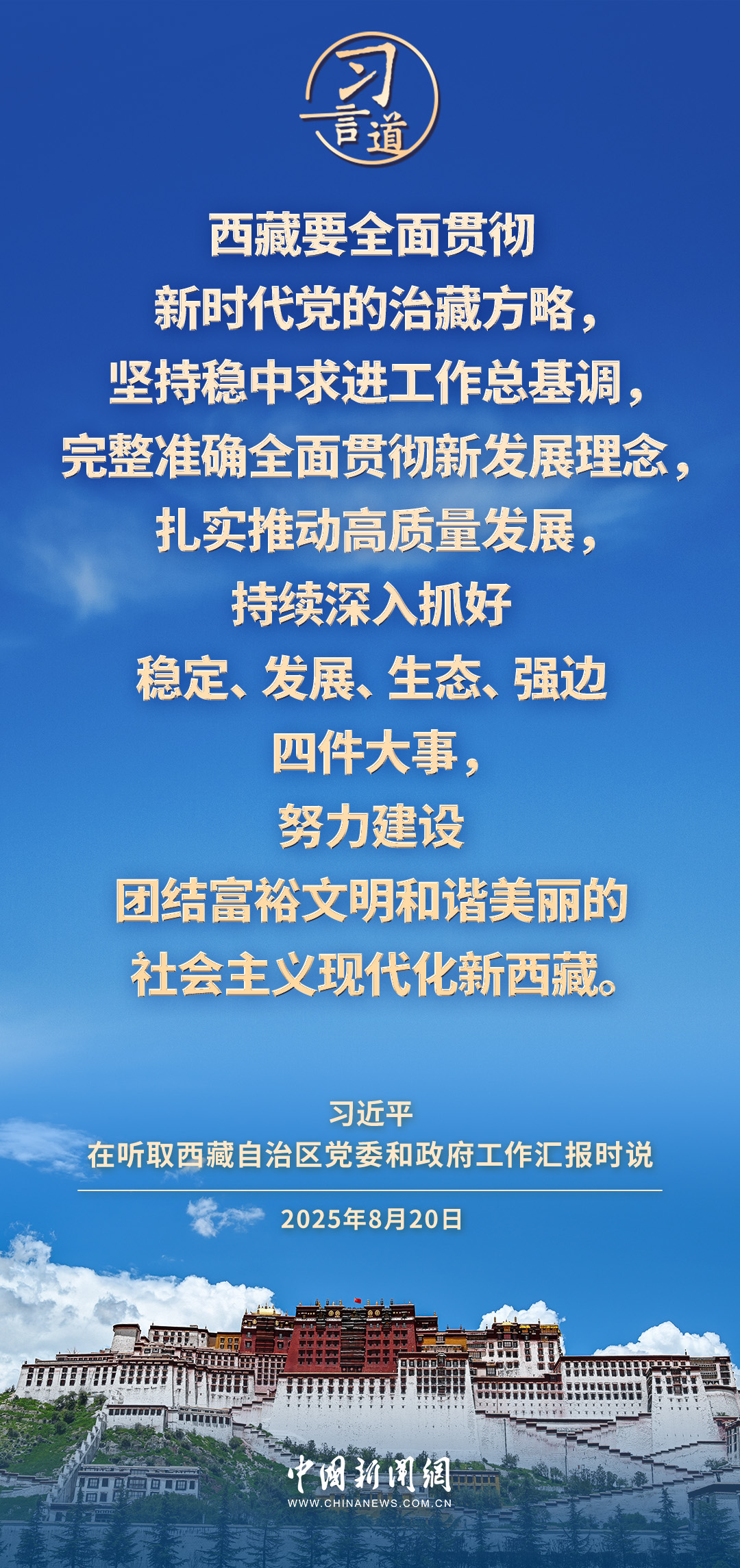
全面贯彻新时代党的治藏方略努力建设团结富裕文明和谐美丽的社会主义现代化新西藏
Xin Hua She· 2025-08-21 00:55
Core Points - Xi Jinping emphasized the importance of maintaining political stability, social stability, ethnic unity, and religious harmony in Tibet to ensure effective governance and development [1][3] - The development strategy for Tibet should focus on high-quality growth tailored to its unique characteristics, promoting industries such as specialty agriculture, clean energy, and modern services [2][3] - Strengthening the leadership of the Communist Party and enhancing party building are crucial for the successful implementation of policies in Tibet [3] Development Strategy - Promote high-quality development by leveraging Tibet's unique advantages, particularly in specialty agriculture and clean energy [2] - Advance major projects like the Yarlung Tsangpo River hydropower project and the Sichuan-Tibet Railway [2] - Focus on ecological civilization, balancing carbon reduction, pollution control, and green expansion [2] Social Stability and Governance - Strengthen the awareness of the Chinese national community and promote the integration of various ethnic groups [1][3] - Enhance social governance by improving community services and ensuring the well-being of the population through employment, education, and healthcare [2] - Implement measures to maintain a clean political environment and combat corruption [3]
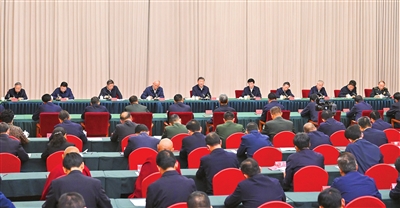
扛牢责任强化共识创新载体合作共赢 努力打造新时代对口援疆工作新标杆
Zheng Zhou Ri Bao· 2025-08-21 00:45
Group 1 - The core viewpoint of the news is the commitment of Zhengzhou and Hami to enhance cooperation in the context of Xinjiang aid work, focusing on mutual benefits and the integration of various ethnic groups [1][2]. - Zhengzhou's leadership emphasizes the importance of aligning with Xi Jinping's thoughts and the new strategies for Xinjiang, aiming to improve the effectiveness of aid projects and cultural exchanges [2][3]. - Hami's leadership expresses gratitude for Zhengzhou's support and highlights the complementary nature of their resources and industries, indicating a strong potential for future collaboration [2][3]. Group 2 - The Zhengzhou delegation visited various aid projects, including renewable energy centers and educational institutions, to assess the progress and impact of their initiatives in Hami [3]. - The focus areas for cooperation include new industrialization, cultural integration, and effective educational support, aiming to set a new benchmark for aid work [2][3]. - The delegation's visit also aimed to boost the morale of aid workers and ensure the implementation of new tasks and responsibilities [3].
习言道|讲好新时代西藏故事
Zhong Guo Xin Wen Wang· 2025-08-21 00:13
Core Viewpoint - Xi Jinping emphasized the importance of maintaining political stability, social stability, ethnic unity, and religious harmony in Tibet during a report from the Tibet Autonomous Region Party Committee and government [1][2][4][5]. Group 1: Political and Social Stability - The need to ensure political stability and social stability in Tibet is paramount [4][5]. - Promoting the awareness of the Chinese national community and enhancing the construction of this community is essential [9]. Group 2: Economic Development - High-quality development should be promoted based on the unique characteristics of Tibet, focusing on highland specialty industries, particularly in agriculture, animal husbandry, and clean energy [16]. - Continuous development of resource processing industries and active promotion of modern service industries are necessary [16]. Group 3: Cultural and Ethnic Integration - There is a call to create a national model area for ethnic unity and progress, promoting the common national language and facilitating exchanges among different ethnic groups [11]. - The importance of integrating Tibetan Buddhism with socialist society is highlighted, along with the need for legal governance of religious affairs [15]. Group 4: Party Leadership - The necessity of adhering to the leadership of the Party and strengthening Party building is emphasized for effective governance in Tibet [19]. - The guiding principle of using Xi Jinping's thoughts on socialism with Chinese characteristics for the new era to unify and inspire all ethnic groups is stressed [19].
在建设社会主义现代化新西藏的征程上奋力前行——习近平总书记的亲切关怀和重要讲话鼓舞雪域高原各族干部群众团结同心、再谱新篇
Xin Hua She· 2025-08-20 17:13
Core Points - Xi Jinping's visit to Tibet marks the 60th anniversary of the Tibet Autonomous Region, emphasizing the importance of unity and modernization in the region [1][3][4] - The speech delivered by Xi Jinping highlights significant achievements in economic and social development in Tibet over the past 60 years, particularly since the 18th National Congress of the Communist Party [4][5] - The focus on maintaining political stability, social harmony, and ecological protection is crucial for the future development of Tibet [5][6][8] Economic Development - The region has experienced transformative changes, with improvements in living conditions and infrastructure, such as the opening of the Lalin Railway, which has boosted regional economic growth [5][6] - Local leaders express optimism about the ongoing development, citing increased community engagement and economic opportunities, particularly in agriculture and tourism [7][9] Social Stability - Emphasis on ethnic unity and social stability is a priority, with initiatives aimed at enhancing community governance and promoting cultural integration among different ethnic groups [5][9] - The importance of education and healthcare is underscored, with ongoing efforts to improve these sectors through support from national resources and local initiatives [8][10] Ecological Protection - Xi Jinping's directives on ecological conservation are being actively pursued, with local officials committed to protecting the environment and promoting sustainable practices [6][8] - The role of local communities in environmental stewardship is highlighted, with initiatives aimed at preserving the unique ecological landscape of Tibet [6][7]
东西问丨郭克范:为何说西藏是中国边疆民族地区治理成功的范例之一?
Zhong Guo Xin Wen Wang· 2025-08-20 13:32
Core Viewpoint - Tibet is presented as a successful example of governance in China's border ethnic regions, highlighting the achievements of the region under the leadership of the Communist Party of China over the past 60 years [3][6][10]. Economic and Social Development - The establishment of the autonomous region has led to significant political, economic, and cultural advancements, with a notable average GDP growth rate exceeding 8% [6][7]. - The transition from a feudal serfdom system to a socialist system marks a historical leap in governance, resulting in the establishment of a moderately prosperous society [6][7]. - The support from the national government has been a consistent theme in Tibet's development, with major infrastructure projects and policies implemented to boost economic growth [7][10]. Governance Experience - The successful governance of Tibet is attributed to the establishment of the ethnic regional autonomy system, which reflects a unique Chinese approach to managing ethnic issues [10][11]. - This governance model is rooted in the historical context of Chinese civilization and aims to maintain national unity while allowing for local self-governance [10][11]. Cultural and Social Cohesion - The governance model emphasizes the concept of a shared community among all ethnic groups, contrasting with Western notions of ethnic identity [11]. - The policies implemented since 1994 have reinforced the idea of unity and collective progress among the diverse populations in Tibet [11][12]. International Perception - Despite significant achievements in economic development, ecological protection, and cultural preservation, international narratives often overlook or misrepresent Tibet's progress due to ideological biases [12][14]. - The Chinese Communist Party's innovative theories are credited with ensuring that the direction of ethnic work remains steadfast against external pressures [14].