特色农牧业

Search documents
宁夏农业“六特”产业全部入选国家产业集群
Zhong Guo Xin Wen Wang· 2026-02-03 08:18
Core Insights - Ningxia has cultivated 105 nationally recognized special agricultural products, with key industries including wine, goji berries, milk, beef cattle, lamb, and cool-season vegetables [1][2] - The region's agricultural development is supported by its unique resources, including the Yellow River irrigation advantage and favorable climatic conditions, leading to a solid foundation for specialty agriculture [1] - By 2025, Ningxia aims to achieve a GDP of 569.6 billion yuan, with a year-on-year growth of 5.3%, and an increase in the primary sector's value added by 6% [1] Agricultural Industry Development - Ningxia's specialty agriculture accounts for over 88% of the total agricultural output value, with a product processing conversion rate of 75.8% [2] - The region's key agricultural products, such as wine, goji berries, and fresh milk, rank among the top in national production [1] - The International Grape and Wine Exchange and Cooperation Center in Ningxia has been established to facilitate the global reach of Chinese wine [1] Future Plans - Over the next five years, Ningxia will focus on developing ten key industries, emphasizing six industrial clusters in specialty agriculture [2] - By 2026, the region aims to stabilize total grain production at over 7.6 billion jin (approximately 3.8 million tons) and enhance agricultural modernization through various initiatives [2] - Plans include the construction and renovation of high-standard farmland and the promotion of rural revitalization through the establishment of 300 model villages [2]
西藏自治区发展改革委主任卫强:因地制宜构建高原特色现代化产业体系
Zhong Guo Xin Wen Wang· 2026-02-03 07:28
Group 1: Development of Key Industries - Tibet will vigorously develop characteristic agriculture and animal husbandry, aiming for a grain output of 1.1496 million tons and vegetable, meat, egg, and milk outputs to exceed one million tons by 2025 [1] - The clean energy industry has rapidly developed since the 14th Five-Year Plan, with installed power capacity expected to exceed 33 million kilowatts by 2025, including over 13 million kilowatts already built [2] - The resource processing industry has significant potential, with the Tibetan medicine production value projected to reach 3.4 billion yuan in 2024 [3] Group 2: Modern Service Industry and Logistics - The rural logistics network in Tibet has achieved 100% coverage, with full automation of rural postal routes, enhancing service delivery in remote areas [4] - The region will expand the "free shipping to Tibet" initiative and improve logistics for agricultural products, while also focusing on healthcare, elderly care, and property services [4] Group 3: Cultural and Tourism Integration - Tibet's tourism market is expected to receive 70.7337 million domestic and international visitors by 2025, reflecting a year-on-year growth of 10.71% [5] - The region aims to integrate culture and tourism, enhancing public cultural services and tourism facilities while developing a modern tourism industry with low environmental impact [5] Group 4: Emerging Industries - The low-altitude economy is being cultivated, with 70 companies in the low-altitude aviation sector and a total of 1,738 flight hours projected by 2025 [6] - The region will develop a low-altitude flight testing industry to address unique geographical challenges, expanding applications in areas such as aerial rescue and logistics [6]
今年青海力争新增限上商贸企业60家
Xin Lang Cai Jing· 2026-02-02 18:02
Core Viewpoint - The Qinghai provincial commerce department aims to achieve substantial breakthroughs in 2026 by focusing on three dimensions: optimizing new growth, revitalizing existing resources, and nurturing new opportunities [1] Group 1: Key Goals - The core targets for 2026 include: - Social retail sales reaching 110 billion yuan - Foreign trade import and export growth exceeding 10% - Actual foreign investment growth around 2% - Online retail sales growth of approximately 5% - Addition of 60 new commercial enterprises with above-limit revenue - More than 30 enterprises with import and export performance [1][2] Group 2: Key Initiatives - Seven key initiatives will be emphasized: - Stimulating domestic demand and promoting the "Buy in Qinghai" brand with over 400 consumer promotion events planned - Strengthening the lithium battery, photovoltaic, and specialty agricultural and livestock product industry clusters while expanding markets in Belt and Road and RCEP member countries [2] - Deepening two-way investment by seizing foreign investment opportunities in manufacturing and guiding enterprises to "go global" [2] - Enhancing urban-rural circulation through the "Double Hundred Assistance for Enterprises and Convenience for the Public" initiative, improving logistics and cold chain facilities [2] - Building an open highland by enhancing the capabilities of the Xining Comprehensive Bonded Zone and cross-border e-commerce pilot zone [2] - Scientifically formulating the "14th Five-Year" business plan through comprehensive research and planning key measures [2] - Strengthening party leadership to ensure high-quality development in commerce through effective governance and organizational integrity [2]
青陕两地科技部门赋能特色农牧产业升级
Zhong Guo Xin Wen Wang· 2026-01-28 17:14
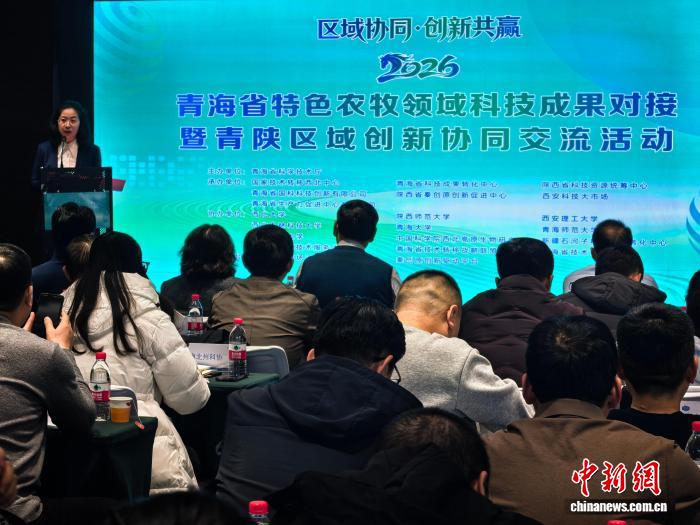
Core Viewpoint - The event held in Xining, Qinghai Province, focuses on the integration of technological achievements in the agricultural and pastoral sectors, aiming to enhance collaboration between Qinghai and Shaanxi provinces, leveraging their respective strengths in resources and research [1][3][5]. Group 1: Event Overview - The 2026 Qinghai Province Agricultural and Pastoral Technology Achievement Docking and Innovation Collaboration Event took place on January 28, 2026 [1]. - The event featured the unveiling of the Northwest National Technology Transfer Center Qinghai Branch, which aims to facilitate technology transfer between Shaanxi's research capabilities and Qinghai's unique agricultural resources [3][5]. Group 2: Industry Significance - The agricultural and pastoral industry is identified as a foundational and advantageous sector for Qinghai, serving as a "ballast" for livelihood security and a key driver for rural revitalization, ecological protection, and economic development [5]. - The collaboration between Qinghai and Shaanxi is highlighted as having significant potential due to their geographical proximity and complementary industries, particularly in the agricultural and pastoral fields [5]. Group 3: Technological Advancements - Experts from both regions shared cutting-edge technological trends and showcased eight high-quality technological achievements in the agricultural and pastoral sectors, covering areas such as smart farming and deep processing [7]. - The event was co-hosted by the Qinghai Provincial Department of Science and Technology, the Northwest National Technology Transfer Center, and the Qinghai Provincial Technology Achievement Transformation Center [7].

“青字号”多点开花闯世界
Xin Lang Cai Jing· 2026-01-17 17:41
Core Viewpoint - During the "14th Five-Year Plan" period, Qinghai Province's foreign trade is experiencing rapid growth, structural optimization, and accelerated transformation of driving forces, particularly by 2025, with significant advancements in the international influence of "Qinghao" brand products centered around new energy and specialty industries [1] Group 1: Export Growth and Product Transformation - The export of clean energy products, represented by lithium-ion batteries and photovoltaic components, is rapidly increasing and has become the main driver of the province's export growth, marking a successful shift from traditional resource-based products to advanced manufacturing represented by new energy and new materials [1] - The salt lake chemical industry is extending towards fine and high value-added products, with significant growth in exports of specialty products like magnesium-based items [2] Group 2: Brand Development and Market Expansion - The export of specialty agricultural and livestock products is improving in branding and standardization, with the export scale and market coverage of "Qinghao" products like cold-water fish and cool-season vegetables continuously expanding, positioning them as leaders in their respective fields nationwide [2] - The business department has developed a foreign trade quality product manual and is promoting "Qinghao" products through exhibitions and other channels to enhance their international influence [2] Group 3: E-commerce and Logistics Development - The construction of cross-border e-commerce pilot zones in Xining and Haidong is progressing steadily, deepening the integration of "industrial belt + cross-border e-commerce" [2] - The regular operation of international freight trains has been established, with 187 trains running in 2025, a 38.5% increase year-on-year, providing a stable international logistics channel for "Qing goods" [2] Group 4: International Trade Relations - Continuous deepening of trade relations with countries involved in the Belt and Road Initiative and positive progress in exploring emerging markets like RCEP have further enhanced the foreign trade risk resistance capability [3] - In 2025, the business department organized over 300 enterprises to participate in key domestic and international exhibitions and hosted multiple economic and trade promotion meetings in regions such as Hong Kong, Macau, Southeast Asia, and Central Asia [3]
西藏“十五五”规划建议:重点发展特色农牧业、文化旅游等主导支柱产业,打造区域经济增长强引擎
Cai Jing Wang· 2025-12-15 03:34
Core Viewpoint - The "Suggestions" from the Tibet Autonomous Region Committee emphasize the development of key pillar industries, including specialty agriculture, clean energy, cultural tourism, and green mining, to drive regional economic growth [2]. Group 1: Key Pillar Industries - The focus is on enhancing specialty agriculture by implementing agricultural technology innovation projects, modern seed industry upgrades, and facility modernization to build a robust modern agricultural management system [2]. - Clean energy industry development is prioritized, with plans to advance the Yaxia hydropower project and promote research in clean energy technologies, while fostering a cluster of clean energy equipment manufacturing [2]. - Cultural tourism is set to be accelerated, with initiatives to optimize resource development, improve infrastructure, and establish a smart tourism service system, alongside the creation of renowned tourist counties and premium scenic spots [2]. Group 2: Green Mining and Resource Development - The strategy includes expanding and enhancing green mining capabilities, promoting resource processing industries, and implementing a new round of mineral exploration strategies [2]. - There is a focus on advancing strategic mineral exploration and development, applying green mining technologies, and constructing safe, green, and smart mines [2].
西藏自治区“十五五”规划建议全文公布
Bei Jing Ri Bao Ke Hu Duan· 2025-12-13 03:16
Core Viewpoint - The "14th Five-Year Plan" period has seen significant progress in building a modern socialist Tibet, with a focus on stability, development, ecology, and border security, leading to historical achievements in economic and social development [1]. Group 1: Economic and Social Development Achievements - The "14th Five-Year Plan" has led to comprehensive advancements in Tibet, with improvements in economic quality, infrastructure, and the development of characteristic industries [1]. - The region has made historical progress in ethnic unity, social stability, and the promotion of Tibetan Buddhism's integration into Chinese culture [1]. - Economic development has been characterized by enhanced quality and efficiency, with significant infrastructure construction and the flourishing of advantageous industries [1]. Group 2: Challenges and Opportunities - Tibet faces challenges such as a complex anti-secession struggle, unbalanced development, and ecological sensitivity, which require strategic focus and action [3][4]. - Opportunities arise from the central government's emphasis on Tibet's development, with major projects like the Yarlung Tsangpo River hydropower project and the Sichuan-Tibet Railway enhancing growth potential [2]. Group 3: Development Goals and Requirements - The guiding ideology for the "15th Five-Year Plan" emphasizes Marxism, socialism with Chinese characteristics, and the importance of high-quality development [5]. - Key requirements include maintaining the Party's leadership, promoting high-quality development, and ensuring that all development efforts contribute to ethnic unity and social stability [6][7]. Group 4: Major Development Targets - The construction of a strong sense of the Chinese national community and the promotion of high-quality economic development are primary targets for the "15th Five-Year Plan" [8]. - Significant improvements in living standards, ecological construction, and national security are also outlined as essential goals [9]. Group 5: Infrastructure and Industry Development - The plan includes the construction of a modern transportation system, logistics hubs, and new energy infrastructure to support economic growth [16][17][18]. - Emphasis is placed on developing pillar industries such as clean energy, cultural tourism, and modern agriculture to drive economic expansion [12][14][15]. Group 6: Social Welfare and Employment - The plan aims to enhance employment quality and promote a fair income distribution system to support common prosperity [30][32]. - Education and healthcare improvements are prioritized to ensure a well-rounded development of the population [31][33]. Group 7: Ecological and Environmental Protection - The strategy includes strict ecological protection measures and the promotion of green development to safeguard Tibet's unique environment [34][35]. - Efforts will focus on enhancing biodiversity and implementing sustainable practices to maintain ecological balance [34].
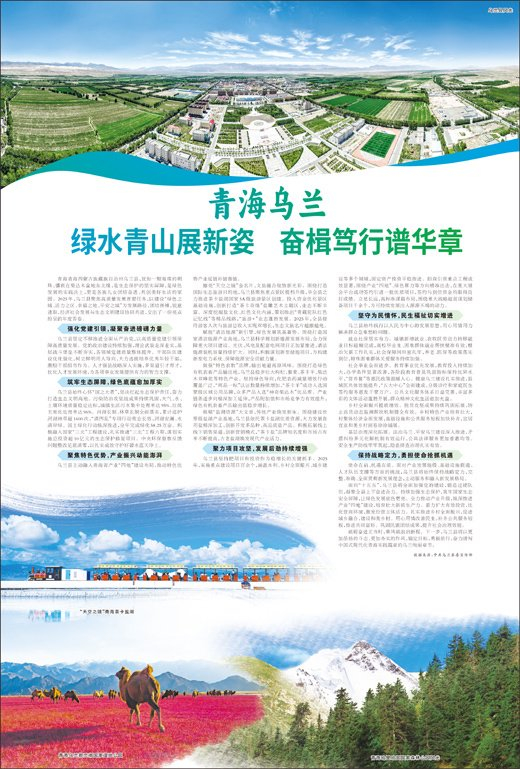
青海乌兰 绿水青山展新姿 奋楫笃行谱华章
Ren Min Wang· 2025-12-11 01:16
Core Viewpoint - Ulan County is committed to high-quality development by focusing on ecological protection, industrial revitalization, and improving the well-being of its residents, aiming to create a harmonious and prosperous community by 2025 [4][5][11]. Group 1: Ecological Protection - Ulan County emphasizes its responsibility for ecological protection, achieving stable environmental quality with urban sewage treatment rates at 95% and waste harmless treatment rates at 96% [7]. - The county has completed afforestation of 582,500 acres and actively participates in national ecological projects with over 1 billion yuan invested in ecological restoration [7]. Group 2: Industrial Revitalization - Ulan County integrates into Qinghai Province's industrial layout, enhancing its tourism sector by upgrading key scenic areas and promoting cultural tourism, with a focus on the Chaka Salt Lake [8]. - The county is developing a clean energy industry, expanding its renewable energy capacity through solar and wind projects, and planning new energy storage initiatives [8]. Group 3: Agricultural Development - Ulan County is enhancing its organic agricultural output, focusing on products like goji berries and quinoa, with a significant increase in certified organic products [9]. - The county is also revitalizing its salt lake resources by developing high-quality salt products and expanding sales channels, increasing brand recognition for "Chaka Salt" [9]. Group 4: Infrastructure and Investment - Ulan County is implementing over 100 key construction projects across various sectors, with a focus on stable fixed asset investment and successful project financing [10]. - The county is strategically planning to reserve over 1,000 projects for sustainable development, ensuring long-term growth [10]. Group 5: Social Welfare and Governance - Ulan County prioritizes social welfare, achieving employment targets and enhancing social security measures, including healthcare and education improvements [11]. - The county is advancing rural revitalization and improving public services, ensuring a better quality of life for its residents [12]. Group 6: Strategic Vision - Ulan County aims to maintain strategic focus and embrace opportunities for industrial development, infrastructure connectivity, and talent support, aligning with national development goals [13]. - The county is committed to enhancing party building, ecological protection, and promoting effective investment to foster a harmonious and prosperous community [13].
青海省“十五五”规划建议:做大做强盐湖资源千亿级产业集群,高标准建设国家绿色算电协同发展示范区
Zheng Quan Shi Bao Wang· 2025-12-10 05:40
Group 1: Economic Development and Planning - The proposal emphasizes the significant achievements during the "14th Five-Year Plan" and highlights the importance of the "15th Five-Year Plan" in the modernization process of Qinghai, indicating both opportunities and challenges ahead [1] - The focus is on building a modern industrial system that reflects Qinghai's characteristics and advantages, with a strong emphasis on the real economy and directions of intelligence, greening, and integration [2] Group 2: Energy and Environmental Initiatives - The proposal calls for the establishment of a new energy system that coordinates the development of wind, solar, water, hydrogen, and thermal energy, aiming to enhance green development and contribute to national carbon reduction and energy security [1] - It includes plans to optimize the provincial and inter-provincial grid structure and accelerate the construction of new energy transmission channels [1] Group 3: Industrial Cluster Development - The proposal outlines the goal of enhancing industrial clusters, particularly in the "Four Lands" initiative, focusing on the efficient use of potassium, lithium, and magnesium resources, and the development of a world-class modern salt lake industry [3] - It aims to create a clean energy industry cluster worth hundreds of billions, integrating various clean energy sources [3] Group 4: Infrastructure and Technological Advancements - The proposal stresses the need for a modern infrastructure system that integrates and optimizes layout structures, enhancing safety and sustainability [7] - It includes plans for the development of new infrastructure, such as 5G networks and the electrification of key railway projects [7] Group 5: Emerging and Future Industries - The proposal advocates for the cultivation of emerging industries, including new energy, new materials, and biomedicine, with a focus on innovation and large-scale application of new technologies [6] - It emphasizes the establishment of a growth mechanism for future industries and encourages venture capital investment [6]
文旅经济再创新高,四川文旅强县如何让产业“多点开花”?
Mei Ri Jing Ji Xin Wen· 2025-10-30 03:44
Core Insights - The tourism sector in Kangding has seen significant growth, with a total of 12.33 million visitors and a revenue of 13.55 billion yuan, marking year-on-year increases of 7.36% and 5.44% respectively [1] Tourism Development - Kangding is focusing on creating a "Four Seasons Kangding" tourism brand to address the seasonal challenges faced by the tourism industry [2] - The city plans to enhance summer offerings with ecological camping and high-altitude hiking, while winter will feature snow sports and wellness products [2] - Kangding aims to integrate its cultural tourism resources by developing various travel routes and hosting events like the Kangding Love Song International Music Festival [2][3] Industrial Growth - Beyond tourism, Kangding is working to develop its industrial sector, particularly in lithium battery production, targeting an annual output value of 1 billion yuan [4] - The city has rich lithium resources, with confirmed lithium oxide reserves of 2.29 million tons, positioning it as a potential leader in lithium production [6] - Kangding is also focusing on clean energy development, with plans to generate 26.14 billion kilowatt-hours of electricity by 2024, contributing to a production value of 6.88 billion yuan [6][7] Ecological Considerations - The city prioritizes ecological protection while pursuing industrial development, aiming for a balance between environmental sustainability and economic growth [6] - Kangding has developed 6.87 million kilowatts of hydropower and plans to expand solar power capacity to 3.4 million kilowatts [7]