
新时代党的治藏方略

Search documents
省对口援藏干部人才代表座谈会召开
Shan Xi Ri Bao· 2026-02-27 23:52
Core Viewpoint - The meeting emphasized the importance of continuing and enhancing the support for Tibet, highlighting the achievements over the past five years and the commitment to furthering these efforts in the new "15th Five-Year Plan" period [1][2]. Group 1: Achievements and Future Plans - The provincial government has made significant progress in the past five years in implementing the directives from Xi Jinping regarding Tibet work and the spirit of the fourth support meeting for Tibet [1]. - The focus for the "15th Five-Year Plan" includes improving the quality and efficiency of support efforts, with a comprehensive approach to project support, livelihood assistance, industrial development, intellectual support, and cultural aid [2]. Group 2: Education and Cultural Integration - There is a strong emphasis on educating and guiding support personnel to align with the correct performance view, integrating various spirits such as the great party-building spirit and the old Tibet spirit into their work [2]. - The initiative aims to ensure that support personnel are committed to serving the public, making scientific decisions, and achieving tangible results that withstand the test of practice, public opinion, and history [2]. Group 3: Support and Welfare for Personnel - Continuous efforts will be made to provide care and support for the personnel involved in the Tibet aid work, ensuring they can perform their duties without concerns [2].
致全省藏族同胞的藏历新年贺信
Xin Lang Cai Jing· 2026-02-17 17:35
Group 1 - The core message emphasizes the achievements in ecological protection and high-quality development in Qinghai, highlighting the progress made under the leadership of the central government [1] - The year 2025 is identified as a significant year for Qinghai's development, marking the end of the "14th Five-Year Plan" and showcasing improvements in economic performance and social harmony [1] - The creation of a demonstration province for ethnic unity and progress is nearing completion, with notable advancements in ecological quality, economic stability, and social welfare [1] Group 2 - The year 2026 is positioned as a critical starting point for the "15th Five-Year Plan," with a call for unity among all ethnic groups to contribute to ecological protection, industrial development, and rural revitalization [2] - The message encourages collective efforts to advance the Chinese-style modernization of Qinghai, aiming for a prosperous and harmonious future [2] - The leaders express well wishes for the New Year, emphasizing gratitude and commitment to the party's guidance [2]
王君正参加自治区十二届人大四次会议拉萨代表团审议
Xin Lang Cai Jing· 2026-01-31 14:20
Core Viewpoint - The article emphasizes the importance of fully and accurately implementing the spirit of the 20th National Congress of the Communist Party of China and the strategic planning for the 15th Five-Year Plan to promote long-term stability and high-quality development in Tibet [1][7]. Group 1: Implementation of Policies - The Secretary of the Autonomous Region, Wang Junzheng, highlighted the need to deeply implement General Secretary Xi Jinping's important instructions regarding Tibet and the new era's governance strategies [1][5]. - The 15th Five-Year Plan is described as a guiding document for economic and social development, providing a strategic framework for the next five years [7]. Group 2: Development Initiatives - Representatives from the Lhasa delegation proposed various suggestions focused on accelerating infrastructure construction, enhancing the development of characteristic industries, and improving grassroots medical and educational talent cultivation [2]. - Wang Junzheng emphasized the need for effective investment expansion and the acceleration of major project construction to stimulate economic growth [8]. Group 3: Social Stability and Governance - The article stresses the importance of maintaining political and social stability as a primary political task, alongside enhancing social governance effectiveness and promoting the construction of a shared community among ethnic groups [8][9]. - There is a call for continuous efforts in anti-corruption and strengthening the grassroots party organization to ensure effective governance [9]. Group 4: Environmental and Urban Development - The article outlines plans for ecological protection and restoration, emphasizing the need for a green transformation in economic and social development [16]. - Urban development strategies include improving city planning, enhancing public cultural resources, and ensuring a high-quality urban renewal process to create a modern, livable city [14][13].

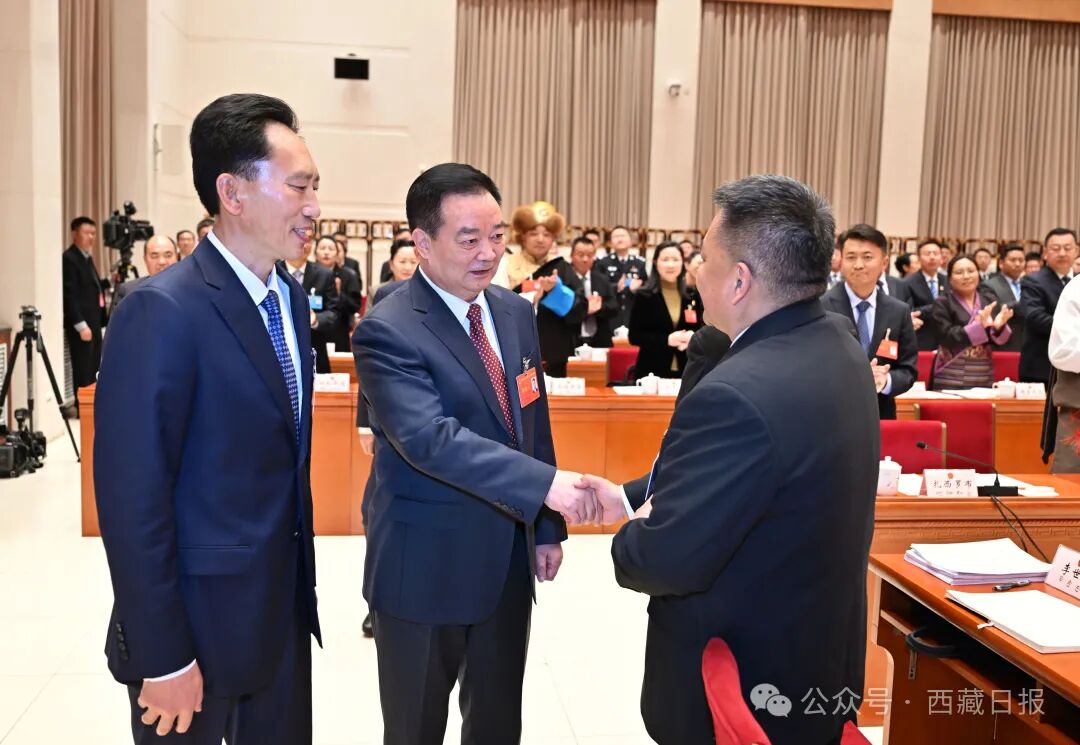
统筹:冯骥 制作:晋巴次成 赵江丰 王雅慧 责任编辑:益西旺堆
Xin Lang Cai Jing· 2026-01-31 05:02
Core Viewpoint - The article highlights the significant achievements and future goals of economic and social development in Tibet, emphasizing stability, high-quality growth, and ecological safety as key priorities. Group 1: Achievements in Recent Years - The year marked the 60th anniversary of the establishment of the autonomous region, celebrated with grand activities [2] - Major engineering projects commenced successfully, indicating progress in infrastructure development [2] - Significant victories were achieved in post-earthquake recovery and reconstruction efforts [2] Group 2: Five-Year Review - The past five years have seen the comprehensive implementation of the Party's strategies in Tibet, leading to notable changes and improvements [5] - There has been a deepening awareness of the shared identity among the Chinese nation [5] - The development in Tibet has been characterized as the best and most transformative in recent history [5] - The security framework has become more robust, ensuring safety for all ethnic groups [5] - The benefits received by various communities have increased significantly [5] Group 3: Key Requirements for Future Development - The focus will remain on maintaining stability as the primary task [7] - High-quality economic development tailored to local conditions will be a central theme [7] - Strengthening the national ecological security barrier will be a fundamental requirement [7] - Accelerating modernization in border areas will be an important mission [7] Group 4: Economic and Social Development Goals for 2026 - The GDP is expected to grow by over 7% [8] - Fixed asset investment is projected to increase by around 15% [8] - Retail sales of consumer goods are anticipated to grow by 7% [8] - Per capita disposable income for urban and rural residents is expected to rise by approximately 7% and 8%, respectively [8] - The urban unemployment rate is targeted to be kept below 5% [8] - Consumer prices are expected to rise reasonably [8] Group 5: Key Focus Areas for 2026 - Building a higher level of safety in Tibet, focusing on long-term stability [8] - Expanding domestic demand to enhance economic quality and efficiency [8] - Developing highland characteristic industries based on local advantages [8]

递补西藏自治区党委候补委员德吉为自治区党委委员
Bei Jing Ri Bao Ke Hu Duan· 2025-11-27 13:06
Core Viewpoint - The Ninth Plenary Session of the Tenth Committee of the Tibet Autonomous Region emphasizes the importance of the 20th Central Committee's Fourth Plenary Session in advancing China's modernization and outlines strategic plans for the 15th Five-Year Plan period [3][4]. Group 1: Meeting Overview - The meeting was held in Lhasa from November 25 to 26, 2025, attended by various party members and representatives [1]. - The session was presided over by the Standing Committee of the Autonomous Region Party Committee, with a speech delivered by Secretary Wang Junzheng [2]. Group 2: Key Discussions and Reports - The meeting discussed the work report by Wang Junzheng and approved the suggestions for the 15th Five-Year Plan for national economic and social development [2]. - It highlighted the significance of the 20th Central Committee's Fourth Plenary Session as a mobilization for advancing Chinese-style modernization [3]. Group 3: Achievements and Future Goals - The meeting acknowledged the achievements made during the 14th Five-Year period, including historical advancements in economic development and social stability [6]. - It emphasized that the 15th Five-Year period is crucial for solidifying the foundation for socialist modernization in Tibet [7]. Group 4: Strategic Directions - The meeting outlined the need to adhere to Marxist principles and integrate Xi Jinping's thoughts into the development strategy for Tibet [8]. - It stressed the importance of high-quality economic development, social stability, and ecological protection as key focuses for the upcoming period [9]. Group 5: Development Initiatives - The meeting proposed to accelerate the construction of a modern industrial system and enhance infrastructure development [10]. - It called for expanding effective demand and improving living standards through various economic and social initiatives [11]. Group 6: Governance and Social Stability - The meeting highlighted the importance of strengthening party leadership and promoting socialist democracy and rule of law in Tibet [12]. - It emphasized the need for effective governance and addressing public concerns to ensure social stability [12]. Group 7: Call to Action - The meeting concluded with a call for unity among party organizations and members to work towards a prosperous and harmonious socialist modern Tibet [13].
民航西藏自治区管理局党委理论学习中心组专题学习党的二十届四中全会精神
Zhong Guo Min Hang Wang· 2025-10-29 02:21
Core Points - The meeting emphasized the importance of implementing the spirit of the 20th Central Committee's Fourth Plenary Session, which outlines the strategic planning for China's modernization and development during the 14th Five-Year Plan period [2][3] Group 1: Strategic Planning - The meeting highlighted the need to accurately grasp the requirements of the 14th Five-Year Plan period and to strengthen strategic research for the development of Tibet's civil aviation [3] - It called for high standards in formulating the civil aviation plan for Tibet, focusing on safety and operational challenges [3] Group 2: Safety and Innovation - The meeting stressed the importance of addressing weak links in high-altitude safety and encouraged collaboration with research institutions and aircraft manufacturers to tackle technical challenges [3] - It promoted the "Five Small Innovations" mechanism to enhance operational efficiency and safety [3] Group 3: Economic Development and Services - The meeting urged a focus on improving people's livelihoods, expanding the aviation market, and increasing auxiliary income through a well-structured human resources plan [3] - It emphasized the need to enhance airport service quality to improve passenger satisfaction and safety [3] Group 4: National Strategy and Infrastructure - The meeting called for active participation in national strategies such as the Belt and Road Initiative and regional coordinated development, including the opening of new air routes and enhancing the capacity of Linzhi Airport [3] - It highlighted the importance of utilizing clean energy and promoting energy-saving measures in airport operations [3] Group 5: Governance and Accountability - The meeting reinforced the commitment to anti-corruption efforts and the importance of maintaining a clear relationship between government and business [4] - It emphasized the need for all levels of party organizations to promote the spirit of the 20th Central Committee's Fourth Plenary Session and ensure alignment with the central government's decisions [4]
中国人权发展基金会、新华社国家高端智库联合发布《谱写传统与现代交融的华彩乐章——中国西藏的乡村发展与文化传承》智库报告
Xin Hua She· 2025-10-16 12:52
Core Insights - The report highlights the significant achievements in rural development and cultural preservation in Tibet, emphasizing rapid economic growth, effective cultural protection, improved living standards, enhanced ecological protection, and increased ethnic unity [2] Group 1: Achievements in Rural Development and Cultural Preservation - Key achievements include rapid economic development, strong cultural protection, improved quality of life, enhanced ecological protection, and increased ethnic unity [2] Group 2: Integration Paths - The integration paths for rural development and cultural preservation are identified as policy support and quality enhancement, dynamic inheritance and innovative development, resource development and cultural tourism integration, and leadership and shared benefits [2] Group 3: Lessons Learned - The lessons learned emphasize the importance of respecting traditions as a foundational value, ensuring human rights as a core development principle, and aiming for comprehensive and coordinated development [2] Group 4: Overall Message - The prosperity of Tibetan villages is portrayed as an epic of the fusion of tradition and modernity, suggesting that people-centered development, culture-driven modernization, and community unity are essential for shared success [2]
王沪宁主持召开全国政协主席会议 易会满被免职
Xin Hua She· 2025-09-30 12:06
Core Points - The meeting of the 41st Chairman Meeting of the 14th National Committee of the Chinese People's Political Consultative Conference (CPPCC) was held on September 30, 2023, chaired by Wang Huning [1] - The meeting emphasized the importance of studying and implementing Xi Jinping's recent important speeches and directives, particularly regarding patriotism and anti-Japanese war spirit [2] - The meeting also discussed the need for ongoing education on the Central Eight Regulations and the promotion of achievements in Tibet and Xinjiang under the leadership of the Communist Party of China [2] - A decision was made to hold the 14th Standing Committee Meeting of the 14th CPPCC in late October in Beijing [3] - The meeting included discussions on global climate change and its responses, with a report from the head of the China Meteorological Administration [3] Summary by Categories Meeting Overview - The 41st Chairman Meeting of the 14th CPPCC was convened to discuss various important topics and directives from the central leadership [1] Key Directives - Emphasis on the need to promote patriotism and the spirit of the anti-Japanese war as articulated by Xi Jinping [2] - Importance of adhering to the Central Eight Regulations and enhancing understanding of work style construction [2] - Focus on the historical achievements in Tibet and Xinjiang, promoting the comprehensive implementation of the Party's strategies in these regions [2] Future Plans - The 14th Standing Committee Meeting of the CPPCC is scheduled for late October in Beijing [3] - A collective study session on global climate change is planned, indicating a focus on environmental issues [3]
研究对口援藏、城镇燃气管理、防震减灾救灾等工作
Liao Ning Ri Bao· 2025-09-17 07:28
Group 1: Aid to Tibet - The meeting emphasized the strategic importance of Tibet in the national context and the necessity of effective aid to Tibet as a significant political task assigned to Liaoning by the central government [2] - The focus will be on promoting economic, cultural, and personnel exchanges between Liaoning and Naqu, enhancing the "Liaona Family" brand [2] - Support will be directed towards developing highland characteristic industries in Naqu, particularly in agriculture, clean energy, modern services, Tibetan medicine, and cultural tourism [2] Group 2: Urban Gas Management - The meeting highlighted the critical nature of gas safety, which impacts the lives of many households and the broader economic and social development [3] - A comprehensive responsibility system will be established to prevent major gas safety incidents, ensuring accountability from source to end [3] - There will be a focus on upgrading gas infrastructure and enhancing safety management through training and public awareness initiatives [3] Group 3: Earthquake Prevention and Disaster Relief - The meeting recognized earthquake prevention and disaster relief as vital for public welfare, emphasizing the need for improved monitoring, defense, and rescue systems [3] - Responsibilities will be clearly defined to ensure effective disaster response and the protection of public life and property [3]
市政协召开党组会议
Chang Jiang Ri Bao· 2025-08-30 01:04
Group 1 - The meeting emphasized the importance of studying and implementing Xi Jinping's recent speeches and directives, particularly regarding the governance strategy for Tibet [1][2] - The city council aims to assist the municipal government in supporting Tibet, focusing on the well-being of Tibetan students studying in Han areas, and promoting the sense of a shared Chinese national community [2] - There is a commitment to deepen the implementation of the Central Eight Regulations, ensuring effective follow-up on educational outcomes and promoting a culture of integrity within the council [2] Group 2 - The city council plans to organize and prepare for key meetings, including the third quarter standing committee meeting and discussions on the "14th Five-Year Plan" [2][3] - Continuous efforts will be made in warning education, emphasizing the role of key individuals in leading by example and ensuring accountability in party governance [2]