个人AI

Search documents
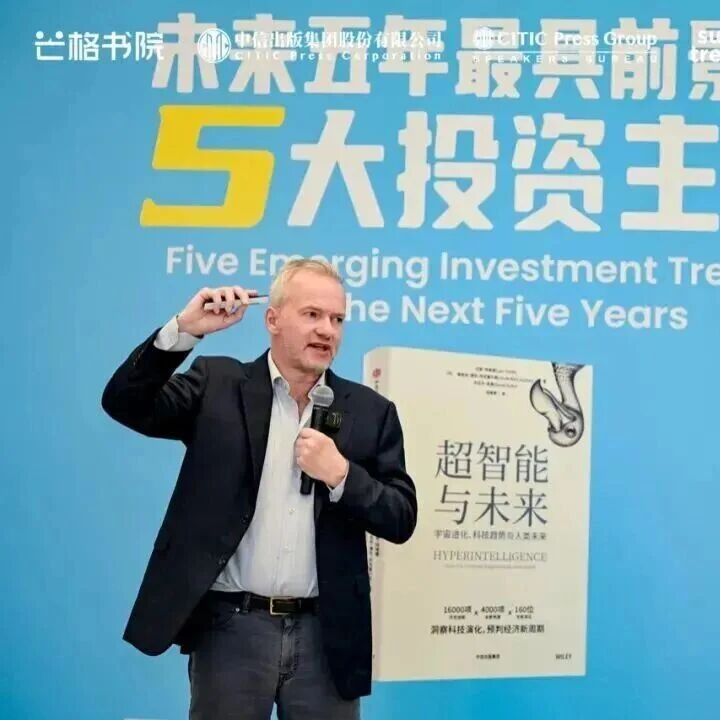
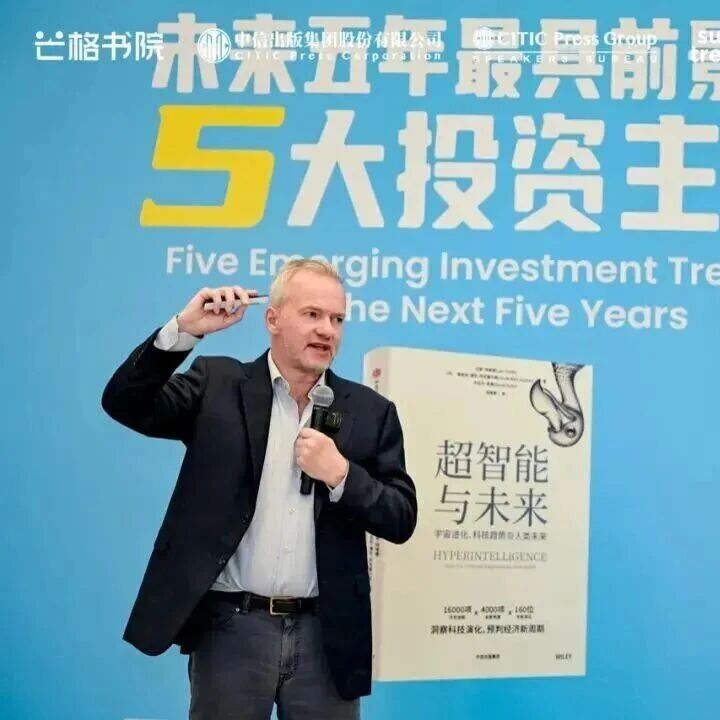
拉斯·特维德:未来5年最具前景的5大投资主题
首席商业评论· 2025-10-20 04:21
Group 1 - The core investment themes for the next five years include technology, metals and mining, passion investments, ASEAN and Chinese markets, and biotechnology [9][30][40] - The rapid growth of AI technology is expected to drive significant profits in the future, with effective compute power increasing by 100,000 times from 2019 to 2023 [13][19] - The emergence of generative AI is anticipated to create strong business moats for companies that effectively utilize it, contrasting with the commoditization of large language models [20][19] Group 2 - The metals and mining sector is projected to face a potential shortage, particularly in uranium, silver, and platinum, with uranium prices expected to rise by 225% if they return to historical peaks [31][30] - Passion investments, such as prime real estate and limited edition assets, are expected to see increased demand as wealth grows, despite their supply remaining fixed [33] - The ASEAN and Chinese markets are highlighted for their potential growth, with China showing significant innovation capabilities and a favorable investment environment [36][38] Group 3 - The biotechnology sector is currently undervalued, with an average P/E ratio of 10-11, and is expected to benefit from AI advancements that lower R&D costs and accelerate product development [40][42] - The future of work is projected to be heavily influenced by AI, with estimates suggesting that 80% of jobs could be performed by intelligent robots by 2050 [29][22] - The development of physical AI, including robotics and autonomous vehicles, is expected to create a significant market by 2027-2028, with China positioned to play a crucial role [24][28]

拉斯·特维德:未来5年最具前景的5大投资主题
首席商业评论· 2025-10-01 04:02
Core Viewpoint - The article discusses the future investment opportunities and risks identified by Lars Tvede, focusing on five key themes for the next five years, including technology, metals and mining, passion investments, ASEAN and Chinese markets, and biotechnology [6][9]. Group 1: Key Investment Themes - Technology is highlighted as a primary investment area, although current valuations are generally high [9]. - The metals and mining sector is expected to experience significant growth due to potential shortages, particularly in uranium, silver, and platinum [30]. - Passion investments, which include unique assets like prime beachfront properties and limited-edition cars, are anticipated to see increased demand as wealth grows [33]. - The ASEAN and Chinese markets are projected to thrive, with China showing significant innovation capabilities and potential for economic growth [36][37]. - The biotechnology sector is currently undervalued and is expected to benefit from advancements in AI, leading to a surge in new products and services [40][42]. Group 2: AI and Its Impact - The article emphasizes that a significant portion of future profits will derive from generative AI, which is expected to create strong business moats for companies that effectively implement it [19][20]. - The effective compute power for AI has increased dramatically, with estimates showing a growth of 100,000 times from 2019 to 2023, and this trend is expected to continue [13]. - The rise of reasoning AI and physical AI is anticipated to transform various industries, with predictions indicating that by 2050, 80% of physical labor could be performed by intelligent robots [22][29]. Group 3: Market Dynamics - The article notes that the current valuation of metals is not overly low, making significant price increases challenging, except for specific metals like uranium [30]. - The Asian markets, particularly those in ASEAN, are highlighted for their potential growth, with low forward P/E ratios and significant economic growth prospects [36][37]. - The Chinese stock market is currently at a historical low, presenting a potential opportunity for significant gains as capital flows into the market [38]. Group 4: Future of Energy - The article discusses the potential for nuclear energy, particularly small modular reactors, to play a crucial role in the future energy landscape, with predictions of significant advancements in nuclear fusion technology [57][59]. - The shift towards nuclear energy is seen as a necessary step for companies to meet energy demands sustainably while reducing carbon emissions [58].
Meta眼镜支持高通上季营收略超预期,手机业务意外乏力,盘后一度跌6%
美股IPO· 2025-07-30 23:54
Core Viewpoint - Qualcomm's recent quarterly earnings report showed total revenue slightly above expectations, but the weakness in mobile business revenue exceeded Wall Street's forecasts, leading to a significant post-earnings stock decline [1][6]. Financial Data - Revenue: In Q2, Qualcomm reported non-GAAP adjusted revenue of $10.37 billion, a year-over-year increase of 10%, with guidance for Q3 set between $9.9 billion and $10.7 billion, while analyst expectations were at $10.33 billion [4]. - EPS: The adjusted earnings per share (EPS) for Q2 was $2.77, reflecting a 19% year-over-year growth, with guidance for Q3 EPS between $2.60 and $2.80, compared to analyst expectations of $2.72 [5]. - EBT: The earnings before tax (EBT) for Q2 was $3.54 billion, a 17% increase year-over-year [7]. Segment Revenue - QCT: The semiconductor business, which includes mobile, automotive, and IoT chip products, generated $8.99 billion in Q2, a year-over-year increase of 11% [8]. - QTL: The technology licensing business reported revenue of $1.32 billion in Q2, a 4% year-over-year increase [9]. Performance Guidance - Revenue: For Q3, Qualcomm expects revenue between $10.3 billion and $11.1 billion, with analyst expectations at $10.61 billion. The QCT revenue guidance is between $9 billion and $9.6 billion, while QTL guidance is between $1.25 billion and $1.45 billion [12]. - EPS: The expected adjusted EPS for Q3 is between $2.75 and $2.95, with analyst expectations at $2.84 [13]. Business Performance Insights - Qualcomm's revenue growth slowed to 10% in Q2 from 15% in Q1, with mobile business revenue increasing by 7%, which was below analyst expectations of nearly 10% [14][15]. - The core mobile business revenue grew by 7% to $6.33 billion, accounting for 61% of total revenue, significantly lower than the 12% growth in Q1 [15]. - Automotive revenue grew by 21% to $980 million, while IoT revenue increased by 24% to $1.68 billion, although both growth rates were lower than in the previous quarter [17]. Strategic Insights - Qualcomm's CEO highlighted the company's AI strategy, emphasizing the importance of manufacturing chips for devices like Meta's smart glasses, which aligns with the vision of "personal AI" [18].