
地区和平与稳定

Search documents
卡塔尔首相与联合国秘书长通电话 重点讨论加沙局势
Yang Shi Xin Wen· 2025-10-10 19:48
Core Viewpoint - The discussion between Qatar's Prime Minister and the UN Secretary-General focused on the latest developments in the Gaza situation, particularly the implementation of the first phase of the ceasefire agreement [1] Group 1: Ceasefire Agreement - Both parties exchanged views on the execution of the first phase of the ceasefire agreement and mechanisms to ensure its full implementation [1] - The Prime Minister emphasized that the successful implementation of the first phase of the agreement and achieving regional peace and stability is a shared responsibility [1] - The UN Secretary-General praised Qatar's key diplomatic role and relentless efforts in facilitating the ceasefire agreement [1] Group 2: Involvement of Mediators - Egypt and Qatar, among other mediators, announced that Israel and Hamas have reached an agreement on all terms and implementation mechanisms of the first phase of the ceasefire on October 9 [1]
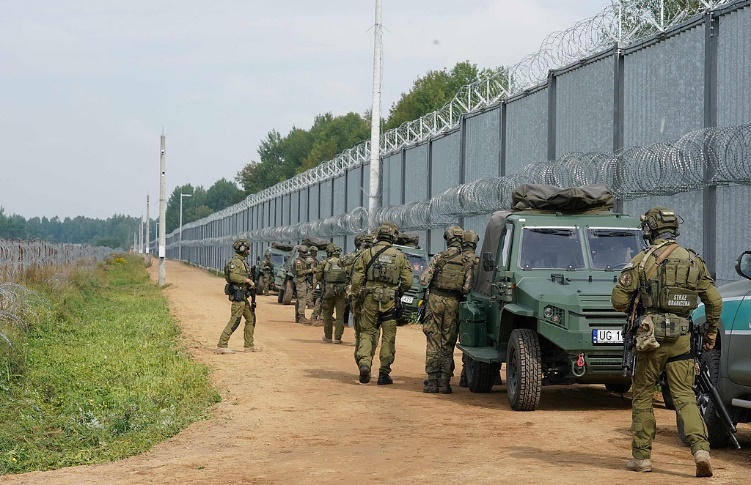
卢卡申科回应波兰等国拟在边境布雷:我们愿开拖拉机前往受欢迎的地方
Huan Qiu Wang· 2025-09-15 13:13
Core Viewpoint - The article discusses Belarusian President Lukashenko's remarks on the increasing provocations from the West towards Belarus and Russia, emphasizing a desire for friendly cooperation rather than military confrontation [1][3]. Group 1: Western Policies and Military Actions - Lukashenko claims that the West continues to view Belarus, Russia, and their alliance as a threat, leading to NATO accelerating military armament in Europe [3]. - He criticizes Poland and the Baltic states for creating defensive measures, such as the construction of barriers at the Belarus border, as attempts to pressure Belarus [3]. - The Belarusian President asserts that there is currently no significant risk or direct military threat, describing anti-personnel mines as defensive weapons [3]. Group 2: Belarus's Stance on Cooperation - Lukashenko expresses Belarus's willingness to develop friendly cooperation with any sincere parties, stating a preference for visiting with tractors rather than tanks [1][3]. - He questions the effectiveness of Western neighbors' actions in promoting regional peace and stability, highlighting concerns over corruption in the funding of border security measures [3]. Group 3: Poland's Response - Poland announced the closure of all border crossings with Belarus due to joint military exercises between Russia and Belarus, citing national security concerns [1][3]. - The Polish Interior Minister stated that the border will only reopen when the government is confident in the safety of Polish citizens [3].

多国谴责以色列袭击卡塔尔
Yang Shi Xin Wen Ke Hu Duan· 2025-09-10 23:15
Group 1 - Multiple countries condemned Israel's airstrike on Qatar's capital, emphasizing the need for all parties to cease attacks [1] - Colombia's Foreign Ministry strongly criticized Israel's actions as a violation of international law and called for adherence to humanitarian law [2] - Indonesia's President expressed unwavering support for Qatar's sovereignty and its efforts for peace in the Middle East [3] Group 2 - Iran's military leadership condemned Israel's aggression, asserting that these actions are coordinated by the United States [4] - Jordan's Crown Prince visited Qatar, pledging to utilize all available resources to support Qatar against challenges posed by ongoing Israeli attacks [5] - Hezbollah's leader characterized the Israeli actions as part of a broader "Greater Israel" plan and called for solidarity with Qatar [6]
委内瑞拉再发警告:美军事行动严重威胁拉丁美洲稳定
Yang Shi Xin Wen· 2025-08-30 04:02
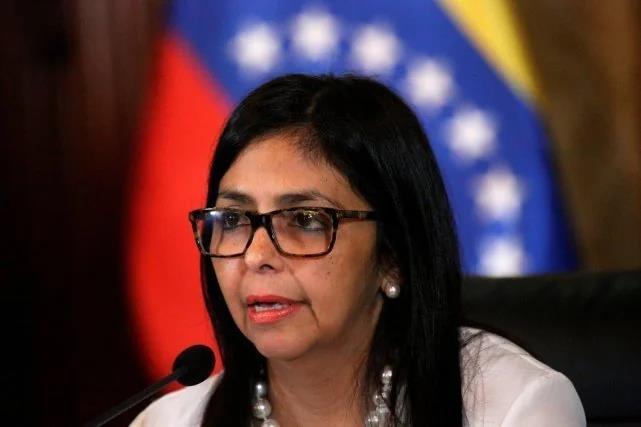
Core Viewpoint - The Venezuelan Vice President Rodríguez warns that potential U.S. military actions could severely threaten peace and stability in Latin America, asserting that Venezuela is prepared to respond to any situation arising from U.S. naval deployments in the Caribbean [1] Group 1 - The U.S. has decided to deploy naval vessels near Venezuela under the pretext of combating drug trafficking, raising concerns among regional countries [1] - Rodríguez states that the proximity of U.S. military forces to Venezuela's coast will be regarded as a direct threat, and Venezuela will respond firmly [1] - Venezuelan Foreign Minister Arreaza announced that the government has submitted an official note to the UN Secretary-General condemning the recent hostile actions by the U.S. against Venezuela [1]
玻利维亚前总统:美在加勒比地区军事部署是对地区稳定的挑衅
Yang Shi Xin Wen Ke Hu Duan· 2025-08-25 00:04
Group 1 - The former Bolivian president Morales claims that the U.S. military deployment in the Caribbean, near Venezuela's territorial waters, is a clear provocation to peace and stability in the region [1]
阿联酋总统与伊朗总统通电话 讨论加强双边关系等议题
news flash· 2025-07-15 18:32
Core Viewpoint - The phone call between UAE President Mohammed and Iranian President Pezeshkian focused on strengthening bilateral relations and achieving mutual benefits for both nations, emphasizing regional peace and stability [1] Group 1: Bilateral Relations - The leaders discussed enhancing bilateral relations to bring prosperity and progress to their peoples [1] - Both parties exchanged views on several regional and international issues of mutual concern [1] Group 2: Regional Stability - President Mohammed reiterated the UAE's commitment to supporting efforts that contribute to regional peace and stability [1] - The conversation highlighted the latest developments in the Middle East situation [1]
刚果(金)与卢旺达签署和平协议
news flash· 2025-06-27 20:58
Core Points - The Democratic Republic of the Congo (DRC) and Rwanda signed a comprehensive peace agreement in Washington, D.C., aimed at ending a 30-year conflict and promoting peace and stability in the Great Lakes region of Africa [1] - The agreement includes commitments to respect territorial integrity, cease hostilities, and facilitate the disarmament and reintegration of illegal armed groups [1] - A permanent joint security coordination mechanism will be established, and provisions for the safe return of refugees and internally displaced persons will be implemented [1] Agreement Details - The agreement immediately takes effect following its signing [1] - Key officials present at the signing included the Rwandan Minister of Foreign Affairs, the DRC Minister of Foreign Affairs, and the U.S. Secretary of State, along with representatives from the African Union and the Qatari government [1] - An annex to the agreement outlines plans to weaken and disarm the Rwandan opposition group, the Democratic Forces for the Liberation of Rwanda (FDLR), and includes arrangements for Rwanda to gradually lift defensive measures [1]
伊朗外长阿拉克奇:(向阿联酋外长表示)美国和以色列的非法攻击对地区和平与稳定构成前所未有的威胁。
news flash· 2025-06-24 10:11
Group 1 - The Iranian Foreign Minister, Zarif, expressed that the illegal attacks by the United States and Israel pose an unprecedented threat to regional peace and stability [1]
日本外相与伊朗外长通电话请求保持克制
news flash· 2025-06-17 04:46
Core Points - Japan's Foreign Minister Taro Kono and Iran's Foreign Minister Mohammad Javad Zarif discussed the ongoing conflict between Iran and Israel, emphasizing the need for restraint to prevent further escalation [1] - Both parties agreed to maintain close dialogue for regional peace and stability [1] - Zarif claimed that Israel's preemptive attacks were aimed at obstructing nuclear negotiations between Iran and the United States [1] - Kono requested Iran's assistance in protecting Japanese nationals in the region, to which Zarif responded with a commitment to provide full cooperation [1] - Kono is also coordinating a phone call with Israeli officials [1]
阿联酋总统:我重申继续与美国合作,实现地区和平与稳定的坚定意愿。
news flash· 2025-05-15 16:59
Core Viewpoint - The President of the UAE reaffirms the commitment to continue cooperation with the United States to achieve regional peace and stability [1] Group 1 - The UAE emphasizes the importance of collaboration with the US in addressing regional challenges [1] - The statement reflects the UAE's strategic alignment with US policies in the Middle East [1] - The commitment to peace and stability indicates a proactive approach to regional diplomacy [1]