气温变化

Search documents
北京本周气温先升后降 立春日最高温将达11℃
Xin Lang Cai Jing· 2026-02-01 19:22
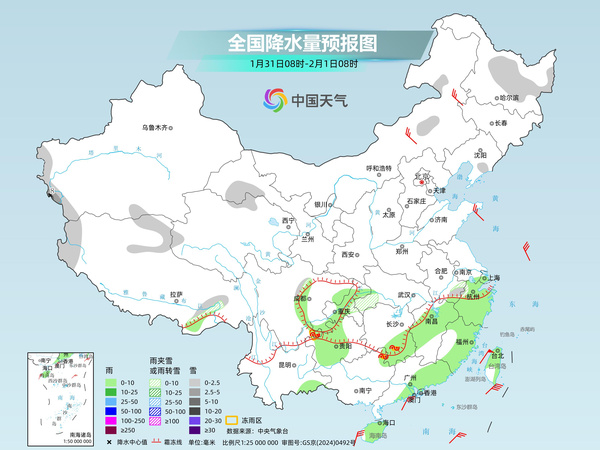
(来源:千龙网) 从全国范围看,本周我国大部地区将进入升温通道,2月4日前后各地气温将达近期高点,东北、江南等 多地累计升温幅度超10℃,较常年同期明显偏暖。同时,大部地区雨雪稀少。 不过2月5日前后,受新一股冷空气影响,冷空气南下和暖湿气流交汇,又将有一次降水过程,江淮、江 汉、江南、西南地区东部及华南大部等地有小到中雨,其中江汉北部、江淮、江南东北部还将出现雨转 雨夹雪或雪;华北北部、东北地区东部的部分地区有分散性零星小雪或小雪。当前正值春运,请旅客及 时关注航班和列车信息。 1日,北京整体天气较好,最高气温达到7℃。不过午后到傍晚云量逐渐增多,并伴有3级左右偏北风, 阵风6级左右,山区局地风力达7级以上,市气象台发布大风蓝色预警。 根据市气象台的最新预报,本周大部分时间以晴到多云为主,气温先升后降,整体温差较大。其中2月4 日将迎来立春,白天最高气温可升至11℃,而5日前后受较强冷空气影响,又会迎来大风降温天气,最 高气温跌至2℃,2月6日最低气温仅-9℃。2月初刚现小暖,就又被冷空气拉回数九寒冬。本周四至周五 北京可能出现降雪。外出滑雪、游玩的市民朋友请做好防寒保暖。北京交管部门提醒,如出现降雪和道 ...
大回暖进行中!立春节气就暖得像3月中下旬,之后还有降温和雨雪吗?
Xin Lang Cai Jing· 2026-02-01 11:05
Temperature Changes - A significant warming trend is underway across most regions of China, with temperature increases of 4-8°C reported in many areas [3] - The warming process is expected to last for 4-5 days, with some regions experiencing temperature rises of up to 20°C, particularly in the northeast and Jiangnan areas [5] - On the day of the beginning of spring, temperatures are projected to be similar to those typically seen in mid to late March [5] Precipitation Patterns - For the next three days, most regions in China will experience minimal rain and snow, with only scattered light precipitation expected in the southwest, northeast, and northern Xinjiang [6] - A new precipitation event is anticipated on the 5th and 6th, bringing light to moderate rain to areas including Jianghuai, Jianghan, Jiangnan, and parts of southern China, with potential for rain to mix with snow in some regions [6] Weather Advisory - As the spring travel season begins, it is advised to pay attention to the latest weather forecasts and ensure safety during travel [8]

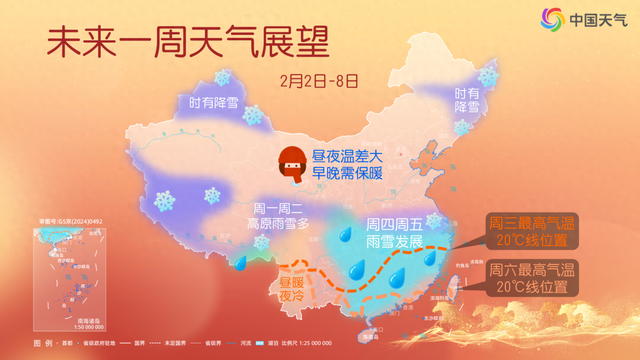
开启升温!多地累计升温幅度将超10℃
Xin Lang Cai Jing· 2026-02-01 11:05
本文转自【新华网】; 我国大部开启升温多地明显偏暖 晴天在线进入降水间歇期 今天(2月1日),我国大部地区将进入升温通道,2月4日前后各地气温将达近期高点,东北、江南等多 地累计升温幅度超10℃,较常年同期明显偏暖。同时,大部地区雨雪稀少,不过2月5日前后,受新一股 冷空气影响,中东部降温雨雪天气将再度发展,需保持关注。 1 全国大部地区开启升温 总体来看,未来一周气温整体都是先升后降的趋势,东北以及长江中下游等地气温波动最为剧烈。大城 市中,像沈阳2月3日将升到6℃,较常年同期明显偏暖,但6日又会降到-8℃,前后冷暖变化较大,公众 需关注气温变化,及时增添衣物。 2 我国进入降水间歇期 下周后期冷空气将携雨雪来袭 未来几天,我国将进入降水间歇期,大部地区天气晴朗。中央气象台预计,今天,内蒙古中东部、新疆 南疆西部山区、西藏西部和北部、青海西南部等地部分地区有小雪或雨夹雪,其中,西藏西部等地部分 地区有中到大雪。西藏东南部、贵州中西部、云南东部、福建东南部、广东东部沿海、海南岛、台湾岛 等地部分地区有小到中雨。 东北江南多地较常年同期明显偏暖 冷空气影响接近尾声,昨天,长江以北地区开启升温模式,但江南东部、华 ...
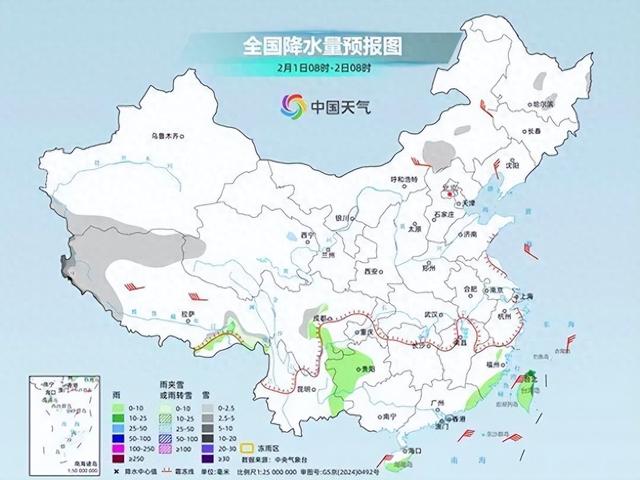
最高17℃!贵阳贵安下周气温回暖
Xin Lang Cai Jing· 2026-02-01 11:04
2月6日夜间到7日白天,多云转阴天,气温下降,主城区气温4~9℃; 从最新气象资料分析,预计明天白天全市维持阴天为主,周二开始转为白天以阴天间多云,夜间偶有零 星小雨,气温逐步回升,最高点可能在周五白天,主城区东山气象站最高可达16℃左右。气象专家表 示,周五夜间抵达的冷空气"逗留"时间较短,对"春运"影响不大。 贵阳市气象台具体预报: 2月1日夜间到2日白天,阴天,夜间有零星小雨,主城区气温3~9℃; 2月2日夜间到3日白天,阴天间多云,主城区气温6~11℃; 2月3日夜间到4日白天,阴天间多云有零星小雨,局地有雾,主城区气温7~13℃; 2月4日夜间到5日白天,阴天间多云有零星小雨,局地有雾,主城区气温10~17℃; 2月5日夜间到6日白天,小雨转多云,主城区气温7~16℃; 2月1日,记者从贵阳市气象台获悉,明天过后贵阳贵安各地气温明显回升,日最高气温升至10℃以上, 下周五晚上冷空气登场,气温下降。 今日清晨,贵阳贵安气温已降至本次冷空气以来的最低点,全市低于0℃及以下的站点有27站,白云区 牛场石龙-1℃最低。午后气温变化不大,各地最高气温维持在"个位数"。 2月7日夜间到8日白天,阴天有零星小雨, ...
大回暖!直冲17℃!下周还有转折→
Xin Lang Cai Jing· 2026-02-01 10:01
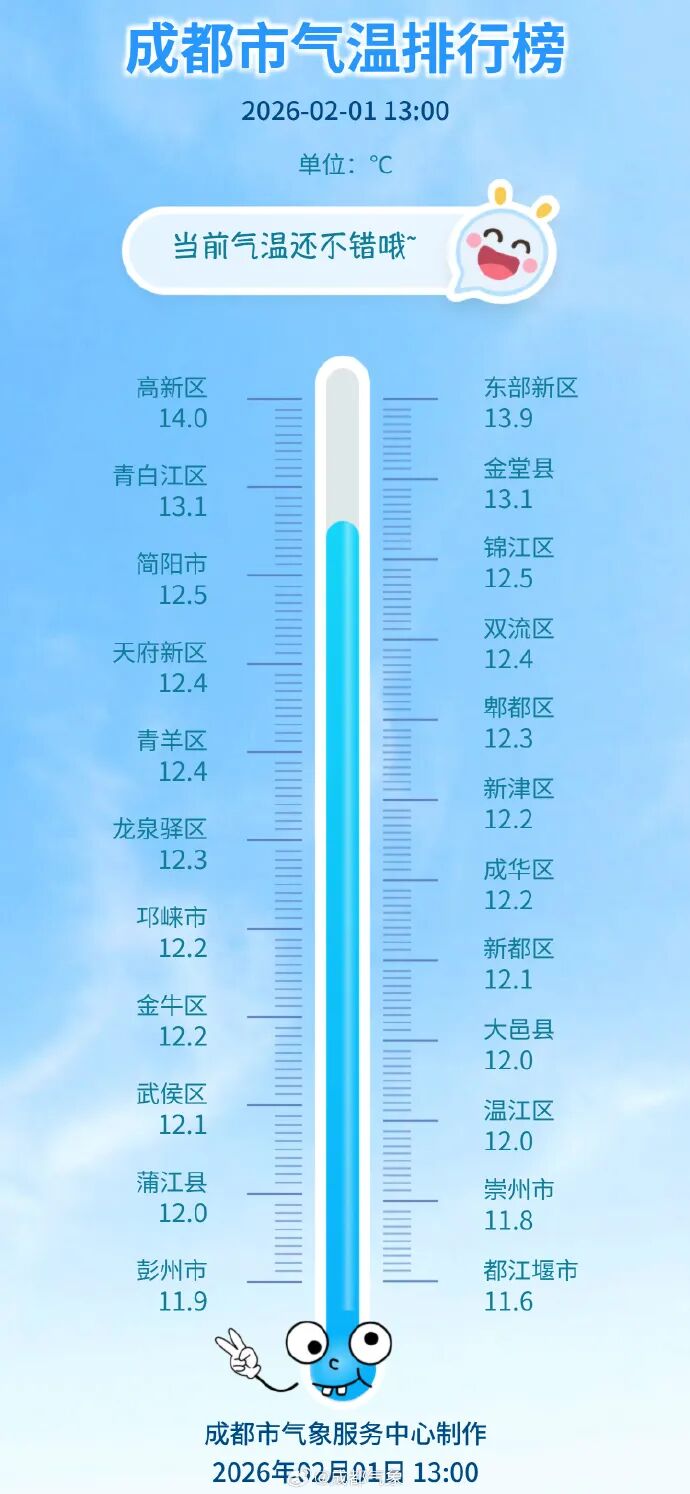
截至今天13时 全市气温已全部升至11.6℃以上 报! 暖阳回归 今天你在哪里晒太阳 转自:成都发布 预计未来一周 我市以阴天间多云 或多云间阴天气为主 2日夜间和5日夜间有分散小雨 整体降雨偏弱 气温缓慢回升 >>2月1日晚上到2日白天:多云间阴,气温3~15℃;中心城区,多云间阴,气温3~14℃。 >>2日晚上到3日白天:阴天间多云,夜间西部山区有分散小雨,气温5~15℃;中心城区,阴天间多云,气温6~14℃。 体感明显转暖 >>3日晚上到4日白天:多云间阴,气温6~16℃;中心城区,多云间阴,气温7~15℃。 >>4日晚上到5日白天:阴天间多云,气温5~17℃;中心城区,阴天间多云,气温6~16℃。 >>5日晚上到6日白天:阴天间多云,夜间有分散小雨,气温5~16℃;中心城区,阴天间多云,夜间有分散小雨,气温6~15℃。 >>6日晚上到7日白天:多云间阴,气温5~16℃;中心城区,多云间阴,气温6~15℃。 >>7日晚上到8日白天:多云间阴,气温4~15℃;中心城区,多云间阴,气温5~14℃。 大回暖持续近5天 新一轮冷空气5日登场 一键式升温来了!除江南南部、华南一带昨天仍在降温,全国大部气温已开始回 ...
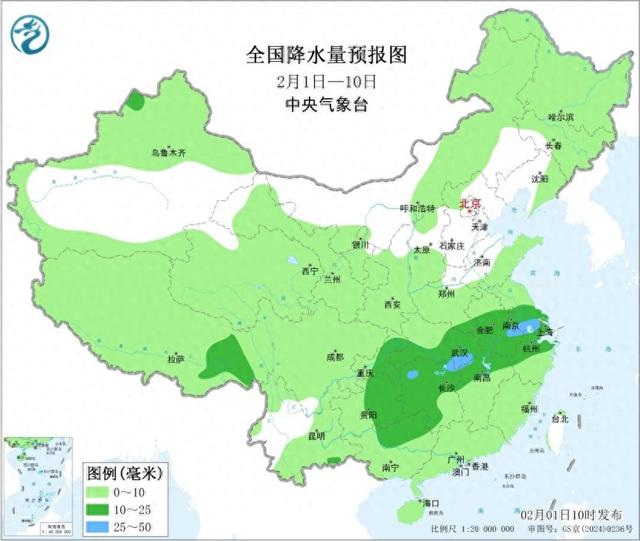
未来十天江淮江汉等地降水量偏多 5-7日冷空气将影响中东部地区
Xin Lang Cai Jing· 2026-02-01 03:51
Core Viewpoint - The weather forecast indicates significant variations in precipitation and temperature across different regions of China over the next ten days, with cold air expected to impact the central and eastern parts of the country [1][4]. Precipitation Summary - In the past ten days (January 22-31), regions such as the western Huanghuai, Jianghuai, Jianghan, and most of Jiangnan experienced cumulative precipitation of 5-20 millimeters, with some areas in northeastern Jiangnan receiving 30-40 millimeters. Compared to the same period in previous years, precipitation was above average in the aforementioned regions, while most other areas saw below-average rainfall [1]. - The forecast for the next ten days (February 1-10) predicts that Jianghuai, Jianghan, western and northern Jiangnan, southwestern China, and southeastern Tibet will receive 5-20 millimeters of precipitation, with localized areas in northern Jiangnan expecting 25-40 millimeters. Other regions like northern Xinjiang and parts of Heilongjiang and Jilin may see 3-5 millimeters, with some areas reaching around 10 millimeters [1][3]. Temperature Summary - Average temperatures in the past ten days were 1-2°C lower than the historical average in regions such as central and eastern Inner Mongolia, most of Northeast China, and parts of North China. Some areas in central and southern Northeast China experienced temperature drops of 4-6°C. Conversely, regions like northern Xinjiang and parts of the northwest, eastern Jiangnan, and eastern Yunnan saw temperatures 1-3°C higher than average [1][3]. - The upcoming ten days will see average temperatures in central and eastern regions drop by 4-8°C due to cold air, with some areas in northeastern China and northern Jiangnan experiencing drops exceeding 10°C. Most other regions will have temperatures 1-3°C above the historical average, particularly northern Xinjiang, which may see increases of over 4°C [4]. Weather Events - From February 5-7, cold air will affect most of the central and eastern regions, leading to a temperature drop and light to moderate rain in southern areas, with some regions experiencing rain turning to sleet or snow [4]. - By February 9, areas in the northwest, Huanghuai, and Jianghan may see sleet or snow, while Jianghuai, Jiangnan, and northern Huannan will experience light rain, with localized areas receiving moderate rain [4]. Air Quality - From February 1-4, light to moderate haze is expected in southern North China, central and western Huanghuai, and Jianghan. However, starting February 5, the haze is expected to gradually dissipate due to the influence of cold air [7].
我国多地开启升温模式 下周后期冷空气将携雨雪来袭
Jin Rong Jie· 2026-02-01 01:36
Group 1 - The majority of regions in the country will enter a warming phase, with temperatures reaching recent highs around February 4, indicating a significant warming trend [1] - In areas such as Northeast and Jiangnan, the cumulative temperature increase will exceed 10°C, which is notably warmer compared to the same period in previous years [1] - Most regions will experience little rain or snow; however, a new cold air mass will bring a drop in temperature and precipitation around February 5, which requires attention [1]
中东部气温反弹南方多地2月初将暖如春 雨雪明显减弱迎间歇期
Yang Shi Wang· 2026-01-31 00:58
Group 1 - The core viewpoint of the articles indicates a significant temperature drop in southern China due to cold air, with a shift in the main cooling areas to the central and eastern parts of Jiangnan and southern China, where local temperature drops can reach 12°C [2][3] - The cold air has caused temperatures in many regions to fall below the normal levels for this time of year, with the highest temperature line retreating to northern Guangxi, central Jiangxi, and central Zhejiang [2] - By February 4, temperatures in many areas of North China are expected to rise above 10°C, with some regions reaching 15°C, indicating a warming trend following the cold snap [2] Group 2 - Rain and snow in the central and eastern regions are expected to weaken, with a noticeable reduction in the affected areas, leading to a precipitation break for most regions starting tomorrow [3][5] - Specific areas such as parts of Xinjiang, Tibet, and northeastern regions may still experience light snow or sleet, while other southern regions may see light rain [5][6] - Public safety is emphasized due to ongoing rain and snow in some southern areas, advising caution for travel and driving conditions [6]
晴冷还将持续 周末气温回升
Xin Lang Cai Jing· 2026-01-28 22:02
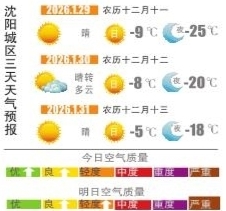
本报讯(沈阳晚报、沈阳发布客户端记者 徐佳婷 刘强 杨硕)1月28日,记者从沈阳市气象部门获悉, 预计周四(29日)沈城晴日依旧相伴,最高气温在-9℃左右,最低气温在-25℃上下,晴冷的天气里阳 光是最好的馈赠,大家不妨在午后出门走走,感受冬日独有的静谧与安然;周五(30日)沈城以晴天为 主,云朵偶有穿梭,气温稍有回升,不过幅度不大,最高气温在-8℃上下,最低气温在-20℃附近,提 醒早晚外出的市民,依然要做好防寒保暖,以免感冒。 (来源:沈阳晚报) 目前来看,周六(31日)至下周二(2月3日)沈城将以晴好天气为主导,气温开启"阶梯式回升"模式, 其中下周二沈城最高气温将回升至6℃附近,偏南风与南风交替吹拂,带着一丝温润的气息,沈城的冬 日正在悄悄回暖,愿您在这样好的天气里,收获满满的温暖与惬意。 转自:沈阳晚报 ...
北京本周五西部北部再飘雪,最高温将短暂跌至冰点上下
Xin Lang Cai Jing· 2026-01-27 04:21
"五九"的第二天,一早天空清爽,白天暖阳在线,风力不大,预计最高气温在4℃左右,与昨天相近, 午间较适宜户外活动~ 今天下班:晴间多云;偏南风;2、3级;3~-1℃。 明天早晨:多云;偏北风;1、2级;-6~-2℃。 (拍摄:延庆~苏玉强) 【昨日观象台气温实况】 昨天白天(26日08时至20时),最高气温为5.2℃(15:27)。 夜间(26日20时至27日08时),最低气温为-6.2℃(07:15)。 29日白天:阴转多云;东转南风2级左右;平原地区最高气温2℃,山区最高气温0~2℃。 29日夜间:多云转阴;南转东风1、2级;平原地区最低气温-4℃,山区最低气温-9~-6℃。 天气趋势 北京天气 月末这几天,天空云量逐步增多,到30日前后天空转阴,西部北部将再有雪花飘落,雪量不大,全市白 天最高气温再次跌至0℃上下。好在降温时间较短,之后气温呈现较平稳回升~ 天气预报 27日白天:晴间多云;北转南风2、3级;平原地区最高气温4℃,山区最高气温1~4℃;最小相对湿度 20%。 27日夜间:晴转多云;南转北风1、2级;平原地区最低气温-6℃,山区最低气温-12~-9℃;最大相对湿 度50%。 28日白天:多云 ...