雾霾天气

Search documents
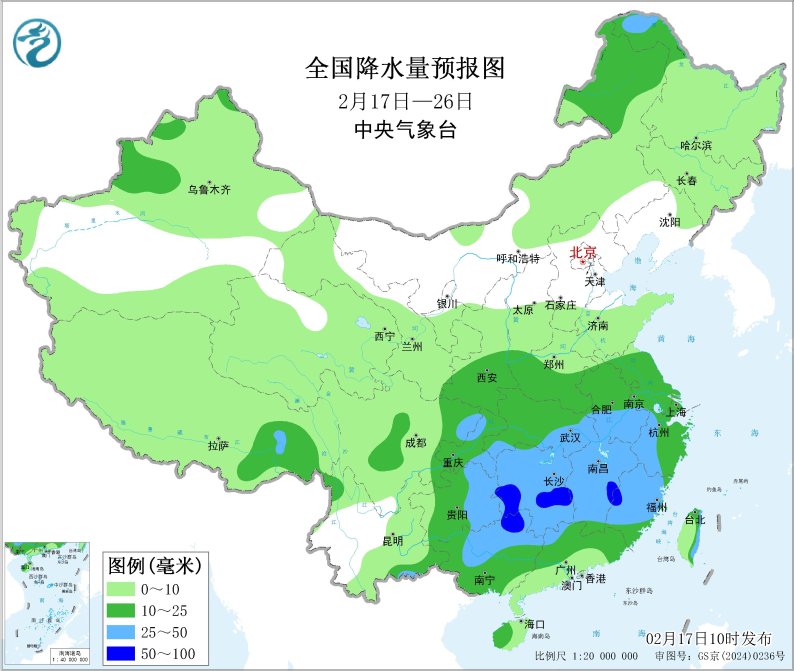
中央气象台:20日前全国大部气温显著回升 21-24日较强冷空气将影响中东部地区
Xin Lang Cai Jing· 2026-02-17 03:52
Summary of Key Points Core Viewpoint - The article discusses the recent weather patterns in China, highlighting significant temperature increases and upcoming cold air impacts on the central and eastern regions. Group 1: Recent Weather Conditions - Over the past ten days (February 7-16), most regions in China experienced below-average precipitation, with temperatures 1-2°C higher than normal, and some areas in northern Xinjiang seeing increases of 3-4°C [1][3] - Cumulative precipitation in regions like Jianghan, Jiangsu, and parts of Guangxi ranged from 5 to 20 millimeters, with some areas in northeastern Jiangnan receiving 30-60 millimeters [1] Group 2: Future Weather Forecast - In the next ten days (February 17-26), temperatures in regions such as Xinjiang, North China, Northeast China, and parts of South China are expected to be 1-3°C above normal, while areas like northern Xinjiang and Jianghan may see temperatures drop by 1-3°C [3] - From February 21-24, a strong cold air mass will affect the central and eastern regions, leading to temperature drops of 4-8°C, with some areas experiencing drops of 12-14°C, accompanied by winds of 4-6 levels, and gusts reaching up to 10 levels [5][8] Group 3: Weather Events and Impacts - Between February 17-19, most of the country will have clear to partly cloudy weather, with significant temperature rises, while northern Xinjiang and parts of Northeast China may see light to moderate snow [5] - The period from February 21-24 will bring rain and snow to various regions, with potential thunderstorms in southern areas, and dust storms in parts of Inner Mongolia [9]

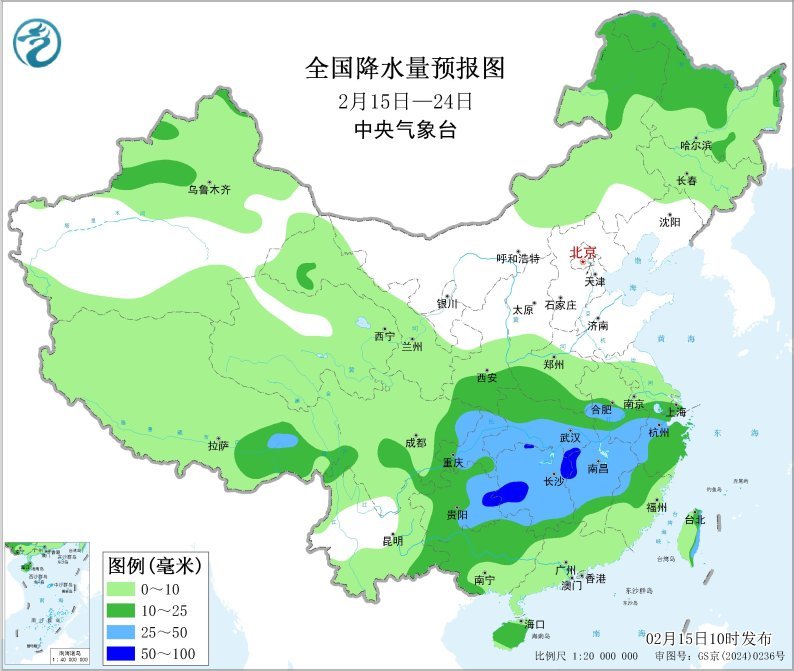
中央气象台:江南北部有较强降水过程 全国大部平均气温偏高但冷暖起伏大
Xin Lang Cai Jing· 2026-02-15 03:15
Summary of Key Points Core Viewpoint - The article discusses recent and upcoming weather patterns in China, highlighting significant rainfall in the Jiangnan region and temperature fluctuations across the country. Group 1: Recent Weather Conditions - Over the past ten days (February 5-14), most regions in China experienced below-average rainfall, with Jiangnan and parts of Guangxi, Guizhou, and Chongqing receiving 5-20 millimeters of precipitation, and some areas in northeastern Jiangnan receiving 30-40 millimeters. Overall, rainfall was less than the historical average for this period [1][2]. - The average temperature across most of the country was 1-2°C higher than normal, with northern Xinjiang seeing an increase of 3-4°C [2]. Group 2: Upcoming Weather Forecast - In the next ten days (February 15-24), significant rainfall is expected in Jiangsu, Jianghan, Jiangnan, and parts of southwestern China, with total precipitation ranging from 10-30 millimeters, and some areas in northern and western Jiangnan and eastern Guizhou could see 40-60 millimeters. This is above the historical average for this time of year [3][4]. - The average temperature in most regions will be 1-3°C higher than the historical average, with areas in Xinjiang, Northeast China, and Huanghuai experiencing increases of 4-6°C [4]. Group 3: Major Weather Events - On February 15-16, a strong cold front will impact northeastern Inner Mongolia, northern Heilongjiang, and parts of Jiangnan, leading to temperature drops of 6-10°C, with some areas in Jiangnan experiencing drops exceeding 12°C. The minimum temperature line will move southward, affecting various regions [6][10]. - Rainfall is expected in southwestern China, Jiangnan, and Huabei, with potential thunderstorms and severe weather conditions, including hail and freezing rain in some areas [9][10]. - From February 21-23, another cold front will further decrease temperatures by 4-8°C across central and eastern regions, with some areas experiencing drops over 10°C [11]. Group 4: Visibility and Air Quality - On February 15, dense fog is anticipated in southern Jiangsu, northern Zhejiang, and parts of Hunan and Jiangxi, with visibility dropping below 1 kilometer in some areas. Additionally, light to moderate haze is expected in regions such as Huabei and Huanghuai starting from the night of February 16 [12].
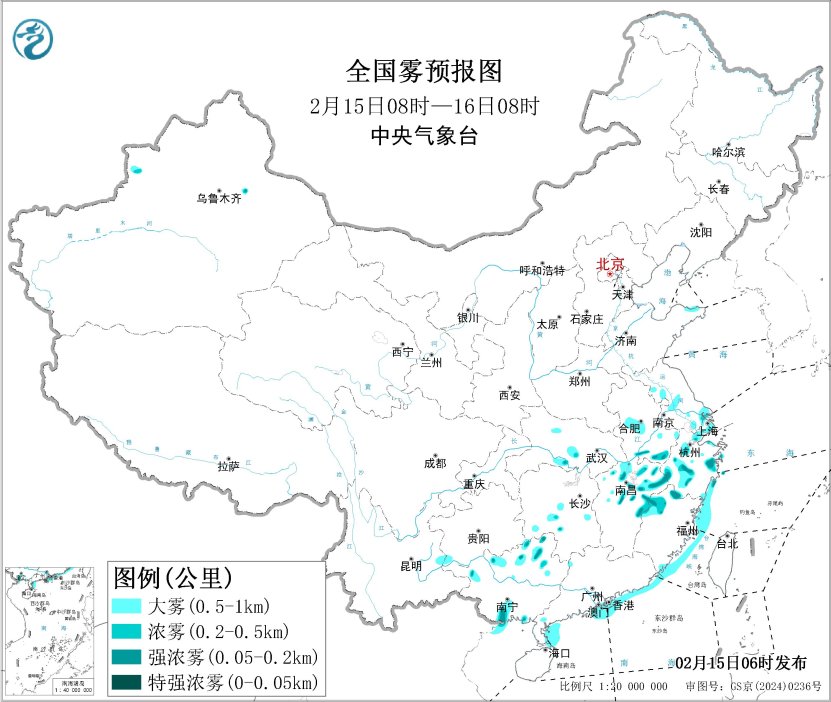
中央气象台:江南中部华南西部等地部分地区有大雾天气
Xin Lang Cai Jing· 2026-02-15 01:09
Group 1 - The article discusses the weather conditions in various regions of China, highlighting the occurrence of fog and haze [1][3][4] - From February 15 to 16, areas such as southern Jiangsu, northern Zhejiang, central Hunan, northern Jiangxi, and parts of Guangxi are expected to experience dense fog with visibility below 1 kilometer, and in some areas, visibility may drop below 200 meters [1] - The Central Meteorological Observatory issued a yellow warning for fog on February 15 at 06:00 [1] Group 2 - The air diffusion conditions are generally good across most of the country from February 15 to 16, with only light haze reported in southern North China, central and western Huanghuai, and eastern Jianghuai [3][4] - Starting from the night of February 16, air diffusion conditions in regions such as southern North China, Huanghuai, Jianghuai, Fenwei Plain, and Sichuan Basin are expected to deteriorate, leading to light to moderate haze [3][4][5][6] - The Pearl River Delta region is forecasted to have good air diffusion conditions with no significant fog or haze expected in the coming week [7]
未来十天江淮江汉等地降水量偏多 5-7日冷空气将影响中东部地区
Xin Lang Cai Jing· 2026-02-01 03:51
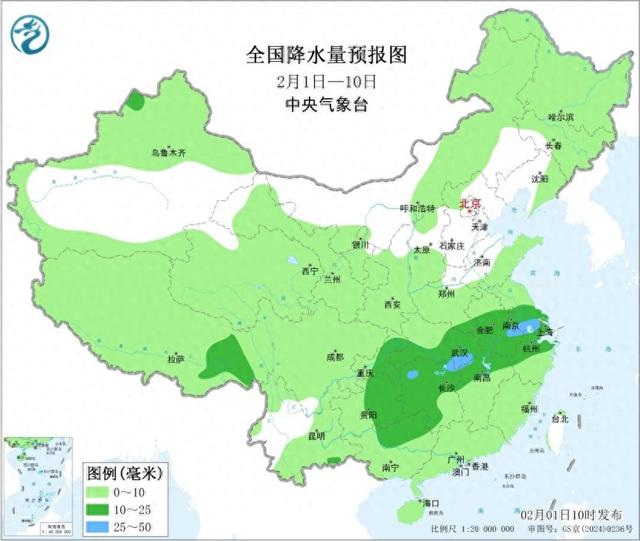
Core Viewpoint - The weather forecast indicates significant variations in precipitation and temperature across different regions of China over the next ten days, with cold air expected to impact the central and eastern parts of the country [1][4]. Precipitation Summary - In the past ten days (January 22-31), regions such as the western Huanghuai, Jianghuai, Jianghan, and most of Jiangnan experienced cumulative precipitation of 5-20 millimeters, with some areas in northeastern Jiangnan receiving 30-40 millimeters. Compared to the same period in previous years, precipitation was above average in the aforementioned regions, while most other areas saw below-average rainfall [1]. - The forecast for the next ten days (February 1-10) predicts that Jianghuai, Jianghan, western and northern Jiangnan, southwestern China, and southeastern Tibet will receive 5-20 millimeters of precipitation, with localized areas in northern Jiangnan expecting 25-40 millimeters. Other regions like northern Xinjiang and parts of Heilongjiang and Jilin may see 3-5 millimeters, with some areas reaching around 10 millimeters [1][3]. Temperature Summary - Average temperatures in the past ten days were 1-2°C lower than the historical average in regions such as central and eastern Inner Mongolia, most of Northeast China, and parts of North China. Some areas in central and southern Northeast China experienced temperature drops of 4-6°C. Conversely, regions like northern Xinjiang and parts of the northwest, eastern Jiangnan, and eastern Yunnan saw temperatures 1-3°C higher than average [1][3]. - The upcoming ten days will see average temperatures in central and eastern regions drop by 4-8°C due to cold air, with some areas in northeastern China and northern Jiangnan experiencing drops exceeding 10°C. Most other regions will have temperatures 1-3°C above the historical average, particularly northern Xinjiang, which may see increases of over 4°C [4]. Weather Events - From February 5-7, cold air will affect most of the central and eastern regions, leading to a temperature drop and light to moderate rain in southern areas, with some regions experiencing rain turning to sleet or snow [4]. - By February 9, areas in the northwest, Huanghuai, and Jianghan may see sleet or snow, while Jianghuai, Jiangnan, and northern Huannan will experience light rain, with localized areas receiving moderate rain [4]. Air Quality - From February 1-4, light to moderate haze is expected in southern North China, central and western Huanghuai, and Jianghan. However, starting February 5, the haze is expected to gradually dissipate due to the influence of cold air [7].
中央气象台:华北中南部黄淮江汉等地有雾霾
Xin Lang Cai Jing· 2026-01-27 11:36
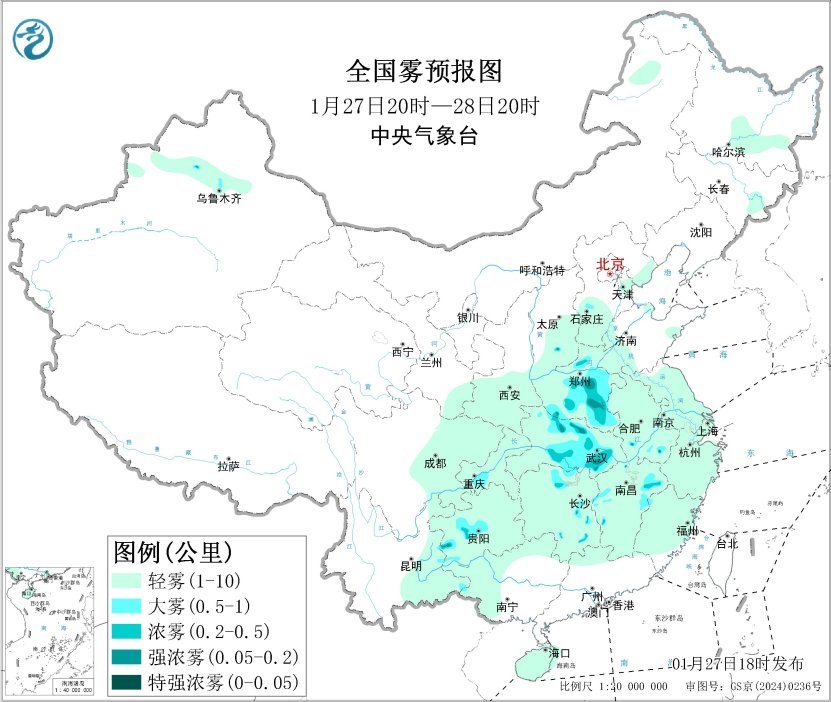
Core Viewpoint - The article discusses the air quality conditions across various regions in China, highlighting the presence of haze and fog in specific areas, with an expectation of improvement due to incoming cold air and precipitation. Group 1: Air Quality Conditions - From the night of the 27th to the 28th, regions in central and southern North China, the Huanghuai area, Fenwei Plain, and Jianghan will experience poor air dispersion conditions, leading to light to moderate haze, with some areas facing heavy haze [1][2]. - The Beijing-Tianjin-Hebei region will see deteriorating air dispersion conditions, resulting in light to moderate haze, and some areas will experience heavy haze [2]. - The Yangtze River Delta region will generally have good air dispersion conditions, but light haze is expected in northern Jiangsu and central-northern Anhui [3]. - The Fenwei Plain will have average air dispersion conditions, with light to moderate haze in southern and central Shanxi and the Guanzhong area of Shaanxi [4]. - In the Central China region, from the night of the 27th to the 29th, areas in central-eastern Hubei and central-northern Hunan will have average air dispersion conditions with light to moderate haze [5]. - The Pearl River Delta region will have generally good air dispersion conditions with no significant haze [6]. - The Southwest region will experience more precipitation, leading to good air cleansing conditions, although light haze may occur in parts of western and southern Sichuan during dry intervals [7]. - The Northeast region will have good air dispersion conditions due to frequent cold air activities, with no significant haze expected [8]. - The Northwest region will see average air dispersion conditions with light to moderate haze in the northern Tianshan area of Xinjiang, along with dust weather in the southern Xinjiang basin [9]. Group 2: Fog Conditions - From the night of the 27th to the morning of the 28th, parts of central-eastern Henan will experience fog, with visibility dropping below 200 meters in some areas [2][5].
新一股冷空气来袭 这些地区将迎雨雪天气
Xin Lang Cai Jing· 2026-01-24 12:26
Group 1 - The upcoming weather in China will experience alternating cold and warm temperatures, with two rounds of cold air expected to impact the region [1] - The first round of cold air will lead to a temperature drop of 4 to 6°C in many areas, with localized drops of around 8°C [2] - The second round of cold air, arriving between January 29 and 31, is expected to be stronger, causing temperature drops of 4 to 8°C, with some areas experiencing drops of up to 10°C [2] Group 2 - The northeastern region will maintain a stable but low temperature, significantly below the seasonal average, with highs around -15°C and lows near -25°C [3] - Two rounds of rain and snow are forecasted for the central and eastern regions, with the first round from January 25 to 27 bringing light to moderate snow in northern areas and rain in southern areas [4] - The second round of precipitation from January 29 to 31 will be more intense, affecting a larger area with potential for heavy snow and freezing rain in certain regions [4] Group 3 - Air quality issues, particularly smog, are expected to recur in the North China Plain and Huanghuai regions, with light to moderate haze returning from January 26 to 29 [5] - Cold air will temporarily disperse haze in central North China, but conditions will worsen again shortly after [5]
中央气象台:华北中南部黄淮等地有霾
Xin Lang Cai Jing· 2026-01-04 00:25
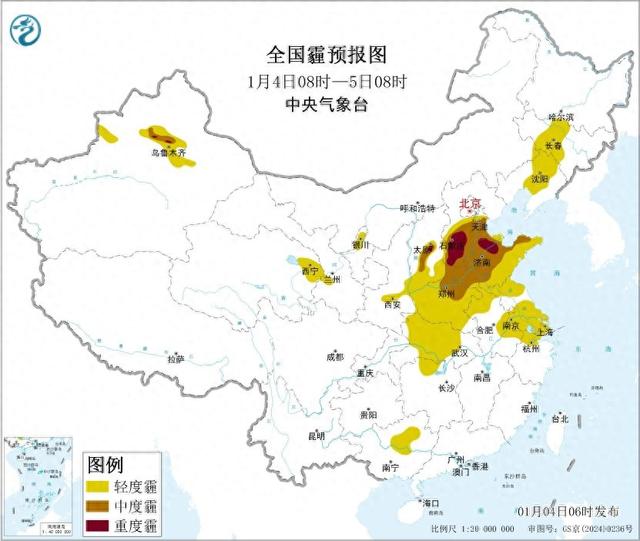
Summary of Key Points Core Viewpoint - The air quality in North China, Central South China, and the Huanghuai region is expected to experience light to moderate haze on January 4, with localized short-term heavy haze. From January 5, the haze will gradually dissipate due to weak cold air influence. For the upcoming week, most parts of the country will have good atmospheric diffusion conditions, with no persistent haze weather expected [1]. Group 1: Regional Forecasts - **Beijing-Tianjin-Hebei and Surrounding Areas**: On January 4, the central and southern parts will have general atmospheric diffusion conditions, with light to moderate haze in some areas and localized short-term heavy haze. From January 5, conditions will improve, leading to a gradual reduction in haze [3]. - **Yangtze River Delta**: From January 4 to 5, most areas will have general atmospheric diffusion conditions, with short-term light haze in parts of Jiangsu and Anhui, and moderate haze in some areas. Starting January 6, conditions will gradually improve due to cold air [4]. - **Fenwei Plain**: On the morning of January 4, the central and southern parts will have general atmospheric diffusion conditions, with light to moderate haze in Shanxi. Haze will gradually dissipate from the afternoon due to cold air [5]. Group 2: Other Regions - **Central Hubei and Northern Hunan**: Light haze is expected from January 4 to 6, with atmospheric diffusion conditions improving from January 7, leading to no significant haze [6]. - **Pearl River Delta**: The region will have good atmospheric diffusion conditions for the upcoming week, with no significant haze expected [6]. - **Southwest Region**: Most areas will have good atmospheric diffusion conditions, with only short-term light haze in parts of the southern Sichuan Basin [7]. - **Northeast Region**: The area will experience active cold air, leading to good atmospheric diffusion conditions, with light haze in some central areas during cold air intervals [8]. - **Northwest Region**: Most areas will have good atmospheric diffusion conditions, but parts of the northern Tianshan Mountains in Xinjiang will experience light to moderate haze, with localized heavy haze. Additionally, from January 8 to 9, some areas in eastern Xinjiang, western Gansu, western Inner Mongolia, Ningxia, and northern Shaanxi may experience dust storms [9].
中东部气温回升 今明两天冷空气影响北方地区
Yang Shi Wang· 2025-12-28 02:42
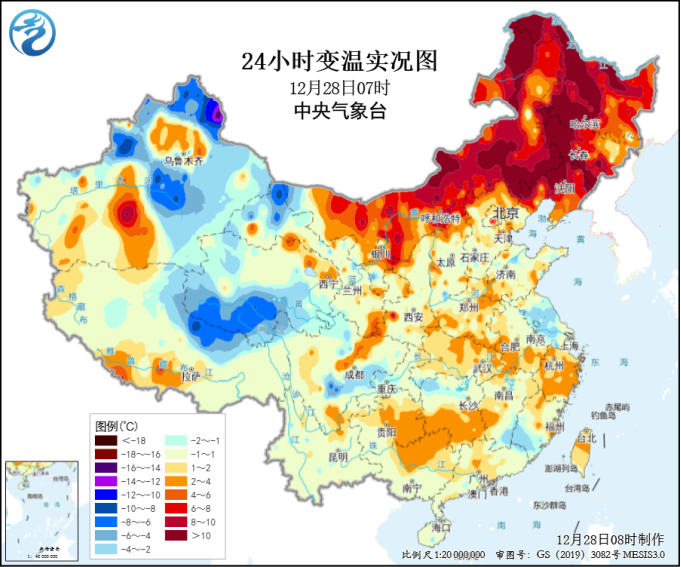
Group 1 - The central meteorological observatory reported a significant warming trend in China's central and eastern regions on December 27, with daytime maximum temperatures rising by 4-6°C in some areas, and locally by 8-10°C [1] - A cold air mass is expected to affect northern regions from December 28 to 30, causing temperature fluctuations, with a decrease of 4-6°C in areas such as Inner Mongolia, northern North China, and the northeast, and locally by more than 10°C [1] - Wind conditions will also change, with 4-5 level north winds and gusts of 6-8 levels in the affected areas, including the Bohai Sea and Yellow Sea [1] Group 2 - On the morning of December 28, fog affected visibility in the Sichuan Basin, while air diffusion conditions in southern North China and Jianghan decreased compared to the previous day [3] - Light to moderate haze is expected in parts of southern North China, Huanghuai, and Jianghan during the day, with some areas experiencing heavy haze [3] - From December 30 to January 1, significant rain and snow are forecasted in eastern Tibet, eastern Northwest China, western Huanghuai, and western Jianghan, with light to moderate rain in eastern Southwest China, Jianghuai, Jiangnan, and South China [3] Group 3 - The national air pollution meteorological conditions forecast indicates varying pollution levels across different regions, with some areas experiencing severe pollution [4] - The national precipitation forecast shows expected rainfall amounts ranging from 0-250 mm in various regions, with specific areas projected to receive significant precipitation [5]
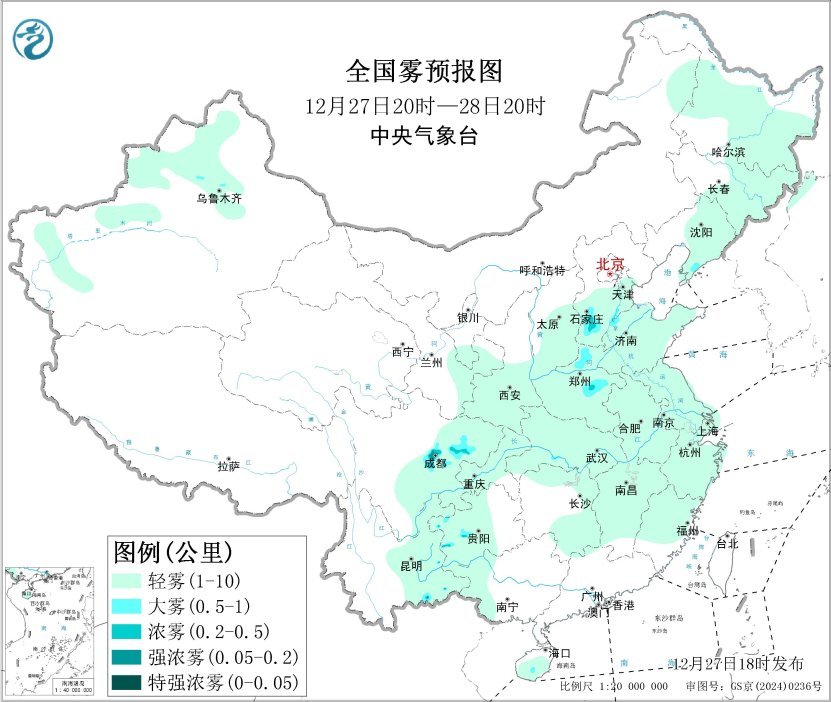
中央气象台:华北中南部黄淮西部等地大气扩散条件一般
Xin Lang Cai Jing· 2025-12-27 10:26
Core Viewpoint - The air diffusion conditions in various regions of China are generally moderate, with some areas experiencing light to moderate haze, but improved conditions are expected due to frequent cold air activity starting from the night of the 28th [1][3][4]. Group 1: Air Quality Forecast - In the Beijing-Tianjin-Hebei region, air diffusion conditions are moderate with light to moderate haze expected until the night of the 28th, after which conditions will improve significantly [3]. - The Yangtze River Delta region will experience moderate air diffusion conditions with light haze until the 29th, but will see better conditions from December 30th to January 1st due to sustained easterly winds [4]. - The Fenwei Plain will have moderate air diffusion conditions with light haze until the 29th, with improvements expected from the 30th due to cold air and precipitation [6]. Group 2: Regional Conditions - In Central China, air diffusion conditions are moderate with light haze in northern Hunan until the 30th, after which cold air and precipitation will lead to improved conditions [7]. - The Pearl River Delta region is forecasted to have generally good air diffusion conditions with no significant haze expected over the next week [8]. - The Southwest region will see moderate air diffusion conditions with light haze until the 29th, improving from the 30th due to precipitation [9]. Group 3: Northeast and Northwest Regions - The Northeast region will experience frequent cold air activity leading to generally good air diffusion conditions, although light haze may occur in some central areas during cold air intervals [10]. - In the Northwest region, the northern slope of the Tianshan Mountains will have moderate air diffusion conditions with light to moderate haze in some areas [11].