3D Printing

Search documents
Materialise NV Announces Results of 2025 Extraordinary Shareholders’ Meeting
Globenewswire· 2025-11-14 21:05
Core Insights - Materialise NV, a leader in additive manufacturing software and 3D printing solutions, announced the approval of all proposed resolutions at its Extraordinary Shareholders' Meeting [1]. Company Overview - Materialise NV has over three decades of experience in 3D printing, offering a range of software solutions and services that support sustainable 3D printing applications [1]. - The company provides open, secure, and flexible end-to-end solutions that facilitate industrial manufacturing and mass personalization across various sectors, including healthcare, automotive, aerospace, eyewear, art and design, wearables, and consumer goods [1]. - Headquartered in Belgium, Materialise NV boasts one of the largest groups of software developers in the industry and operates one of the world's most comprehensive 3D printing facilities [1].


PRNT: 3D Printing And How This Niche Works (BATS:PRNT)
Seeking Alpha· 2025-10-28 21:42
Core Insights - The 3D Printing ETF (BATS: PRNT) provides investors with access to a niche segment of the manufacturing industry, which has the potential to become mainstream [1] - The fund currently has a relatively small asset under management (AUM) of $77 million, and it is advised by ARK [1] Industry Overview - The 3D printing sector is characterized by its growth potential and the ability to deliver value to stakeholders over time [1] - The ETF represents a strategic investment opportunity within the broader manufacturing landscape, appealing to those interested in innovative technologies [1]

3D Systems Announces Major Milestones in Saudi Arabian Growth Initiative
Globenewswire· 2025-10-27 20:30
Core Insights - 3D Systems and Dussur established the National Additive Manufacturing Innovation Company (NAMI) to support Saudi Arabia's Vision 2030 Program, focusing on advanced 3D printing technologies in the defense and energy sectors [1][2] - NAMI has achieved significant milestones, including partnerships with major companies like Saudi Electric Company and Lockheed Martin, enhancing local manufacturing capabilities [4][5] Group 1: Company Developments - NAMI reached critical milestones in deploying advanced 3D printing technologies across Saudi Arabia's energy and defense sectors [4] - Saudi Electric Company acquired a 30% stake in NAMI to enhance production efficiency and reduce costs for spare parts [5] - Lockheed Martin is collaborating with NAMI to manufacture military and aerospace components, reinforcing Saudi Arabia's role in global supply chains [5] Group 2: Industry Impact - The partnership with Saudi Electric Company aims to accelerate the adoption of 3D printing for energy infrastructure applications and develop a skilled workforce [5] - NAMI signed a $26 million framework agreement with Modern Isotope Factory for manufacturing tungsten components, aligning with localization goals [5] - The collaboration with Lockheed Martin is expected to enhance the adoption of additive manufacturing in the aerospace and defense sectors, utilizing 3D Systems' Direct Metal Printing technology [5]

Northann (NCL) - Prospectus(update)
2025-10-24 20:31
As filed with the U.S. Securities and Exchange Commission on October 24, 2025. Registration No. 333-290562 UNITED STATES SECURITIES AND EXCHANGE COMMISSION Washington, D.C. 20549 Amendment No. 1 to FORM S-1 REGISTRATION STATEMENT UNDER THE SECURITIES ACT OF 1933 Northann Corp. (Exact Name of Registrant as Specified in its Charter) (Primary Standard Industrial Nevada 3089 88-1513509 (I.R.S. Employer Identification No.) 2251 Catawba River Rd Fort Lawn, SC 29714 T: (916) 573 3803 (Address, Including Zip Code, ...
Northann (NCL) - Prospectus
2025-09-26 21:21
As filed with the U.S. Securities and Exchange Commission on September 26, 2025. Registration No. 333- 701 S. Carson Street, Suite 200 Carson City, NV 89701 UNITED STATES SECURITIES AND EXCHANGE COMMISSION Washington, D.C. 20549 FORM S-1 REGISTRATION STATEMENT UNDER THE SECURITIES ACT OF 1933 Northann Corp. (Exact Name of Registrant as Specified in its Charter) (Primary Standard Industrial Classification Code No.) Nevada 3089 88-1513509 (I.R.S. Employer Identification No.) 2251 Catawba River Rd Fort Lawn, S ...
QIDI Q2 Launches: Redefining Your First Entry-Level 3D Printer
Globenewswire· 2025-08-20 13:00
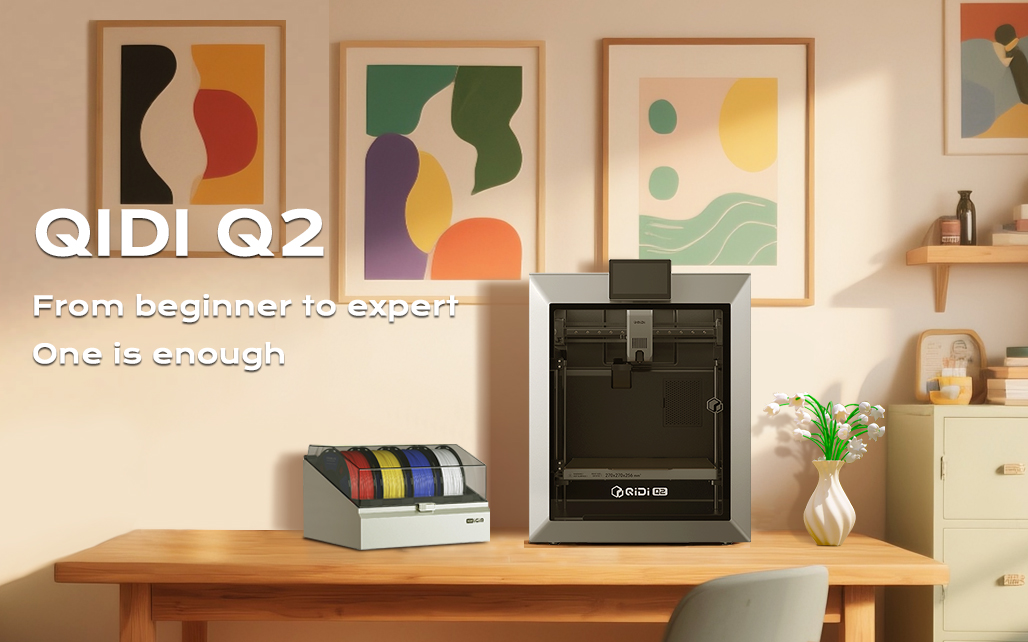
Core Insights - QIDI has launched its latest entry-level 3D printer, QIDI Q2, priced at $499, aimed at home users with significant hardware and performance upgrades [1][19] - The QIDI Q2 features advanced technology such as a next-generation leveling sensor and industrial-grade mechanics, ensuring high stability and precision in printing [3][4] Product Features - The QIDI Q2 incorporates a "nozzle-as-sensor" design that eliminates calibration offsets, enhancing printing accuracy [3] - It utilizes a custom 1.5GT high-density timing belt system and industrial-grade linear rails for smooth motion control and durability [4][5] - The printer is compatible with the QIDI BOX, allowing for automatic filament switching and multi-color printing capabilities [7] Material Compatibility - QIDI Q2 supports advanced materials including carbon fiber and glass fiber, enabling complex multi-material creations [7][8] - It achieves high-temperature printing capabilities for materials like PPS-CF, bridging the gap between entry-level and professional-grade performance [8] Safety and Certification - The printer features a triple-filtration system for health and safety, including a closed-loop thermal monitoring system for overheating protection [12][13] - QIDI Q2 is certified by MET Laboratories and complies with U.S. and Canadian safety standards, ensuring user protection [13] Software and Connectivity - QIDI plans to launch a new mobile app and model website for remote slicing and real-time print monitoring, enhancing user experience [15][16] - The advanced AP control board in QIDI Q2 offers powerful processing capabilities, with future compatibility for AI monitoring features [16] Market Position - QIDI Q2 is positioned as an ideal first 3D printer for home users, combining professional-grade features with user-friendly operation [17][19] - The printer's compact design offers a 20% smaller footprint while providing a 30% larger build volume, making it suitable for home studios [12]
SecureTech Announces Uplisting to OTCQB Venture Market
GlobeNewswire News Room· 2025-08-01 12:30
Company Overview - SecureTech Innovations, Inc. is a pioneering technology company focused on advancing artificial intelligence, industrial 3D printing, cybersecurity, and digital infrastructure solutions [6] - The company’s portfolio includes AI UltraProd, Piranha Blockchain, and Top Kontrol, which address various real-world challenges [6] Market Position - SecureTech's common stock has been approved for trading on the OTCQB® Venture Market, marking a significant upgrade from the previous OTCID market [1][2] - The OTCQB is recognized by the U.S. Securities and Exchange Commission (SEC) as an established public market, providing enhanced transparency, improved liquidity, and increased visibility for investors [2] Strategic Goals - The uplisting to the OTCQB is viewed as a major milestone and a validation of the company's commitment to transparency and shareholder value [3] - The company aims for a long-term goal of listing on a national exchange such as the NYSE or NASDAQ, which would enhance capital access and strategic partnerships [3]

计算机2025Q2基金持仓分析:持仓占比低位,加仓港股IT与金融
Shenwan Hongyuan Securities· 2025-07-23 07:40
Investment Rating - The investment rating for the computer industry is currently at a low public fund allocation of 2.6%, which is a decrease of 0.6 percentage points from the previous quarter, placing it in the 10th percentile since 2010 [4][6]. Core Insights - The report highlights three main logical frameworks supporting the computer sector: the improvement of domestic supernode solutions, the commercialization of AI applications driven by foundational large models, and continuous innovations in various fields such as stablecoins and 3D printing [4][7][9]. Summary by Sections 1. Fund Allocation and Holdings - In Q2 2025, the computer industry saw a fund allocation of 2.6%, ranking 13th among 30 primary industries, indicating a mid-level position [6]. - The top ten holdings in the computer sector include Huada Jiutian, Kingdee International, and Keda Xunfei, with Meitu replacing UFIDA in the top ten [12][13]. 2. AI and Computing Power - Domestic supernode solutions are gaining traction, with Huawei's CloudMatrix384 demonstrating a significant performance advantage over NVIDIA's H100, achieving 1.7 times the computing power and 3.6 times the memory capacity [7][8]. - The introduction of several foundational large models, such as DeepSeek R1 and Kimi K2, is accelerating the commercialization of AI applications, enhancing the capabilities of domestic AI agents [8][9]. 3. Innovations in Financial Technologies - Stablecoins are moving towards compliance and payment infrastructure development, with projections indicating a potential market size of $2-3.7 trillion within the next 3-5 years, which will stimulate growth across the financial IT and electronic payment sectors [9][10]. - The shift of 3D printing from industrial to consumer-grade products is expected to unlock significant market potential, with entry-level prices dropping to 1499 yuan, thus broadening accessibility [10][11]. 4. Valuation Metrics - As of July 22, 2025, the computer industry has a PE (TTM) of 85.4x, which is at the 93.4 percentile historically, indicating a high valuation relative to past performance [20][22]. - The report notes that the current valuation levels exceed those seen in 2020 and 2023, reflecting optimistic market expectations regarding future profitability [21][22]. 5. Key Investment Targets - The report identifies several key investment targets across various segments, including AI applications (e.g., Kingsoft Office, Dingjie Zhizhi) and digital economy leaders (e.g., Hikvision, Kingdee International) [26].




Modular Wall Panel Systems Market Trends, Forecasts and Company Analysis Report 2025, with Armstrong World Industries, Hufcor, PortaFab, Paric, Trimo, Starwall Partition Systems, & Eurobond Laminates
GlobeNewswire News Room· 2025-07-22 16:19
Core Insights - The Modular Wall Panel Systems Market is projected to grow from USD 1.6 Billion in 2024 to USD 2.5 Billion by 2030, with a CAGR of 7.80% driven by urbanization, faster construction needs, and sustainable practices [2][19]. Market Drivers - The demand for time-efficient and cost-effective construction solutions is a primary driver, as modular wall panels reduce construction time and labor requirements through prefabrication [6][8]. - Sectors such as healthcare, education, and commercial real estate benefit from the rapid deployment capabilities of modular systems, enhancing project planning and budgeting [7]. - Rising labor costs and a shortage of skilled tradespeople in developed regions make modular construction a practical alternative, minimizing on-site labor dependency [8]. Market Challenges - High initial investment and setup costs hinder adoption, as establishing production facilities requires significant capital for specialized equipment and automation [9][10]. - Comprehensive planning and design expenses, along with limited financing options in developing regions, further restrict the transition to modular construction [10]. - Resistance to change within construction firms complicates the adaptation of existing workflows to modular techniques, delaying broader adoption [11]. Market Trends - The integration of smart and sustainable materials into modular panels is a key trend, with manufacturers adopting eco-friendly alternatives to meet tightening environmental regulations [12][13]. - Materials such as recycled metals and engineered wood are replacing traditional materials, providing benefits like improved insulation and energy efficiency [13]. Key Market Players - Notable companies in the modular wall panel systems market include Armstrong World Industries, Hufcor, PortaFab, DIRTT Environmental Solutions, and others [16]. Report Scope - The report segments the market by product type and application, covering various sectors including healthcare, education, and commercial [15][21].


Clean Start: Investing in eco-friendly sea walls
CNBC Television· 2025-07-11 21:23
Environmental Impact & Sustainability - Traditional seawalls are environmentally unfriendly due to chemical leaching, prompting the need for eco-friendly alternatives [1] - Kind Designs' seawalls mimic mangroves and marine habitats, creating artificial reefs that sequester approximately 40 pounds (18.14 kg) of carbon per panel annually, equivalent to a tree's carbon sequestration [1][4] - The company utilizes a rapid setting cement with a 32% lower CO2 footprint compared to traditional Portland cement, and its materials are non-metallic and non-toxic [3] - Living seawalls eliminate the need for expensive offsets often required by permitting agencies to mitigate the environmental damage caused by traditional seawalls [6] Product Features & Benefits - Kind Designs' 3D-printed seawalls protect coastal communities from rising tides and function like reefs, dissipating 47% of wave energy and improving water quality [2] - The design attracts native species and creates habitats, transforming the infrastructure into living artificial reefs that promote bioalcification [4] - Installation is faster, with a curing time of 3 days compared to a month for legacy seawalls, and any contractor can install them [2][7] Financials & Investment - Kind Designs has secured $11.5 million in total VC funding from investors including Florida Opportunity Fund, Anthroposine Ventures, Go Ventures, Overlay Capital, and Mark Cuban Companies [5] - The panels cost approximately $30 per square foot, comparable to traditional panels, with additional cost savings due to the elimination of offset requirements [5]