Concentration Risk

Search documents
How Advisors Are Putting Private Markets to Use
Yahoo Finance· 2026-01-04 13:00
Core Insights - The integration of alternative investments into client portfolios is evolving from an opportunistic add-on to a calculated component of portfolio construction, reflecting a structural shift in advisor strategies [2][3][5] Group 1: Portfolio Construction and Strategy - Alternative investments can be categorized into three types: income and low-volatility growth, growth alternatives, and real assets for inflation hedging, depending on client risk and return profiles [1] - Private credit is utilized for income and downside support, while private equity and venture capital are sought for long-term growth, emphasizing pacing and vintage diversification [2] - Advisors are increasingly using alternatives as a core part of portfolio construction, with 50% allocating at least 10% of client assets to alternatives and 75% allocating at least 5% [3][5] Group 2: Client Demand and Market Trends - Higher-net-worth clients often inquire about alternative investments after reaching significant financial milestones, typically around $1 million in investable assets [8] - The demand for alternatives is driven by a desire for diversification and risk management rather than solely for market-beating returns [8][9] - The trend towards alternative investments is supported by an extended bull market in equities, which has become concentrated and expensive [5] Group 3: Technology and Accessibility - Technology and AI are streamlining access to alternative investments, making it easier for financial advisors to introduce these strategies to clients [6] - 77% of advisors utilize model portfolios for alternative investing, with 55% valuing analysis tools as essential technology features [7] Group 4: Risk Management and Client Concerns - Clients are increasingly focused on ensuring their portfolios are not overly reliant on a single market environment, with alternatives providing a means to manage concentration risk [10][11] - Alternatives can reduce volatility drag during withdrawal phases, but they also come with trade-offs such as less liquidity, complexity, and higher fees [9]
New Year ETF Resolution Isn’t About Picking Winners, It’s About Balance - iShares Core U.S. Aggregate Bond ETF (ARCA:AGG), iShares Core 30/70 Conservative Allocation ETF (ARCA:AOK)
Benzinga· 2025-12-30 16:38
Core Insights - The article emphasizes the importance of portfolio structure and risk distribution rather than merely focusing on asset selection as the market experiences narrow leadership and uneven performance [1] Group 1: ETF Utilization - ETFs are increasingly being used as tools for managing portfolios, allowing investors to adjust allocation, diversification, and risk without relying on individual stock picks [2] - The article suggests that new year investing resolutions should include the momentum of using ETFs for portfolio management [2] Group 2: All-In-One ETFs - Asset allocation ETFs, such as iShares Core 60/40 Balanced Allocation ETF (AOR), iShares Core 40/60 Moderate Allocation ETF (AOM), and iShares Core 30/70 Conservative Allocation ETF (AOK), provide a structured approach to investing by bundling equity and fixed-income ETFs [3] - These funds automatically rebalance to maintain target allocations over time, offering a simple framework for investors reassessing their risk tolerance [4] Group 3: Equal-Weight ETFs - Concentration risk is a concern with market-cap-weighted indices, which can lead to portfolios being heavily influenced by a few large companies [5] - Equal-weight ETFs, like Invesco S&P 500 Equal Weight ETF (RSP), provide similar weights to all companies, increasing exposure to mid-sized companies and reducing dependence on large-cap stocks, though they may experience more turnover and volatility [6] Group 4: Bond ETFs - Fixed income remains a crucial component in portfolio construction discussions, with broad-based bond ETFs like Vanguard Total Bond Market ETF (BND) and iShares Core U.S. Aggregate Bond ETF (AGG) offering diversified exposure across various securities [7] - Shorter-duration bond ETFs are utilized to manage interest-rate sensitivity while seeking income, with performance being more dependent on market conditions than timing [8] Group 5: ETF Details - Key ETFs mentioned include: - AOR: Growth-oriented asset allocation, Expense Ratio: 0.15% - AOM: Moderate asset allocation, Expense Ratio: 0.15% - AOK: Conservative asset allocation, Expense Ratio: 0.15% - RSP: S&P 500 equal-weight equities, Expense Ratio: 0.20% - BND: Broad U.S. bond market, Expense Ratio: 0.03% - AGG: U.S. aggregate bonds, Expense Ratio: 0.03% [9]

The S&P 500 Is Too Exposed To Big Tech, Time To Buy JPMorgan's Mid Cap Equity ETF Instead
247Wallst· 2025-12-29 16:23
Core Insights - The S&P 500 index is facing a concentration issue, with a significant portion of its performance driven by a small number of large-cap stocks [1] Group 1 - The concentration of the S&P 500 has increased, with the top five companies accounting for a substantial share of the index's total market capitalization [1] - This concentration can lead to increased volatility and risk, as the performance of the index becomes heavily reliant on the performance of these few companies [1] - Investors may need to consider the implications of this concentration when making investment decisions, as it could affect diversification strategies [1]

VONG vs. MGK: Is Diversified Growth or Mega-Cap Concentration Better for Investors?
The Motley Fool· 2025-12-27 23:25
Core Insights - The article compares two low-cost Vanguard ETFs, the Vanguard Mega Cap Growth ETF (MGK) and the Vanguard Russell 1000 Growth ETF (VONG), focusing on their diversification, sector exposure, and risk profiles for growth-focused investors [1][2]. Group 1: Fund Overview - Both MGK and VONG are passively managed funds from Vanguard that target U.S. large-cap growth stocks, with an expense ratio of 0.07% for both [3]. - As of December 27, 2025, MGK has a 1-year return of 17.59% and a dividend yield of 0.37%, while VONG has a 1-year return of 15.46% and a higher dividend yield of 0.45% [3]. Group 2: Performance & Risk Metrics - Over the past five years, MGK has a maximum drawdown of -36.02%, compared to VONG's -32.72%, indicating MGK's higher volatility [4]. - An investment of $1,000 in MGK would have grown to $2,080 over five years, while the same investment in VONG would have grown to $2,010 [4]. Group 3: Portfolio Composition - VONG tracks the Russell 1000 Growth Index, holding 391 stocks with a significant allocation of 55% in technology, while MGK is more concentrated with only 66 stocks and a 58% allocation in technology [5][6]. - The top holdings for both funds include Nvidia, Apple, and Microsoft, but MGK has higher individual weights in these stocks, leading to greater concentration risk [6]. Group 4: Investment Implications - VONG offers greater diversification with nearly 400 stocks, reducing concentration risk compared to MGK's 66 stocks [7]. - While MGK has outperformed VONG in the past year and five years, the marginal difference in performance suggests that MGK's higher risk may not have yielded significantly better returns [8]. - Future performance may favor MGK if the tech sector continues to thrive, but VONG's diversification could mitigate risks during potential tech downturns [9].

Why I Would Never Sell This Mid-Cap ETF
The Motley Fool· 2025-12-24 21:21
Core Viewpoint - The Vanguard Mid-Cap ETF is recommended for long-term investors seeking growth potential in mid-cap stocks, which have been historically overlooked compared to large-cap and small-cap stocks [1][5]. Group 1: Investment Opportunity - Mid-cap stocks are often neglected due to less coverage by sell-side analysts, leading to fewer headlines and perceived difficulty in stock selection [2]. - The Vanguard Mid-Cap ETF is recognized as one of the largest and best options for mid-cap exposure, appearing on analysts' top recommendations for 2026 [4]. - Over the past decade, this ETF has outperformed the Russell 2000 and S&P 600 indexes, challenging the notion that small caps always provide better growth potential [5]. Group 2: Risk Mitigation - The ETF's performance is bolstered by increasing concerns about concentration risk in the market, making mid-caps a strategic choice to mitigate this risk [7]. - The Vanguard ETF allocates only 12.7 percentage points to technology stocks, ensuring a diverse portfolio with no single holding exceeding 1.25% [8]. Group 3: Flexibility and Valuation - The median market capitalization of the ETF's holdings is $41.9 billion, indicating a shift towards larger stocks that can reduce volatility compared to traditional mid-cap valuations [9]. - The standard definition of mid-cap stocks may be outdated, as rising company valuations suggest a need for reevaluation [9]. Group 4: Cost Efficiency - The ETF features a low expense ratio, with an investor paying only $4 annually on a $10,000 investment, significantly lower than the category average of $86 [10]. - Low portfolio turnover has contributed to the ETF's outperformance against mid-cap competitors over the past decade, reinforcing its value proposition [11].

Prediction: Berkshire Hathaway Will Stop Selling Apple Stock in 2026
The Motley Fool· 2025-12-22 08:31
Core Viewpoint - Berkshire Hathaway's recent reduction in its Apple stake appears to be a strategic move to manage an oversized position rather than a sign of declining confidence in Apple's business [1][2]. Group 1: Berkshire's Position in Apple - As of September 30, Berkshire Hathaway owned 238.2 million shares of Apple, down from 280.0 million shares three months prior [5]. - The current value of Berkshire's Apple position exceeds $65 billion, making it the largest holding, significantly ahead of its second-largest holding, American Express, valued at approximately $57 billion [6]. - Apple's stock represents about 20% of Berkshire's total equity portfolio and approximately 6% of Berkshire's total market capitalization, which is around $1.07 trillion [6][7]. Group 2: Future Outlook and Management Strategy - The recent selling of Apple shares is likely a response to concentration risk after years of compounding, rather than a bearish outlook on the tech company [8]. - There is speculation that Berkshire may continue to sell Apple shares to maintain a 20% position in its equity holdings for risk management purposes, but further selling beyond this level is considered unlikely [9]. - Berkshire's substantial cash reserves, totaling $354.3 billion, provide flexibility for capital deployment, which may influence the decision to retain remaining Apple shares under new management [10][11]. Group 3: Apple's Business Performance - Apple's recent earnings report indicated an 8% year-over-year revenue increase to $102.5 billion for the fourth quarter of fiscal 2025, with expectations of accelerated growth during the holiday quarter [13]. - Management anticipates revenue growth of 10% to 12% year-over-year for the upcoming quarter, supported by strong demand for the iPhone [13][14].


Defray Concentration Risk With This Equal-Weight ETF
Etftrends· 2025-12-18 13:41
Core Viewpoint - The concentration risk in the market is increasingly relevant due to the dominance of a few mega-cap growth stocks, particularly the "Magnificent Seven," which significantly influences market performance [1][3]. Group 1: Market Concentration - The top 10 domestic stocks by market value now account for 35% of the broader market, a figure that has doubled over the past decade [2]. - This top-heavy market structure raises concerns about vulnerability, as any downturn in these leading stocks could lead to significant declines in overall market performance [3][5]. Group 2: Investment Strategies - The ALPS Equal Sector Weight ETF (EQL) is highlighted as a potential investment option, as it offers a strategy that equally weights sectors rather than individual stocks, which has historically led to superior returns compared to other equal-weight ETFs [4]. - Investors are advised to diversify their portfolios beyond a few dominant stocks to mitigate risks associated with market concentration [3][5]. Group 3: Historical Context - Historical examples, such as the dot-com bubble, illustrate the dangers of high market concentration, where a surge in the share of the largest stocks led to significant market volatility and losses when expectations were not met [4].

In Depth: Will Bitcoin Crash if Strategy Starts Selling?
Yahoo Finance· 2025-12-03 09:08
Core Insights - The company, formerly known as MicroStrategy, is facing potential financial jeopardy as it considers selling Bitcoin for the first time since August 2020, which could signal distress and impact the wider crypto market [1][5][12] - The company's market value to Bitcoin holdings ratio (mNAV) is currently at 1.13, indicating it may need to take drastic actions if it falls below 1.0 [2] - The company has revised its earnings guidance significantly downward, projecting a potential annual loss of $5.5 billion or gains of $6.3 billion depending on Bitcoin's price fluctuations [2][3] Financial Position - The company announced a $1.4 billion reserve to meet dividend and interest payments, funded by diluting current shareholders [4] - The company's stock has been under pressure, trading below the value of its Bitcoin holdings, raising concerns about its financial sustainability [5][9] - The company has historically weathered downturns but now faces structural pressures that complicate its financial model [10][11] Market Dynamics - Institutional investors have increasingly entered the Bitcoin market, contributing to its recent rebound above $90,000, but the company’s reliance on Bitcoin's price remains a significant risk [7][10] - The potential for index exclusion could lead to mechanical selling, further impacting the company's stock price [12] - The company's stock has dropped by 51% over the past year, contrasting with Bitcoin's relatively flat performance [14] Future Outlook - Experts suggest that the company’s concentration risk may diminish as more Bitcoin treasury companies and ETFs emerge, but recovery in stock performance may take time [14] - The CEO of The Bitcoin Bond Company believes the company is not in true financial jeopardy unless specific economic conditions arise, indicating some structural support for the company [13] - The psychological impact of a potential Bitcoin sale by the company could trigger market panic, despite the actual supply hitting the market being limited [12]
US Options Market Grapples With ‘Concentration Risk’ in Clearing
Yahoo Finance· 2025-11-30 14:00
Core Viewpoint - The US options market is experiencing record volumes, but there are concerns about its reliance on a small number of banks for trade guarantees, which could pose risks to market stability [1][3]. Group 1: Market Structure - The Options Clearing Corp. (OCC) processes over 70 million contracts daily during peak periods, acting as a central counterparty for all listed US options trades [2]. - A small group of firms dominates the market, with the top five contributing nearly half of the OCC's default fund in Q2 2025, raising concerns about concentration risk [3]. Group 2: Risk Factors - Craig Donohue, CEO of Cboe Global Markets, expressed concerns about significant concentration risk in clearing intermediation, indicating potential vulnerabilities in the system [4]. - Although the likelihood of a major bank failure is low, the industry has experienced defaults in the past, such as the bankruptcy of MF Global in 2011 [5]. Group 3: Market Dynamics - The OCC reported a 52% increase in average daily volume in October compared to the previous year, leading to market makers increasingly opting for self-clearing, which introduces additional risks due to their lower capital levels [6]. - Only a few clearing brokers can cross-margin between futures and options, which can help reduce margin requirements by offsetting related positions [8].


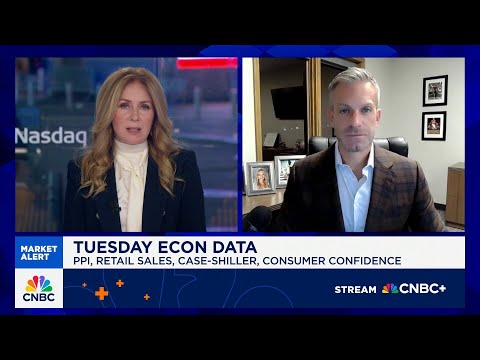
The biggest risk to the market remains the concentration at the top, says Matt Powers
CNBC Television· 2025-11-25 12:03
Joining us right now to talk about the markets is Matt Powers with Powers Advisory Group. He's a managing partner there. Uh Matt, you think that there is still risk to that market and the biggest risk at this point is concentration in too few stocks.>> Yeah, good morning Becky. Thanks for having me. Uh you know, I don't want to come off sounding bearish because I'm not.And maybe kind of a cheesy analogy. I heard you guys have one here earlier. Uh you know, we're not necessarily worried about the pie growing ...