
Consumer spending

Search documents
Fed Chair Powell: The base line would be solid growth next year
CNBC Television· 2025-12-10 20:05
Economic Outlook - The forecast suggests an optimistic outlook for next year due to additional GDP growth, easing inflation, and a steady unemployment rate [1] - Outside forecasts also indicate a pickup in growth [2] - Consumer spending has been resilient, contributing to the growth [2][4] - AI spending on data centers and related areas has been supporting business investment [2][4] - Fiscal policy is expected to be supportive [4] Growth Expectations - The baseline expectation for next year is a pickup in growth from the current 1.7% [3] - The SCP median growth is 1.7% for this year and 2.3% for next year [3] - Adjusting for the shutdown, the growth would be 1.9% and 2.1% for 2025 and 2026 respectively [3]

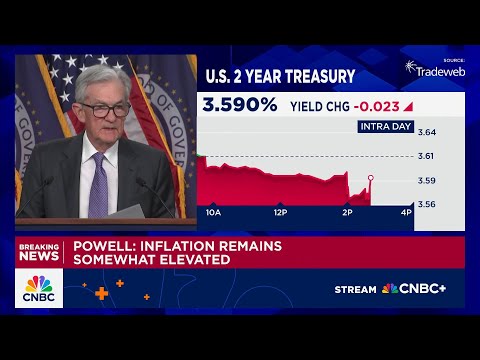
Fed Chair Powell: The base line would be solid growth next year
Youtube· 2025-12-10 20:05
Economic Outlook - The economic outlook for next year appears optimistic due to additional GDP growth, easing inflation, and a steady unemployment rate [1] - The forecast indicates a pickup in growth from the current low level of 1.7% to 2.3% for next year, with adjustments accounting for previous shutdown impacts [3] Drivers of Growth - Key drivers of the positive forecast include resilient consumer spending and sustained business investment in AI-related sectors, particularly data centers [2][4] - Fiscal policy is expected to remain supportive, contributing to solid growth alongside ongoing AI spending [4]
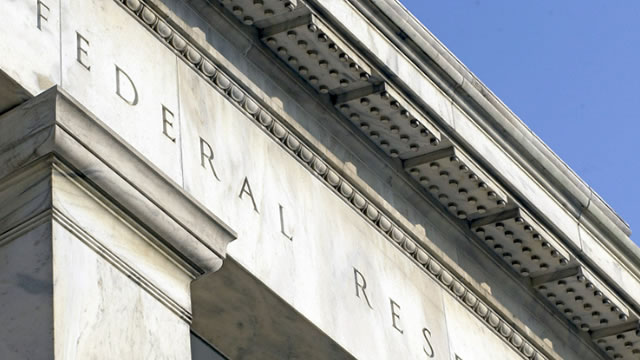
We're expecting 2026 U.S. GDP growth of 2.2%, says Mastercard's Michelle Meyer
CNBC Television· 2025-12-10 17:47
Economic Outlook - Mastercard Economic Institute expects US GDP growth of 22% in 2026, driven by AI and trade realignment [2] - The Institute anticipates moderate inflation in the US, with continued disinflation in the services sector [7][8] - Global GDP is forecasted to grow by 31% [14] Consumer Spending - Black Friday spending increased by 41% year-over-year [4] - The Institute projects mid-3% growth for overall holiday spending [4] - US spending on e-commerce from Chinese mainland initially grew by 20% year-over-year (January-April) but contracted by 6% (May-September), offset by increased European spending on Chinese mainland e-commerce [6] Labor Market & Investment - Despite some slowdown in job creation in 2025, active investment in the digital economy and AI continued [10] - Lower-income tiers are experiencing a slowdown in wage growth compared to higher-income populations [13] Uncertainty & Policy - Policy changes can create uncertainty, causing businesses to pause and wait for clarity [9]

2 Catalysts That Can Drive Walmart Stock Higher in 2026
The Motley Fool· 2025-12-09 13:45
Core Viewpoint - Walmart has shown strong performance in 2023, with shares up 25%, outpacing both Amazon and the S&P 500, driven by two key catalysts: online advertising and e-commerce growth [1]. Group 1: Online Advertising - Walmart's global ad business grew by 53% year over year in Q3 FY26, indicating significant potential for revenue growth and profit margin enhancement [4]. - Online ads, while not a large part of Walmart's business, are growing rapidly and can improve profit margins compared to the low single-digit margins typical in the retail industry [3]. - The contribution of online ads is reflected in Walmart's 34% year-over-year net income growth, despite only a 6% increase in revenue [6]. Group 2: E-commerce Growth - E-commerce sales have shown strong performance, with a 27% year-over-year growth in Q3 FY26, demonstrating Walmart's ability to compete effectively with Amazon [7]. - Walmart's stores function as logistics hubs, allowing for efficient nationwide delivery and reduced shipping costs, which supports e-commerce growth [7]. - The increase in e-commerce sales is also expected to drive higher ad revenue, mirroring trends seen at Amazon [8]. Group 3: Consumer Spending - The company's performance is closely tied to consumer spending, which needs to remain resilient for continued revenue growth [9]. - Despite potential consumer pullbacks, Walmart's focus on low prices positions it well during economic downturns, allowing it to thrive even in challenging economic conditions [10]. - Recent data from Adobe Analytics indicates a 7.7% year-over-year increase in Cyber Monday sales, suggesting continued consumer spending, which could bode well for Walmart in 2026 [11].

X @CNN Breaking News
CNN Breaking News· 2025-12-05 15:19
Consumer spending stalled in September as inflation remained stubborn, shutdown-delayed report shows.https://t.co/YUv2lvJLIZ ...
Consumer spending points to strong third-quarter GDP. U.S. economy still has momentum.
MarketWatch· 2025-12-05 15:16
Core Insights - Consumer spending increased in September, indicating a likely strong economic growth in the third quarter [1] Group 1 - The rise in consumer spending is expected to be a precursor to robust economic growth [1]

US consumer spending moderates in September
Yahoo Finance· 2025-12-05 15:10
WASHINGTON, Dec 5 (Reuters) - U.S. consumer spending increased marginally in September, suggesting a loss of momentum in the economy at the end of the third quarter as a lackluster labor market and rising cost of living curbed demand. Consumer spending, which accounts for more than two-thirds of economic activity, rose 0.3% after a downwardly revised 0.5% gain in August, the Commerce Department's Bureau of Economic Analysis said on Friday. Economists polled by Reuters had forecast consumer spending ad ...
Macy’s lifts sales forecast as shoppers keep spending
Yahoo Finance· 2025-12-03 14:25
Core Insights - Macy's has raised its sales forecasts for the financial year, expecting full-year sales between $21.5 billion and $21.6 billion, indicating strong consumer spending despite economic concerns [1] - The company reported a sales growth of approximately 3% in the quarter ending Nov. 1, marking its strongest performance in over three years [1] Consumer Behavior - The U.S. retail economy shows that consumers are still willing to spend but are becoming more selective in their purchases [2] - A record $11.8 billion was spent online during Black Friday, reflecting consumer engagement with discounts offered by retailers [2] Strategic Initiatives - Macy's CEO Tony Spring emphasized the importance of price cuts and a compelling product offering as the company enters the holiday season [3] - The increase in sales is attributed to Macy's ability to cater to a diverse consumer base, including both discount shoppers and luxury buyers, with significant sales growth at Bloomingdale's [3] Company Developments - Since joining Macy's in 2024, CEO Spring has focused on investing in high-performing stores by increasing staff and advertising as part of a turnaround strategy [4] - Despite low consumer confidence and predictions of reduced holiday spending, the National Retail Federation reported a rise in shoppers during the Thanksgiving weekend, with 203 million people participating, up from 197 million the previous year [5] Market Trends - Dollar Tree reported a 9.4% sales growth in its latest quarter, benefiting from consumers opting for budget-friendly options [5]

Trump economic advisor Kevin Hassett touts ‘best Black Friday that we've ever seen' as holiday spending surges
Fox Business· 2025-12-01 16:11
Core Insights - Strong consumer spending is reported during the holiday shopping season, with record sales on Black Friday and expectations for high spending on Cyber Monday [1][4][5] - Economic indicators suggest that consumer incomes have increased under the current administration, contributing to higher spending [2][6] - Despite concerns about inflation and rising costs, consumer confidence appears robust, leading to increased holiday shopping [5][6] Group 1: Holiday Sales Performance - Black Friday generated $11.8 billion in online sales, marking a 9.1% year-over-year increase and setting a new single-day record [4] - Cyber Monday is projected to reach $14.2 billion in online sales, reflecting a 6.3% increase from the previous year [5] - A Deloitte survey indicates that 82% of consumers plan to shop between Thanksgiving and Cyber Monday, up from 79% last year [5] Group 2: Economic Context - Incomes have reportedly increased by $1,500 per person this year, contrasting with a drop of about $3,000 per person under the previous administration [2] - Inflation rates have decreased to approximately 2.5%, significantly lower than wage growth, which supports increased consumer spending [6] - Retailers anticipate that both online and in-store sales will reach record highs this holiday season [6]
