Electric Vehicles (EVs)

Search documents
'Fast Money' traders talk Ford announcing it is pulling the plug on its Lightning EVs
Youtube· 2025-12-15 22:45
Core Viewpoint - The automotive industry is experiencing increased competition, particularly in the electric vehicle (EV) segment, as companies like Ford and GM adapt to market demands for lower-cost options, while Tesla remains a significant player in profitability within this space [1][12]. Group 1: Company Performance - Ford shares increased by approximately 1% in aftermarket trading, indicating a positive market response [1]. - Ford's restructuring efforts are aimed at improving return on investment (ROI) and profitability, with expectations of a 25% improvement in cash flow from these initiatives [7]. - Ford's core business is reportedly stable, with positive EBITDA growth anticipated for 2025 [8]. Group 2: Market Dynamics - The expiration of federal tax credits at the end of September has created challenges for automakers, highlighting the difficulties in the current automotive business environment [4]. - There is a growing demand for hybrid vehicles in the U.S., with hybrid sales currently representing about 20% of the market [5]. - The competition is intensifying as other automakers introduce lower-cost EV models, which could impact Ford's market position [2][3]. Group 3: Competitive Landscape - GM's stock performance has outpaced Ford's, suggesting a stronger market position for GM at this time [3]. - Tesla is recognized for its ability to maintain profitability in the EV sector, setting a benchmark that other automakers are struggling to achieve [12]. - The automotive industry is witnessing a shift in resource allocation, with investors increasingly interested in companies that can adapt to changing market conditions [11].


Ford takes $19.5 billion charge as it retreats from EVs
Fastcompany· 2025-12-15 22:08
Core Viewpoint - Ford Motor is taking a significant $19.5 billion writedown and discontinuing several electric vehicle (EV) models, reflecting the auto industry's retreat from battery-powered vehicles due to changing policies and declining demand for EVs [1][5]. Group 1: Company Actions - Ford will cease production of the F-150 Lightning in its electric form, shifting to an extended-range electric model (EREV) that utilizes a gas-powered generator [2]. - The company is also canceling the next-generation electric truck, known as the T3, and planned electric commercial vans [2]. - Ford plans to pivot towards gas and hybrid models, with an expectation that hybrids, extended-range EVs, and pure EVs will make up 50% of its global mix by 2030, up from 17% currently [3]. Group 2: Financial Implications - The $19.5 billion writedown will be spread out primarily in the fourth quarter and continue through 2027, with $8.5 billion related to canceled EV models, $6 billion tied to a dissolved battery joint venture with SK On, and $5 billion for program-related expenses [4]. - Ford has raised its 2025 guidance for adjusted earnings before taxes and interest to approximately $7 billion, up from a previous range of $6 billion to $6.5 billion [4]. Group 3: Market Context - The shift in Ford's strategy reflects a broader trend in the auto industry, as demand for battery-powered models has decreased significantly, particularly after the expiration of a $7,500 consumer tax credit [5][6]. - U.S. sales of electric vehicles fell by about 40% in November, indicating a substantial decline in consumer interest [6]. - The Trump administration's policies have reduced federal support for EVs and eased emissions regulations, further impacting the market outlook for electric vehicles [5]. Group 4: Future Plans - Ford is now focusing on developing more affordable EV models, with the first model from a specialized team in California expected to be priced around $30,000 and available in 2027 [10]. - The production of the new gas-powered trucks will begin in 2029 at a new facility in Tennessee, replacing the previously planned EV pickup [9].
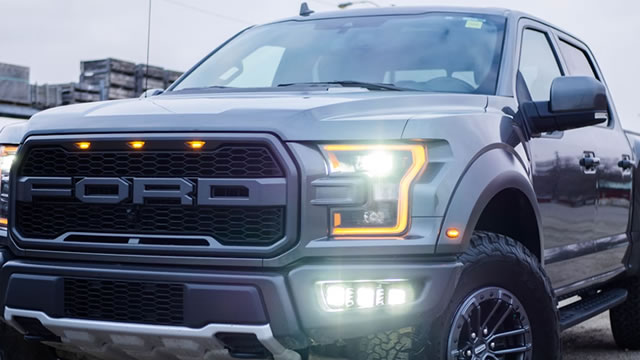
Elon Musk-Led Tesla's US Sales Fall 23% To Near 4-Year Low In November As Domestic Demand Shrinks Amid Trump's Anti-EV Stance - Tesla (NASDAQ:TSLA)
Benzinga· 2025-12-12 04:16
Core Insights - Tesla Inc. experienced a significant decline in U.S. sales in November, reaching a near four-year low with 39,800 units sold, representing a 23% year-on-year decrease from 51,513 units sold in the same month last year [2] - Despite the sales drop, Tesla's market share in the U.S. electric vehicle (EV) sector increased to over 56.7% from 43.1%, attributed to legacy automakers reducing their EV efforts [2] Sales Performance - Tesla's U.S. sales in November were the lowest since January 2022, indicating a troubling trend for the company [2] - The company also reported a significant decline in European sales, with only 6,964 new registrations in October, marking a 48.5% year-on-year decrease from 13,519 units in October 2024 [4] Market Dynamics - The decline in EV sales is not limited to Tesla; Ford Motor Co. also reported a 60% drop in EV sales during November, with its F-150 Lightning EV Pickup Truck sales plummeting over 72% [4] - The shift in U.S. EV sales has been influenced by policy changes, including the Trump administration's rollback of Corporate Average Fuel Economy (CAFE) standards, which has been criticized for affecting EV demand [5] Product Strategy - In response to declining sales, Tesla is offering 0% financing on its models, suggesting a lack of demand for the vehicles. Experts recommend introducing new models to stimulate interest [3] - Tesla has launched more affordable trims of its Model 3 and Model Y vehicles, priced at $36,990 and $39,990 respectively, under the 'Standard' designation [3] Financial Metrics - Tesla scores well on the Momentum metric and has satisfactory ratings for Growth and Quality, but is rated poorly on Value. The company shows a favorable price trend in the medium and long term [6] - During after-hours trading, Tesla's stock (TSLA) declined by 0.80% to $446 [6]


Ford, SK On To End $11.4 Billion Battery Venture Amid EV Rollback, CAFE Relaxations - Ford Motor (NYSE:F)
Benzinga· 2025-12-11 10:57
Core Insights - Ford Motor Co. and SK On have decided to terminate their EV battery manufacturing partnership due to challenges in the electric vehicle market, including regulatory changes and declining demand [1][2][3] Company Developments - SK On will shift its focus towards Energy Storage Systems and has announced changes in ownership of the battery plants, with Ford taking full ownership of the Kentucky plant and SK On assuming control of the Tennessee plant [2][3] - The partnership, known as BlueOval SK, had involved significant investments, totaling approximately $11.4 billion, primarily for the $5 billion Kentucky plant, which was producing batteries for the F-150 Lightning EV Pickup Truck [4] Market Context - The decision to end the partnership aligns with a broader strategy to reduce debt and enhance profitability, as SK On has reported multi-million dollar losses amid falling EV demand [3] - Ford's EV sales have seen a drastic decline, with a reported 60% drop in November, raising concerns about the viability of ongoing EV projects [4] Regulatory Environment - Recent regulatory changes, including the rollback of Corporate Average Fuel Economy (CAFE) Standards by President Trump, have contributed to the challenges faced by the EV sector [5] - Ford's CEO, Jim Farley, has expressed a commitment to EVs despite these challenges, emphasizing the importance of remaining competitive in the global market [6]

What's Behind Ford's EV Sales Plunge of 60% in November?
ZACKS· 2025-12-03 15:15
Core Insights - Ford's EV sales in the U.S. dropped significantly by 60.8% in November following the expiration of the $7,500 federal tax credit, with total vehicle sales slightly declining by 0.9% compared to November 2024 [1][8] Sales Performance - Hybrid vehicle sales increased by 13.6% to 16,301 units, while fully electric vehicle sales fell sharply to 4,247 units from 10,821 units in November 2024 [2][8] - Specific models like the Mustang Mach-E saw a 49% decrease in sales to 3,014 units, and the F-150 Lightning experienced a 72% drop to 1,006 units. The E-Transit van's sales plummeted by 82% to 227 units [2][8] Financial Performance - Ford Model e, the EV division, reported a loss of $1.4 billion in Q3, accumulating year-to-date losses of $3.6 billion, with approximately $3 billion linked to current EV models and around $600 million invested in next-generation EVs [3] - The Zacks Consensus Estimate for Ford's 2025 EPS has decreased by 2 cents in the past 30 days, while the 2026 EPS estimate has increased by 1 cent in the last week [9] Strategic Shift - Ford is transitioning its focus from larger, battery-heavy vehicles to smaller, more profitable models based on the new Ford Universal EV Platform, with a midsize EV pickup expected to launch in 2027 at around $30,000 [3][4] - The company has completed 95% of sourcing for the new platform, with vehicle testing ongoing and equipment installation set to begin at the Louisville plant later this year [4] Competitive Landscape - In November, Tesla's registrations in France and Denmark fell by approximately 50%, with sales in France down 58% to 1,593 units and in Denmark down 49% to 534 units [5] - BYD Company Limited delivered 474,921 passenger vehicles in November, a decrease of 5.7% year-over-year, with battery-electric models growing by 19.9% [6] Valuation - Ford's stock has outperformed the Zacks Automotive-Domestic industry year-to-date, with shares gaining 26.6% compared to the industry's 31.3% growth [7] - From a valuation perspective, Ford appears undervalued, trading at a forward sales multiple of 0.32, significantly lower than the industry's 3.25 [10]

Is Coherent Prepared to Capture the Momentum in the EV Market?
ZACKS· 2025-12-01 18:36
Core Insights - Coherent Corp.'s Silicon Carbide (SiC) substrates are essential for enhancing energy efficiency in electric vehicles (EVs), with the global EV market projected to grow at a CAGR of 32.5% through 2030, presenting significant growth opportunities for the company [1][8] Investment and Financial Performance - Coherent secured a $1 billion investment from Denso Corporation and Mitsubishi Electric Corporation in late 2023, which included minority stakes in the SiC business and supply agreements for substrates and epitaxial wafers, enhancing the company's financial flexibility for SiC expansion [2] - The company reported a 17% year-over-year growth in revenue for the first quarter of fiscal 2026, with gross margin expansion of 249 basis points, following a 23% revenue increase and 400 basis points gross margin growth in fiscal 2025, driven by demand from AI-related datacenters and communications [3][4] Competitive Landscape - Despite strong growth indicators, Coherent faces competitive pressure from Cognex and Applied Materials in the battery process equipment sector, which could impact pricing and market share [5][8] Stock Performance and Valuation - Over the past year, Coherent's stock has increased by 58.5%, outperforming the industry average of 11.8% and surpassing Cognex's 4.7% decline and Applied Materials' 39% growth [6] - Coherent trades at a forward price-to-earnings ratio of 29.58X, which is higher than the industry's 25.22X, while Applied Materials and Cognex trade at 26.19X and 34.13X, respectively [10] - The Zacks Consensus Estimate for Coherent's earnings for fiscal 2026 and 2027 has risen by 9.6% and 3.9% over the past 60 days, indicating positive market sentiment [13]


Should You Buy Ford While It's Below $14?
The Motley Fool· 2025-11-30 19:09
Core Viewpoint - Ford's stock has increased by 31% this year as the company shifts its focus towards efficient growth despite external challenges such as tariff uncertainties and changes in federal support for electric vehicles [1][2]. Financial Performance - Ford's current stock price is $13.28, with a market capitalization of $53 billion [4]. - The stock has a 52-week range of $8.44 to $13.97, and the company has a gross margin of 7.58% and a dividend yield of 4.52% [5]. Tariff Impact - The U.S. auto tariff policy has seen significant changes, including a 25% tariff on imported passenger vehicles and light trucks, which has raised manufacturing costs [6][7]. - In Q3, Ford's net earnings before interest and taxes (EBIT) related to tariffs was approximately $700 million, influenced by preferential tariff treatment [8]. - Recent tariff policy changes have been favorable for Ford, allowing it to offset tariffs on imported auto parts due to its large U.S. manufacturing volume [9]. Strategic Shift - Ford is reducing its costly electric vehicle investments and focusing on hybrid vehicles, commercial vehicles, and software solutions [2][10]. - The Model e segment has incurred losses of $3.6 billion over nine months, prompting a strategy adjustment towards cost efficiency and aligning supply with customer demand [10]. - The company plans to launch its Universal EV Platform (UEV) in 2027, targeting affordable vehicles starting at around $30,000 [11]. Commercial Vehicle Expansion - Ford is expanding its commercial vehicle lineup, which has seen growth in electric vehicle sales, particularly with the E-Transit Custom and E-Transit Courier in Europe [13]. - The adoption of commercial vehicles is supported by integrated software and services that enhance fleet management [13]. Competitive Landscape - The automotive industry is highly competitive, with Ford facing competition from General Motors, Toyota, and electric vehicle manufacturers like Tesla and Rivian [14]. - Despite a solid dividend yield of 4.6%, Ford's total returns have been modest, averaging 4.3% annually over the past decade [15]. - The company may benefit from favorable tariff conditions due to its U.S.-based manufacturing, but the competitive landscape suggests that better growth opportunities may exist elsewhere [16].

Why Impressive Speed Won’t Be Enough To Sell EVs In The U.S.
CNBC· 2025-11-18 17:00
Performance & Market Positioning - EVs surpass gas cars in power and speed, offering a better driving experience, yet sales in the U_S_ lag behind global figures [2] - Tesla established narrative command of EVs by creating a seminal product, shifting perceptions from mere "vegetables" to desirable "desserts" [6][9] - Automakers are adding EVs to high-performance lines, including supercars, hypercars, and racing series, extending to mainstream vehicles like trucks and SUVs [11][12] - The 9000-plus-pound GMC Hummer EV accelerates from 0 to 60 mph in 2_8 seconds, while the Porsche Macan 4S electric achieves it in under 4 seconds [13] Challenges & Obstacles to EV Adoption - EV sales declined after federal credits ended, leading automakers to reconsider all-electric futures and increase gas and hybrid production [23] - Surveys indicate that charger availability, charging time, range, and price are major concerns for mainstream EV adoption [23] - EVs, on average, sell for approximately $9,000 more than the already high overall new car price in the U_S_ [24] - Customers buying high-end EVs sometimes prefer the feel and sound of gas engines, and simulated sounds have not been well-received [26][27][28] - Charger availability, charging time, and range anxiety remain significant obstacles to wider EV adoption [29] Future Trends & Solutions - The next battleground for EV domination will be on the consumer side, with EVs designed from a blank sheet as rolling computers with centralized hardware and constantly updated software [33] - Driver education should be integrated into EVs, using sensors to assess driver reactions and adjust acceleration accordingly to enhance safety [39][40] - The industry needs to make EVs easier to live with, more affordable to own, and smart enough to manage their immense power responsibly [41]

TSLA Shift to American Auto & EV's Next Leg for Growth
Youtube· 2025-11-17 18:30
Core Viewpoint - The EV market is experiencing a shift towards American supply chains, with Tesla encouraging suppliers to avoid China-based parts due to national security concerns, which is expected to influence other automakers as well [2][3] Industry Trends - American automakers are focusing on reducing EV costs through improved manufacturing processes, exemplified by the Nissan Leaf priced under $30,000 compared to the average combustion vehicle price of about $50,000 [4] - Leasing options for EVs are becoming more attractive, with monthly payments for models like the Ford Mustang Mach-E and Honda Prologue EV ranging from $200 to $250 [5] Consumer Behavior - There is a growing consumer interest in the total cost of ownership of EVs, beyond just the initial purchase price, as indicated by a Bloomberg report forecasting higher EV sales in 2025 compared to 2024 [6] - Automakers are partnering with utility companies to provide incentives for home charging, such as free charging for 18 hours a day in Texas and cash back offers in New York [7][9] Technological Innovations - The introduction of vehicle-to-grid technology allows EV owners to sell electricity back to the grid, with Nissan offering $4,500 for connecting EV batteries in California [8][9] - Some automakers are enabling their EVs to serve as backup power sources for homes, providing additional value beyond the vehicle's MSRP [17][18] Market Outlook - A rebound in EV adoption is anticipated following the repeal of federal tax credits, with expectations of recovery in sales by 2026 [14][15] - American automakers are positioned advantageously due to their vehicles being designed for the American power grid, optimizing for off-peak electricity rates and offering features that enhance consumer trust and brand loyalty [16][19]

Ford CEO Jim Farley says automaker's had shakeup after ‘humbling’ discovery he found in Tesla Model 3, Chinese EV cars
MINT· 2025-11-12 17:40
Core Insights - Ford Motor Company's President and CEO Jim Farley expressed that disassembling Tesla and Chinese competitors' vehicles was a humbling and shocking experience, prompting significant changes within Ford to enhance competitiveness in the electric vehicle (EV) market [1][3]. Group 1: Competitive Analysis - Ford discovered that Tesla's Model 3 has approximately 1.6 km less wiring compared to Ford's Mustang Mach-E, indicating a more efficient design [2]. - Similar findings were noted when comparing Ford's vehicles to those of Chinese EV manufacturers, highlighting a competitive disadvantage [2]. Group 2: Strategic Changes - The insights gained from the disassembly led to a restructuring at Ford, which has faced challenges in the competitive auto market [3]. - In 2022, Ford established its Model E division to focus on EV innovation, which has incurred costs of $5 billion by 2024, viewed by Farley as a challenge to be addressed [4]. Group 3: Commitment to EVs - Farley emphasized that Ford cannot abandon the EV segment, stating the necessity to remain competitive globally and not cede the market to Chinese manufacturers [5]. - In August 2025, Ford announced a $5 billion investment in EV production, which includes modifications to its manufacturing processes and upgrades to its Kentucky plant [5]. Group 4: Future Production Plans - The Kentucky plant, currently producing F-Series Super Duty trucks, is set to manufacture Ford's $30,000 electric pickup truck, scheduled for release in 2027 [6].