Sustainable Agriculture

Search documents
Edible Garden Recognized for Sustainability Leadership in NRG’s 6th Annual Excellence in Energy Awards
Globenewswire· 2025-11-17 12:30
Core Insights - Edible Garden AG Incorporated has been awarded the Silver Award in Sustainability Leadership at NRG Energy's 6th Annual Excellence in Energy Awards, recognizing its commitment to sustainable agriculture and energy efficiency [1][2][3] Company Overview - Edible Garden is a leader in controlled environment agriculture (CEA), providing locally grown organic produce through its Zero-Waste Inspired® farming model, available in over 5,000 retail locations across the U.S., Caribbean, and South America [4] - The company operates state-of-the-art vertically integrated greenhouses and processing facilities in Belvidere, NJ; Grand Rapids, MI; and Webster City, IA, focusing on resource efficiency and waste reduction [4][5] Sustainability Initiatives - The company's Zero-Waste Inspired® mission emphasizes resource efficiency and waste reduction, supported by patented technologies such as the GreenThumb 2.0 software and Self-Watering displays [3][5] - GreenThumb 2.0 software optimizes growing conditions and reduces energy usage, while the Self-Watering display extends plant shelf life and enhances in-store presentation [5] Recognition and Partnerships - Edible Garden has been recognized as a FoodTech 500 firm and is a Giga Guru member of Walmart's Project Gigaton sustainability initiative, highlighting its role in advancing sustainable practices in the food industry [6]

Clean Seed Capital Joins Global Climate Action Dialogue at COP30 in Brazil
Thenewswire· 2025-11-12 14:00
Core Insights - Clean Seed Capital Group Ltd. is participating in COP30, emphasizing its commitment to sustainable agriculture and technology transfer [1][2] - The company’s SMART Seeder™ Mini-MAX™ is designed to enhance agricultural productivity while reducing environmental impact [3][4] Company Participation and Initiatives - Clean Seed is part of the Global Alliance for Sustainable Planet (GASP) delegation, contributing to discussions on food systems transformation [1] - The company will engage in key panel discussions at COP30, highlighting its innovative solutions [3] Product Overview - The SMART Seeder™ Mini-MAX™ is a precision seeding platform manufactured by Mahindra & Mahindra Ltd., aimed at improving agricultural efficiency [3][4] - The Mini-MAX™ is designed to reduce fertilizer use, fuel consumption, and enhance crop yields, particularly in regions vulnerable to climate change [4][5] Market Impact and Goals - The Mini-MAX™ addresses critical challenges such as emissions reduction, soil restoration, and water conservation, aligning with COP30 priorities [5] - The company aims to expand access to its technology for smallholder producers, promoting sustainable farming practices [5][6] Leadership Statement - The CEO of Clean Seed expressed the company's honor in participating at COP30 and the importance of scalable solutions for environmental and economic benefits [6]


Easy Environmental Solutions, Inc. Announces Second EasyFEN Deployment Agreement as Rollout Accelerates Across Africa
Prism Media Wire· 2025-11-12 13:41
Core Insights - Easy Environmental Solutions, Inc. has announced a second deployment agreement for its EasyFEN™ system in West Africa, which is expected to generate significant annual recurring revenue at full production [3][4][7] Group 1: Deployment Agreement - The company has entered into a non-binding Letter of Intent (LOI) with a major agribusiness partner in West Africa for the deployment of the EasyFEN™ Modular Liquid Microbial Fertilizer Production System, with an initial transaction value estimated between $3.25 million and $4.25 million [3][4] - The LOI includes an option for an initial Terreplenish® shipment valued at up to $1 million to support early market development and farmer training [4][7] Group 2: Production Capacity and Environmental Impact - Each EasyFEN facility can process 17,500 tons of organic waste annually, producing up to 2.7 million gallons (10.2 million liters) of Terreplenish® and treating approximately 1.35 million acres (546,000 hectares) of farmland each year [8][9] - The facilities are designed to prevent methane emissions equivalent to removing about 30,000 cars from the road annually by converting waste streams instead of allowing them to decompose [9] Group 3: Strategic Importance - The EasyFEN model is positioned as a key driver for local fertilizer independence and agricultural resilience across Africa, addressing the urgent need for reliable fertilizer inputs to support food security [5][7] - Executives emphasize that the deployment of the EasyFEN system represents a foundational shift towards agricultural independence in the 21st century [5][6]

Easy Environmental Solutions, Inc. Announces Second EasyFEN Deployment Agreement as Rollout Accelerates Across Africa
Globenewswire· 2025-11-12 13:40
Core Insights - Easy Environmental Solutions, Inc. has entered into a non-binding Letter of Intent with a major agribusiness partner in West Africa for the deployment of its EasyFEN™ Modular Liquid Microbial Fertilizer Production System, with potential annual recurring revenue of up to $24 million at full production [1][2] - The initial transaction value is estimated between $3.25 million and $4.25 million, which includes one month of inoculation and remote monitoring during commissioning [1] - The deployment aims to enhance local production of nutrient-rich fertilizers, addressing the immediate need for reliable fertilizer inputs across Africa [3] Deployment Details - The LOI includes an option for an initial Terreplenish shipment valued at up to $1 million to facilitate field demonstrations and farmer training prior to system installation [2] - This deployment is distinct from the EasyFEN system currently being installed in Kenya, marking the second confirmed deployment in Africa [2] Environmental Impact - Each EasyFEN facility is designed to process up to 17,500 tons of organic waste annually, producing approximately 2.7 million gallons (10.2 million liters) of Terreplenish per year [5] - The facilities are expected to prevent methane emissions equivalent to removing about 30,000 cars from the road each year [4] Agronomic Benefits - Terreplenish provides significant agronomic value, including the ability to deliver 45–60 lbs of plant-available nitrogen per acre and 15–20 lbs of mobilized phosphorus per acre [9] - The system can also achieve up to a 20% reduction in irrigation or rainfall demand due to improved soil moisture retention [9] Company Overview - Easy Environmental Solutions, Inc. focuses on developing modular technologies aimed at solving major global challenges, with a strong emphasis on sustainability and efficiency [7]

AVO Beyond Avocados: Can Mangoes & Blueberries Drive Future Growth?
ZACKS· 2025-11-11 18:51
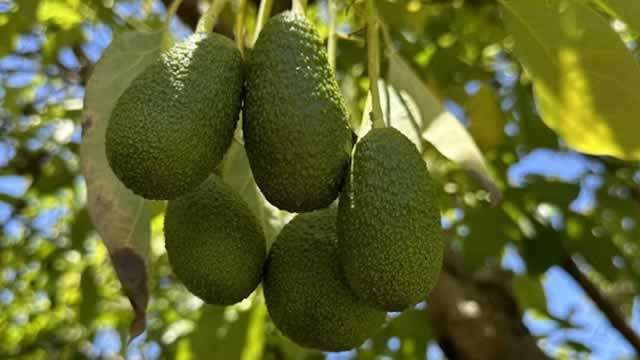
Core Insights - Mission Produce, Inc. is diversifying its product offerings beyond avocados into high-growth categories like mangoes and blueberries, leveraging its established global sourcing and distribution network [1][8] - The company's mango strategy aims to establish a reliable year-round supply in North America through an asset-light model based on partnerships with established growers [2][8] - Blueberries are emerging as a significant growth area, with acreage expanding by 25% to over 700 hectares and sales nearly tripling this year, indicating strong production momentum [3][8] Company Strategy - Mission Produce is applying its expertise in perishable logistics to new fruit categories, positioning itself for growth as its avocado segment matures [1] - The company is focusing on an integrated supply chain to ensure consistency in pricing, supply, and packaging for mangoes, which is crucial in a fragmented market [2] - Innovative pruning strategies and yield gains in blueberry production are extending the harvest season, contributing to the rapid growth in sales [3] Competitive Landscape - Mission Produce faces competition from Corteva, Inc. and Fresh Del Monte Produce Inc., both of which are advancing distinct strategies to enhance their market positions [4] - Corteva is focusing on sustainable agriculture through advanced seed genetics and crop protection innovations, while Fresh Del Monte is adapting to consumer preferences with technology and sustainability initiatives [5][6] Financial Performance - Mission Produce's shares have increased by 19.5% over the last six months, contrasting with a 5.8% decline in the industry [7] - The company trades at a forward price-to-earnings ratio of 26.23X, significantly higher than the industry average of 12.40X, indicating a premium valuation [9] - Consensus estimates suggest a year-over-year earnings decline of 9.4% for fiscal 2025 and 28.3% for fiscal 2026, with stable estimates over the past 30 days [10]

CNH Industrial (NYSE:CNH) Earnings Call Presentation
2025-11-11 13:00
Connectivity and Digital Solutions - CNH provides connectivity included for the lifetime of the modem on new machines, with options like Starlink™ satellites to boost coverage in remote areas[10] - FieldOps™ Digital Farm Management is available on smartphone, computer, and iPad, facilitating machine and fieldwork management[9] - AI Tech Assistant and fully connected machines enable dealers to use predictive systems for faster issue resolution[11] Field Preparation and Tillage - Case IH Quadtrac® system minimizes soil compaction with a ground pressure of 0.55 kg/cm2 (7.85 psi)[16] - Autonomous Tillage development can lead to approximately €75/hectare (~US$36/acre) savings, 17% less fuel consumption, and a 4% yield improvement[19] - Autonomous Tillage development can cover 9.5% more hectares[19] Seeding and Planting - Active Implement Guidance keeps every pass within 0-5 cm of the intended pass over 95% of the time[27] Growing and Protection - Selective spraying of green weeds on brown pre-emerged fields can save up to 60% of herbicide use[33] - Variable rate applications can save up to 20% of inputs[33] - Farmers can save up to approximately 120,000 liters (~32,000 gallons) of product applied per season or ~€23,000 ($28,000) in annual savings using Green-on-Brown and Variable Rate applications[33] Harvesting - Combine Automation can earn farmers approximately €70 (~$82) more per hectare and harvests 7.4% more tonnes per hour in wheat operations[38] Specialty Operations - CNH holds over 50% market share in grapes and over 90% in olives in 2024[46] - Specialty solutions can lead to up to 80% labor reduction and 100% CO₂ reduction when using the R4 Electric Power Robot, along with 20% lower Total Cost of Ownership[54]

Agroz Plans to Expand Locations of Products and Services in GCC and Southeast Asia to Advance AI-Driven Food Security Solutions
Prnewswire· 2025-11-06 14:00
Core Insights - Agroz Inc. is planning to expand its operations into new regional markets, specifically in Southeast Asia and the Gulf Cooperation Council (GCC) region, to meet rising demand for sustainable agriculture solutions [1][2][3] Company Overview - Agroz Inc. is a fully vertically integrated agricultural technology company specializing in AI-powered Controlled Environment Agriculture (CEA) vertical farms [1][6] - The company designs, builds, manages, and operates both indoor and outdoor CEA vertical farms, providing fresh, pesticide-free produce directly to consumers and businesses [6] Market Expansion - The company has received interest for its vertical farm products in Oman and the United Arab Emirates, indicating potential customer acquisition in these markets [2][3] - Agroz aims to leverage its advanced vertical farming and robotics technologies to address food security challenges in these high-potential markets [2][3] Competitive Advantage - Agroz's proprietary Agroz OS system significantly reduces farm operating costs, increases crop yields, and accelerates time-to-harvest compared to traditional farming methods [4] - The Agroz OS system combines digitally automated hardware with AI-powered software that optimizes growing conditions in real-time [4] Technological Innovation - The company is developing Agroz Copilot for Farmers, an AI assistant that aids growers in daily operations, and is working towards fully autonomous farms managed by AI agents [5] - By utilizing AI and robotics, Agroz aims to create scalable, data-driven vertical farming solutions to sustainably feed a growing global population [5]

Corteva Announces Groundbreaking, Nature-Inspired Solutions to Control Insects, Help Farmers Effectively Protect Yield
Prnewswire· 2025-11-05 15:15
Core Insights - Corteva has announced the launch of two new crop protection solutions, Goltrevo and Varpelgo, aimed at combating destructive pests affecting various crops [2][3] Group 1: Product Details - Goltrevo is a bioinsecticide based on a novel strain of the fungus Beauveria bassiana 203, targeting sap-feeding insects like corn leafhoppers, whiteflies, and aphids, as well as chewing insects such as root-feeding worms and caterpillars [3][9] - Varpelgo provides effective control of chewing insects, including diamondback moths and armyworms, and is designed for key crops like soybeans, corn, and rice [5][6] Group 2: Market and Regulatory Aspects - Commercial sales of Goltrevo are expected to begin in 2027 in Latin America, pending regulatory approvals [4] - Varpelgo is anticipated to see its first commercial sales in the early 2030s in Asia Pacific and Latin America, subject to field trials and regulatory reviews [6] Group 3: Strategic Importance - The introduction of these products aligns with Corteva's commitment to innovation in crop protection, enhancing farmer productivity and supporting global food security [3][8] - Both products are designed to fit within integrated pest management programs, offering farmers new rotational choices for pest control [6]


Germany Plant Cell Culture Equipment Market Size 2025 Research Report Segmented by Manufacturers, Regions, Trends, Opportunities and Forecasts to 2032
Medium· 2025-11-03 04:54
Core Insights - The Plant Cell Culture Equipment Market was valued at USD 1.85 billion in 2024 and is projected to grow at a CAGR of 8.2%, reaching an estimated USD 3.65 billion by 2032 [1][13]. Market Overview - The market includes specialized tools for cultivating plant cells, tissues, and organs under sterile conditions, essential for applications in plant research, genetic engineering, and pharmaceutical production [5][6]. - Key components of the market consist of incubators, microscopes, centrifuges, and cell counters, driven by the need for higher throughput and reduced contamination risks [6][12]. Technological Advancements - AI is transforming the market by enhancing automation, precision, and data-driven insights, leading to reduced human error and accelerated research cycles [2][3]. - Advanced sensor technologies and miniaturization are enabling more accurate real-time data monitoring and high-throughput experimentation [11][12]. Key Trends - The market is experiencing shifts towards automation and digitalization, with a focus on energy-efficient equipment and sustainable practices [8][10]. - Increased adoption of automated systems and robotics is facilitating high-throughput screening and processing [10][12]. Growth Drivers - The surge in global population and the need for enhanced food security are driving investments in plant research and breeding, increasing demand for sophisticated culture equipment [12][15]. - The expanding applications of plant cell culture in pharmaceuticals and nutraceuticals are opening new revenue streams [12][15]. Regional Insights - North America is leading the market with a projected CAGR of 8.5%, supported by strong R&D funding and a robust biotech sector [22]. - Asia Pacific is anticipated to be the fastest-growing region with a CAGR of 9.2%, driven by investments in biotechnology and food security [22][26]. Future Outlook - The market outlook from 2025 to 2032 is promising, with sustained growth expected from technological advancements and expanding application areas [13][27]. - The integration of AI and automation is anticipated to make plant cell culture processes more efficient and scalable [13][27].

Davis Commodities Evaluates USD 500 Million+ ESG Agri-Trade Expansion Across Asia and Africa
Globenewswire· 2025-10-17 15:30
Core Insights - Davis Commodities Limited is evaluating an expansion strategy for its ESG-certified agri-trade ecosystem, aiming to link over USD 500 million in sustainable commodity flows across Asia and Africa within the next three years [1][2]. Group 1: Expansion Strategy - The assessment includes internal modeling of high-impact ESG verticals, enhanced trade infrastructure, and certification-aligned crop programs in climate-sensitive regions [2]. - The company is exploring how ESG-aligned trading structures can unlock scalability and resilience while adapting to evolving market dynamics [3]. Group 2: Preliminary Projections - Key metrics under early-stage modeling indicate a potential USD 500–750 million in ESG-certified commodity turnover based on blended trade scenarios [7]. - The company anticipates coverage of 12+ emerging-market trading corridors with verified sugar, rice, and sustainable oils [7]. - Efficiency gain projections of 15%–25% are expected through digitalized procurement and low-carbon transport protocols [7]. - There is potential for over USD 75 million in incremental ESG revenue from certified supply across select markets [7]. Group 3: Certification Frameworks - Participating certification frameworks under consideration include Bonsucro, ISCC, and Rainforest Alliance [7]. - The company is conducting internal analysis in partnership with regional commodity experts, certifiers, and technology consultants [3]. Group 4: Company Overview - Davis Commodities Limited specializes in trading sugar, rice, and oil and fat products in various markets, including Asia, Africa, and the Middle East [4]. - The company sources, markets, and distributes commodities under two main brands: Maxwill and Taffy in Singapore [4]. - It utilizes a global network of third-party commodity suppliers and logistics service providers to distribute products to customers in over 20 countries as of the fiscal year ended December 31, 2024 [4].