
Free Cash Flow

Search documents
LGLV: Low Beta, Value Tilt Do Not Translate Into Consistent Outperformance
Seeking Alpha· 2025-12-01 00:38
Core Viewpoint - The State Street® SPDR® US Large Cap Low Volatility Index ETF (LGLV) is initiated with a Hold rating, indicating a balanced perspective on its investment potential [1]. Group 1: Investment Strategy - The analysis emphasizes the importance of identifying underpriced equities with strong upside potential and overappreciated companies with inflated valuations [1]. - The focus is on the energy sector, including oil & gas supermajors, mid-cap, and small-cap exploration & production companies, as well as oilfield services firms [1]. - A comprehensive evaluation of Free Cash Flow and Return on Capital is deemed essential for deeper investment insights [1]. Group 2: Market Perception - The analyst acknowledges that while some growth stocks may warrant their premium valuations, it is crucial for investors to investigate whether the market's current opinions are justified [1].


Can ALB's Cash Strength Power Bigger Shareholder Returns Ahead?
ZACKS· 2025-11-28 14:36
Core Insights - Albemarle Corporation (ALB) is focused on enhancing shareholder value through strong liquidity and cash flows, ending Q3 2025 with approximately $3.5 billion in liquidity and $893.8 million in operating cash flow, a 29% increase year-over-year [1][7]. Financial Performance - ALB anticipates free cash flow between $300 million and $400 million in 2025, supported by effective cash conversion, reduced capital expenditures, and productivity improvements [2]. - The company has consistently raised its quarterly dividend for 30 consecutive years, currently offering a dividend yield of 1.3%, which is considered safe due to robust cash flows [3][7]. Peer Comparison - Sociedad Quimica y Minera de Chile S.A. (SQM) reported liquidity of around $1.5 billion and plans to invest $2.7 billion in capital expenditures from 2025 to 2027 for lithium capacity expansion [4]. - ICL Group Ltd. (ICL) had cash resources of approximately $1.55 billion and declared a quarterly dividend of about $62 million, representing 50% of its third-quarter adjusted net income [5]. Market Performance - ALB's stock has increased by 47.6% year-to-date, contrasting with a 25.6% decline in the Zacks Chemical - Diversified industry [6]. - The forward price-to-sales ratio for ALB is 2.95, significantly higher than the industry average, and it holds a Value Score of D [8]. Earnings Estimates - The Zacks Consensus Estimate for ALB's 2025 earnings suggests a year-over-year increase of 48.3%, with EPS estimates trending upward over the past 60 days [9].


GFI vs. CDE: Which Gold-Mining Stock is the Better Buy Right Now?
ZACKS· 2025-11-28 13:26
Core Insights - Gold Fields Limited (GFI) and Coeur Mining, Inc. (CDE) have distinct business models and asset portfolios that influence their competitive positions in the precious metals sector [1] Gold Fields Limited (GFI) - GFI is a globally diversified gold producer with large-scale, long-life assets across Africa, Australia, and the Americas, focusing on consistent production and disciplined cost management [2] - In Q3 2025, GFI's attributable gold output increased to approximately 621,000 ounces, a 22% year-over-year rise, driven by the Salares Norte mine [4] - The Salares Norte mine produced about 112,000 ounces in Q3 2025, marking a 53% increase from the previous quarter [5] - GFI realized an average gold price of roughly $3,468 per ounce, with all-in sustaining costs reduced to about $1,557 per ounce, leading to expanded margins [5] - The Tarkwa mine in Ghana produced around 123,000 ounces in Q3 2025 and has historically produced over 500,000 ounces annually [6] - GFI's dividend yield is approximately 1.60%, with a 5-year annualized dividend growth of 17.51% [7] - As of September 2025, GFI's net debt was $791 million, down $696 million from the previous quarter, with a debt-to-capital ratio of 34.8% [8] Coeur Mining, Inc. (CDE) - CDE has a North American-centric portfolio, primarily focused on silver, with gold production increasing [3] - In Q3 2025, CDE's gold production reached 111,364 ounces, a 3% quarter-over-quarter and 17% year-over-year increase [9] - CDE realized an average gold price of $3,148 per ounce, contributing to margin expansion [9] - CDE is in the process of acquiring New Gold Inc., which would create one of the largest North American precious metals producers [10] - The combined entity is projected to produce approximately 900,000 ounces of gold and 20 million ounces of silver in 2026 [11] - CDE's cash and cash equivalents were around $266 million as of September 2025, with a debt-to-capital ratio of 10.5% [13] Price Performance & Valuation - GFI stock has increased by 227.4% year-to-date, while CDE has risen by 183.1% [14] - GFI is trading at a forward 12-month sales multiple of 5.87, compared to CDE's 3.85 [17] - The Zacks Consensus Estimate for GFI's fiscal 2025 sales implies an 81% year-over-year growth, while CDE's fiscal 2026 sales estimate suggests a 90% rise [19][22] Comparative Analysis - GFI benefits from a larger production base, producing over 2 million ounces of gold annually, while CDE has less diversity [24] - GFI's cost structure is more competitive, with lower all-in sustaining costs and wider operating margins supported by long-life assets [24] - GFI's reserve base is significantly higher, providing multi-year visibility and reduced replacement risk, while CDE faces more exposure to cost volatility and integration risks [24] - GFI is preferred for investors seeking stronger upside potential in the gold sector, holding a Zacks Rank of 1 (Strong Buy) compared to CDE's Zacks Rank of 3 (Hold) [25]



Goodfood Reports Fiscal Year and Fourth Quarter 2025 Results with Net sales of $121 million and $25 million, Gross Profit of $50 million and $10 million and Adjusted EBITDA¹ of $6 million and $0.4 million, respectively
Globenewswire· 2025-11-27 11:30
Core Insights - Goodfood Market Corp. reported financial results for the 13 weeks and 52 weeks ended September 6, 2025, highlighting challenges in the macro environment and consumer discretionary spending, yet demonstrating resilience with a gross margin of 42% and positive Adjusted EBITDA [2][6][25]. Financial Performance - For the fiscal year 2025, net sales decreased by 21% to CAD 120.9 million from CAD 152.8 million in 2024 [6][10]. - In the fourth quarter, net sales were CAD 25 million, with a gross profit of CAD 10 million and a gross margin of 40.3% [7][12]. - The company reported a net loss of CAD 4 million in the fourth quarter, with an adjusted EBITDA margin of 1.7% [7][16]. Cost Structure and Operational Review - The cost of goods sold decreased by 22% to CAD 70.5 million in fiscal 2025, contributing to a gross profit decline of 20% [8][11]. - Selling, general, and administrative expenses were reduced by 17% to CAD 45.4 million, although as a percentage of net sales, these expenses increased from 35.9% to 37.5% [8][11]. - The company is focusing on refining its product lineup and tightening costs to enhance operational flexibility and margin resilience [3][4]. Cash Flow and Capital Structure - Adjusted free cash flow for the fourth quarter was CAD 1.7 million, a significant improvement from a negative CAD 1.1 million in the same period last year [20][21]. - Total net debt increased to CAD 25.1 million, with a total net debt to adjusted EBITDA ratio of 4.12, up from 2.49 in the previous year [23][24]. Strategic Initiatives and Market Position - Goodfood is positioning itself to operate profitably without relying on macroeconomic recovery, focusing on new product offerings like Heat & Eat and Genuine Tea [4][25]. - The company aims to enhance its sustainability initiatives and has received B Corp certification, reflecting its commitment to environmental and social responsibility [28][39]. - Goodfood is exploring acquisitions to strengthen its platform, with Genuine Tea being the first acquisition completed in late 2024 [25][29].

AT&T: Dividend Growth Could Resume With Strong 2025 Free Cash Flow Guidance (NYSE:T)
Seeking Alpha· 2025-11-27 10:17
Group 1 - The article presents a comparative analysis between AT&T and Verizon, highlighting a preference for AT&T stock based on specific charts [1] - Sensor Unlimited, an economist with a PhD, has been covering the mortgage market, commercial market, and banking industry for the past decade [1] - The investing group Envision Early Retirement, led by Sensor Unlimited, offers solutions for generating high income and growth through dynamic asset allocation [1] Group 2 - The investing group features two model portfolios: one for short-term survival and another for aggressive long-term growth [1] - Members have direct access to discuss ideas via chat, receive monthly updates on holdings, and engage in tax discussions and ticker critiques [1]


XVV: Low-Fee Strategy With ESG Screening Worth Shortlisting
Seeking Alpha· 2025-11-26 23:44
Core Insights - The article emphasizes the importance of identifying underpriced equities with strong upside potential and overappreciated companies with inflated valuations in investment strategies [1] - It highlights the significance of analyzing Free Cash Flow and Return on Capital for deeper investment insights beyond basic profit and sales analysis [1] - The author acknowledges that while some growth stocks may deserve premium valuations, it is crucial for investors to investigate whether the market's current opinions are accurate [1] Industry Focus - The research primarily concentrates on the energy sector, including oil & gas supermajors, mid-cap, and small-cap exploration & production companies, as well as oilfield services firms [1] - The analysis also extends to various other industries such as mining, chemicals, and luxury goods [1]

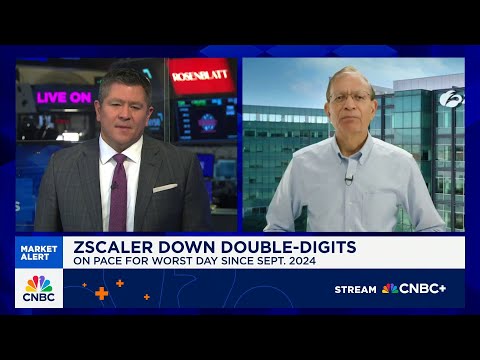
Zscaler CEO says the company had an ‘exceptionally’ strong quarter
CNBC Television· 2025-11-26 18:28
Financial Performance - Zscaler's revenue grew 26% [1][2] - Zscaler's ARR (Annual Recurring Revenue) growth is 26% [1] - Zscaler's RPO (Remaining Performance Obligations) growth is 35% [1] - Zscaler's free cash flow margin is 52% [1][2] - Zscaler is operating at a rule of 78 (revenue growth plus free cash flow) [2] Business Operations and Strategy - Zscaler's organic business contributed significantly to the outperformance [3][5] - Zscaler raised its annual guidance [3][5] - Zscaler is acquiring new customers and selling AI security products [3] - Zscaler is displacing point products to reduce cost and complexity [3] Red Canary Acquisition - Red Canary's contribution is very small compared to Zscaler's overall business [4] - The beat was largely due to Zscaler's organic business, not Red Canary [5]

Final Trades: FTAI, ETN, COWZ, XBI
CNBC Television· 2025-11-26 18:23
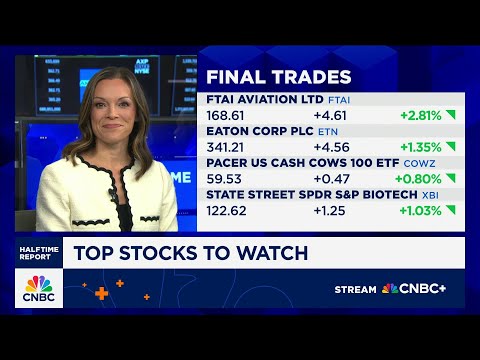
Investment Recommendations - FTA Aviation is a good way to extend portfolio beyond tech, benefiting from interest rates decreasing and driving demand for aircraft companies [1] - Eaten stock is down 12% this month, finding support at the 200-day moving average, with a long position recommended [1] - XBI (SPDR S&P Biotech ETF) is performing well this month and is expected to reach $125, with a buy recommendation [2] Sector Focus - Healthcare sector is highlighted as having companies with high free cash flow, referred to as "cash cows" [2] - Aviation sector is mentioned as a potential investment area [1] Market Observations - Interest rates are expected to decrease, which could benefit lenders to aircraft companies [1]
Final Trades: FTAI, ETN, COWZ, XBI
Youtube· 2025-11-26 18:23
Group 1 - The discussion highlights the potential for investment in the aviation sector, particularly as interest rates decrease, which may drive demand for aircraft companies [1] - There is a focus on "cash cows," referring to companies with high free cash flow, with healthcare being identified as the largest sector in this category [2] - The ETF XBI is mentioned as performing well, with expectations for it to reach a price target of 125, indicating positive sentiment towards biotech investments [2]

Euronav NV(CMBT) - 2025 Q3 - Earnings Call Transcript
2025-11-26 14:02
Financial Data and Key Metrics Changes - The company reported a net profit of approximately $17 million for the quarter, with an EBITDA of $238 million and liquidity exceeding $555 million [2][3] - Capital expenditures (CapEx) are currently at $1.6 billion, with a contract backlog remaining stable at around $3 billion [3][4] - The company declared an interim dividend of $0.05 per share, payable in early January [3] Business Line Data and Key Metrics Changes - In the dry bulk segment, the company achieved a TCE of $29,500 for Newcastlemaxes in Q3, increasing to approximately $34,000 in Q4, while Capesize rates rose from $20,500 to $26,200 [12][13] - The Kamsarmax and Panamax segments saw rates improve from $13,500 in Q3 to $17,000 in Q4 [13] - The tanker division reported Q3 rates of $30,500 for VLCCs, with Q4 rates reaching $68,000 [17][18] Market Data and Key Metrics Changes - The company remains positive on tankers, dry bulk, and offshore markets, while expressing caution regarding containers and chemicals due to supply-demand imbalances [8][9] - Dry bulk demand is expected to grow, with a ton mile demand increase of 0.8% for capesizes this year, projected to ramp up to nearly 3% next year [10] - The offshore wind market is experiencing growth, although some projects have been postponed [11] Company Strategy and Development Direction - The company is focused on increasing spot exposure in dry bulk and large tankers, positioning itself to benefit from favorable market conditions [4][8] - A new multi-purpose accommodation service vessel has been ordered to enhance capabilities in both oil and gas and offshore wind markets [22][24] - The company aims to maintain a flexible dividend policy, balancing shareholder rewards with strengthening its balance sheet for future opportunities [32][33] Management's Comments on Operating Environment and Future Outlook - Management expressed optimism about the operational leverage and free cash flow generation capacity, anticipating significant liquidity generation in the coming quarters [5][6] - The company is cautious about the container and chemical markets, expecting challenges due to high order books and supply-demand dynamics [9][20] - Management remains committed to decarbonization efforts, focusing on ammonia as a fuel choice despite delays in IMO regulations [29][50] Other Important Information - The company has successfully reduced bridge financing by $300 million and is actively working to optimize its financing portfolio [5][60] - The average age of the fleet is at historical highs, which may lead to increased scrapping in the future [15] Q&A Session Summary Question: Impact of delayed carbon pricing by IMO on dual-fuel technology demand - Management indicated that the delay does not alter their strategy, which is based on finding partners for dual-fuel technology and is supported by EU legislation [28][29] Question: Investment philosophy regarding new buildings in dry bulk and tankers - The company has invested significantly in recent years and will continue to look for opportunities, but current new building prices are considered high [30][31] Question: Dividend policy and expectations - The company maintains a fully discretionary dividend policy, with no fixed minimum or maximum dividends expected [32][33] Question: Interest expenses and one-off impacts - Elevated interest expenses were attributed to bridge financing and arrangement fees from recent acquisitions [58][59] Question: Expectations for fixed contracts and their growth - The company aims to increase fixed contract coverage but does not have a specific target due to market variability [97]