Euro

Search documents
Euro Is More Attractive Than Dollar, says JPM's Reschke
Bloomberg Television· 2025-08-27 19:35
What we're seeing is a market that's surprisingly strong with all the geopolitical noise, whether it's in Europe, in the US, tariffs and so on. Absolute levels are almost at historical heights. You know, we see spread levels both in Europe and the U.S. really, you know, can't get much better.But what would what what we are seeing is that investors are becoming ever so slightly more selective. You know, all the deals that we did and there was 10 billion of supply yesterday went well, but we saw a really sign ...

X @Bloomberg
Bloomberg· 2025-08-11 02:23
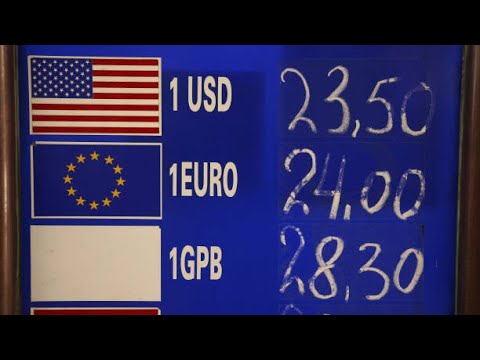
Market Trends - Options traders are using currencies like the Australian dollar and euro to express bearish US dollar views [1] - Recent disappointing American economic data is influencing these bearish views [1]
X @Bloomberg
Bloomberg· 2025-08-01 08:54
Market Trends - The euro is facing its most significant weekly decline against the dollar in nearly three years [1] - Market concern is growing regarding the economic consequences of Europe's trade agreement with the US [1]
Euro outperforms the dollar and yen
CNBC Television· 2025-07-25 19:05
Market Trends & Yield Curve Analysis - The yield curve is flattening, with 10-year Treasury yields decreasing while 2-year Treasury yields increasing on the week [1] - The shift in the yield curve's steepening trend occurred around July 15th and 16th, following the release of CPI (Consumer Price Index) and PPI (Producer Price Index) data [2][3] Currency Market Dynamics - Euro is outperforming, reaching a one-year high against the Yen (euroyen) [3][4] - The dollar is underperforming against the Yen (dollar yen) [4] - Euro is hovering near a four-year high against the dollar [5] Factors Influencing Euro Strength - Concerns about fiscal prudence and austerity measures in Europe, even after the election, are contributing to the Euro's strength against the Yen [4][5]
ECB Keeps Interest Rates Unchanged
Bloomberg Television· 2025-07-24 12:41
Interest Rate Policy - The ECB paused interest rate hikes, holding the deposit rate steady, a decision widely expected [1] - The ECB will make interest rate decisions meeting by meeting, without pre-committing to a specific path, but remains determined to stabilize inflation [1][7] - The market is questioning whether this pause signifies the end of rate hikes or if one more hike is anticipated, and what conditions would prompt rate cuts [2] Economic Outlook and Data Dependency - The ECB is awaiting more economic data and forecasts, particularly clarity on trade deals between Brussels and Washington, before making further decisions [3] - Bloomberg Economics suggests that more rate cuts may be needed in September and December [4] - The Governing Council's interest rate decisions will be based on its assessment of the inflation outlook, risks, economic and financial data, underlying inflation dynamics, and the strength of monetary policy transmission [7] Euro Exchange Rate - The market is interested in Christine Lagarde's comments on the euro exchange rate and its impact on disinflation [5][9] - Euro strength, up 13% year-to-date against the dollar, is a factor influencing inflation [8] - The ECB will be mindful of the exchange rate as a channel to influence inflation, though not explicitly targeting a specific level [9] Risks to Growth and Inflation - The market will interpret an emphasis on downside risks to growth as a signal for potential rate cuts in September [6] - Downside risks to inflation are also a growing concern for the ECB [6] - Potential dumping of Chinese goods into the euro area is an issue, dependent on talks between China and the EU [8]
X @Bloomberg
Bloomberg· 2025-07-16 10:18
Market Concerns - Financial markets are showing renewed anxiety regarding France's ability to manage its growing budget deficit [1] - ING strategists suggest this anxiety could negatively impact the demand for the euro [1]
X @Bloomberg
Bloomberg· 2025-07-08 16:00
Eurozone Membership - Bulgaria's path to Eurozone accession and its implications for the country's economy [1] Economic Impact (Potential) - The report focuses on the economic consequences of Bulgaria joining the Eurozone [1]
X @Bloomberg
Bloomberg· 2025-07-05 12:08
Monetary Policy & Currency Dynamics - The euro is unlikely to swiftly replace the dollar as the world's financial system anchor [1] Central Bank Official's Stance - European Central Bank Governing Council member Gabriel Makhlouf made the statement regarding the euro's potential to supplant the dollar [1]
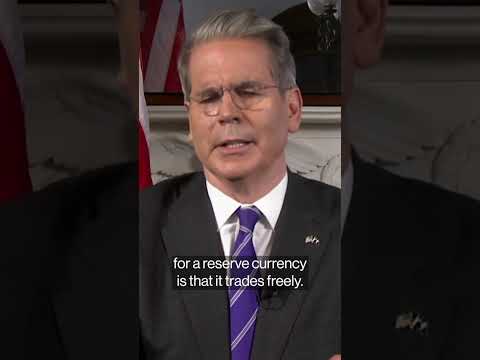
Bessent on euro as reserve currency: Be careful what you wish for
Bloomberg Television· 2025-07-03 20:42
Currency Dynamics - The industry views the notion of the Chinese Yuan becoming a reserve currency as flawed due to its non-convertibility and capital controls [1] - The industry notes that China's 14 亿 (1.4 billion) population desires to move capital out of the country, further hindering the Yuan's potential as a reserve currency [1] - The industry emphasizes that a freely trading currency is a prerequisite for reserve currency status [1] - The industry observes that a Euro exchange rate of 1.20 against the dollar would likely provoke concerns from European exporters about its strength [2] - The industry suggests the ECB should be cautious about the Euro's appreciation [2] Geopolitical & Economic Responsibility - The industry acknowledges the United States recognizes the responsibilities associated with being a reserve currency [2]
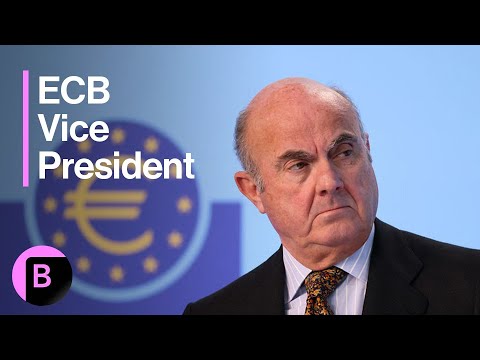
ECB's Guindos on Inflation, Euro Rate, Fiscal Policy
Bloomberg Television· 2025-07-01 07:37
Economic Outlook & Uncertainty - Trade negotiations are a relevant factor influencing the European economy, with predictions varying based on different outcomes [1] - High levels of uncertainty persist due to geopolitical risks and the unknown final outcome of trade negotiations [4][5] - The Euro area's growth rate is expected to be below 1% in 2025 and slightly above that in 2026, with risks tilted to the downside [9] - Investment is flat, and consumption is not recovering, indicating a weak economic situation [9][10] Monetary Policy - The ECB has reduced interest rates eight times, from 4% to 2%, and is in a good place to deal with the future [3] - Further interest rate cuts are unlikely to significantly improve the economy, and the focus should be on certainty in trade and fiscal policies [10][11] - The evolution of inflation is expected to be positive, with the possibility of undershooting the target being limited [6][7] - The ECB does not target any concrete level for the exchange rate but monitors its level and evolution, considering its impact on inflation [16] Inflation & Exchange Rate - The ECB is confident that inflation will reach 2%, with favorable factors including the exchange rate and the evolution of energy prices [17][18][19] - An exchange rate of 1.17 or even 1.20 is considered acceptable, but overshooting beyond that would be more complicated [14] Fiscal Policy & Market Risks - Increased defensive spending is supported, but fiscal sustainability is needed, as markets may not continue to overlook fiscal policy [21][22] - Concerns exist about a market event linked to perceived unsustainable fiscal policy, which could lead to higher yields and impact valuations [23][24]