Magnificent Seven

Search documents
Ed Yardeni on why he's underweight 'Magnificent Seven' stocks
CNBC Television· 2025-12-08 12:52
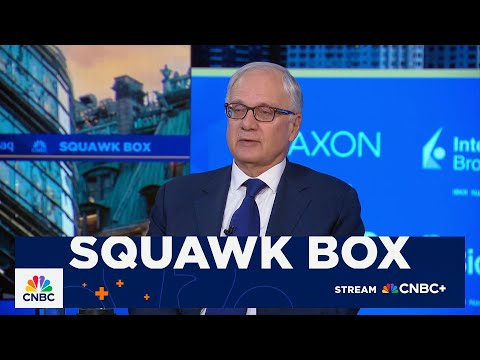
>> ALL RIGHT. WELCOME BACK TO SQUAWK BOX EVERYBODY. LET'S TAKE A LOOK AT THE FUTURES THIS MORNING.DOW FUTURES UP BY ABOUT TEN POINTS S&P FUTURES UP BY SIX. THE NASDAQ INDICATED UP BY CLOSE TO 60 POINTS. AND JOINING US RIGHT NOW IS ED YARDENI.HE'S PRESIDENT AT YARDENI RESEARCH. AND WE COULD START BY TALKING ABOUT HOW THE MARKETS CONTINUE TO KIND OF MELT BACK UP OR NEAR ALL TIME HIGHS. BUT I THINK THE MOST INTERESTING THING, AND WHAT HAS KIND OF SHOCKED AND SURPRISED ME THIS MORNING, IS YOUR MOVE AWAY FROM TH ...

Peter Schiff once said he'd ‘be a lot richer’ if he invested all his money in the ‘Magnificent 7’ a decade ago.
Yahoo Finance· 2025-12-08 10:13
Core Insights - Peter Schiff acknowledges that focusing on high-performing stocks, specifically the "Magnificent Seven," would have significantly increased his wealth over the past decade [1][2][4] - The "Magnificent Seven" includes major companies such as Apple, Microsoft, Amazon, Alphabet, Nvidia, Tesla, and Meta, all of which have outperformed the S&P 500 [2][4] - Schiff's investment philosophy, heavily centered on gold, has limited his wealth growth compared to the stock market's performance [3][4] Investment Performance - The total net worth of the wealthiest 1% in the U.S. reached $51.9 trillion in Q2 2025, indicating substantial wealth accumulation among top earners [3] - Schiff's net worth, reported to be over $80 million, places him within the top 1% bracket, but his growth has been constrained by his focus on gold investments [3] Market Dynamics - Schiff describes the wealth generated in the stock market as "artificial" and primarily based on perceived stock valuations, suggesting skepticism about the sustainability of such wealth [6]





Ed Yardeni Discusses Shift From Magnificent Seven Tech Stocks
Youtube· 2025-12-08 04:08
Core Viewpoint - The recommendation has shifted to underweight mega-cap tech stocks compared to the rest of the S&P 500 due to increasing competition and high market capitalization of these stocks [1][4]. Group 1: Market Dynamics - The "Magnificent Seven" tech stocks now account for 45% of the S&P 500 market cap, while their earnings share has not increased proportionately [3]. - The U.S. market represents 65% of the global stock market cap, making it challenging to recommend an overweight position in the U.S. [4]. - There is a growing competitive landscape among the Magnificent Seven, with new entrants and innovations challenging their dominance [6][7]. Group 2: Competitive Landscape - Recent advancements, such as Google's Gemini 3 and DeepSeek's new model, have intensified competition in the AI sector, prompting a reevaluation of the positions held by established players like OpenAI [6][7]. - High profit margins in the tech sector are attracting more competition, indicating a shift in market dynamics [8]. Group 3: Investment Strategy - A broader investment strategy that includes the "impressive 493" companies outside the Magnificent Seven is suggested, as these companies are leveraging technology to enhance productivity and profit margins [9].

Will Alphabet Outshine NVIDIA in the MAG-7? ETFs to Watch
ZACKS· 2025-11-27 15:02
Core Insights - Alphabet Inc's shares have increased by 67% year-to-date, outperforming NVIDIA's 32% rise as of November 25, 2025 [1] - Berkshire Hathaway has taken a new position in Alphabet, making it the 10th largest equity holding in its portfolio as of the end of Q3 2025 [2] - Alphabet is part of the "Magnificent Seven" group, which includes major tech companies known for their AI initiatives, and has shown strong revenue and earnings growth [4] Financial Performance - Alphabet's stock has surged 18.3% in the past month, contrasting with NVIDIA's 4.7% decline [1] - Alphabet's forward price-to-earnings (P/E) ratio is 26.68X, lower than the tech sector's 30.75X and the S&P 500's 24.03X, indicating a cheaper valuation compared to peers like Microsoft, which trades at 32.31X [11] Strategic Moves - Alphabet is expanding into AI chip production, potentially competing with NVIDIA [6] - Meta Platforms is reportedly in discussions to utilize Google's AI chips, which could enhance Alphabet's market position [7][8] - Google has secured a deal to supply up to 1 million tensor processing units (TPUs) to Anthropic, suggesting growing interest in its AI chip technology [10] Market Position - Alphabet has a strong Growth score of "B" and a Momentum Score of "A," positioning it well within the top 13% of its sector and top 33% of its industry [12] - The stock has solid exposure to various exchange-traded funds (ETFs), making it an attractive option for investors following Berkshire's investment strategy [13]

3 Stocks at Fresh 52-Week AND Record Highs to Buy Now
Yahoo Finance· 2025-11-26 15:29
Group 1 - The commentary discusses stocks reaching new 52-week highs and lows, particularly in relation to the performance of the "Magnificent Seven" companies over the past five years [1][2] - The average cumulative return of the Magnificent Seven was 292.8%, with Nvidia contributing nearly 61% of that return [3] - Excluding the highest and lowest returns among the Magnificent Seven, the average return is 153.2%, indicating a more attainable performance benchmark [3] Group 2 - Mueller Industries (MLI) reached a new 52-week high of $110.52, marking its 35th high in the past year and an all-time high, with a 553.2% increase over the past five years [4] - The company has been positively viewed due to its strong positioning to benefit from construction industry demand and a solid balance sheet, holding $1.07 billion in net cash valued at 5.2 times cash per share [5] - As of Q3 2025, Mueller Industries reported $1.32 billion in net cash with no debt, a 25% increase from December 2024, and a cash per share of $11.89, trading at 9.3 times cash [6]

YMAG: Chasing MAG-7 With 34% Yield And 30% Underperformance (NYSEARCA:YMAG)
Seeking Alpha· 2025-11-25 15:23
Core Viewpoint - The article discusses the "Magnificent Seven," a term referring to leading companies in the Information Technology sector, including Alphabet Inc, Amazon.com Inc, Apple Inc, Microsoft Corporation, and Tesla Inc [1]. Group 1: Company Overview - The "Magnificent Seven" represents the top tier of the Information Technology sector, highlighting their significance and influence in the market [1]. Group 2: Investment Strategies - Trapping Value is an investment team with over 40 years of combined experience, focusing on options income and capital preservation [1]. - The Conservative Income Portfolio, managed by Trapping Value in partnership with Preferred Stock Trader, includes two income-generating portfolios and a bond ladder [1]. - The Covered Calls Portfolio aims to provide lower volatility income investing while emphasizing capital preservation [1]. - The fixed income portfolio targets securities with high income potential and significant undervaluation compared to peers [1].

YMAG: Chasing MAG-7 With 34% Yield And 30% Underperformance
Seeking Alpha· 2025-11-25 15:23
The Magnificent Seven is commonly used to refer to the crème de la crème of the Information Technology sector. Alphabet Inc ( GOOG ), Amazon.com Inc ( AMZN ), Apple Inc ( AAPL ), Microsoft Corporation ( MSFT ), Tesla Inc (Trapping Value is a team of analysts with over 40 years of combined experience generating options income while also focusing on capital preservation. They run the investing group Conservative Income Portfolio in partnership with Preferred Stock Trader. The investing group features two inco ...


Alphabet's stock is getting closer to this huge milestone. Why Apple should watch out.
MarketWatch· 2025-11-25 15:17
After surging 16% since the beginning of November, shares of Alphabet look like they have plenty more room to run. That means the other "Magnificent Seven†names need to watch out. ...

Prediction: This Will Be the Largest Company By the End of 2026
247Wallst· 2025-11-25 15:04
Core Insights - The month has been significant for the Magnificent Seven and the AI trade, indicating notable developments in the sector [1] Group 1 - The Magnificent Seven refers to a group of leading tech companies that are heavily involved in AI advancements [1] - Recent events have highlighted the volatility and rapid changes within the AI market, affecting investor sentiment [1] - The performance of these companies is closely tied to the broader trends in AI technology and its adoption across various industries [1]

Bill Ackman Missed Out On $25 Million Selling Alphabet Shares Early In Q3
Benzinga· 2025-11-20 19:50
Legendary investor Bill Ackman disclosed no new stock purchases in the third quarter, instead showing a decreased position in shares of Magnificent Seven stock Alphabet Inc (NASDAQ:GOOG)(NASDAQ:GOOGL) . With Alphabet hitting new all-time highs since the end of the third quarter, Ackman missed out on millions in potential profits.Ackman Cuts Alphabet StakeIn the third quarter, Ackman decreased the stake for Alphabet Class A (GOOGL) shares in the Pershing Square Capital Management portfolio, lowering its expo ...