Private credit

Search documents
Citi's Rob Rowe: We think it’s a done deal on an October rate cut and expect another in December
CNBC Television· 2025-10-24 17:04
Market Overview & CPI Analysis - CPI 数据中关税的影响并不明显,整体同比 CPI 仍高于 3% 的目标值[1][2] - 市场普遍预计美联储将在 10 月降息,12 月可能再次降息[3] - 普遍认为市场情绪仍然积极,科技和创新领域仍是投资重点[5] Sector Focus & AI Impact - 策略上,通过银行、保险和公用事业等周期性行业来对冲科技投资,以受益于预期中的宽松政策[6] - AI 的生产力、效率和收入增长预计将在企业采用率达到 50% 以上时才会显现,目前采用率约为 5% 到 10%[6] - 盈利方面,目前非科技行业的盈利表现更为积极,需考虑科技基础设施支出的影响[8] Private Credit & Risk Assessment - 目前看到的私募信贷问题更多与欺诈有关,而非经济状况[9][11] - 预计某些领域的部分信贷会出现违约,但不太可能像金融危机那样大规模蔓延[11] - 经济前景仍然乐观,预计软着陆,加上货币政策宽松,违约风险预计不会大规模扩散[14]

X @Bloomberg
Bloomberg· 2025-10-22 16:53
Market Trends - Private credit investors are anticipated to face reduced returns in the future [1] - Interest rate cuts are expected to occur [1] - Credit spreads are tightening [1]
X @Bloomberg
Bloomberg· 2025-10-22 13:52
Market Trends - Short sellers are taking profits on bets against some of the largest US private credit lenders [1] - Share prices of these lenders were impacted by valuation concerns in the wider credit market [1]
Manulife CFO Simpson on Private Credit, Asia, AI
Yahoo Finance· 2025-10-22 12:09
Core Insights - Manulife's CFO Colin Simpson expresses the company's positive stance on involvement in private credit, highlighting its significance in the current market landscape [1] - The discussion includes insights on life insurance products specifically tailored for the Asia market, indicating a strategic focus on this region [1] - The company is actively adopting AI technologies, which suggests a commitment to innovation and efficiency in its operations [1] - Outlook for markets and interest rates is addressed, reflecting the company's awareness of macroeconomic factors that could impact its business [1] Company Focus - Manulife is engaged in private credit, which is seen as a valuable opportunity in the financial landscape [1] - The firm is concentrating on life insurance offerings in Asia, indicating a targeted growth strategy in this high-potential market [1] - The adoption of AI technologies is a key initiative for Manulife, aiming to enhance operational capabilities and customer service [1] Market Outlook - The discussion includes an analysis of market conditions and interest rate trends, which are critical for strategic planning and investment decisions [1]

Here are the hidden risks and biggest opportunities on Wall Street
Youtube· 2025-10-20 17:12
Earnings Season and Market Performance - Earnings season has shown resilience, with companies like Ally demonstrating strong performance despite a weakening labor market [2][12] - Big tech companies are expected to play a significant role in market performance, with Apple recently receiving a buy upgrade and reaching a record high [3][4] - The upcoming CPI data is crucial for understanding economic conditions, particularly for Social Security cost of living adjustments [5][4] Labor Market Insights - The labor market is experiencing a "low fire, low hire" environment, with stable unemployment rates and limited mass layoffs [9][10] - Small and medium-sized firms are facing more job market declines compared to larger firms, indicating a K-shaped economic slowdown [11][12] - Despite concerns, the overall impact on the aggregate economy has not yet been significant [12] Regional Banks and Credit Concerns - Recent stress among regional lenders is viewed as contained, with limited exposure to companies facing bankruptcy [14][15] - Unlike the Silicon Valley Bank crisis, current losses among regional banks are manageable, and investor fear has not been sustained [16][18] - The S&P 500 remains close to all-time highs despite credit jitters and economic uncertainties [19][20] Investment Strategies and Market Outlook - Financials and industrials are highlighted as sectors with potential for earnings catch-up, as they have not experienced the same valuation increases as big tech [27][28] - Infrastructure investments are seen as favorable in moderate to high inflation environments, encompassing traditional projects as well as AI-related developments [29] - Private credit opportunities are being explored, particularly those with lower economic sensitivity and closer to investment-grade assets [29][30]


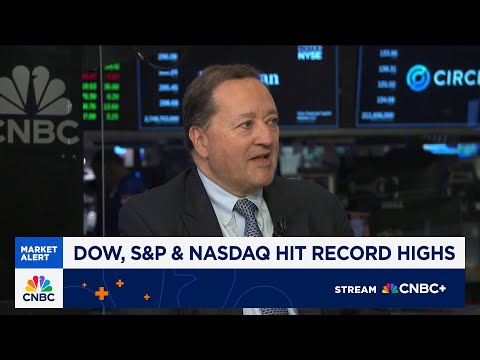
The AI bubble is a 'rational bubble', says Mohamed El-Erian
CNBC Television· 2025-10-20 13:31
AI & Economy - The economy is currently experiencing an AI-driven boom, which is a positive factor contributing to outperformance compared to the rest of the world [2][3] - This AI boom is characterized as a "rational bubble" with significant investment in various AI companies, leading to competition and innovation [3] - While the AI sector promises substantial productivity gains, only a few companies are expected to emerge as winners, implying potential losses for some investors [3][4] Gold & Dollar - Global concerns about the US dollar's stability are driving central banks and institutional investors to diversify into gold [5] - The increasing allocation to gold by central banks and institutional investors, coupled with speculative activity, is expected to continue pushing gold prices upward [6] - Gold price may reach $5,000 this year [7] Bitcoin - Bitcoin's fundamental holding is still smaller than gold, and the speculation side is much larger than for gold, resulting in higher volatility [7] - Bitcoin is still evolving and has not yet developed the fundamental characteristics of gold [7][8] Financial Stability & Private Credit - Isolated cases of financial strain are expected due to excessive risk-taking in pursuit of returns, but these are not considered systemic threats to financial stability [9][10] - Private credit is viewed as separate from the banking system, providing financing to companies that might not otherwise have access [8][11]

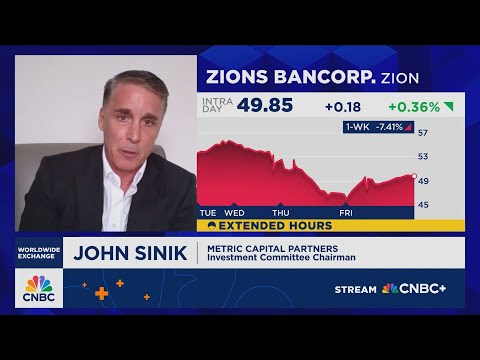
Sinik: Private credit has grown tenfold but isn’t a problem by itself
CNBC Television· 2025-10-20 13:14
So, John, you sent us some notes. You're in the industry. One of the things that you really highlighted is the growth of private credit.Uh, basically increasing by about 10 times over the last couple years or so. Should that be a sign of worry that so many companies are going outside of traditional financing and turning into private credit. >> No, I don't think it necessarily needs to be to be a worry.I mean, it is very much a scale market. So, you do see a concentration of private credit provided by a hand ...
Trump's Plan to Rescue Argentina Is 'Unconventional,' Larry Summers Says
Yahoo Finance· 2025-10-18 12:07
Core Insights - US bank earnings appear solid with strong balance sheets, indicating a stable financial environment for the banking sector [1] - Concerns have been raised regarding the rapid growth of private credit, which may pose risks to the financial system [1] - The uneven deregulation in the financial sector could lead to vulnerabilities, particularly in the context of economic interventions [1] - The US intervention to support Argentina's peso without IMF-style safeguards is viewed as a risky approach [1] Summary by Category Banking Sector - US banks report solid earnings and maintain strong balance sheets, reflecting overall financial health [1] Private Credit - The fast growth of private credit is highlighted as a potential risk factor for the financial system [1] Regulatory Environment - There is an indication of uneven deregulation within the financial sector, which could create instability [1] International Intervention - The US's unilateral intervention to stabilize Argentina's peso is criticized for lacking necessary safeguards typically provided by the IMF [1]
OWL Co-CEO Claps Back On Jamie Dimon's 'Cockroach' Remark: 'Might Be A Lot More Cockroaches At JPMorgan'
Yahoo Finance· 2025-10-18 02:31
Core Viewpoint - A debate has emerged regarding the health of the U.S. credit markets, with contrasting views from Blue Owl Capital's co-CEO Marc Lipschultz and JPMorgan Chase's CEO Jamie Dimon, particularly in light of recent bankruptcies in the credit sector [1][2]. Group 1: Responses to Credit Market Concerns - Lipschultz dismissed Dimon's warning about hidden problems in the credit market, suggesting that the recent bankruptcy of First Brands does not indicate a systemic issue in private credit [2][3]. - He characterized the concerns as "an odd kind of fear-mongering," attributing the failure to isolated incidents of fraud within the traditional syndicated loan market rather than the direct lending space [3][4]. Group 2: Economic Perspectives - Prominent economist Mohamed El-Erian supported Dimon's view, stating that the recent credit issues are a predictable outcome of a prolonged period of easy money and lax credit standards [4][5]. - El-Erian emphasized that while defaults may not pose a systemic risk, they are likely to increase due to the environment created by years of loose credit [5]. Group 3: Recent Bankruptcies and Market Reactions - The bankruptcies of First Brands and subprime auto lender Tricolor Holdings have heightened fears of credit deterioration, leading to significant sell-offs in regional bank stocks [5][6]. - Zions Bancorporation reported a substantial charge due to bad loans, while Western Alliance Bancorp alleged fraud by a borrower, further contributing to market concerns [6].


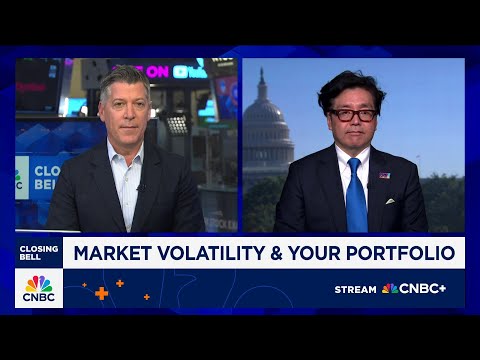
Tom Lee: Private credit concerns don't change market's long list of tailwinds
CNBC Television· 2025-10-17 20:24
Joining us now is Tom Lee. He's Funst Strat's head of research and a CNBC contributor. It's good to see you joining us from the nation's capital today.So, what's your take on everything that we are talking about now daily. Uh, well, I I heard the earlier segment, Scott, and I I do think I'm kind of more in the Jamie Diamond camp, you know, that uh the in Steve Leeman's point that there's opacity in private credit. And that's the problem that investors are going to grapple with for some time. And I think tha ...