Quantum Computing

Search documents
A Federal Reserve Crisis of Confidence Threatens the Very Fabric of Wall Street -- and Investors May Pay the Price
Yahoo Finance· 2026-02-14 09:26
Since 2019, investors have been privy to a bit of stock market history. The benchmark S&P 500 (SNPINDEX: ^GSPC) has gained at least 16% for three consecutive years on only three occasions spanning 98 years. It's been done twice over the previous seven years (2019-2021 and 2023-2025). The ageless Dow Jones Industrial Average (DJINDICES: ^DJI) and growth stock-dominated Nasdaq Composite (NASDAQINDEX: ^IXIC) haven't been slouches, either. Both have soared to several record-closing highs. Will AI create the ...
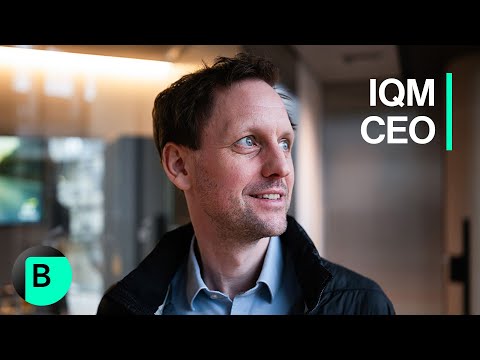
Finland's IQM Urges Europe to Close the Gap in Global Quantum Race
Bloomberg Technology· 2026-02-14 07:00
If you look just at the number of start ups in Quantum, for example, there are more in Europe than we have in the US, for example. So this is really not the issue. We have the fundamental science, we have the research. We have to early stage venture.What is missing is two things. It's those companies that scale to become global leaders and it is the industry engagement. There are no tech companies in Europe that invest heavily like you have big names in the US, the likes of Google, IBM, Amazon.So I think th ...

Can Quantum Computing Power the AI Boom?
Bloomberg Television· 2026-02-14 07:00
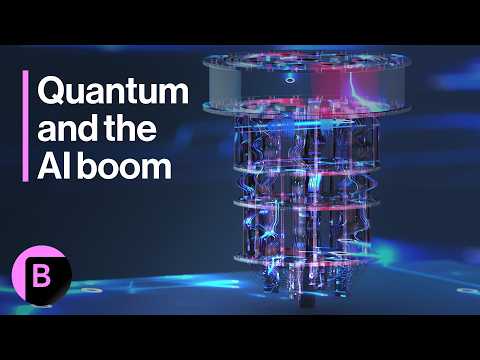
This processor built by Alphabet, took 5 minutes to solve a problem that one of the world's fastest existing supercomputers would take ten septillion years to answer. That's right. Longer than the age of the universe.The experimental Google machine used what's known as quantum computing technology at the heart of the next great race from Washington to Beijing for commercial and military supremacy. It could mean accelerated progress in areas like drug research, artificial intelligence, defense and finance. T ...
Does Rigetti's $600M Cash Runway De-Risk Its 2026 Roadmap Execution?
ZACKS· 2026-02-13 16:20
Core Insights - Rigetti Computing (RGTI) enters 2026 with a robust balance sheet, differentiating itself from peers reliant on frequent capital raises [1][2] - The company's liquidity exceeds $600 million, providing multi-year financial visibility and reducing near-term dilution risk [1][2] - Rigetti's resources are sufficient to fund planned system launches, including next-generation 100+ qubit platforms with approximately 99.5% fidelity and a 150+ qubit architecture [1][7] Financial Flexibility - Rigetti's revenue profile is uneven, primarily tied to government agencies and research institutions, making financial flexibility crucial [2] - Recent contract momentum and international engagement reinforce long-term relevance but do not mitigate quarterly volatility [2] - The strong balance sheet allows Rigetti to absorb delays and customization without external financing, enhancing its competitive position [2][3] Peer Updates - D-Wave Quantum (QBTS) achieved a technical milestone with scalable on-chip cryogenic control for gate-model quantum processors, reducing wiring complexity [4] - IonQ (IONQ) is deepening its relationship with the Korea Institute of Science and Technology Information by installing a next-generation 100-qubit system, highlighting its success with government-backed institutions [5] Price Performance and Valuation - Rigetti's shares have declined 16.6% over the last six months, compared to the industry's decline of 20.3% [6] - The company trades at a price-to-book ratio of 13.31, above the industry average, and carries a Value Score of F [9] - The Zacks Consensus Estimate for Rigetti's 2026 earnings indicates a significant 75.9% improvement from the previous year [10]


Will Quantum Computing Live Up to the Hype? #tech
Bloomberg Television· 2026-02-13 15:10
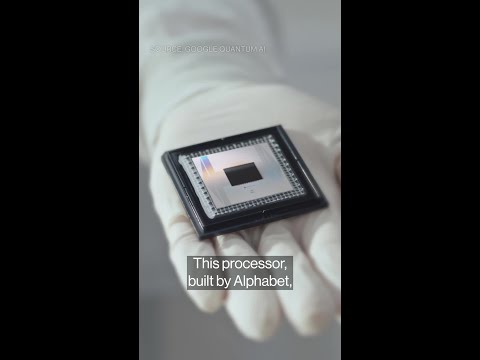
This processor built by Alphabet needed five minutes to solve a problem that one of the world's fastest existing supercomputers would need 10 septillion years to answer. That's right, longer than the age of the universe. The experimental Google machine used what's known as quantum computing.Technology at the heart of the next great race from Washington to Beijing for commercial and military supremacy. It could mean accelerated progress in areas like drug research, artificial intelligence, defense, and finan ...
Why Did Rigetti Computing Stock Plunge This Week?
Yahoo Finance· 2026-02-13 14:31
Core Viewpoint - The value of quantum computing stocks, particularly Rigetti Computing, has significantly declined from their previous highs, reflecting a correction from overexuberance in the market [1][4]. Group 1: Stock Performance - Rigetti Computing's shares have dropped approximately 75% from their peak last fall, with a recent decline of 15.4% as of Friday morning [1][2]. - The company's market capitalization is currently nearly $5 billion, down from over $18 billion last fall, despite reporting only $1.9 million in third-quarter revenue [3]. Group 2: Analyst Insights - TD Cowen analyst Krish Sinkar downgraded Rigetti stock, suggesting that investors may have overestimated the company's potential and that forward estimates for 2027 are overly optimistic [2][4]. - Rigetti management anticipates that significant demand and value for quantum computing will not materialize until after 2030, indicating a longer timeline for potential returns [4]. Group 3: Market Sentiment - The current decline in Rigetti's stock price is seen as a correction from the previous market enthusiasm, with investors likely needing more time to identify successful companies in the quantum computing sector [4].
Photonic Inc. Partners with TELUS, Demonstrates World-First Quantum Communications Running Over Today's Network Infrastructure
Globenewswire· 2026-02-13 14:24
Core Insights - Photonic Inc. and TELUS have formed a partnership to advance quantum-secure networking capabilities and deliver quantum solutions that can transform industries globally [1][3] - The collaboration has achieved a significant milestone with the world's first quantum teleportation using TELUS' existing fibre optic infrastructure, demonstrating the ability to reliably carry quantum information [1][2] Company Overview - Photonic Inc. specializes in distributed quantum computing and communications technologies, focusing on commercial-scale quantum computers and networks to tackle challenges in materials science, drug discovery, climate change, and security [5] - TELUS is a leading communications technology company with over $20 billion in annual revenue and more than 21 million customer connections, committed to leveraging technology for positive human outcomes [7] Technical Achievements - The quantum teleportation was successfully conducted over 30 km of TELUS' PureFibre network, utilizing Photonic's Entanglement First™ architecture, which integrates silicon-based qubits with telecom band photonic connectivity [2] - This achievement allows for the transfer of quantum information to a remote processing node, a crucial step for establishing long-distance quantum networks and commercial-scale quantum computers [2] Future Prospects - The partnership aims to expand projects at the intersection of Photonic's quantum computing expertise and TELUS' telecommunications capabilities, paving the way for products and infrastructure that support commercial quantum solutions [3][4] - The collaboration is expected to contribute to building a secure, resilient, and connected future for Canada, enhancing the country's leadership in quantum computing and networking [3][4]


Xanadu Develops Quantum Algorithm Closing in on Chemistry's Toughest Challenge
Globenewswire· 2026-02-13 14:00
TORONTO, Feb. 13, 2026 (GLOBE NEWSWIRE) -- Xanadu (Xanadu Quantum Technologies Inc.), a world leader in photonic quantum computing, today announced the publication of a quantum algorithm that significantly reduces the resource requirements to simulate photochemical reactions on a fault-tolerant quantum computer. Published as a pre-print research paper, "Efficient Simulation of Pre-Born-Oppenheimer Dynamics on a Quantum Computer," this work provides a scalable path for investigating phenomena that are import ...


Quantum computing is worth billions for for individual applications: Phasecraft CEO
Bloomberg Television· 2026-02-13 13:52
when you speak to investors, what number do you put on the potential value of this of this industry. >> I mean, if you're looking across the whole industry, it is incredibly difficult actually to put put a number on this because there are individual applications of quantum computing where that one application is well into the billions, right. So, I mean, what is the value of developing the next lithium ion battery.What's the value of developing high temperature superconductors that enable low loss power tra ...

Riverlane CEO explains which industries have the most to gain from quantum computing advances
Bloomberg Television· 2026-02-13 13:49
Which industries, Steve, are best positioned to benefit the most. Where do we expect to see the most impact on an industry level from this technology. >> I think the earliest industries will be those that are trying to develop new medicines or new materials as Ashley alluded to.I mean, what quantum computers can do is solve uh chemistry, solve material sciences in a radically new way. So, we've been trying to do this for for 100 years now. Um, traditional computers struggle to scale um with these systems.An ...