Bias

Search documents
Ethical AI: Why it Matters and What's at Stake | Dvija Mehta | TEDxYouth@PPSIJC
TEDx Talks· 2025-06-18 16:21
AI Ethics & Bias - AI ethics is the study of aligning artificial intelligence with human values and moral principles, promoting responsible AI use through fairness, accountability, transparency, and safety [1] - AI systems can learn and scale human biases, amplifying them significantly, as demonstrated by Amazon's hiring AI and a bank's loan lending AI [1] - Current large language models (LLMs) like ChatGPT are often "black boxes," lacking interpretability, which hinders the ability to identify and rectify faults in their decision-making processes [1] Anthropomorphism & Social AI - Anthropomorphism, the tendency to treat non-human entities as human, poses risks when applied to AI, potentially leading to inappropriate moral consideration [1][3][9] - Social AI systems, designed to fulfill social needs like companionship, can evoke trust, intimacy, and even love, exacerbating the anthropomorphism problem [5][6] - Assigning human qualities to non-conscious AI systems risks neglecting moral considerations for entities that deserve them, such as non-human animals [9][10] Future of AI & Responsible Development - Interpretability and adaptability are essential for creating safer and more trustworthy AI systems that can be effectively integrated into society [11][12] - The industry needs to address the ethical implications of AI, especially with the potential emergence of Artificial General Intelligence (AGI) and AI agents in the workflow [14][15] - The industry should focus on building a society where technology is ethically aligned with humans, ensuring a safe and trustworthy environment [13][16]


Rewriting AI’s Future for All | Shana Feggins | TEDxRoxbury
TEDx Talks· 2025-06-16 15:10
AI Ethics and Bias - AI systems are currently making decisions that impact lives, potentially closing doors to opportunities like grocery stores, healthcare, and home loans [2] - Facial recognition technology can fail to identify certain groups up to 35% more often than others, highlighting bias in AI [3] - The AI field lacks diversity, with only 25% of AI engineers identifying as a minority and 22% as women, and these numbers are decreasing [4] - AI trained on inequitable data reproduces and scales existing biases, impacting hiring, medical diagnostics, and criminal justice [6][7] - Ethical AI should be fit, fair, inclusive, and transparent, actively working to eliminate discrimination and ensuring accountability [8][9] Social Mobility and Economic Impact - AI has the potential to widen the wealth gap by $43 billion if not managed properly [11] - AI-driven automation is estimated to displace 85 million jobs but create 97 million new ones, resulting in a net increase of 12 million jobs globally [11] - Communities risk missing out on the future of work, wealth, and leadership if they are not involved in AI innovation [12] - Education, funding for tech founders, and policies that prioritize people over profit are needed to ensure equitable participation in the AI economy [12] Agentic AI and Human Oversight - Agentic AI systems, which operate with autonomy, require human-defined goals to ensure they align with human values [15] - Human oversight is crucial throughout the AI lifecycle to train, monitor, and correct AI decisions, especially when they impact real lives [16][17] - AI should center on human values and maintain human involvement to ensure context, compassion, and ethical judgment are considered [16][17]

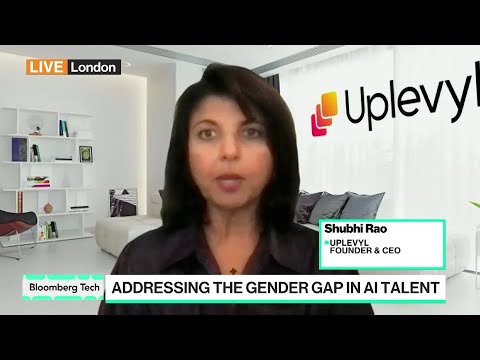
Addressing AI’s Impact on the Gender Gap
Bloomberg Technology· 2025-06-13 20:21
Generative AI Impact on Workforce - Generative AI applications are currently automating administrative jobs largely held by women [1] - Disproportionate impact on women could create further gender inequities [2] - Current AI models are trained on internet data, which is heavily male-dominated [3][4] - Lack of representation of women in training datasets, especially in areas like caregiving and unpaid labor, leads to biased models [4] Addressing Gender Bias in AI - Upper Level is creating a gender dataset to represent women's experiences and challenges [5] - Blending gender data sets could lead to gender equality across broader training sets [6] - Training large language models to be more inclusive can counteract bias [6] Women's Adoption of Generative AI - A significant gap exists in the adoption of generative AI between men and women, potentially around 20 percentage points [8] - Women's lower activity on tech platforms due to misogyny and lack of trust impedes adoption of generative AI [9] - The adoption gap between men and women is widening [10]