
Interest Rates

Search documents
CAC 40 Up Firmly In Positive Territory
RTTNews· 2026-01-29 10:44
Group 1: Market Performance - France's equity index CAC 40 increased by 51.98 points or 0.64% to 8,118.66, supported by positive earnings updates and the Federal Reserve's decision to hold interest rates [1] - Schneider Electric rose more than 3%, while Legrand gained nearly 3%, and STMicroElectronics increased by 2.1% after forecasting first-quarter revenue above market expectations [2] - Shares of a spirits maker surged over 8% due to better-than-expected third-quarter sales but later lost most of the gains [3] Group 2: Company-Specific Developments - Sanofi reported a loss in its fourth quarter despite higher net sales, but projects continued profitable growth with sales expected to grow by a high single-digit percentage at CER in 2026 [4] - Sanofi proposed a dividend of 4.12 euros for 2025, a 5.1% increase from the previous year, and plans a share buyback program of 1 billion euros in 2026 [5] - Eurofins Scientific shares fell by 4.7%, while Dassault Systemes and Capgemini dropped by 2.2% and 2.1%, respectively [3][5] Group 3: Economic Indicators - The Eurozone Economic Sentiment Indicator (ESI) rose to 99.4 in January 2026, up 2.2 points from December 2025, marking the highest level since January 2023 [6] - Consumer confidence improved to -12.4, the highest since February 2025 [6] - Lending to Eurozone businesses increased by 3% year-on-year to a record €5.324 trillion in December 2025, indicating a recovery in credit demand [7]


Indonesia Sees Worst Stock Rout Since 1998 | The China Show 1/29/2026
Bloomberg Television· 2026-01-29 09:55
There was broad support on the committee for holding. Today, broad I would say, including among non-voters. So that's where that was.Of course, some people did want to cut and then dissented. But committee pretty broadly, four, four, four holding today. Jay Powell there speaking after the Fed held rates steady and signaled a cautious outlook.You're watching the China show this morning. I meant about rulers with David England. Good morning.We are counting down to the open of markets in greater China. Let's g ...


X @Bloomberg
Bloomberg· 2026-01-29 08:50
Sweden’s central bank held borrowing costs steady for a fourth month and stuck with its forecast for no change until next year https://t.co/V9M9iwLHiO ...
Fed Holds Rates; Saudi Arabia's Giga Spending | Horizons Middle East & Africa 1/29/2026
Bloomberg Television· 2026-01-29 07:23
JOUMANNA: OUR TOP STORIES THIS MORNING -- THE FED HOLDS RATES WITH JEROME POWELL, POINTING TO AN IMPROVED U.S. OUTLOOK AS THE LABOR MARKET STUDIES. POWELL ALSO ADVISED HIS SUCCESSOR TO STAY OUT OF ELECTED POLITICS. GOLD, COPPER, AND SILVER HIT ALL-TIME HIGHS AS A WEAKER DOLLAR AND RISING GEOPOLITICAL TENSIONS PROVIDE FRESH MOMENTUM.AND THE WORLD'S LARGEST TECH FIRMS ARE RAMPING UP SPENDING ON AI. MET'S PLANS BOOSTING THE LIKES OF SAMSUNG AND SK HYNIX. IT'S JUST GONE 9:00 A.M. ACROSS THE EMIRATES. SO MUCH TO ...

X @Santiment
Santiment· 2026-01-29 04:20
RT CoinRank (@CoinRank_io)🇺🇸 FOMC HOLDS RATES — BUT CRYPTO SENTIMENT IS THE REAL SIGNALThe #Fed left interest rates unchanged at its first meeting of the year. Chair Jerome #Powell said rates are now in a “neutral range,” hinting at a potentially extended pause.According to @santimentfeed chart:When social sentiment turns bullish & greedy, markets often top outWhen sentiment turns bearish & fearful, prices tend to rebound#FOMC #CryptoMarkets #Bitcoin #Ethereum ...
Hallie Jackson NOW - Jan. 28 | NBC News NOW
NBC News· 2026-01-29 02:43
WE ARE COMING ON THE AIR WITH THE TWO BORDER PATROL AGENTS WHO FIRED AT A MINNEAPOLIS MAN SATURDAY. NOW ON LEAVE WITH TENSIONS SPIKING ACROSS THE COUNTRY ON IMMIGRATION, WE'VE GOT NEW DETAILS INTO US IN JUST THE LAST FEW MINUTES ABOUT THAT ATTACK ON A DEMOCRATIC CONGRESSWOMAN SET TO SPEAK IN AN HOUR AND THEN CLASHES IN TEXAS DEVELOPING JUST RECENTLY OUTSIDE A FACILITY WHERE A FIVE YEAR OLD IS BEING HELD. OUR TEAM IS ON THE GROUND COVERING ALL OF IT.ALSO NEW DETAILS FIRST INTO NBC NEWS. A CLOSE CALL BETWEEN ...

Dow Futures Down 150 Points After Fed Leaves Rates Unchanged, Investors Fixate On Big Tech Earnings: Gold Sets A New Record - Apple (NASDAQ:AAPL), Lockheed Martin (NYSE:LMT)
Benzinga· 2026-01-29 02:14
Market Overview - U.S. stock futures are down, with S&P 500 Futures down 0.26% at 6,989.00, Nasdaq Futures down 0.22% at 26,098.50, and Dow Futures down 0.29% at 49,025.00 [2] - Asian markets opened higher, with Japan's Nikkei 225 up 0.17% at 53,449.08, driven by engineering, mining, and automotive stocks [3] Commodity Prices - Crude oil prices are rising, with WTI March futures at $63.57 per barrel, up 0.52%, and a weekly increase of 7.26% [2] - Precious metals are experiencing significant gains, with gold spot prices surpassing $5,500 per ounce, marking a record high [3] - Spot silver prices reached an all-time high above $117 per ounce, with year-to-date gains exceeding 60% [4] Currency and Economic Indicators - The U.S. Dollar Index (DXY) is down 0.04% at 96.287, reflecting a decline to four-year lows [4] - The market is anticipating upcoming Producer Price Index reports and speeches from key Federal Reserve officials [4]


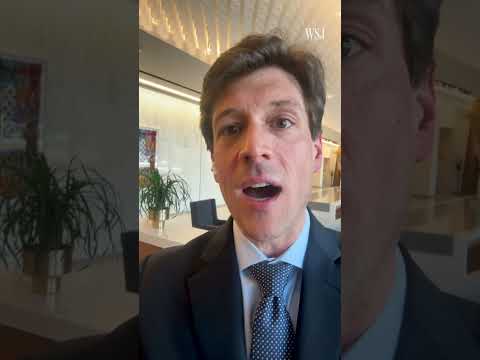
WSJ Chief Economics Correspondent Explains Fed’s Outlook for the U.S. Economy | WSJ News
WSJ News· 2026-01-28 23:46
The Fed is feeling better about the economy. That was the takeaway from the press conference JPAL just finished here at the Federal Reserve, where the central bank decided to keep interest rates steady for the first time since last summer. >> While job gains have remained low, the unemployment rate has shown some signs of stabilization and inflation remains somewhat elevated.>> There wasn't a lot of drama around the rate decision, but there was loads of political intrigue given what's happened since the beg ...
X @CoinMarketCap
CoinMarketCap· 2026-01-28 23:36
LATEST: 📊 Bitcoin barely moved from $89,300 and Ethereum held steady near $3,000 after the US Federal Reserve decided to hold interest rates steady at 3.5%-3.75% despite two dissents favoring a cut. https://t.co/Q4HKExAZqX ...
Bitcoin price flat after Fed keeps rates still and Powell keeps quiet on politics
Yahoo Finance· 2026-01-28 22:58
Bitcoin lay flat Wednesday as Federal Reserve Chair Jerome Powell remained tight-lipped when pressed by journalists about his row with President Donald Trump. The leading cryptocurrency was trading near $89,170 per coin shortly after Powell’s remarks. Over the past seven days, it’s down over 1%. The Federal Reserve was widely expected to keep interest rates still in its first meeting of 2026 — and markets had already priced that in. What traders were keeping an eye on, though, was whether Chair Powell wo ...