美国优先政策

Search documents
关税转向,出口何去何从
2025-05-12 15:16
Summary of Key Points from Conference Call Industry Overview - The conference call primarily discusses the impact of the US-China trade war on various industries, particularly focusing on tariffs and their implications for manufacturing and export dynamics. Core Points and Arguments - **Tariff Rates**: The US has imposed a general 30% tariff on Chinese goods, with additional tariffs on specific products like solar panels, automobiles, and steel. Some electronic and semiconductor products have been exempted from these tariffs [1][3][4]. - **Trade War Dynamics**: The trade war is characterized not only by tariffs but also by the US's attempt to negotiate trade imbalances through bilateral talks, potentially undermining the WTO framework and forming new trade alliances that could disadvantage China [1][6]. - **Supply Chain Shifts**: The trade war has accelerated the relocation of Chinese manufacturing supply chains to third countries to avoid tariffs, diminishing China's role as a global manufacturing hub and focusing more on serving its domestic market [1][7]. - **US Policy**: The "America First" policy manifests in trade and investment restrictions against China, including export controls and market access limitations, with a predominant focus on competition [1][10]. - **China's Countermeasures**: China has implemented reciprocal tariffs and non-tariff measures, including a list of 131 exempted items, although it is expected that certain controls, like those on rare earth exports, will remain in place [1][5][11]. - **Future Trade Alliances**: There is a potential for new trade alliances led by the US that may include unfavorable terms for China, with ongoing negotiations involving countries like the UK and Japan [1][8][9]. - **Impact on Manufacturing**: The trade war has led to a significant outflow of manufacturing from China, with companies considering relocating production to mitigate tariff impacts. This trend is expected to continue as firms adapt to the new trade environment [1][7][21][22]. - **Sector-Specific Effects**: Different sectors are experiencing varying levels of impact from tariffs. For instance, leading engineering machinery companies are less affected due to their overseas production capabilities, while smaller domestic firms face greater challenges [4][34]. - **Long-term Strategies**: Chinese manufacturing must focus on global expansion and entering high-end markets to sustain profitability. Companies with strong brand recognition and global supply chain capabilities are better positioned to navigate trade uncertainties [26][30]. Additional Important Content - **Export Trends**: There is an expectation of a surge in exports from China in the short term as companies rush to ship goods before potential tariff increases, reminiscent of past trade war behaviors [18][20]. - **Sectoral Recommendations**: The engineering machinery sector is projected to grow at a compound annual growth rate of approximately 20% over the next 3-5 years, with specific companies like SANY Heavy Industry and XCMG recommended for investment [35]. - **Comparative Analysis**: Companies like Giant Technology are noted for their advantageous supply chain management compared to competitors like Stanley Black & Decker, highlighting the importance of global production distribution [28][29]. This summary encapsulates the critical insights from the conference call, focusing on the implications of the US-China trade war across various sectors and the strategic responses from both countries.



特朗普与加总理卡尼举行首次会晤
Guo Ji Jin Rong Bao· 2025-05-07 05:52
Group 1 - The meeting between President Trump and Canadian Prime Minister Mark Carney was marked by a polite atmosphere but highlighted significant tensions regarding trade and sovereignty [1][2] - Trump suggested making Canada the "51st state," which Carney strongly rejected, emphasizing that Canada is not for sale [1] - Trump reiterated his stance against removing the 25% tariffs on Canadian goods and claimed a trade deficit with Canada of $200 billion, although the actual figure is approximately $63 billion [1] Group 2 - Canada is the largest export market for 36 U.S. states, with a daily bilateral trade amounting to CAD 3.6 billion (approximately USD 2.7 billion) [1] - Canada supplies 60% of U.S. crude oil imports and 85% of electricity imports, making it a critical supplier of aluminum, steel, and key minerals [1] - Carney emphasized the importance of Canadian businesses to U.S. manufacturing and expressed a commitment to protecting national interests through multilateral channels, reducing reliance on the U.S. [1][2] Group 3 - Carney's visit, while not resulting in substantial breakthroughs, symbolized a significant shift in Canada's diplomatic strategy to defend national interests and reshape its approach to the U.S. [2] - The backdrop of Trump's "America First" policy presents a major challenge for Canada in balancing its dependence on the U.S. with its national sovereignty [2] - The outcome of this diplomatic engagement may influence the future political and economic order in North America [2]
美国码头工会痛批美政府关税政策:“鲁莽短视”,将导致大量就业岗位流失
Huan Qiu Wang· 2025-04-30 06:00
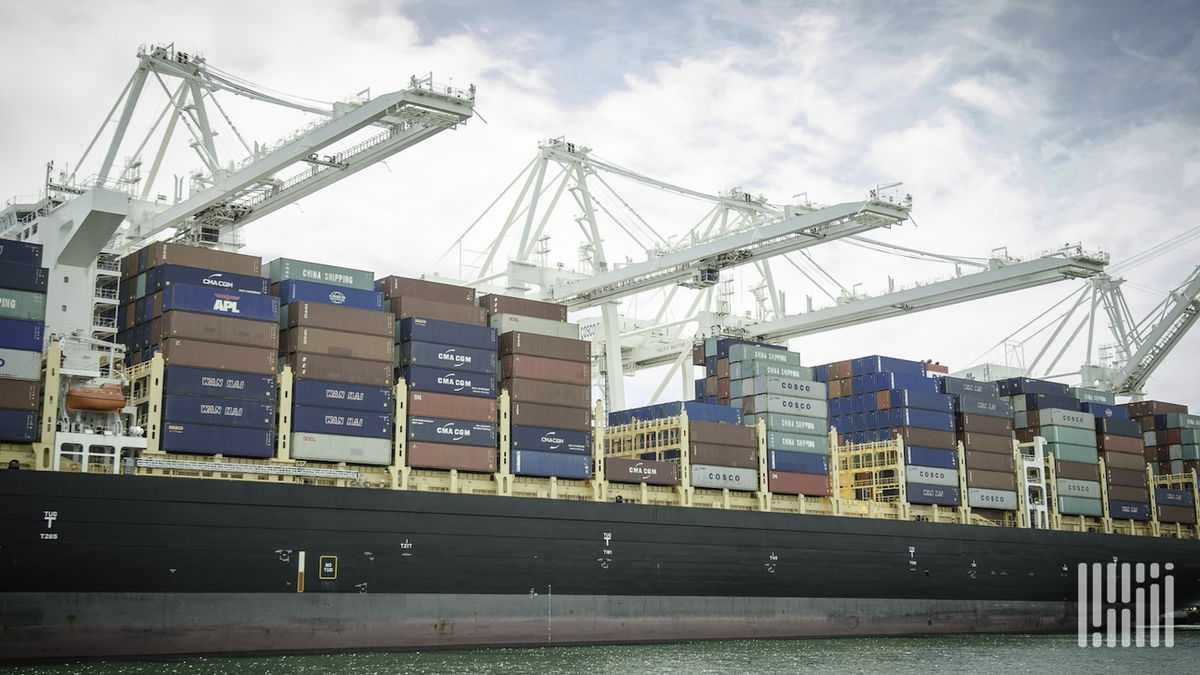
【环球网报道】据美国《新闻周刊》、货运情报及数据分析网站"FreightWaves"报道,在美加两国拥有约4.2万名会员的国际码头与仓储工会联盟(ILWU)4 月28日发表声明,批评美国总统特朗普的贸易政策"鲁莽短视",并警告称,美国的关税政策将导致大量就业岗位流失,并抬高美国工人阶级的生活成本。 "国际码头与仓储工会联盟(ILWU)对特朗普政府近期征收的关税表示坚决谴责。"该组织在声明中表示:"关税就是税,和其他鲁莽、短视的政策一同已经 开始摧残美国工人、损害关键经济部门,牺牲了辛勤工作的家庭的利益,让超级富豪中饱私囊。关税还给我们的盟友埋下不信任的种子,并激化地缘政治紧 张局势。这些关税纯粹是对工人阶级的直接打击,应予以坚决反对。" "FreightWaves"称,目前,美国西海岸港口来自中国的集装箱进口量急剧下滑,美国滥施关税几乎让中美双边贸易陷入停滞。 "成千上万的工作岗位都依赖于全球贸易或与之相关。世界两大经济体之间贸易受限,可能导致服务于全球供应链的工人遭遇毁灭性失业潮。"该声明 称,"这些关税带来的间接影响,如燃料成本增加、建筑材料价格上涨,已令许多美国企业难以招架,并引发裁员。" 该声明还提到 ...