关税政策

Search documents
有色金属行业周报(2026.3.23-2026.3.29):地缘冲突持续扰动金属市场,短期承压不改长期看好-20260330
Western Securities· 2026-03-30 07:08
Investment Rating - The report maintains a long-term positive outlook on the non-ferrous metals industry despite short-term pressures from geopolitical conflicts and economic indicators [1][2]. Core Insights - The U.S. March PMI has decreased by 0.5 points to 51.4, indicating a slowdown in economic expansion, while input price indices have risen significantly, reflecting increased cost pressures [1][17]. - The ongoing conflict in the Middle East is affecting global metal markets, with rising costs and supply chain disruptions becoming evident [1][2]. - Zimbabwe's ban on lithium ore exports has intensified, leading to cash flow crises for local small mining companies [3][19]. - The UAE's Emirates Global Aluminium reported significant damage to its smelting facility due to attacks, impacting production capabilities [4][20]. - Indonesia has approved export taxes on nickel, reflecting budgetary pressures exacerbated by rising oil prices due to geopolitical tensions [5][21]. Summary by Sections Market Review - The non-ferrous metals sector outperformed the Shanghai Composite Index, with a weekly increase of 2.78%, driven by strong performances in energy metals [10][11]. Key Focus Areas & Metal Prices - **Industrial Metals**: Geopolitical tensions are increasing risks for aluminum production, with LME copper prices at $12,141.00 per ton, up 2.59% week-on-week [22][25]. - **Precious Metals**: COMEX gold prices decreased to $4,489.70 per ounce, reflecting a 0.05% decline, while silver prices showed mixed trends [37][38]. - **Energy Metals**: Lithium carbonate prices rose to 164,200 yuan per ton, up 11.28% week-on-week, amid tightening supply conditions [38][43]. Core View Updates and Key Stock Tracking - **Industrial Metals**: Recommendations include companies with integrated operations like China Hongqiao and others in the aluminum sector [52]. - **Precious Metals**: Continued central bank gold purchases suggest gold remains a key asset for long-term investment [53]. - **Strategic and Minor Metals**: Anticipated easing of export restrictions on certain rare earths and lithium-related products may lead to price increases [53]. Company Earnings Forecasts - Key companies such as Zijin Mining and Luoyang Molybdenum are highlighted with projected earnings per share and valuations, indicating strong growth potential [55][56].
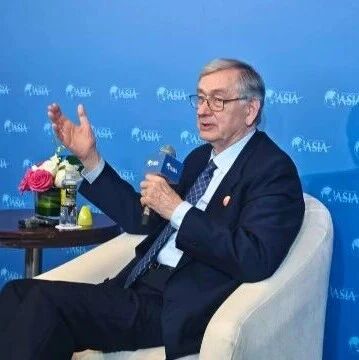
斯洛文尼亚前总统答一财:是时候考虑新一轮贸易自由化了
第一财经· 2026-03-26 15:05
Core Viewpoint - The article discusses the implications of the recent U.S.-EU trade agreement and the challenges posed by the reliance on tariffs, emphasizing the need for a new round of trade liberalization and the restoration of the WTO's dispute resolution mechanism [3][4][5]. Group 1: U.S.-EU Trade Agreement - The European Parliament is set to vote on the U.S.-EU trade agreement nearly nine months after its initial announcement [3]. - The agreement requires the EU to eliminate tariffs on U.S. industrial goods and provide preferential market access for U.S. seafood and agricultural products in exchange for the U.S. imposing a 15% tariff on most EU goods [4]. - The EU has delayed the approval of the agreement multiple times due to political uncertainties, including comments from former President Trump and a Supreme Court ruling against his tariff policies [4]. Group 2: Tariff Dependence and Trade Liberalization - The former Slovenian President Turk criticized the U.S. for its increasing reliance on tariffs, which he views as a significant regression from the historical trend of trade liberalization led by the U.S. since the late 1950s [3][4]. - Turk suggests that a new approach to trade liberalization is necessary, which may involve adjustments to existing mechanisms and the introduction of new arrangements [3][5]. Group 3: WTO and Global Trade Relations - Turk advocates for the empowerment of the WTO as a solution to current trade uncertainties, emphasizing the need to restore its dispute resolution mechanism, which has been stalled due to U.S. actions [5]. - The EU has been actively pursuing new trade agreements with countries like Indonesia, India, and Mercosur, and recently signed a bilateral free trade agreement with Australia, which is expected to increase exports significantly [5].

现货价格弱势运行,宏观风险仍存
Hua Tai Qi Huo· 2026-03-26 05:37
Group 1: Report Industry Investment Rating - No relevant content provided Group 2: Core Viewpoints of the Report - The spot price is running weakly, and macro - risks still exist. With the marginal easing of the Middle East situation, the prices of outer - market crude oil and LPG have declined, and the PG futures price has fallen from a high. The domestic spot prices in various regions showed mixed trends yesterday. Due to the easing of the Middle East situation and the outer - market trend, the manufacturers of civil gas and ether - post carbon four have offered discounts to increase sales. Although there have been significant pull - backs in both the inner and outer markets, the situation in Iran remains unclear, the Strait of Hormuz has not resumed navigation, and the news is constantly changing. In a high - volatility market, both long and short positions lack a safety margin, so caution is needed [1] - The short - term strategy for unilateral trading is to mainly wait and see due to short - term sharp fluctuations. There are no strategies for inter - period, inter - variety, spot - futures, and options trading [2] Group 3: Summary Based on Related Catalogs Market Analysis - On March 25th, the regional prices were as follows: Shandong market, 6380 - 6500; Northeast market, 5620 - 6010; North China market, 6200 - 6450; East China market, 6700 - 7350; Yangtze River area market, 6840 - 6960; Northwest market, 5700 - 6015; South China market, 7100 - 7300 [1] - In the second half of April 2026, the CIF price of frozen propane in East China was 980 US dollars/ton, a decrease of 100 US dollars/ton, and the price of butane was 980 US dollars/ton, a decrease of 100 US dollars/ton. In RMB terms, the price of propane was 7435 yuan/ton, a decrease of 762 yuan/ton, and the price of butane was 7435 yuan/ton, a decrease of 762 yuan/ton. The same price changes occurred in South China [1] Strategy - Unilateral: Short - term sharp fluctuations, mainly wait and see in the short term [2] - Inter - period: None [2] - Inter - variety: None [2] - Spot - futures: None [2] - Options: None [2]
The Art of the Sledgehammer: How Trump’s 15% Global Tariff Just Redecorated Your Portfolio
Stock Market News· 2026-03-20 06:00
Trade Policy Impact - The U.S. administration has increased global tariffs from 10% to 15%, significantly affecting the trade landscape and supply chains [1][3] - Retailers such as Walmart (WMT) and Target (TGT) are experiencing declines in stock prices, with WMT down 1.4% and TGT down 2.3% as they adjust to the new tariff rates [4] - The iShares MSCI Mexico ETF (EWW) fell by 4.2% following the announcement of tariffs on all goods imported from Mexico, impacting automakers like Ford (F) and General Motors (GM) [5] Sector Reactions - The energy sector saw a rise in stock prices for ExxonMobil (XOM) and Chevron (CVX), up 1.8% and 1.5% respectively, due to increased volatility and potential supply shortages [6] - The healthcare sector is facing pressure as the administration engages with drugmakers like Pfizer (PFE) and Eli Lilly (LLY) on implementing "Most Favored Nation" pricing, which could lower drug prices in the U.S. [10] Market Performance - The DOW and S&P 500 indices have shown declines, with the DOW down 0.85% and the S&P 500 down 1.2% as investors react to the escalating trade tensions [2][4] - The volatility index (VIX) is trending upward, indicating increased market uncertainty and investor anxiety [13] Cryptocurrency Market - Bitcoin (BTC) has fallen by 4.8% amid broader market liquidations, despite claims of rising American Bitcoin treasury firms [11]

独家洞察 | 关税风暴席卷下,私募基金分配率还好吗?
慧甚FactSet· 2026-03-20 02:02
Core Insights - The article discusses the impact of tariff policies on the timing of fund distributions to investors, highlighting a previous analysis on how tariffs affect private equity funding [2][4] - It emphasizes that the new high-tariff environment has a limited effect on the private equity market, as these funds typically have the ability to withstand short-term price fluctuations [4] Distribution Rates Analysis - The analysis uses Q1 2018 as the starting point for the new U.S. tariff strategy and Q4 2021 as the endpoint for U.S. and EU tariff policies [7] - Prior to 2018, distribution rates in Europe and Asia steadily increased, reaching average rates of approximately 8% and 5% respectively by Q1 2018, while U.S. rates were more volatile but grew faster [7] - From 2018 to 2021, U.S. fund distribution rates stabilized, likely due to a natural trend following previous growth, as the U.S. economy began to cool down [7] - During the market volatility of 2020, funds maintained lower distribution rates to preserve capital, but rates surged in late 2021 as the funding environment eased and tariff structures improved [7] - Distribution rates in Asia and Europe also declined during 2018-2020 but began to recover in 2020, reaching peaks by the end of 2021 alongside the U.S. [7] Volatility and Future Outlook - Starting in 2022, volatility became a key characteristic of distribution rates, with the U.S. private equity market continuing to show an upward trend despite significant fluctuations [8] - The European market, while smaller, also experienced fluctuations in 2023, whereas the Asian market did not show similar volatility, possibly due to limited data sample size [8] - By 2025, distribution rates across all regions are projected to decline, likely due to global economic and policy instability leading funds to adopt a more conservative approach [9] - If uncertainty persists, potential interest rate cuts in the U.S. could improve the funding environment for funds, aiding in the maintenance of portfolio operations and allowing for delayed capital distributions [9]

WTO:2025年关税对贸易造成总体负面影响小于预期
第一财经· 2026-03-19 14:05
Core Insights - The WTO's latest report indicates that the overall negative impact of tariffs on trade by 2025 is less than previously expected due to the delayed implementation of new tariffs by the US until August, limited retaliatory tariffs from other economies, and the implementation of numerous tariff exemptions [1] Group 1 - The WTO forecasts that the recent dynamics regarding tariffs reflect strategic adjustments rather than fundamental policy changes [1] - As of the end of February this year, the share of trade conducted under the "Most Favored Nation" principle has rebounded to 72% globally [1]
波司登(03998.HK):暖冬环境下主品牌高质量平稳增长
Ge Long Hui· 2026-03-18 07:22
Group 1 - The core viewpoint is that due to a warmer winter, the main brand's revenue growth is expected to be stable but slightly below previous expectations, with a projected revenue increase of approximately mid-single digits for the full year [1] - The average temperature in China for the winter of 2025 is forecasted to be -1.54℃, which is 1.51℃ higher than the historical average, marking it as the second warmest winter since 1961 [1] - For FY26H1, the main brand's revenue reached 5.719 billion yuan, representing a year-on-year increase of 8.3%, but FY26H2 revenue growth is anticipated to slow down due to the warm winter [1] Group 2 - The main brand maintains high operational quality, with the launch of the AREAL series in collaboration with designer KIM JONES, positioning it as a high-end urban line with an average product price above 2,600 yuan [2] - The brand's sales structure is expected to show significant growth across three key product series: extreme cold, puff, and non-extreme cold outdoor series, which, along with the KJ series, is likely to enhance the average selling price (ASP) [2] - OEM business revenue for FY26H1 was 2.044 billion yuan, a year-on-year decrease of 11.7%, primarily due to the impact of the 2025 tariff policy, which led to some orders being advanced to March [2] Group 3 - Profit forecasts for FY26-28 have been adjusted downwards due to the main brand's sales being slightly lower than expected and temporary pressure on OEM business, with net profit estimates revised to 3.71 billion, 4.03 billion, and 4.39 billion yuan respectively [3] - The company is expected to maintain a robust growth trend in the long term due to its strong brand assets and operational management capabilities [3] - The company has a high dividend payout ratio, consistently above 80% over the past four years, leading to a current dividend yield of over 7% based on an 80% payout ratio, maintaining a "buy" rating [3]

到岸成本持续走高,国内现货涨跌互现
Hua Tai Qi Huo· 2026-03-18 05:08
Report Summary 1. Report Industry Investment Rating - Not provided in the given content 2. Core Viewpoints of the Report - The on - shore cost of LPG continues to rise, and domestic spot prices show mixed trends [1]. - Due to the tense situation in the Middle East and the continuous obstruction of navigation in the Strait of Hormuz, the prices of foreign - market crude oil and LPG remain strong, providing strong support for PG. However, as the import cost of propane and butane keeps rising, there is a negative feedback in the demand of downstream chemical plants, and the market will constantly seek a new balance [1]. - The short - term trend of the single - side LPG market is expected to be volatile and slightly strong, and it is recommended to wait and see [2]. 3. Summary by Related Catalogs Market Analysis - On March 17th, the regional prices of LPG are as follows: Shandong market, 5350 - 5580 yuan/ton; North China market, 5100 - 5550 yuan/ton; East China market, 5610 - 6340 yuan/ton; Yangtze River area market, 6010 - 6360 yuan/ton; Northwest market, 5100 - 5250 yuan/ton; South China market, 6130 - 6250 yuan/ton [1]. - In the second half of April 2026, the CIF prices of frozen LPG in East China are propane 998 dollars/ton (up 18 dollars/ton), butane 1003 dollars/ton (up 23 dollars/ton), equivalent to RMB prices of propane 7577 yuan/ton (up 127 yuan/ton) and butane 7615 yuan/ton (up 165 yuan/ton). In South China, the prices are the same as in East China [1]. - After the end of the cold wave, the export volume of the United States has increased significantly. The estimated LPG shipment volume in March is 6.81 million tons, a month - on - month increase of 1.35 million tons and a year - on - year increase of 0.92 million tons. But the U.S. export volume is approaching the production capacity limit (about 7.2 million tons per month), and the product structure is different from that of the Middle East, so it cannot fully offset the supply gap in the Middle East [1]. Strategy - Single - side: Short - term volatile and slightly strong, wait and see. - Cross - period: No recommendation. - Cross - variety: No recommendation. - Spot - futures: No recommendation. - Options: No recommendation [2] Figures - There are 18 figures showing various prices and trading data of LPG, including spot prices of civil LPG and ether - post carbon - four in different regions, as well as closing prices, month - to - month spreads, and trading volume and open interest of PG futures contracts [3]
矛盾尚未缓解,盘面偏强运行
Hua Tai Qi Huo· 2026-03-17 08:13
Report Summary 1. Report Industry Investment Rating No relevant information provided. 2. Core View of the Report The market is running strongly with contradictions unresolved. Due to the tense situation in the Middle East and the continuous obstruction of navigation in the Strait of Hormuz, the prices of foreign crude oil and LPG continue to be strong, and the PG futures market also rises accordingly. The domestic LPG spot prices show mixed trends. The upstream inventory is controllable with a willingness to support the market, but the weak demand poses a certain resistance. The impact of geopolitical conflicts on the LPG balance sheet is gradually materializing. As the import cost of propane and butane continues to rise, there is a negative feedback in the demand of downstream chemical plants. The market will continuously seek a new balance. Additionally, the increase in US LPG shipments offsets the shortage of Middle - East raw materials to some extent [1]. 3. Summary by Related Catalogs Market Analysis - **Regional Prices on March 16**: Shandong market: 5250 - 5600 yuan/ton; North China market: 5100 - 5550 yuan/ton; East China market: 5610 - 6340 yuan/ton; Yangtze River area market: 6010 - 6360 yuan/ton; Northwest market: 5150 - 5300 yuan/ton; South China market: 6200 - 6250 yuan/ton [1]. - **April 2026 Lower - half - month Import Prices**: In East China and South China, the CIF price of propane is 980 US dollars/ton, up 23 US dollars/ton, and the CIF price of butane is 980 US dollars/ton, up 23 US dollars/ton. The RMB - converted price of propane is 7450 yuan/ton, up 180 yuan/ton, and that of butane is 7450 yuan/ton, up 180 yuan/ton [1]. Strategy - **Single - side**: Short - term shock is on the strong side, and it is advisable to wait and see [2]. - **Inter - period**: No relevant strategy [2]. - **Inter - variety**: No relevant strategy [2]. - **Futures - spot**: No relevant strategy [2]. - **Options**: No relevant strategy [2].
'TARIFFS ARE WORKING': Century Aluminum CEO details impact of trade moves
Youtube· 2026-03-14 22:00
Core Insights - The administration's tariffs on aluminum have led to the creation of 150 new jobs at a smelting plant in South Carolina, with an average salary of $125,000 per year [1][2] - The plant is returning to 100% manufacturing capacity after previously idling production lines due to low prices and fierce foreign competition [2] - The CEO of Century Aluminum emphasizes the importance of domestic production, as most aluminum currently comes from foreign sources, particularly China [5] Industry Impact - The tariffs are viewed as effective by industry leaders, with a focus on reshoring supply chains and hiring more American workers [3] - The construction of pot lines at the smelting plant is crucial for increasing production capacity, which will operate continuously once completed [4] - The reliance on foreign aluminum sources, especially from China and the Middle East, is driving prices higher, highlighting the need for increased domestic production [5]