
Decarbonisation

Search documents
Vow ASA: Contract of EUR 13.8 million awarded for equipment deliveries to four cruise newbuilds, additional six options to be called upon
Globenewswire· 2025-11-26 15:55
Core Insights - Vow ASA and its subsidiary Scanship received a purchase order worth EUR 13.8 million from a major European shipyard for equipment deliveries starting in July 2026, with the first vessel expected to be operational by the end of 2028 [1] - The agreement includes options for the customer to order equipment for an additional six vessels, valued at EUR 22 million, with deliveries extending to 2032 [1] Group 1: Contract Details - The contract signifies a continuation of the long-standing cooperation between Vow ASA, the shipyard, and the cruise line, emphasizing a commitment to reliable and sustainable solutions [2] - Equipment deliveries are planned for four firm vessels, with two vessel deliveries expected per year [1] Group 2: Environmental Impact - Scanship technology will ensure that all wastewater on the ships is purified to meet the highest standards in the Baltic Sea and Alaskan State waters, involving multiple processing steps for waste management [3] - The waste management system promotes a circular economy by recovering valuable materials such as glass and aluminum [4] - Vow ASA's integrated clean ship solutions are designed to comply with maritime environmental requirements, reduce greenhouse gas emissions, and prevent pollution [4] Group 3: Company Overview - Vow ASA and its subsidiaries focus on preventing pollution and converting biomass and waste into valuable resources, generating clean energy for various industries [6] - The company is a leader in the cruise market for wastewater purification and waste valorization, supporting industries in transitioning towards a fossil-free future [8] - Vow ASA's advanced technologies enable decarbonization and material recovery, with scalable and patented solutions for converting waste into clean energy and low carbon fuels [7]


Difficult market conditions impact Q3 results
Globenewswire· 2025-11-26 12:38
Core Insights - The company faced difficult market conditions in Q3 2025, impacting overall performance, with trade policy uncertainty and geopolitical tensions affecting key markets differently [2][3] - Despite challenges, the company remains financially robust and continues to invest in capacity expansion, decarbonisation, and digitalisation [3] Financial Performance - Revenue for the first nine months of 2025 reached 2,910 MEUR, a 1% increase compared to the previous year, with 2024 acquisitions contributing a 2 percentage point positive impact [4] - Q3 2025 revenue was 963 MEUR, reflecting a 2% increase in local currencies and a 1% increase in reported figures, again aided by 2024 acquisitions [4] - EBITDA for the first nine months was 665 MEUR, with a margin of 22.9%, down 1.7 percentage points year-over-year [4] - Q3 2025 EBITDA was 215 MEUR, with a margin of 22.3%, down 2.9 percentage points compared to Q3 2024 [4] - EBIT decreased by 11% to 457 MEUR in the first nine months, with a margin of 15.7%, down 2.1 percentage points year-over-year [4] - Q3 2025 EBIT decreased by 14% to 150 MEUR, with a margin of 15.5%, down 2.6 percentage points compared to Q3 2024 [4] Investments and Cash Flow - Total investments in the first nine months of 2025 amounted to 307 MEUR, focusing on new factories in North America and India, production expansion in Romania, and electrification of existing production lines [4] - Cash flow from operations before financial items and tax was 579 MEUR in the first nine months, down from 684 MEUR the previous year [4] Shareholder Information - The company initiated a share buy-back program, purchasing 3,259,800 B shares for a total of 119 MEUR during the first nine months of 2025 [4] - Shareholders can request conversion of A shares to B shares from 26 November 2025 until 10 December 2025 [4] Outlook - Revenue is expected to remain at last year's level in local currencies, with EBIT margin projected between 14-15% [4]

Bel to invest in The Laughing Cow production in Spain
Yahoo Finance· 2025-11-26 10:25
Core Insights - Bel Group is expanding its production of The Laughing Cow cheese in Spain, investing €1.5 million ($1.7 million) to add a 600m² building with two new packaging lines, which will increase annual output by 15% to nearly 7,000 tonnes, equivalent to about 500 million portions [1] - The Ulzama plant, operational since 1968, produces cheese portions for Spain and Portugal and employs around 140 people. The facility has also implemented a biomass boiler to replace fossil fuels, reducing CO₂ emissions by 500 tonnes annually, marking a significant step in Bel's decarbonisation strategy [2] - Bel's chief operations officer emphasized the company's dual focus on sustainability and profitability, highlighting the Ulzama site's transition to renewable energy and its expansion plans [3] Financial Performance - In the first half of 2025, Bel Group reported a 5.4% decline in consolidated net profit to €45.8 million, while recurring operating income fell by 19.3% to €125 million. However, consolidated net sales increased by 3.2% organically to €1.86 billion, driven by higher volumes and price increases that countered inflation in raw materials [4][5] - The company's core brands performed well, with Kiri sales rising by 8.2%, Mini Babybel by 6.1%, and Boursin by 7.3%, despite challenges from geopolitical tensions and increased consumer price sensitivity [6] Strategic Initiatives - Bel has set a target for all Babybel products to be packaged in recyclable paper by 2027, reflecting its commitment to sustainability [4] - The company acquired a 22.5% stake in Indonesian cheese maker Mulia Boga Raya, aiming to enhance cheese consumption in Indonesia and develop tailored innovations [4]
Inside Australia’s mining decarbonisation push
Yahoo Finance· 2025-11-26 10:15
Core Viewpoint - The Australian mining industry is at a critical juncture in its efforts to decarbonise, facing challenges related to investment, technological maturity, and the need for coherent policy to support the transition to cleaner operations [6][25][26] Emission Reduction Pathways - Three main pathways for emission reduction in mining have been identified: fuel switching and electrification, reducing fugitive emissions, and scaling carbon management technologies like carbon capture and storage [1][2] - Despite some companies making bold commitments, many are deferring capital investment in direct abatement, leading to a lack of meaningful progress on scope 1 emissions [2][22] Government Targets and Industry Response - Australia's Federal Government has set a 2035 emissions reduction target of 62–70% below 2005 levels, building on a previous target of a 43% cut by 2030 [4] - The response to these targets has been mixed, with some industry leaders calling them ambitious while environmental groups criticize them as insufficient [3][4] Technological Innovations - Innovations in renewable energy integration, microgrids, and electrified fleets are being pursued to define the next era of mining [4][5] - On-site renewables are viewed as the most effective way to cut emissions, with projects like Gold Fields' St Ives project expected to cover 73% of the mine's electricity needs and reduce carbon emissions by 50% [7][8] Challenges in Electrification - Truck haulage accounts for up to 50% of emissions in open pits, yet only 1% of trucks and 3% of underground loaders are currently battery-electric due to high upfront costs and infrastructure challenges [14][15] - The transition to electric fleets is expected to increase significantly in the next decade as miners address existing challenges [16] Broader Environmental Technologies - Beyond carbon, technologies addressing methane emissions and wastewater treatment are being developed, with projects aimed at reducing fugitive methane emissions and recycling contaminated mine water [18][19][20] Investment and Policy Needs - Consistent investment, technological development, and refined policy are essential for industry-wide change in the mining sector [22] - A balanced policy approach is necessary to incentivize low-emission technologies while avoiding the pitfalls of over-subsidization or excessive regulation [23][24] Future Outlook - The potential for Australia to leverage its clean energy resources is significant, but achieving this will require coordinated policy, investment, and technological innovation over the next decade [25][26]
Rio Tinto strengthens support for organisations responding to gender-based violence across Canada
Businesswire· 2025-11-25 14:00
Core Viewpoint - Rio Tinto is reaffirming its commitment to combat gender-based violence in Canada by providing financial support to local organizations that assist affected individuals and communities [1][3]. Financial Contributions - This year, Rio Tinto is contributing $400,000 to support 15 organizations that deliver essential services to those affected by gender-based violence [2]. - Since 2020, the company has provided a total of $2.335 million in funding for this initiative in Canada [3]. Partnerships and Supported Organizations - Rio Tinto is partnering with 15 organizations across Canada, including SOS violence conjugale, to provide shelter, counseling, education, and training [5]. - The organizations supported include various centers in Quebec, British Columbia, Newfoundland and Labrador, and Northwest Territories [5]. Corporate Responsibility and Employee Support - The company emphasizes the importance of safety and support for its employees, offering resources such as additional paid leave, emergency accommodation, and financial support for those experiencing gender-based violence [4]. - Employees also receive training to assist colleagues in need of support [4]. Leadership Statements - Jérôme Pécresse, Chief Executive of Rio Tinto Aluminium & Lithium, highlighted the company's responsibility to ensure safety for both employees and surrounding communities [3]. - Jocelyne Jolin, Executive Director of SOS violence conjugale, noted that Rio Tinto's support helps modernize tools for victim safety and sends a strong message about corporate commitment to addressing intimate partner violence [4].


HD KSOE signs $1.45bn contract with HMM for eight container ships
Yahoo Finance· 2025-11-24 17:49
Core Insights - HD Korea Shipbuilding & Offshore Engineering (HD KSOE) has secured a shipbuilding contract valued at $1.456 billion with global shipping company HMM for the construction of eight container vessels, each with a capacity of 13,400 TEU [1][2] - The contract increases HD KSOE's total orders for container ships in 2023 to 69 vessels, representing a combined capacity of 720,000 TEU, the highest among South Korean shipbuilders [2] Group 1: Contract Details - The contract includes the construction of eight container vessels, with two being built at HD Hyundai Heavy Industries and six at HD Hyundai Samho [1] - Deliveries of the vessels are expected to commence in sequence and continue until the first half of 2029 [2] Group 2: Technological Advancements - The new vessels will be equipped with liquefied natural gas (LNG) dual-fuel engines and a fuel tank that is approximately 50% larger than standard versions, aimed at enhancing operational efficiency [2] - HD Hyundai has introduced the HiNAS Control system for its new builds since 2023, which is an autonomous navigation system developed in partnership with Avikus [3][4] - HiNAS Control features include vessel maneuvering, collision detection, and avoidance, with data indicating a 15% reduction in carbon emissions and a similar increase in fuel efficiency [4] Group 3: Market Position and Future Plans - An HD Hyundai representative emphasized the company's commitment to leading the decarbonization of the shipbuilding and shipping industries through technological advancements focused on eco-friendly and high-efficiency vessels [5] - The recent contract follows HMM's announcement of new vessel orders totaling Won4 trillion, which includes twelve 13,000 TEU container ships and two very large crude carriers [5] - HD Hyundai Heavy Industries recently celebrated the milestone of delivering its 5,000th ship [6]
STI Hovering at 4,500: Is Singapore Set for a Breakout?
The Smart Investor· 2025-11-19 09:30
Market Overview - Singapore's Straits Times Index (STI) has surpassed 4,500, a level not seen in a decade, raising investor interest and speculation about a potential breakout after years of stagnation [1] - The rally is driven by recovering REITs, steady industrial performance, and strong earnings from major banks, despite mixed results among them [2][5] Bank Performance - DBS Group reported a net profit of S$2.95 billion for 3Q2025, while OCBC posted S$1.98 billion; however, UOB's net profit fell to S$443 million due to increased provisions [2][5] - DBS's total income increased by 3% YoY to S$5.9 billion, while OCBC maintained a strong capital return plan with a CET1 ratio of 16.9% [5] - UOB's profit decline of 72% was attributed to S$1.36 billion in credit allowances, including S$615 million in pre-emptive provisions [5] REITs and Industrial Stocks - REITs have stabilized, with CapitaLand Integrated Commercial Trust achieving a portfolio occupancy of 97.2% and a 3.5% YoY increase in distribution per unit (DPU) [3][10] - Sembcorp Industries reported an underlying profit of S$491 million for 1H2025, while Keppel Ltd's net profit surged 25% YoY to S$431 million, driven by real estate recovery [3] - The average distribution yield for S-REITs is around 6.2%, higher than global peers and Singapore government bond yields, indicating renewed strength in the sector [11] Industrial Sector Growth - Singapore's industrial companies are benefiting from trends in clean energy, infrastructure upgrades, and digitalization, contributing to the STI's rally [13][16] - Sembcorp's earnings have improved due to a focus on renewable energy, while Singapore Technologies Engineering reported a 20% increase in net profit to S$403 million [14] - New contracts worth S$4.9 billion were secured in 3Q2025, enhancing the order book in various sectors [15] Economic Indicators - Singapore's GDP grew by 2.9% YoY in 3Q2025, with total merchandise trade rising 6.6% in 2024 to S$1.29 trillion, indicating steady growth [17][18] - Despite the positive indicators, external risks such as geopolitical tensions and policy shifts could impact market sentiment and financial conditions [17][18] Investment Strategy - Investors are advised to focus on quality companies with steady earnings, strong balance sheets, and reliable dividends, particularly in the REITs and industrial sectors [19][20] - A diversified portfolio of well-managed companies is recommended to withstand market volatility and capitalize on potential long-term growth [19][20]
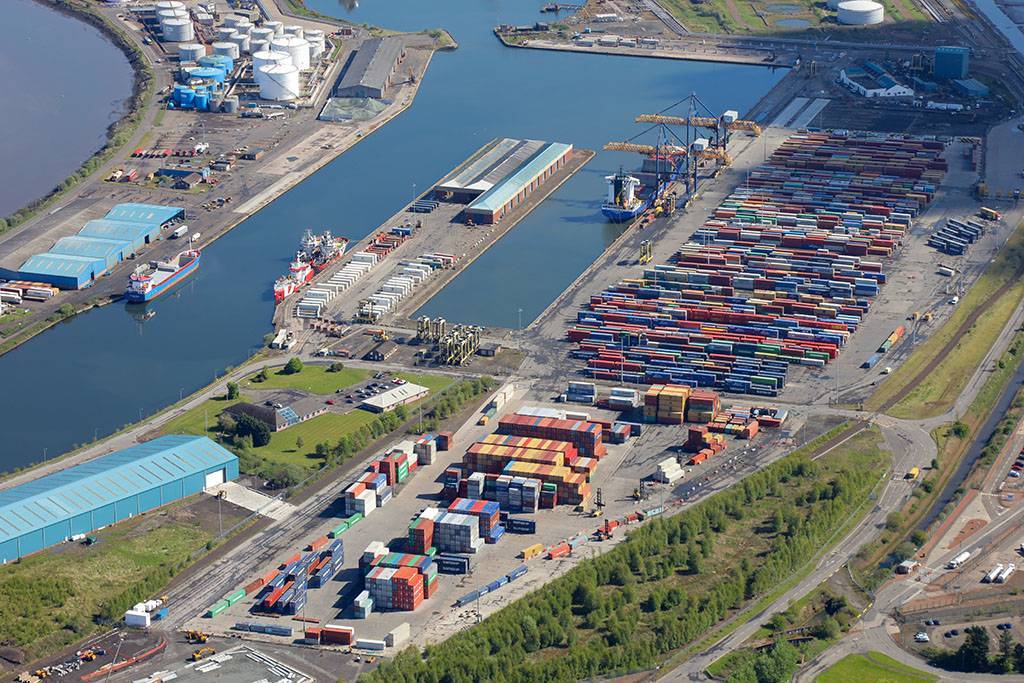
Kalmar and Forth Ports continue their joint decarbonisation journey with large repeat order for hybrid straddle carriers
Globenewswire· 2025-11-12 08:00
Core Insights - Kalmar has received a repeat order from Forth Ports Group for three hybrid straddle carriers, scheduled for delivery in Q2 2026, indicating a strong commitment to decarbonisation efforts [1][4] Group 1: Company Developments - The new hybrid straddle carriers will complement six previously ordered machines, enhancing Forth Ports' operational capabilities at their London Container Terminal [2] - The hybrid technology is expected to reduce fuel consumption by up to 40% compared to traditional diesel-powered machines, showcasing Kalmar's leadership in sustainable material handling solutions [4] Group 2: Environmental Impact - The hybrid machines will significantly lower fuel consumption and CO2 emissions, contributing to Forth Ports' net zero targets and reducing local air and noise emissions [3][4] - Forth Ports Grangemouth, Scotland's largest port, handles nine million tonnes of cargo annually, indicating the scale of operations that will benefit from these advancements in technology [2]
X @The Economist
The Economist· 2025-11-11 09:20
China relies on coal for its ever-increasing electricity demand. To meet decarbonisation goals, the country requires not just the ability to do without coal. It needs to be sure that it wants to https://t.co/2ydVR76Ds8 ...
X @The Economist
The Economist· 2025-11-09 05:00
The main reason countries have yet to decarbonise their economies is because they lack the means to do so. And that is what China is fixing https://t.co/a6SFUVWzuU ...