Nuclear Fusion

Search documents
Time for Japan ETFs?
ZACKS· 2025-10-31 12:31
Core Insights - Japan's Nikkei index has reached an all-time high, crossing the 51,000-mark on October 30, 2025, with a 14% increase in the past month [1] - The Bank of Japan (BoJ) has maintained its policy rate at 0.5% and is not in a hurry to tighten monetary policy despite inflation expectations [2][3] - Prime Minister Sanae Takaichi supports "Abenomics" and aims to enhance investment in strategic sectors, which may lead to a weaker yen [4][5] Monetary Policy - The BoJ is expected to keep its monetary policy loose, with inflation projected at 2.7% for fiscal 2025, 1.8% for fiscal 2026, and 2.0% for fiscal 2027 [2] - Two board members advocated for a 25 basis points rate hike, but the majority preferred to wait for further assessment [2] Economic Environment - Japan's exports have faced a weakening environment, having dropped for four consecutive months before a slight increase in September [3] - A weaker yen could enhance the profitability of export-oriented sectors, benefiting from repatriated income [5] Investment Opportunities - The rally in Japanese equities is expected to increase demand for Japan-focused large-cap ETFs, such as WisdomTree Japan Hedged Equity Fund (DXJ) and iShares Currency Hedged MSCI Japan ETF (HEWJ) [6][7] - ProShares UltraShort Yen (YCS) is anticipated to benefit from a declining yen, with the Invesco CurrencyShares Japanese Yen Trust (FXY) losing 3.2% over the past month [5][8]


Japanese Stocks Surge on "Takaichi Trade": ETFs in Focus
ZACKS· 2025-10-08 11:01
Core Viewpoint - Japan's Nikkei 225 index reached an all-time high, driven by optimism surrounding government spending and monetary policy following the election of Sanae Takaichi as the new leader of the ruling Liberal Democratic Party [1][2]. Market Reaction - The 30-year Japanese government bond yield hit a record high, while the two-year note yield decreased due to expectations of delayed rate hikes by the Bank of Japan [3]. - The yen experienced a moderate decline against the U.S. dollar and reached historic lows against the euro [3]. Political Context - Takaichi is perceived as the most expansionist candidate, succeeding the hawkish Prime Minister Shigeru Ishiba, which contributed to the surge in the Nikkei index [4]. - Takaichi's agenda includes enhancing investment in strategic sectors such as artificial intelligence, semiconductors, nuclear fusion, and defense [5]. Investment Opportunities - The rally in Japanese equities is expected to increase demand for Japan-focused large-cap ETFs, particularly in a falling yen environment, which benefits export-oriented companies [7]. - Specific ETFs poised to gain include WisdomTree Japan Hedged Equity Fund (DXJ), Xtrackers MSCI Japan Hedged Equity ETF (DBJP), and iShares Currency Hedged MSCI Japan ETF (HEWJ), with DXJ rising 2.8% on October 6, 2025 [8]. - ProShares UltraShort Yen (YCS) gained 3.8% on the same day, while the Invesco CurrencyShares Japanese Yen Trust (FXY) fell by 1.9% due to expectations of easier monetary policy [9].

X @The Economist
The Economist· 2025-09-13 17:00
An American startup is challenging the widespread misapprehension that controlling nuclear fusion is hard. Its founders are revisiting a 60-year-old idea https://t.co/QAEY9jtc3V ...
X @The Economist
The Economist· 2025-09-10 23:40
So long as one is not hoping to use the process to produce electricity, controlling nuclear fusion is easy. Indeed, it is possible to build a fusion reactor on a bench top. We explain how https://t.co/4lvL2Y54tK ...
X @Bloomberg
Bloomberg· 2025-09-03 08:07
Company Strategy - Commonwealth Fusion Systems 计划在 2030 年代末或 2040 年代初在日本部署一个反应堆 [1] Leadership - CEO Bob Mumgaard 在一次采访中透露了该计划 [1]
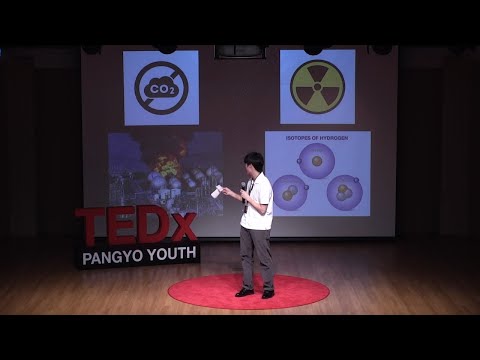
How We Can Harness the Sun: Nuclear Energy and its Future | Sean Chung | TEDxPangyo Youth
TEDx Talks· 2025-08-19 15:05
Core Argument - Nuclear fusion represents a potential solution to energy challenges, offering a clean, abundant, and sustainable alternative to fossil fuels [4][14] - The technology is advancing, with breakthroughs in sustained fusion energy output and achieving ignition, where more energy is produced than consumed [18][19] - Global collaboration and private sector investment indicate growing support and momentum for nuclear fusion research and development [20][21][22] Technological Advancements - Fusion involves combining light atomic nuclei, like deuterium and tritium, to release substantial energy [6][7][12] - Achieving fusion requires extremely high temperatures, exceeding 100 million degrees Celsius, creating plasma that needs to be contained [15] - Magnetic confinement, using devices like tokamaks, is a leading method for containing plasma [16] - Ignition, producing more energy from fusion than input, has been achieved, demonstrating the potential for efficient energy generation [19] Fuel and Sustainability - Deuterium, a key fusion fuel, is abundant in seawater, and tritium can be bred from the fusion cycle itself, ensuring a sustainable fuel supply [13][14] - Fusion emits no greenhouse gases and produces no long-term radioactive waste, unlike nuclear fission [14] Challenges and Future Directions - Sustained funding, global cooperation, and continued research are crucial for realizing the potential of fusion energy [29] - Public perception and political challenges related to nuclear energy need to be addressed to gain widespread acceptance [25][26]
X @Bloomberg
Bloomberg· 2025-07-23 10:10
Industry Outlook - Nuclear fusion is transitioning from science fiction to a practical engineering problem [1]
Jefferies:工业人工智能 + 专家日_核聚变
2025-07-02 15:49
Summary of Key Points from the Conference Call on Nuclear Fusion Industry Overview - The focus of the conference call was on the **nuclear fusion industry**, which is recognized for having the highest power intensity among all power generation technologies [1][2]. Core Insights and Arguments - **Current Stage of Development**: Nuclear fusion technology is still in its early stages, with expectations to start generating power by **2035** and achieving economic viability by **2045** [1][3]. - **Types of Fusion**: The expert discussed four major types of nuclear fusion: 1. Deuterium-tritium (D-T) fusion 2. Deuterium-deuterium (D-D) fusion 3. Deuterium-helium3 (D-He3) fusion 4. Hydrogen-boron (p-B11) fusion - Currently, the focus is on D-T fusion, but D-He3 and p-B11 are seen as potential next-generation options due to their advantages in energy conversion ratios and safety [3][4]. - **Safety and Technical Barriers**: Nuclear fusion is considered inherently safe due to strict conditions required for the reaction. However, there are significant technical barriers, including high-temperature ignition and material durability against radiation damage [2][5]. Key Projects and Developments - **Global Projects**: Countries worldwide are actively promoting nuclear fusion research. Notable projects include: - **BEST project** in Hefei, China, aiming for net energy gain (Q > 1) and expected to be commissioned in **2028**. - **SPARC project** in the US, utilizing high-temperature superconductors to reduce equipment size and costs, expected to start commissioning in **2026** [4]. - **Investment Opportunities**: Successful operation of these projects could benefit stocks related to high-temperature superconductors and uranium-related stocks due to increased nuclear plant construction [4]. Commercialization and Challenges - **Commercialization Progress**: The pace of commercialization is accelerating, with increasing financing and development of new technologies. However, challenges remain, including: 1. High costs of raw materials (e.g., tritium and helium-3 priced at **USD 20 billion per ton**). 2. Technical barriers related to achieving the necessary high temperatures for fusion reactions [5] [4]. Additional Important Insights - **Breakthroughs in R&D**: Recent advancements in research and development may expedite the progress of nuclear fusion technology, which has been under exploration since the **1950s** [2][3]. - **Market Implications**: The expected growth in nuclear fusion technology could lead to significant market shifts, particularly benefiting companies involved in related technologies and materials [4][5].
Google's data center energy use doubled in four years
TechCrunch· 2025-07-01 19:52
Core Insights - Google's data centers have seen a dramatic increase in electricity consumption, more than doubling from 14.4 million megawatt-hours in 2020 to 30.8 million megawatt-hours in 2024, indicating a growth of over 113% in just four years [1][2][5] - Data centers are responsible for 95.8% of Google's total electricity usage, highlighting the significant impact of this segment on the company's overall energy consumption [2] - The company's power usage effectiveness (PUE) has improved only marginally over the past decade, reaching 1.09 in 2024, suggesting that further efficiency gains may be challenging to achieve [6] Energy Strategy - Google is committed to using only carbon-free electricity sources, which has led to substantial investments in various energy technologies, including geothermal, nuclear fission, and fusion [7][10][15] - The company has made significant renewable energy purchases, including 600 megawatts of solar capacity in South Carolina and 700 megawatts in Oklahoma, as part of a broader $20 billion investment in carbon-free power plants [11][12] - Currently, about 66% of Google's data center electricity consumption is matched to the hour with carbon-free sources, but there are regional disparities, with Latin America achieving 92% while the Middle East and Africa only reach 5% [14]