Interest Rates

Search documents
Better Dividend Stock: Realty Income vs. AGNC
Yahoo Finance· 2026-03-31 16:40
Core Viewpoint - Realty Income and AGNC are both attractive options for income-seeking investors, with Realty Income being a large REIT and AGNC a leading mREIT [1][2] Company Overview - Realty Income owns over 15,500 properties across the U.S., U.K., and seven European countries, making it one of the largest REITs globally [1] - AGNC has a portfolio of $94.8 billion in mortgage-backed securities (MBS) and mortgages, focusing primarily on Agency MBS assets backed by government-sponsored entities [1][5] Financial Performance and Projections - Realty Income has a forward yield of 5.3% and expects its adjusted funds from operations (AFFO) per share to rise 2%-3% to $4.38-$4.42 for 2026, covering its forward dividend rate of $3.24 [7] - AGNC offers a higher forward yield of 14.6%, with analysts projecting its earnings per share (EPS) to increase by 4% to $1.55 in 2026, which will also cover its forward dividend rate of $1.44 [8] Interest Rate Sensitivity - Both companies are sensitive to interest rate changes, with Realty Income facing higher costs for property acquisitions and macro headwinds for tenants due to rising rates [4] - AGNC's profitability is influenced by the spread between short-term borrowing costs and long-term MBS yields, which can be affected by the Federal Reserve's rate decisions [5][8] Market Conditions - Lower interest rates would benefit both companies, making property acquisitions cheaper for Realty Income and allowing AGNC to maintain a favorable net interest rate spread in its MBS trades [6]


Should You Buy XRP While It's Below $1.50?
Yahoo Finance· 2026-03-31 16:20
Core Viewpoint - XRP has experienced a significant decline in value, losing more than half of its worth in the past six months, trading around $1.31, which is nearly one-third of its peak value of over $3.65 [1][2]. Market Performance - XRP reached a high of just over $3.65 in July of the previous year but has since been in a persistent decline [1]. - In the first three months of 2026, XRP has lost 28% of its value, reflecting a broader bearish sentiment in the crypto markets, with Bitcoin also down by about 24% [5]. Economic Concerns - There are worries about a potential recession due to tariffs and geopolitical issues, alongside rising oil prices which have heightened inflation fears. This could lead to increased interest rates, negatively impacting speculative assets like cryptocurrencies [6]. Regulatory Environment - Investors are concerned about the lack of regulatory clarity, particularly regarding the Clarity Act, which aims to establish a clear framework for cryptocurrencies. The latest draft may restrict stablecoin yields, potentially diminishing demand for stablecoins [7]. Investment Considerations - Despite XRP's low value, there is caution against buying it, as it previously traded below the $1 mark before the 2024 election. Continued deterioration in economic conditions and the crypto market could lead XRP back to those levels [9].
‘Gold's liquidity works against it' in oil shock, central bank selling and ETF liquidations still possible – Morgan Stanley's Gower
KITCO· 2026-03-31 15:59
Group 1 - The article discusses the recent sell-off of gold ETFs, indicating a significant shift in investor sentiment towards gold as a safe-haven asset [1][2] - Central banks are reportedly increasing interest rates, which is contributing to the decline in gold ETF investments as higher rates typically strengthen the US dollar and reduce the appeal of non-yielding assets like gold [1][2] - The sell-off reflects broader market trends where investors are reassessing their portfolios in light of changing monetary policies and economic conditions [1][2]


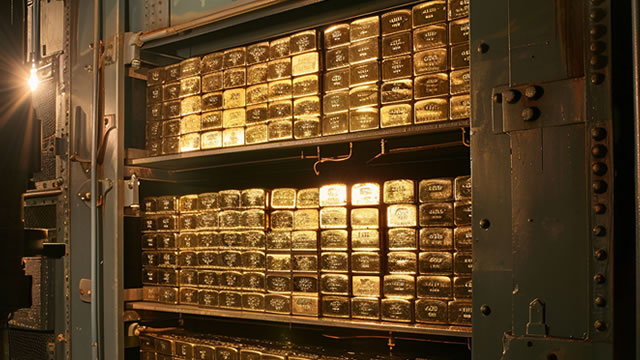
Gold Is On Track For Its Worst Month Since 2008
Yahoo Finance· 2026-03-31 14:03
Core Viewpoint - Gold is experiencing its largest monthly decline since the 2008 financial crisis, currently trading at $4,570.00 per ounce, down 15% in March and nearly 20% from its all-time high of $5,589 per ounce reached in January [1][4]. Group 1: Price Decline - Gold's price is on track for its biggest monthly decline since October 2008, when it dropped 16.8% [3]. - The precious metal has been negatively impacted by the ongoing war in Iran and expectations of rising inflation leading to increased interest rates by central banks [1][4]. Group 2: Market Dynamics - The recent decline in gold prices is also attributed to a sharp rise in the U.S. dollar, which remains the world's reserve currency [4]. - Despite the current downturn, many Wall Street analysts maintain a bullish outlook on gold, predicting a rebound above $5,500 this year [4]. Group 3: Interest Rates Impact - Analysts caution that the future trajectory of gold prices will largely depend on the direction of interest rates in the coming months [5].
Euro-Zone Inflation Jumps Most Since 2022 on Energy Costs
Yahoo Finance· 2026-03-31 10:27
(Bloomberg) -- The euro area saw its steepest jump in inflation since 2022 as the Iran war pushed energy costs sharply higher, backing expectations that the European Central Bank will have to raise interest rates. Consumer prices rose 2.5% from a year ago in March – up from 1.9% the previous month and the highest since January 2025. The reading is just below the 2.6% median estimate in a Bloomberg survey. Core inflation, which excludes volatile items like food and energy, unexpectedly slowed to 2.3%, wh ...
Is The Deficit Fear Overblown?
ARK Invest· 2026-03-30 20:36
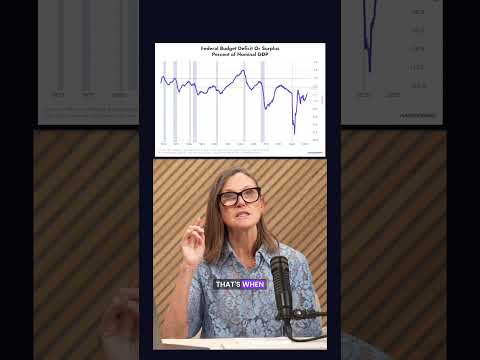
The bond market has been very concerned about the deficit, the federal deficit. As the government issues more and more debt, uh the tendency is for prices to go down uh of Treasury bonds and interest rates to go up. It's been very interesting uh to see since I think it was September of I'm going to say 24.That's when the 10-year Treasury yield peaked at 5% and when the deficit was the the talk of the town in bond land. Well, what you can see here is the deficit is improving and that's without, you know, the ...
Why Investors Are Flocking to Money Market Funds
Zacks Investment Research· 2026-03-30 18:44
A comprehensive look at trends, fund profiles, and more in exploring ETFs. Hi everyone, welcome to exploring ETFs. I'm Nina Mishra and today we are talking about money market ETFs.So we have seen that stocks and oil, they have been a wild ride as the war enters its fifth week. traditionally defensive areas of the market including gold and long-term government bonds they have also sold off leaving very few places for investors to hide in. So that is why these very safe ultra- lowrisk highly liquid securities ...

Fed Chair Powell sees no threat of private credit 'contagion,' says interest rates are in a 'good place'
Yahoo Finance· 2026-03-30 16:51
Group 1: Federal Reserve's Stance on Private Credit Markets - Federal Reserve Chair Jerome Powell stated that there is currently no risk of contagion in private credit markets that could affect the broader financial system, although the situation is being monitored closely [1][2] - Powell described the current situation in private credit markets as a correction, indicating that while some investors may incur losses, it does not appear to be a systemic event [2] Group 2: Concerns in Private Credit Markets - Recent concerns in private credit markets have arisen as investors began withdrawing funds following the cancellation of a merger by Blue Owl Capital, leading to a wave of redemption requests [3] - Increased redemptions are also linked to fears that advancements in AI could disrupt traditional software business models, potentially resulting in higher default rates among previously stable companies, many of which are held by private credit lenders [3] Group 3: Inflation and Economic Policy - Powell emphasized that interest rates are currently positioned well to address the oil price shock from the Middle East [4] - He acknowledged that tariffs are contributing between 0.5% and 1% to inflation, which is expected to be a one-time increase, suggesting that without tariffs, inflation would be closer to 2% [6] - The Fed's preferred inflation measure, the Personal Consumption Expenditures index excluding food and energy, is currently around 3% [6]
Iran Conflict Rattles Stocks — Jim Cramer’s Game Plan and 9 Stock Calls
Insider Monkey· 2026-03-30 16:28
Market Overview - The ongoing oil-shock-driven sell-off is significantly impacting the stock market, with rising oil prices leading to lower stock valuations [1] - The market is expected to continue its downward trend until the resolution of the war, which is contributing to inflation and higher interest rates [5] Economic Indicators - Key economic reports, including the JOLTS report and retail sales data, are anticipated to influence the Federal Reserve's decisions regarding interest rates [2][3] - The incoming Fed chief, Kevin Warsh, is looking for signs of job losses and weaker retail sales to justify potential rate cuts [3][4] Company Highlights Johnson & Johnson (NYSE: JNJ) - Johnson & Johnson is viewed as a strong investment opportunity, especially following the FDA approval of its oral treatment for moderate to severe plaque psoriasis, which could significantly impact its market position [9][10] - The stock has shown volatility, dropping from $140 to $230 rapidly, indicating potential for recovery and growth [9] - The new drug is projected to achieve peak sales of $5 billion, with some analysts suggesting this estimate may be conservative [10] Meta Platforms, Inc. (NASDAQ: META) - Meta is currently facing legal challenges that have negatively impacted its stock value, but these issues are not expected to affect its long-term earnings [11][12] - The company has lost significant market value due to recent court cases, highlighting the volatility associated with legal risks in the tech sector [11]



Powell sees inflation outlook in check, no wider crisis yet in private credit
CNBC· 2026-03-30 15:43
Group 1 - Federal Reserve Chair Jerome Powell believes inflation expectations are well anchored despite rising energy prices and no signs of a widespread crisis in private credit [1][3] - Powell maintains that the current interest rate target of 3.5%-3.75% is appropriate as the Fed observes ongoing events, including geopolitical tensions and tariff impacts [3] - The private credit sector, valued at $3 trillion, is experiencing rising defaults and investor withdrawals, raising concerns about potential systemic risks [5][6] Group 2 - Powell's term is set to end in mid-May, with former Governor Kevin Warsh nominated as his successor, although his nomination is currently stalled in the Senate [4] - Warsh has expressed a preference for lower interest rates than the current levels, but Powell refrained from commenting on his successor's plans [5] - Powell indicated that while there are corrections occurring in the private credit market, there are no current signs of contagion affecting the banking system [6]