
Recycling

Search documents
X @The Economist
The Economist· 2025-08-21 14:40
Only 22% of e-waste is recycled, according to the United Nations. A new generation of robots powered by artificial intelligence is looking to change that https://t.co/eks2S3gJrj ...
X @The Economist
The Economist· 2025-08-18 19:20
Industry Trend - Western countries are seeking to reduce reliance on China's rare-earth supplies [1] - Recycling is presented as a viable alternative to replicating China's rare-earth supply chain [1]
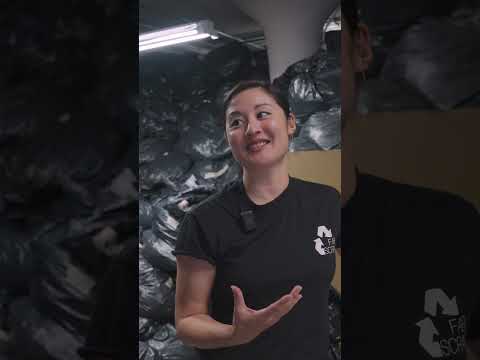
We visited the Fabscrap warehouse to watch the operation in action.
The Verge· 2025-08-06 14:01
Company Overview - FabScrap is a small fashion nonprofit in Brooklyn that resells and recycles leftover fabric, aiming to reduce textile waste in landfills [1] - The organization collaborates with various brands, including household names like J Crew and Macy's, as well as niche brands like Noah [2] - FabScrap employs a small team of 15 people [6] Environmental Impact - FabScrap has saved 2 million pounds (907,185 kg) of textiles from landfills [1][3] - The nonprofit shares data with brands, including the amount of material saved from landfills, the percentage of materials reused, and the amount of CO2 saved [3] - The organization receives 6 to 7 thousand pounds (2,721 to 3,175 kg) of material every week [3] Operations and Processes - FabScrap sorts through thousands of pounds of textiles with the help of volunteers [4] - The organization recycles, resells, or downcycles excess material [2] - Smaller scraps of fabric are shredded and made into shoddy, which is used for insulation [5] - Fabric pieces too big to shred are sold to the public in a thrift store [6]

Could recycling be used to hurt the planet? | Ibrahim Abdeen | TEDxYouth@BedayiaSchool
TEDx Talks· 2025-08-05 15:50
Environmental Concerns & Industry Practices - The plastic industry adopted the resin identification code, which resembles the recycling symbol but often misleads consumers about recyclability [3][5][6] - Only plastic types one and two are regularly recycled, despite the presence of the resin identification code on other plastic types [4] - Approximately 98% of single-use plastic production relies on petrochemicals rather than recycling [10] - Microplastics, resulting from plastic breakdown, contaminate food, water, and air, posing health risks [12][13] Consumer Behavior & Misinformation - A 2019 survey indicated that most Americans mistakenly believe the resin identification code signifies recyclability [5] - Consumers are often unaware of the difference between the recycling symbol and the resin identification code, leading to unintentional environmental harm [1][7] - Billions of plastic bottles are discarded annually, with most unlikely to be safely reused [8] Solutions & Recommendations - Individuals should prioritize reusing items like metal bottles and fiber bags to reduce plastic consumption [15] - Consumers should encourage companies to implement reuse programs, similar to deposit-refund systems for glass bottles [16][17] - Stakeholders, including consumers and business leaders, must advocate for responsible corporate decisions regarding plastic use [17]

Writing the Future: Sustainability in Our Laws | Catherine Blakespear | TEDxEncinitas Blvd
TEDx Talks· 2025-07-28 15:18
[Music] I'd like you each to put your hands out in front of you, palms facing down, and take a look at the veins in your hands. Your circulatory system is transporting oxygen and nutrients to all parts of your body and it's also transporting microplastics. This is microplastics in your blood and in many ways this is horrifying.We think about the public health effects that we will see. Long-term studies are underway to determine what is the effect on human health. But initial studies are dire.There are conne ...
Sustainability & Me | Preetthika C V | TEDxThe NGP School Coimbatore
TEDx Talks· 2025-07-25 15:24
Sustainability & Waste Reduction - The speaker highlights the shift from sustainability being a buzzword to becoming a lifestyle, emphasizing changes in everyday practices [1] - The talk advocates for reusing and donating unused stationery items instead of discarding them, promoting responsible consumption and waste reduction [4][5] - The speaker's project, Edo Tools at Ease, aims to provide underprivileged students with quality stationery items through donation drives and a tech-enabled supply request system [2][3] Energy Conservation - The Ujala scheme in India reduced LED bulb prices from approximately 450-500 rupees to 70 rupees, promoting energy conservation and reducing electricity bills for millions of families [1] Call to Action - The talk encourages the audience to identify and reuse existing resources, emphasizing that small, individual efforts contribute to significant collective change [4][6] - The speaker urges the audience to take action and start making sustainable choices, highlighting that the power to change lies in their hands [7]
Let’s Save Our Seas | Odysseas Gkiokas | TEDxNea Smyrni Youth
TEDx Talks· 2025-07-10 16:02
Environmental Impact - Millions of tons of waste end up in the oceans annually, harming marine life and the environment [1] - Plastic waste can persist in the sea for up to 400 years [4] - A large floating island of plastic exists in the ocean and is growing [6] Waste Management & Recycling - Recycling is an effective way to reduce waste [2] - Proper disposal of rubbish in recycling bins is crucial [3] - Participating in beach and ocean cleanup organizations is beneficial [3][4] Plastic Reduction & Innovation - Reducing the use of single-use plastic bottles, bags, and packaging is important [4] - Companies should reduce plastic production [5] - Supporting and investing in the development of new, biodegradable plastics is necessary [5] Prevention & Awareness - Avoiding placing bins near the sea can prevent pollution [5] - Plastic pollution kills fish and other sea animals [6] - Immediate action is needed to protect the seas and the future [7]
Sorting Trash, Sorting Perspectives | Joanna Tang | TEDxYuehai St Salon
TEDx Talks· 2025-07-08 16:50
How can we liter tissue paper into a recycling bin? I unbelievably asked my friend one day after lunch. There were only two types of rubbish beans outside our cafeteria. Recycling beans and other waste beans. Why not? Isn't tissue paper recyclable? She answered in amazement, seeming that I had cracked her belief system down. Calming myself down, I explained to her patiently, "You know, since you have wiped your mouth with a tissue paper, the tissue paper is no longer clean, but is polluted by the germs and ...

Saving the Planet one Basketball at a Time | Alexander Oliver Lu Scheel | TEDxYouth@YCYWShanghai
TEDx Talks· 2025-07-08 15:26
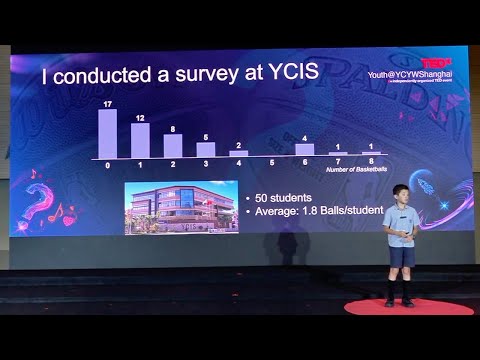
Environmental Impact of Basketball Waste - The industry produces 40 to 50 million basketballs annually, enough to fill an auditorium 10 times over [2] - A staggering 95% of basketballs end up in landfills or are burned [2] - Discarded basketballs decompose into toxic microplastics, polluting soil, water, and air [3] Consumer Behavior and Waste Generation - A survey at YCIS indicates the average student owns almost two basketballs, with some owning six or more [4] - This consumption pattern contributes to a global waste problem [4] Proposed Solutions for Sustainability - Encourage consumers to extend the lifespan of their basketballs [6] - Promote repairing damaged basketballs instead of discarding them [6] - Support recycling or donation programs, such as Wilson's Rebound, to repurpose old basketballs [6] - Advocate for reduced consumption of new basketballs [6]
X @The Wall Street Journal
The Wall Street Journal· 2025-07-01 07:40
Materials Science & Sustainability - Waste wood scraps, after molecular-level modification, can be transformed into high-performance building materials [1] - Modified wood scraps have the potential to replace plastics, aluminum, and carbon fiber in vehicles and gadgets [1]