Aluminum

Search documents
Metal Markets Punished by Hormuz Chaos | Presented by CME Group
Bloomberg Television· 2026-04-10 16:22
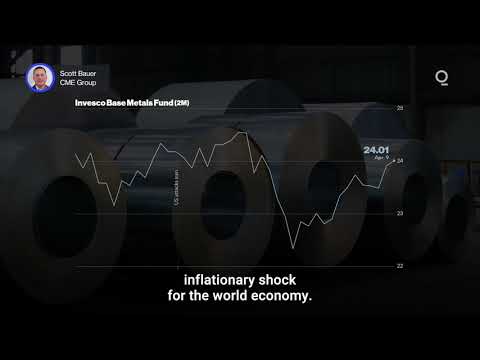
When analysts discuss the straight of Hormuz, oil typically dominates the conversation. But this critical waterway also handles massive flows of aluminum, copper, and other industrial metals. Base metals, with the exception of aluminum, have faced heavy downward pressure over the last month as hostilities in the Middle East disrupted commodity supplies and threatened an inflationary shock for the world economy.Metals markets also have been shaken, but a growing prospect of an oil shock that may batter the g ...

X @Nick Szabo
Nick Szabo· 2026-04-04 06:35
RT Gerry Nolan (@RealGerryNolan)🇮🇷🇦🇪 Emirates Global Aluminium the region's largest aluminium producer and one of the biggest industrial complexes on the planet is confirmed shut down for up to 12 months after Iranian missiles and drones struck its Al Taweelah site in Abu Dhabi’s Khalifa Economic Zone.The smelter, casthouse, power plant, alumina refinery and recycling plant all evacuated, all in emergency shutdown. And the damage goes deeper than the strikes themselves with the power loss caused an uncontro ...
X @Bloomberg
Bloomberg· 2026-04-01 12:15
The Iran war has generated billions of dollars of additional oil revenues for Russia, but Moscow’s windfall extends well beyond crude to gas, grain, aluminum and fertilizers. https://t.co/bxgfwylLBf ...
专家电~1
2026-04-01 09:59
Summary of Key Points from the Expert Call on Middle-East Aluminum Smelters Industry Overview - The discussion focused on the operational risks and outlook for Middle-East aluminum smelters, which account for 7% of global aluminum supply and 18% of ex-China supply, crucial for markets in the US, EU, Japan, Thailand, and Malaysia [3][6][17]. Core Insights - Current production cuts in the region have reached approximately 800,000 tons (kt) annually, including 550kt from voluntary suspensions and additional impacts from recent drone attacks, reducing production to 5.2 million tons (mnt) [6][14]. - If the crisis persists, production levels may drop to 4.6mnt in 4-8 weeks and stabilize at 3.5-4.0mnt in a prolonged disruptive scenario [6][26]. - Power supply risks and challenges in transporting raw materials through the Strait of Hormuz are significant, with local smelters exploring alternative routes, particularly the Sohar route in Oman [6][20][23]. - The cost of logistics is becoming a critical factor, with estimates indicating an additional cost of US$200-300 per ton for truck transport, which smelters are likely to absorb given the current high aluminum prices [23]. Production and Restart Challenges - Restart timelines for smelters vary: controlled shutdowns may take 2-4 months, while uncontrolled shutdowns could require 6-8 months due to potential damage from frozen pots [24][25]. - The sustainability of the business model for local producers is under scrutiny due to ongoing conflicts, raising concerns about future investments in the sector [7][28]. Implications for Other Industries - Other industries, such as steel and petrochemicals, face similar logistical challenges as aluminum, particularly those reliant on raw material imports [31][33]. - The impact of rising costs in aluminum and fertilizers is contributing to global inflation, emphasizing the region's role in supplying critical goods [34]. Future Outlook - GCC aluminum smelters were previously optimistic about expansion plans, but current logistical challenges have raised doubts about the sustainability of these initiatives [28][30]. - Investments abroad are being explored, with EGA planning a smelter in the US and Alba acquiring a smelter in France, contingent on the geopolitical situation stabilizing [30]. Conclusion - The expert call highlighted significant operational risks for Middle-East aluminum smelters due to geopolitical tensions, logistical challenges, and rising costs, which could have far-reaching implications for the industry and related sectors [3][7][28].
天山铝业-2025 年四季度净利润符合预期;预计 2026 年一季度净利润同比翻倍以上
2026-04-01 09:59
Tianshan Aluminum Conference Call Summary Company Overview - **Company**: Tianshan Aluminum - **Industry**: Aluminum Production - **Region**: Asia Pacific Key Financial Highlights - **FY25 Net Profit**: Increased by 8% YoY to Rmb4.8 billion, aligning with market expectations [2] - **4Q25 Net Profit**: Rose 8% YoY and 18% QoQ to approximately Rmb1.5 billion, reflecting higher aluminum prices [8] - **Impairment Impact**: A Rmb119 million impairment related to bauxite inventory negatively affected the bottom line in 4Q25 [2] - **Balance Sheet Strength**: Net gearing improved to 22% in FY25 from 23% in FY24 [2] - **Finance Costs**: Decreased by 34% YoY due to an optimized debt structure [2] Dividend Information - **Dividend Declared**: Rmb0.55 per share for FY25, representing a payout ratio of 52% and a yield of 3% [3] - **Future Payout Guidance**: Management indicated that the dividend payout in FY26 will not be lower than 50% [3] Earnings Outlook - **FY26 Earnings Forecast**: Strong earnings growth anticipated, with net profit expected to more than double in 1Q26 to Rmb2.2 billion from Rmb1.06 billion in 1Q25 [8] - **Aluminum Price Trends**: Continued upward momentum in aluminum prices due to geopolitical tensions in the Middle East, with two aluminum plants damaged, potentially affecting ~3.2 million tons of aluminum capacity [4] - **New Capacity Contribution**: Expected higher volume results from the release of 200,000 tons of new capacity in Xinjiang [4] Cost Management - **Production Cost Improvements**: FY25 saw a 4% YoY increase in aluminum average selling price (ASP) and a 7% YoY decline in production costs [8] - **Gross Profit Margin**: Increased to 30% in FY25 [8] - **Power Costs**: Self-generated power costs fell by 23%, and purchased power costs dropped by 17% YoY, contributing to improved margins [8] Valuation and Market Position - **Stock Rating**: Overweight with a price target of Rmb23.20, indicating a 44% upside from the current price of Rmb16.12 [6] - **Market Capitalization**: Approximately Rmb74.99 billion [6] - **52-Week Price Range**: Rmb21.88 to Rmb6.64 [6] Risks and Considerations - **Upside Risks**: Better-than-expected demand and decreasing raw material and energy prices [13] - **Downside Risks**: Slowdown in global aluminum demand and rising raw material and energy prices [13] Conclusion Tianshan Aluminum is positioned for strong growth in FY26, driven by favorable market conditions and operational efficiencies. The company's financial health is robust, with a solid dividend policy and a positive outlook for aluminum prices. However, potential risks related to market demand and cost fluctuations should be monitored closely.

中国铝业-2025 年四季度核心净利润具韧性,不及预期;减值指引为 2026 年关键事项
2026-04-01 09:59
Summary of Aluminum Corporation of China (Chalco) 4Q25 Earnings Call Company Overview - **Company**: Aluminum Corporation of China (Chalco) - **Ticker**: 2600.HK - **Date of Call**: March 29, 2026 Key Financial Metrics - **Net Profit for 2025**: Rmb12.7 billion, +2% YoY, accounting for 90% of Citi's estimate and 87% of Bloomberg consensus [1] - **Impairment Losses**: Rmb3.6 billion in 2025, up from Rmb2.6 billion in 2024, impacting net profit [1][2] - **Recurring Net Income**: Rmb16.3 billion, -2% YoY [1] - **4Q25 Net Income**: Rmb1.8 billion, -47% YoY and -53% QoQ; implied recurring profit of Rmb4.8 billion, -19% YoY and +23% QoQ [1] - **Dividends**: Proposed final dividend of Rmb0.147/share, total dividend for 2025 at Rmb0.270/share, up from Rmb0.219/share in 2024 [1] Segment Performance - **Revenue Breakdown for 2025**: - Alumina: Rmb62 billion (15% of total revenue) - Aluminum: Rmb146 billion (35% of total revenue) - Trading: Rmb142 billion (35% of total revenue) - Energy: Rmb8 billion (2% of total revenue) [1] - **Profit Before Tax (PBT)**: - Alumina: Rmb4.8 billion, -59% YoY - Aluminum: Rmb20.6 billion, +130% YoY - Energy: Rmb862 million, -13% YoY - Trading: Rmb1.274 billion, -32% YoY [1] Market Conditions - **Aluminum Prices**: - Average SHFE aluminum price in 2025: Rmb20,699/ton, +4% YoY - Average spot alumina price in 2025: Rmb3,211/ton, -21% YoY [6] - **4Q25 Prices**: SHFE aluminum price at Rmb21,511/ton, +5% YoY; spot alumina price at Rmb2,831/ton, -47% YoY [6] Cash Flow and Gearing - **Operating Cash Flow**: Rmb34.1 billion, +4% YoY; Capex at Rmb9.2 billion, -11% YoY; Free Cash Flow (FCF) at Rmb24.8 billion, +11% YoY [7] - **Net Gearing**: 21% in 4Q25, down from 30% in 4Q24 [7] Future Guidance and Risks - **2026 Guidance**: Anticipation of lower impairment losses YoY, but some impairment is expected [2] - **Risks**: - Lower-than-expected aluminum and alumina prices - Higher-than-expected costs - Higher-than-expected impairment losses - Potential loosening of supply cut policies by the Chinese government if aluminum prices overshoot [12] Valuation - **Target Price**: HK$15.94/share, implying a 47.5% expected return and a 5.7% expected dividend yield [4][11] Conclusion Chalco's financial performance in 2025 showed resilience in core earnings despite significant impairment losses. The aluminum segment demonstrated strong growth, while the alumina sector faced challenges. Future guidance indicates cautious optimism, with attention needed on market conditions and potential risks impacting performance.

铜冠金源期货商品日报20260401-20260401
Tong Guan Jin Yuan Qi Huo· 2026-04-01 06:09
1. Report Industry Investment Rating - Not provided in the given content 2. Core Viewpoints of the Report - The global market is significantly affected by the geopolitical situation in the Middle East, with asset prices showing high volatility. The A - share market is in an oscillating pattern, and the bond market is expected to oscillate in the short - term. Different commodity prices are affected by factors such as the Middle East conflict, supply - demand relationships, and cost factors [2][3] - The end - of - war signals between the US and Iran have led to a rebound in risk appetite in the overseas market, and the prices of various metals and agricultural products have shown different trends. The price trends of different varieties are mainly affected by factors such as the geopolitical situation, supply - demand fundamentals, and cost [4][6][23] 3. Summary of Each Section 3.1 Macro - Overseas: The US - Iran situation is in the stage of "fighting while negotiating, using pressure to promote negotiation". China and Pakistan call for cooling down the situation in the Middle East, and the market risk appetite has rebounded. The Nasdaq rose nearly 4%, oil prices fell about 3%, precious metals continued to recover, the US bond yield fell below 4.4%, and the US dollar index dropped to 99.7 [2] - Domestic: In March, China's official PMI rebounded overall, and the manufacturing PMI returned to the expansion range. However, the recovery sustainability is restricted. The A - share market is in an oscillating pattern, and the bond market is expected to oscillate in the short - term [3] 3.2 Precious Metals - International precious metal futures prices rose sharply on Tuesday. The end - of - war signals from the US and Iran have eased market concerns, but the geopolitical signals are still changing, and the precious metal prices are expected to oscillate in the short - term [4][5] 3.3 Copper - The copper price rebounded. The overall conflict situation is cooling down, the overseas risk appetite has rebounded, and the US dollar has fallen, which has boosted the metal market. The mine supply is still tight, and the refined copper production capacity expansion is restricted. The copper price is expected to continue to rebound in the short - term [6][7] 3.4 Aluminum - The aluminum price remained strong. Although there are expectations of conflict mitigation in the Middle East, the conflict is still expected to continue for some time. The domestic spot consumption is recovering seasonally, and the aluminum price is expected to maintain a strong performance [8][9] 3.5 Alumina - The alumina price oscillated. The overseas alumina surplus has increased, and the domestic new - production capacity is gradually being released, putting pressure on the price. However, the cost provides support, and it is expected to oscillate within a range [10] 3.6 Cast Aluminum - The cast aluminum price is in a relatively strong operation. The cost provides support, the supply is limited, and the demand is weak and stable. It is mainly dominated by macro and cost factors and is expected to perform strongly [11] 3.7 Zinc - The zinc price had a weak rebound. The end - of - war signals between the US and Iran have led to a rebound in market sentiment. The overseas zinc mine supply is tightening, the cost support is stable, the supply and demand are both increasing, and the zinc price is expected to have a weak rebound in the short - term [12][13] 3.8 Lead - The lead price oscillated at a low level. The supply of electrolytic lead is increasing steadily, and the supply of recycled lead is decreasing. The demand recovery is weak, the short - term supply - demand contradiction is dull, and the lead price is expected to oscillate at a low level [14] 3.9 Tin - The tin price had a weak rebound. The end - of - war signals have led to a rebound in market sentiment. The tin mine supply is gradually recovering, the refined tin supply is increasing steadily, and the short - term fundamental contradiction is limited. The tin price is expected to maintain a weak rebound pattern [15] 3.10 Nickel - The nickel price oscillated narrowly. The overall conflict situation is cooling down, the overseas risk appetite has rebounded, and the US dollar has fallen, which has boosted the metal market. The cost support of high - nickel iron is strong, but the downstream demand recovery is less than expected, and the nickel price is expected to oscillate in the short - term [16][17] 3.11 Lithium Carbonate - The lithium carbonate price oscillated widely. The market sentiment has cooled down, the supply is increasing, the demand resistance to high - priced raw materials is increasing, and the inventory is at a low level. The futures market is expected to oscillate widely [18] 3.12 Steel and Iron - Steel: The steel price is expected to oscillate. The PMI has returned to the expansion range, the terminal demand is in a weak recovery, and the supply and demand situation of different varieties is different [19] - Iron Ore: The iron ore price is expected to oscillate at a high level. The overseas port inventory has decreased, the iron water production has increased, the steel mill profit has recovered, and the raw material demand is rising [20][21] 3.13 Coking Coal and Coke - The coking coal and coke prices are expected to oscillate. The end - of - war signals between the US and Iran have led to a decline in energy prices, which has affected the coking coal and coke prices. The upstream production is increasing steadily, the downstream demand is warming up, and the inventory is decreasing [22] 3.14 Soybean and Rapeseed Meal - The soybean and rapeseed meal prices are expected to oscillate weakly. The new - season US soybean planting area estimate is slightly lower than expected, the spill - over effect of the Middle East conflict on fertilizer and fuel prices is emerging, and the domestic soybean supply is increasing. The soybean and rapeseed meal prices are expected to oscillate weakly in the short - term [23][24] 3.15 Palm Oil - The palm oil price is expected to oscillate at a high level. Indonesia will restart the B50 bio - diesel policy, which has greatly boosted market sentiment. The Malaysian palm oil export demand in March was good, which is conducive to inventory reduction [25][26] 3.16 Metal Trading Data - The trading data of various metals on the previous day, including contract closing prices, price changes, trading volumes, and open interest, are provided [27] 3.17 Industrial Data - The industrial data of various metals, such as inventory, spot price, and basis, on March 31 and March 30 are provided, including the comparison of data changes between the two days [28][31][33]
CSTM Gains From Strength in Automotive Structures Unit: More Upside to Come?
ZACKS· 2026-03-31 15:20
Core Insights - Constellium SE (CSTM) is experiencing growth, particularly in the Automotive Structures & Industry (AS&I) segment, which shipped 202,000 metric tons in 2025, driven by strong demand [1][8] - Revenues from the AS&I segment increased by 10% to nearly $1.6 billion, supported by strong shipment volumes and metal prices, although lower shipments of automotive extruded products are a concern [2][8] - The demand for aluminum is rising due to the shift towards lighter and energy-efficient electric vehicles, recycled aluminum, and rechargeable batteries, aligning with sustainability goals [3] - Rising aluminum prices, influenced by geopolitical tensions in the Middle East, are benefiting domestic producers like Constellium, as supply disruptions have tightened regional availability [4][8] Segment Performance - The AS&I segment's performance is bolstered by healthy orders for extruded products following recovery from a flood in Valais, despite concerns over lower automotive extruded product shipments [2][8] - Alcoa Corporation (AA) is also performing well in the Alumina segment, with production increasing by 1% to 2.48 million metric tons in Q4 2025, and third-party shipments rising by 5% [5] - Ryerson Holding Corporation (RYZ) reported flat year-over-year shipments of 42,000 tons in its Aluminum segment, but revenues increased by 19.5% to $282 million due to higher metal prices [6] Market Performance and Valuation - Constellium's shares have increased by 22.3% over the past three months, outperforming the industry growth of 10.8% [7] - The company is trading at a forward price-to-earnings ratio of 10.81X, above the industry average of 9.65X, and holds a Value Score of A [9] - The Zacks Consensus Estimate for CSTM's 2026 earnings has risen by 20.6% over the past 60 days, indicating positive market sentiment [10]


Dow Jones alone in the green, Nasdaq slumps as Trump says Iran talks 'serious'
Yahoo Finance· 2026-03-30 20:22
Group 1: Market Reactions - US aluminum producers saw significant stock price increases, with Alcoa rising 11.5% and Century Aluminium gaining around 9% following missile strikes by Iran on aluminum infrastructure in the Middle East [2] - The London Metal Exchange aluminum benchmark increased by 5% to approximately $3,492 per ton, nearing a four-year high, indicating heightened concerns over global supply [2] - Other US aluminum producers also experienced gains, including Kaiser Aluminium up 3.4% and Constellium rising nearly 4% [2] Group 2: Economic Data and Corporate Earnings - The upcoming week features a mix of economic data releases, including consumer confidence, JOLTS job openings, retail sales, ADP employment data, and weekly jobless claims, which are crucial for assessing the US economy's strength [4] - Retail sales data, set to be released on Tuesday, is particularly important for investors [4] - Nike is scheduled to report earnings on Tuesday, with a focus on commentary regarding demand in China and global consumer trends, alongside reports from Conagra Brands, Lamb Weston, and Cal-Maine Foods [5] Group 3: Stock Market Overview - US stocks opened higher, with the Dow Jones up 0.4% above 45,350, while the S&P 500 added 0.2%, although the tech-heavy Nasdaq showed a slight decline [6] - Semiconductor and storage stocks, including Marvell and Western Digital, led the declines among Nasdaq 100 stocks, while chipmakers like Intel and ASML faced pressure [6]
Alcoa Surges 11% After Iran Claims Aluminum Plant Attacks - Alcoa (NYSE:AA), Century Aluminum (NASDAQ:CEN
Benzinga· 2026-03-30 15:25
Industry Overview - Aluminum Bahrain, the world's largest single-site aluminum smelter with an annual capacity of 1.6 million metric tons, has faced significant production cuts, reducing output by 19% due to decreased traffic through the Strait of Hormuz [2] - The U.S. imports 21% of its aluminum from the UAE and Bahrain, while domestic production meets only about one-third of its needs, indicating a growing supply gap as demand from AI data centers increases [3] Recent Developments - The IRGC's attacks on aluminum facilities in Bahrain and the UAE have resulted in "significant damage," raising concerns about the stability of aluminum supply in the region [1] - The IRGC claims these strikes are retaliation for attacks on Iranian steel plants, suggesting a potential shift in targeting Gulf economic assets [5] Market Predictions - Prediction markets indicate a 49% chance of tanker traffic in the Strait of Hormuz returning to pre-war levels by June 1, 2024, with odds improving to 72% by 2027 [4] - The likelihood of a ceasefire between Iran and the U.S. is currently at 47% before May 31, 2024, and 60% before June 30, 2024 [4] Company Analysis - JPMorgan has upgraded Alcoa to neutral with a price target of $68, while UBS has raised its forecast to $70, although these projections may be optimistic if the conflict persists [6]