monetary policy

Search documents
X @Bloomberg
Bloomberg· 2025-11-06 17:28
Federal Reserve Bank of Cleveland President Beth Hammack said monetary policy should continue putting downward pressure on inflation, which she says is too high and remains a bigger risk for the US central bank than labor-market weakness https://t.co/gdfpUrRC3r ...
BOE's Bailey Says Inflation 'Could Be Sticky'
Bloomberg Television· 2025-11-06 17:04
On the one hand, inflation is still well above the 2% target. It is possible that it could be sticky, for example, if increases in administered prices were repeated or if labor cost pressures continued to be elevated. There is a risk that the inflationary shocks we have had could have effects of inflation expectations on the way wages and prices are determined in the economy.That could lead to more inflationary pressure. A scenario in the report illustrates that the path of bank rate might have to be higher ...

Fed's Miran talks why he wants rates to be even lower, Trump's tariff case goes before SCOTUS
Yahoo Finance· 2025-11-05 19:01
Labor Market Analysis - Private sector job growth swung positive in October to 42,000 from negative 29,000, with larger companies contributing more than midsize and smaller companies [1] - Alternative data, like that from ADP, suggests pre-existing trends in the labor market are continuing at a similar rate, with modest job creation and moderating wages [3] - Labor demand may not be as strong as desired from a cyclical perspective, indicating rates could be lower [4] - Changes to job creation levels due to policy changes like immigration are considered output gap neutral, as additional people both work and consume [6][7][8] - Low levels of growth may result from changing border policy, but monetary policy doesn't automatically respond to this [9][10] Monetary Policy Considerations - Monetary policy aims to balance supply and demand, avoiding both inflation and deflation [7] - Expansionary supply-side policies, like full expensing provisions from the tax bill, incentivize investment in new factory equipment and structures, pushing demand higher in the short run and expanding the supply side in the longer run [12][13][14] - Regulations shape the structure of the economy by influencing production possibilities and industry composition [15] - Monetary policy responds to the output gap, the outlook for inflation, and changes in the neutral rate [18] - An increase in national savings typically leads to lower interest rates [23] Inflation and Interest Rates - One perspective is that current policy is too restrictive, and a faster move to a neutral rate is preferred to avoid undue harm to the job market [25][26][28] - Tariffs are not viewed as a significant driver of inflation, and shelter/housing market inflation is expected to decrease more quickly than some colleagues anticipate [27][28] - High interest rates may already be causing a recession in parts of the economy, particularly housing [30] - The median projection from the September meeting suggested a third rate cut this year, implying a cut in December [35] - Core services inflation, when adjusted for imputed services like portfolio management fees, is closer to 2%, specifically 23%-24% [39][46] - Shelter disinflation is a critical factor in the inflation outlook, with expectations of benign shelter inflation due to market rents running at approximately 1% [47][49] Trade and Economic Uncertainty - Increased uncertainty over the tariff and trade environment could negatively impact the economy [21] - A ruling against the president's authority to issue tariffs could increase uncertainty, potentially pressuring growth and hiring [20][21]
Fed’s Miran explains his neutral rates stance
Bloomberg Television· 2025-11-03 15:15
Neutral Rate Drivers - Population growth is typically a major driver of neutral rates, but recent years have seen an unprecedented acceleration [2] - Population growth changed more in the last 3 years than in the previous 30 years [3] - Fiscal deficits also influence neutral rates [1] Monetary Policy Implications - Changes in neutral rate drivers suggest the neutral rate itself may be changing more rapidly [4] - A decreasing neutral rate leads to passive tightening of monetary policy [4][5] - Maintaining a restrictive policy stance for an extended period increases the risk of inducing an economic downturn due to policy lags [6]
X @Bloomberg
Bloomberg· 2025-11-03 12:54
Federal Reserve Governor Stephen Miran said monetary policy remains restrictive and that he will continue to advocate for further easing https://t.co/HVbp8TSuOo ...
X @Bloomberg
Bloomberg· 2025-10-31 12:50
The European Central Bank’s monetary policy is well positioned but could yet shift as officials grapple with risks including those emanating from financial markets, Governing Council member Francois Villeroy de Galhau said https://t.co/soLqabgkev ...
Fed Chair Powell wants to give the Fed control of the outcome, not the markets: Roger Ferguson
CNBC Television· 2025-10-30 11:11
Fed Policy & Market Outlook - The Fed cut rates by 25 basis points, but the possibility of a further rate cut in December is uncertain due to differing views within the committee [1] - Markets may have been overly optimistic about future rate cuts, as the Fed aims to maintain control over outcomes rather than being driven by market expectations [6][7] - The Fed acknowledges dissension within its ranks, stemming from differing tolerances for inflation above the 2% target and unacceptably high unemployment [5][15] Stagflation Concerns - There are concerns about a potential mild stagflation scenario, with a weakening job market and inflation stuck around 3% year-over-year [8][9] - Inflation remains well above the 2% target, and the labor market's weakness presents a mystery regarding the balance between supply and demand factors [10] - Monetary policy may have limited ability to address labor market issues primarily driven by supply-side factors like declining labor force participation and reduced immigration [10] AI & Economic Impact - The Fed acknowledges the limitations of its tools in addressing specific unemployment issues, particularly those potentially caused by AI-driven layoffs [12][13] - The impact of AI on employment is not yet evident in aggregate data, but the Fed is monitoring the situation [15] - The Fed's tools are too blunt to effectively tamp down on potentially excessive capital expenditure in the AI space, which is driven by expectations of high returns [16][17]
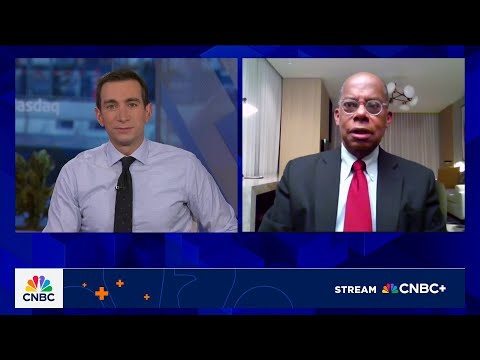
Ray Dalio: A risky AI market bubble is forming, but may not pop until the Fed tightens
CNBC Television· 2025-10-28 16:48
Market Bubble Concerns - A composite bubble indicator suggests a relatively high level of bubble activity in the market [1] - Bubbles are unlikely to burst unless monetary policy tightens, but current trends suggest easing rates are more probable [2] - The divergence in the economy, with weakening elements alongside bubble development, complicates monetary policy [4] - The current situation is reminiscent of market conditions before crashes in 1998-99 and 1927-28 [4] - The industry acknowledges significant risks, even if the exact timing of a potential bubble burst is uncertain [7] Unicorn Valuation and Financing - Unicorns may raise, for example, $100 million but be valued at $1 billion, creating a perception of wealth that isn't fully realized in cash transactions [5] - This inflated valuation can become its own form of "money" within the ecosystem [6] AI and Technology Risks - The rapid obsolescence of GPUs and the evolving landscape of data centers present risks in the AI sector [6]

Bridgewater founder Ray Dalio: Market is showing signs of a bubble
CNBC Television· 2025-10-28 15:45
Do you think that concentration is is indicative of a bubble. >> This is the big question, right. Um >> I know eager to hear your thoughts.>> There's a um there's a lot of bubble stuff going on. I have a bubble indicator um which is a composite of things that would take you too long to explain. And the bubble indicator is relatively high.It has to do not only with the pricing, has to do with who owns it, how the financing is taking place and so on. And it's a relatively high uh um level of of of bubble. Um ...
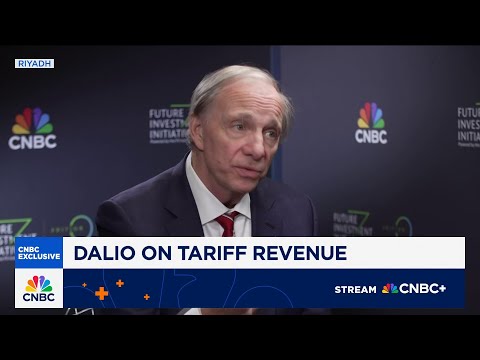
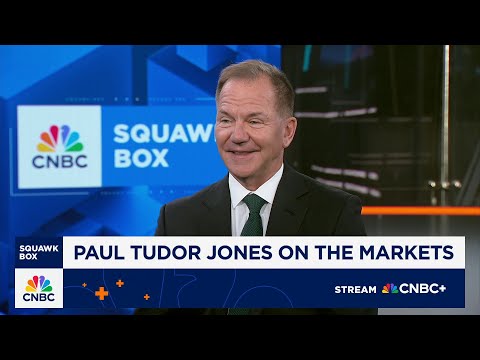
Paul Tudor Jones: Ingredients are in place for massive rally before a ‘blow off’ top to bull market
CNBC Television· 2025-10-28 13:54
Market Outlook & Investment Strategy - The market feels like 1999, suggesting a potential for significant price appreciation, similar to the NASDAQ doubling between October 1999 and March 2000 [3][4] - Investors should position themselves as if it's October 1999, but be prepared to exit the market quickly [4][5] - The greatest price appreciation typically occurs in the 12 months leading up to the market peak [5][6] - A "blowoff" is anticipated, potentially more explosive than 1999 due to current monetary and fiscal policies [6][7] - Current fiscal and monetary conditions, featuring a budget deficit of 6%, are reminiscent of the post-war period of the early 1950s [8][9] - The market is conducive to massive price appreciation in various assets, but requires increased retail buying and recruitment from hedge funds and real money [10][11][12] Investment Recommendations - Investors should consider positions in gold, crypto, and the NASDAQ [14][15] - The biggest winners in the market are signaling an inflation story, with gold up approximately 46-47%, Bitcoin up approximately 50-60%, and a Morgan Stanley retail flow basket (meme stocks) up approximately 67-68% [13] Risk Assessment - The circularity of certain deals, such as the Open AI deal with AMD, raises concerns [13] - Leverage, including margin debt and leveraged ETFs, is currently elevated compared to October 1999 levels [11]