
Automation

Search documents
Knightscope(KSCP) - 2025 Q1 - Earnings Call Transcript
2025-05-14 20:02
Financial Data and Key Metrics Changes - Total revenue for Q1 2025 was $2.9 billion, a 29% increase from $2.3 billion in Q1 2024, driven by growth in both service and product revenue [6][12] - Service revenues grew to approximately $2.1 billion, up 25% from $1.7 billion the previous year, primarily due to strong ASR subscriptions and full-service maintenance agreements [6][12] - Product revenues increased by 44% to about $809,000 compared to $563,000 in the prior year, attributed to successful distribution partnerships [6][12] - Gross loss improved to approximately $700,000 from a loss of $1.4 million a year ago, reflecting savings in total cost of revenue [8][12] - Operating expenses decreased by 9% year-over-year to $6.2 million from $6.8 million in 2024 [10][12] - Net loss after accounting for other income and expenses was about 11% lower than the prior year's loss of $7.6 million [12] Business Line Data and Key Metrics Changes - Research and development expenses were about $2.1 million, a 35% increase year-over-year, reflecting continued investment in product innovation [10][12] - Sales and marketing expenses decreased by 15% to $1.3 million, due to strategic changes in the go-to-market strategy [11][12] - General and administrative expenses were $2.8 million, down from $3.6 million the previous year, primarily due to cost discipline [11][12] Market Data and Key Metrics Changes - The company reported a total backlog of approximately $2.5 million, consisting of $1.9 million in ECDs and $600,000 in ASR-related orders [51] Company Strategy and Development Direction - The company is focused on achieving positive gross margins, scaling services and product footprint, and operating with increased efficiency and discipline [14][12] - Management emphasized the importance of executing long-term goals while navigating external uncertainties, such as tariffs and macroeconomic factors [21][22] Management's Comments on Operating Environment and Future Outlook - Management expressed optimism about the company's progress and the effectiveness of recent changes made over the past fifteen months [15][17] - The company is navigating macro uncertainties but believes that opportunities exist, particularly in the context of national security and safety [21][25] - Management highlighted the importance of focusing on long-term shareholder value rather than short-term profitability [32][56] Other Important Information - The company is in the process of moving to a new facility, which is expected to enhance collaboration and efficiency, although some disruption risks are anticipated during the transition [47][49] - The company has made significant changes to its management structure, including the termination of 40% of the management team to improve efficiency [39][56] Q&A Session Summary Question: How is macro uncertainty impacting customer conversations? - Management noted that while political uncertainty has less direct impact, financial factors like tariffs could affect component pricing and lead times [21][22] Question: Is the per-share loss improvement due to the reverse split? - The reverse stock split occurred in September 2024, and the per-share price reflects this adjustment [28][29] Question: When will the company report positive EBITDA and earnings? - Management indicated that while they are focused on achieving positive earnings and EBITDA, the timing is still uncertain [30][31] Question: What is the impact of the Doge program on federal security customers? - The program has created some challenges due to personnel changes but also presents opportunities for more efficient security solutions [34][35] Question: What are the biggest obstacles in ramping up the customer base? - Management cited funding as a significant challenge, impacting the ability to scale operations and grow the customer base [60][62] Question: How does the order book look? - The company reported a backlog of approximately $2.5 million, indicating a healthy order pipeline [51] Question: What are the plans for the new headquarters? - The new facility is expected to enhance operational efficiency, with some anticipated costs and disruptions during the move [74][75]

Chewy (CHWY) FY Conference Transcript
2025-05-14 15:00
Chewy (CHWY) FY Conference Summary Company Overview - Chewy is the largest pure play online pet retailer in the U.S. with over 20 million active customers and estimated net sales of over $1.2 billion in fiscal 2025 [1][2] - More than 80% of revenue is generated from subscription-based auto-ship customers, and about 85% comes from nondiscretionary categories [2][12] Key Financial Metrics - Expected adjusted EBITDA margins of approximately 5.5% and free cash flow of about $525 million for the year [3][2] - Chewy's profitability continues to improve, with a focus on building out its pet ecosystem [5][6] Leadership Changes - CFO David Reeder announced his departure to return to the semiconductor industry after just over a year at Chewy [5][6] Industry Insights - The U.S. pet industry is valued at approximately $150 billion, with about 30% of that market occurring online [10][11] - Chewy is positioned to benefit as more spending shifts online, particularly in pharmacy and health and wellness categories [11][12] Customer Growth and Retention - Active customer growth is expected to be low single digits in fiscal 2025, driven by Chewy's efforts rather than overall market growth [19][30] - Chewy has improved gross adds, reactivations, and reduced churn through targeted marketing and personalized offerings [20][22] Market Resilience - The pet industry is described as recession resilient, with consumables being a predictable revenue source [12][13] - Chewy's business model, with 85% of revenue from consumables, provides stability during economic downturns [13][12] Product Categories and Growth Strategies - Hard goods sales are more sensitive to macroeconomic conditions but have shown signs of recovery [32][33] - The health and wellness category, which accounts for about 30% of sales, has higher gross margins and is expected to grow significantly [40][41] Veterinary Services Expansion - Chewy has opened eight veterinary clinics and plans to add another eight to ten, which are attracting both existing and new customers [44][46] - More than half of new customers visiting the clinics subsequently place orders on Chewy's platform [46] Profitability and Cost Management - Chewy expects to expand adjusted EBITDA margins by 60 to 90 basis points, with a focus on gross margin improvement and operational efficiency [55][56] - Automation in fulfillment centers is expected to increase productivity by about 30% per square foot [64][65] Capital Allocation - Chewy returned approximately $950 million to shareholders last year and continues to generate significant free cash flow [70][68] - The company maintains a flexible capital allocation strategy, including opportunistic share repurchases [70][68] Conclusion - Chewy is well-positioned in the growing online pet retail market, with a strong focus on customer retention, product diversification, and operational efficiency. The company is leveraging its unique position in the pet ecosystem to drive future growth and profitability.

Flex (FLEX) FY Conference Transcript
2025-05-14 13:00
Summary of Flex (FLEX) FY Conference Call - May 14, 2025 Company Overview - **Company**: Flex (FLEX) - **Industry**: Hardware and Networking Key Points Macro Environment and Guidance - The macroeconomic environment remains volatile, but demand in the data center business is strong, with a revenue of approximately $3.5 billion from cloud and $1.3 billion from power products and industrial units [4][6] - The automotive sector faces uncertainty in the near term, but long-term fundamentals are strong due to technology transitions like EV and hybrid vehicles [5][6] - Consumer-related businesses show stable demand, with potential growth from strategic partnerships in the lifestyle sector [6][7] - Health solutions are steady, with strong device sales but challenges in equipment [7] Tariff and Supply Chain Considerations - Companies are actively planning for potential macro impacts from tariffs, with heightened activity in supply chain robustness [8][10] - Flex has not included direct tariff impacts in its guidance but is prepared for drastic changes [11][12] - The company is experiencing increased customer inquiries about supply chain de-risking, indicating a broad-based concern across industries [15][16] Margin Improvement and Business Strategy - Flex has been focusing on improving margins by matching high-value customers with high-value locations, which has been a successful strategy over the past few years [19] - The EMS plus products plus services strategy aims to enhance margins by integrating more products and services into customer offerings [23][27] - Services revenue is growing faster than the company average, particularly in cloud and lifestyle sectors [33] Data Center Business Insights - The data center business is focused on addressing challenges related to power, heat, and scale, with significant growth expected in both power and cloud segments [35][44] - Flex has diversified its customer base in the data center sector, reducing reliance on any single hyperscaler [41][42] - The company is investing in liquid cooling technologies and has acquired JetCool to enhance its capabilities in this area [39][54] Competitive Landscape - Flex differentiates itself from traditional EMS players by offering both critical and embedded power solutions, which is not common in the industry [64][66] - The company is positioned to compete with established power product companies while leveraging its EMS capabilities [66] Future Growth Opportunities - Significant growth opportunities exist in the data center, health solutions, and automotive sectors, with a focus on premium brands in consumer-related businesses [70][72] - Flex is optimistic about long-term growth in agility and reliability businesses, particularly in the data center and health solutions sectors [74] Automation and Labor Market - Automation is a priority for Flex, with a focus on balancing automation with flexibility in manufacturing processes [75] - The company is investing in harmonizing data to optimize factories and enhance automation capabilities [76] Additional Insights - The company is actively working on integrating AI into its manufacturing processes to improve efficiency and productivity [76] - Flex's strategy includes a long-term goal of increasing the penetration of value-added services across all business units [34] This summary captures the essential insights and strategic directions discussed during the Flex FY Conference Call, highlighting the company's focus on growth, margin improvement, and adaptation to macroeconomic challenges.

X @CryptoJack
CryptoJack· 2025-05-14 07:30
#SmartContracts remove intermediaries, but security flaws can destroy billions. Are we underestimating the risks of automation? 🔐 ...
Jabil (JBL) FY Conference Transcript
2025-05-13 19:30
Summary of Jabil (JBL) FY Conference Call - May 13, 2025 Company Overview - **Company**: Jabil (JBL) - **Industry**: Electronics Manufacturing Services (EMS) Key Points and Arguments Macro Economic Concerns - There is a sense of relief among customers regarding recession fears, with the administration's efforts seen as effective in preventing a significant downturn [3][5][6] - Jabil's diversified portfolio across various end markets, including healthcare and digital commerce, positions the company well to manage through economic fluctuations [4][5] Supply Chain and Tariff Management - Jabil has regionalized its supply chain, producing in-country for local consumption, which mitigates risks associated with tariff volatility [7][8] - The company is not currently seeing significant shifts in business due to tariffs, as customers are cautious about the costs and risks of relocating operations [8] Capacity and Geographic Flexibility - Approximately 35% to 40% of Jabil's capacity is located in the Americas, with current utilization around 75-80%, indicating room for growth [16][18] - The company has recently opened a facility in St. Petersburg, Florida, and has the capability to expand in the U.S. and Mexico as needed [16][18] Margin Improvement Strategies - Jabil aims to increase its margin from 5.4% to 6% or 6.5% in the near future, driven by portfolio diversification, vertical integration, and operational efficiencies [22][23][24] - The company is focusing on higher-margin businesses and has made tuck-in acquisitions to enhance its service offerings [24][25] Growth in Cloud and Data Center Infrastructure - Jabil has increased its revenue guidance for the second half of the fiscal year by $1 billion, driven by strong demand from hyperscale customers and capital equipment business [28] - The company is confident in continued spending from cloud customers, viewing it as an "arms race" among hyperscalers [28][29] Automotive Sector Challenges - The automotive segment faces headwinds from tariffs and reduced demand for electric vehicles (EVs), but Jabil is diversifying its customer base and product offerings to mitigate risks [44][45] - The company has added new OEM customers in China, which is expected to provide growth opportunities in the EV space [46][48] Healthcare Market Opportunities - Jabil is significantly larger than its nearest competitor in the healthcare market and is focused on expanding its share of wallet through organic growth and acquisitions [56][57] - The company recently acquired Pharmaceutical International Incorporated, enhancing its capabilities in pharmaceutical delivery systems [58] Semiconductor Capital Equipment - Jabil's semiconductor capital equipment business is performing well, with strong growth driven by key customers like NVIDIA [62] - The company anticipates a cyclical recovery in the semiconductor industry within the next twelve months [63] Networking and Communications - The networking segment is experiencing slower growth due to exiting low-margin businesses, but there are positive trends in Ethernet and liquid cooling technologies [65][66] Digital Commerce Growth - Jabil is seeing growth in digital commerce, particularly in automation and robotics for retail environments, with expectations for continued expansion in this area [67][68] Future Outlook - Jabil's path to achieving higher margins is not solely dependent on revenue growth but also on optimizing product mix and operational efficiencies [69][70] - The company is well-positioned for future growth across various sectors, including healthcare, cloud infrastructure, and automotive, despite current economic challenges [49][50][56]

Best EV & AV Stocks to Electrify Your Portfolio Now
ZACKS· 2025-05-13 15:45
Industry Overview - The auto industry is undergoing a significant transformation driven by electric vehicles (EVs) and autonomous vehicles (AVs) [2][4] - Global EV sales are projected to grow by 19.2% in 2025, reaching 21.3 million units, with China leading the market [2] - By 2030, EVs are expected to account for over 40% of global light vehicle sales, increasing to more than 80% by 2040 [2] Electric Vehicle Market - Tesla was historically the dominant player in the EV market, but competition is intensifying with traditional automakers and new startups entering the space [3] - Companies like General Motors, Rivian, BYD, and NIO are making significant investments and launching ambitious product plans to capture market share [3] Autonomous Vehicle Market - The AV market is anticipated to grow from nearly $48 billion in 2025 to over $133 billion by 2030, driven by advancements in technology [4] - Major tech companies and automakers are investing heavily in AV technology to enhance road safety and reduce traffic congestion [4] Investment Opportunities - The dual transformation of electrification and automation presents substantial investment opportunities in the EV and AV sectors [5] - Investors are encouraged to consider stocks like BYD, Rivian, and NIO for potential growth [5] Rivian Automotive - Rivian is transitioning from high-end models to more affordable vehicles, with the upcoming R2 mid-size SUV expected to start around $45,000 [8] - The company has reported a positive gross profit for two consecutive quarters and aims for sustained profitability [8] - Rivian's partnership with Volkswagen involves an investment of up to $5.8 billion, supporting its next-generation electrical architecture [9] NIO Inc. - NIO has expanded its vehicle lineup and is launching new brands, including ONVO and Firefly, to capture a broader market [12][14] - The company is focusing on battery swap technology, with over 3,200 stations deployed, and aims to break even by Q4 2025 [15][16] BYD Company - BYD has shifted entirely to new energy vehicles, emerging as a global EV leader and outselling Tesla in early 2025 [17][18] - The company benefits from vertical integration, controlling production from batteries to vehicle assembly, which helps maintain low costs [19] - BYD is expanding its global footprint with new plants and aims to double overseas sales to over 800,000 units in 2025 [21]


Knowles (KN) 2025 Conference Transcript
2025-05-13 13:45
Summary of Dover's Conference Call Company Overview - **Company**: Dover Corporation - **Event**: 2025 Conference Call - **Date**: May 13, 2025 Key Points Acquisition of Secora - Dover announced the acquisition of Secora, a global leader in precision measurement solutions based in Germany, with an enterprise value of approximately EUR 550 million [2][3] - Expected revenues from Secora are projected to exceed EUR 100 million this year, with a margin profile consistent with Dover's Pumps and Process Solutions segment [3][4] - The acquisition is seen as complementary to Dover's Polymer Processing platform, enhancing technology and recurring revenue opportunities [4][5] Financial Profile and Growth - Dover has invested over $1 billion in its polymer processing platform over the past decade, including the acquisition of Secora [5] - Secora's customer base includes blue-chip companies, providing opportunities for cross-selling, particularly in the wire and cable market, which benefits from global electrification investments [6][7] Capital Allocation and M&A Strategy - Dover has $1.8 billion in cash, with the Secora acquisition utilizing only a third of that amount, indicating potential for further M&A activity [11][12] - The company is engaged in discussions for various small tuck-in acquisitions, although no imminent deals are expected [12][13] Supply Chain and Production - Dover is assessing the potential shift of production and supply chains to the U.S. due to tariff discussions, but current exposure to China is limited (5% of revenue and 6% of cost) [19][21] - The company maintains a flexible supply chain strategy, allowing for adaptability in response to market conditions [22][32] Biopharma and Medical Segment - The biopharma segment generated mid-200 million in revenue in 2024, with expectations for double-digit growth moving forward [38][39] - The growth is attributed to a recovery in demand rather than merely a comp issue, indicating a fundamental demand increase [41][42] Clean Energy and CO2 Systems - Dover's clean energy segment, particularly in LNG, is expected to grow significantly, driven by favorable market conditions and technology investments [60][61] - The CO2 systems business is also experiencing growth, with global revenues projected in the mid-200 million range for 2024 [50][54] Automation Investments - Dover is focusing on automation across all segments, with significant capital allocated to enhance productivity and efficiency [34][36] - The company has seen substantial benefits from past automation investments, particularly in the capital goods sector [36] Thermal Connectors and Data Centers - The thermal connectors segment for liquid cooling in data centers is projected to exceed $30 million in 2024, with strong growth anticipated due to increased demand for high-performance computing [75][76] - The shift from air to liquid cooling is accelerating demand, driven by higher energy requirements from new chip technologies [79][80] European Heat Pumps - There is a positive outlook for the European heat pump market, with signs of demand recovery after a period of destocking [89][90] - The company is optimistic about growth opportunities in various markets, including HVAC and district energy systems [90] Additional Insights - Dover's management is closely monitoring macroeconomic conditions and their impact on demand, particularly in the context of tariffs and supply chain dynamics [32][33] - The company remains committed to its capital expenditure plans and is not altering its guidance despite market uncertainties [31][32] This summary encapsulates the key discussions and insights from Dover's conference call, highlighting the company's strategic initiatives, financial outlook, and market positioning across various segments.

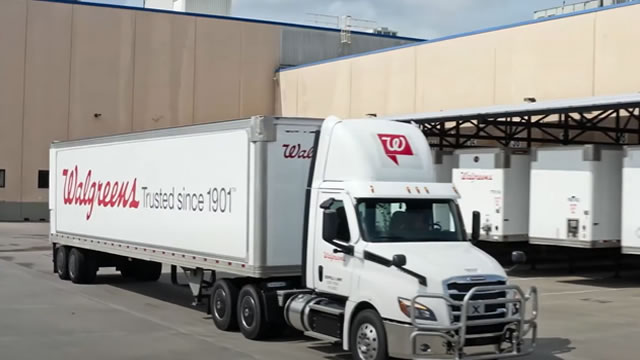
Walgreens doubles down on prescription-filling robots to cut costs, free up pharmacists amid turnaround
CNBC· 2025-05-11 12:00
Core Insights - Walgreens is focusing on automation to enhance efficiency and improve patient interaction as it navigates challenges in the drugstore industry [1][2][5] Group 1: Automation and Micro-Fulfillment Centers - Walgreens is expanding its micro-fulfillment centers, which utilize robots to fill prescriptions, aiming to serve over 5,000 stores by year-end, up from 4,800 in February 2023 [4] - The micro-fulfillment centers currently handle an average of 40% of prescription volume at supported pharmacies, equating to approximately 16 million prescriptions filled monthly [4][7] - The investment in robotic pharmacy fills has generated around $500 million in savings by reducing excess inventory and increasing efficiency [7] Group 2: Operational Changes and Market Position - The company is transitioning from opening new stores to closing underperforming locations to improve profitability amid competition from CVS Health, Amazon, and others [5][6] - Walgreens aims to alleviate the workload of pharmacy staff, allowing them to focus more on clinical services like vaccinations and testing [2][8] - The automation strategy provides Walgreens with a competitive edge over independent pharmacies and some rivals that lack centralized support [9] Group 3: Industry Context and Challenges - The drugstore industry is facing challenges such as declining pharmacy reimbursement rates, reduced consumer spending, and increased competition from online retailers [5][6] - The shift towards automation is partly a response to staff burnout and chronic understaffing issues highlighted by nationwide walkouts in 2023 [6] - While micro-fulfillment centers offer cost savings and efficiency, they also come with risks related to reliance on advanced robotics [10]

Here's Why You Should Retain Adient Stock in Your Portfolio Now
ZACKS· 2025-05-09 14:30
Core Viewpoint - Adient plc is positioned to benefit from its diverse customer base and international presence, despite facing challenges such as high restructuring costs in Europe and uncertainty regarding year-end customer recoveries [1] Group 1: Market Position and Business Wins - Adient has established a strong market position through a broad range of products and a diverse customer base, which is expected to strengthen further [2] - In fiscal 2024, Adient secured new and renewal contracts totaling approximately $1 billion in annual revenues, with around 90% of these agreements involving local OEMs, many set to launch in fiscal years 2026 and 2027 [3] Group 2: Regional Performance and Strategy - The company is gaining momentum in the EMEA region, driven by restructuring benefits and securing key programs with European customers, while also developing opportunities with China-based OEMs [4] - Adient is focusing on enhancing efficiency by phasing out lower-performing segments and launching higher-margin programs expected to positively impact results in 2026 [4] Group 3: Innovations and Automation - Adient's initiatives in automation and modularity are yielding positive results, with automation reducing labor costs and improving quality, speed, and safety [5] - The implementation of AI-powered welding inspection and partnerships for 3D sewing automation are enhancing precision and reducing labor needs, differentiating Adient in supporting China OEMs expanding internationally [5] Group 4: Challenges and Financial Outlook - Sales in China are lagging, with revenues expected to remain stable or slightly decline in fiscal 2025 due to an unfavorable production mix [6] - Adient anticipates higher European restructuring costs and has revised its free cash flow outlook to $150-$170 million from a previous estimate of $180 million [6]


Allient (ALNT) - 2025 Q1 - Earnings Call Transcript
2025-05-08 15:02
Financial Data and Key Metrics Changes - Revenue for Q1 2025 was $132.8 million, down 9% year-over-year due to demand softness in vehicle and industrial markets, with an unfavorable FX impact of $1.8 million [11] - Sequentially, revenue decreased by $10.8 million or 9%, but adjusted EPS increased nearly 50% from Q4, reaching $0.46 per share [7][20] - Gross margin expanded 70 basis points sequentially to 32.2%, while operating margin rose 130 basis points to 6.6% [7][15] Business Line Data and Key Metrics Changes - Aerospace and defense revenue increased by 25%, driven by key program deliverables [12] - Vehicle revenue declined by 34%, reflecting softness in powersports demand and a shift from lower-margin programs [13] - Industrial markets showed mixed results, with power quality solutions for HVAC and data center infrastructure growing, but overall industrial market sales were down due to reduced demand in automation [14] Market Data and Key Metrics Changes - Sales to U.S. customers represented 52% of revenue, down from 58% in Q1 last year, with contributions from Europe, Canada, and Asia Pacific [11] - The industrial sector contributed 47% of trailing twelve-month sales, primarily driven by strong demand for power quality solutions [14] - The medical market was down 2% on a trailing twelve-month basis due to softness in pump-related products [14] Company Strategy and Development Direction - The company is focused on long-term growth themes such as electrification, energy efficiency, automation, and infrastructure investment [9] - The "Simplify to Accelerate Now" program is central to improving operational efficiency and aligning resources with demand [7][27] - The company is taking proactive steps to address global trade challenges, particularly regarding tariffs and rare earth magnet sourcing [28] Management's Comments on Operating Environment and Future Outlook - Management noted solid order momentum with total orders increasing 17% sequentially and 13% year-over-year, indicating a healthy book-to-bill ratio of 1.04 times [25] - The external environment remains fluid, but the company is built for resilience with a diverse customer base and global manufacturing footprint [26] - Management expressed confidence in achieving sustainable, profitable growth while continuing to invest in capabilities [30] Other Important Information - Operating cash flow was $13.9 million, up 52% from last year, and net debt decreased by $13.6 million to $174.4 million [21][23] - Capital expenditures for the quarter were $1.1 million, with an anticipated full-year spend of $10 million to $12 million [24] Q&A Session Summary Question: Demand and Supply Environment - Management observed positive signs in demand at the start of the quarter, with expectations for incremental growth [36] - Tariff impacts are being managed through cost mitigation strategies and localization of supply chains [37] Question: Competitive Positioning - The company believes it is well-positioned to win business due to its existing footprint and localization efforts [39] Question: Vehicle Business Strategy - Management confirmed a strategic shift away from lower-margin automotive applications towards higher-margin opportunities [46][49] Question: Inventory Turn Targets - The company aims to improve inventory turns beyond 3.1, but acknowledges potential short-term challenges due to geopolitical factors [56] Question: Rare Earth Elements Impact - Management provided insights on the cost impact of rare earth elements, indicating a significant portion of costs could be affected [65] Question: Recreational Vehicle Market - The company is not exiting the recreational vehicle market and sees opportunities for competition, particularly in industrial applications [73][75]
