
Monetary Policy

Search documents
Fed Rate Cuts Are Priced In. Watch for Dissent Among the Committee.
Barrons· 2025-09-12 10:52
Group 1 - The Federal Reserve is expected to cut interest rates next week, with a nearly unanimous consensus among committee members [1][2] - Traders are pricing in a 93% chance of a 25 basis-point cut, while the likelihood of a 50 basis-point reduction is significantly lower [2] - Federal Reserve governor Christopher Waller and Vice Chair for Supervision Michelle Bowman are likely to advocate for a larger cut, marking a notable dissent in the committee's recent history [2]
美联储展望_9 月版-Fed Chatterbox_ September Edition (Mei)
2025-09-12 07:28
Summary of Key Points from the Conference Call Industry or Company Involved - The conference call primarily discusses the Federal Reserve's monetary policy, labor market conditions, and inflation dynamics. Core Points and Arguments 1. **Monetary Policy Adjustments**: Several Federal Open Market Committee (FOMC) participants indicated that the current restrictive policy stance may need adjustments due to weakening labor market conditions. Expectations include three consecutive 25 basis point cuts in September, October, and December 2023, with two additional cuts anticipated in 2026, leading to a terminal funds rate range of 3-3.25% [3][4][9]. 2. **Labor Market Concerns**: There is a growing consensus among FOMC members that downside risks to employment are increasing. Governor Waller noted that labor market conditions could deteriorate rapidly, while other members echoed similar concerns about the potential for rising unemployment [3][5]. 3. **Inflation Dynamics**: The FOMC participants expressed mixed views on the impact of tariffs on inflation. While some believe the effects will be short-lived, others caution that tariffs could have a more persistent impact on inflation, particularly in the services sector [6][8]. 4. **Current Policy Stance**: Most participants characterized the current federal funds rate as modestly restrictive. However, there is a call for moving towards a more neutral stance to better align with economic conditions [9][11]. 5. **Economic Indicators**: The FOMC members are closely monitoring various economic indicators, including unemployment, layoff rates, and hiring rates, to gauge the health of the labor market. A deterioration in these indicators could prompt more aggressive policy easing [5][6]. Other Important but Possibly Overlooked Content 1. **Diverse Perspectives on Tariffs**: There is a notable divergence in opinions regarding the long-term effects of tariffs on inflation, with some members suggesting that the inflationary impact may not fade quickly, while others believe it will be temporary [6][8]. 2. **Caution Against Complacency**: Several members emphasized the need for caution in interpreting labor market data, suggesting that underlying factors such as immigration and labor supply could influence the apparent strength or weakness of the labor market [5][6]. 3. **Potential for Wage-Price Dynamics**: There is a concern that if inflation pressures persist, it could lead to adverse wage-price dynamics, although the current labor market does not appear to be tight enough to trigger such outcomes [8][9]. 4. **Recalibration of Policy**: Some members, including President Daly, indicated that it may soon be time to recalibrate monetary policy to better match the evolving economic landscape, particularly in light of tariff-related price increases [4][11]. 5. **Long-term Inflation Expectations**: Despite recent inflation increases, longer-term inflation expectations remain stable, which is a positive sign for monetary policy [6][8]. This summary encapsulates the key discussions and insights from the conference call, highlighting the Federal Reserve's approach to navigating current economic challenges.
X @Bloomberg
Bloomberg· 2025-09-12 07:09
European Central Bank officials offered diverging views on the next step for interest rates, highlighting the sense of uncertainty overshadowing euro-zone monetary policy https://t.co/6XjwDvyaTs ...
Global Markets React to Indonesian Bank Support, Apple’s China Expansion, and ECB’s Inflation Watch
Stock Market News· 2025-09-12 07:08
Group 1: Indonesia's Banking Sector - Indonesia's new Finance Minister announced a support package of 55 trillion rupiah for each major state-owned bank, including Bank Mandiri (BMRI), Bank Negara Indonesia (BBNI), and Bank Rakyat Indonesia (BBRI) [2][9] - This capital injection is expected to enhance the financial stability and lending capacity of these banks, which are vital for Indonesia's economic growth [2][9] Group 2: Apple and the Chinese Market - Apple is expanding its presence in the Chinese market by introducing eSIM support for its iPhone Air model [3][9] - The company is collaborating with major Chinese telecommunications providers, including China Mobile, China Telecom, and China Unicom, to facilitate this development [3][9] - The introduction of eSIM functionality is anticipated to improve user convenience and potentially boost iPhone sales in China [3][9] Group 3: French Inflation Data - France's Consumer Price Index (CPI) for August showed stability, with a year-over-year increase of 0.9% and a month-over-month rise of 0.4%, both aligning with market expectations [4][9] - The CPI ex-tobacco index increased slightly to 121, consistent with estimates, while the EU Harmonized CPI also registered stable figures [4][9] Group 4: European Central Bank Insights - ECB Governing Council member Martins Kazaks emphasized a data-driven approach to monetary policy, indicating that December projections will be crucial for assessing inflation deviations from the 2% target [5][9] - Kazaks highlighted currency movements and Chinese trade flows as significant risks to the economic outlook [5][9] Group 5: European Market Sentiment - European markets opened with a mild upward trend, reflecting positive sentiment from Wall Street as investors analyze recent economic data and central bank commentary [6][9]


Global Markets React to US Fiscal Shift, Geopolitical Tensions, and Monetary Policy Stance
Stock Market News· 2025-09-12 01:38
Fiscal Landscape - The U.S. government's interest payments on its national debt have reached a record $1.21 trillion, surpassing the entire defense budget for the first time since at least 1940 [2][9] - Projections indicate that interest payments could rise to $1.6 trillion by 2034, consuming over 20% of the federal budget, raising concerns about long-term fiscal sustainability [3][9] Global Monetary Policy - The European Central Bank (ECB) has maintained its key deposit rate at 2%, citing stable inflation and a resilient economic outlook, with future decisions being data-dependent [4][9] - Anticipation is building for the Federal Reserve to implement a rate cut in the U.S., following mixed economic data, which has positively impacted gold prices [5][9] Corporate and Energy News - Baidu's Hong Kong shares are expected to open 3.8% higher, reflecting positive market sentiment [13] - The International Energy Agency (IEA) has released a higher oil surplus estimate, leading to a decline in crude prices [14] - Petronas has delivered Malaysia's first blended sustainable aviation fuel (SAF) to KL International Airport, marking a step towards sustainability [14] International Trade - A U.S. envoy has expressed optimism about resolving a tariff dispute with India, as negotiations continue to address the trade imbalance [15]
Fed Cut Locked: Why CPI Isn't Enough (And Jobs Are Cracking)
Seeking Alpha· 2025-09-11 23:10
Inflation Data Summary - The headline Consumer Price Index (CPI) in the US increased by 0.4% month-over-month, marking the highest level since January [1] - The core CPI remained steady at 3.1% year-over-year, aligning with analyst expectations [1]
U.S. & EU "Moving in Different Directions" on Rate Cuts, China Sees "A.I. Excitement"
Youtube· 2025-09-11 21:00
Economic Overview - The US and Eurozone are experiencing divergent economic trends, particularly in growth, inflation, and monetary policy [2][5] - The core CPI in the US was reported at 3.1% for August, while the Eurozone's was lower at 2.3% [3] - The US labor market is showing signs of deterioration, contrasting with the Eurozone where unemployment is projected to continue falling [3][6] Monetary Policy - ECB President Lagarde indicated that the Eurozone's inflation is on target, suggesting that the ECB may be done with rate cuts [4][5] - The Eurozone's economy has shown resilience, with the manufacturing PMI increasing and returning to expansion territory for the first time since June 2022 [4][6] - The US is facing discussions about potential rate cuts, while the Eurozone appears to be stabilizing its monetary policy [5][8] Currency Impact - The US dollar fell following the CPI data release and the ECB press conference, with expectations of more Fed rate cuts potentially exerting downward pressure on the dollar [7][8] - A weaker dollar is beneficial for international stock investments, as it enhances returns [8][10] International Stock Performance - International stocks have outperformed the US market by over 200 basis points this year, primarily due to currency effects [9][10] - The outperformance of international stocks was initially driven by weakness in the US tech sector and strength in European cyclicals [10] Specific International Markets - Chinese stocks are highlighted as top performers, with significant investments in AI and cloud computing, leading to a potential 60% increase in spending by major companies [11][12] - The MSCI China index is trading slightly above its 10-year average, indicating that while there is excitement, earnings are still being revised down [12]
ECB Decision: Lagarde on Interest Rates, Inflation, Economy, Risks
Bloomberg Television· 2025-09-11 14:52
Monetary Policy Stance - The ECB governing council decided to keep the three key ECB interest rates unchanged [1][21] - The ECB will follow a data-dependent and meeting-by-meeting approach to determining the appropriate monetary policy stance [3][22] - The ECB is not pre-committing to a particular rate path [4][22] - The ECB stands ready to adjust all instruments within its mandate to ensure inflation stabilizes sustainably at the 2% medium-term target [23] Inflation Outlook - Headline inflation is currently around the 2% medium-term target [1] - ECB staff projects headline inflation averaging 21% in 2025, 17% in 2026, and 19% in 2027 [2] - Inflation, excluding energy and food, is expected to average 24% in 2025, 19% in 2026, and 18% in 2027 [2][13] - Annual inflation edged up to 21% in August from 2% in July [10] Economic Growth - The economy grew by 07% in cumulative terms over the first half of the year [5] - The economy is projected to grow by 12% in 2025, revised up from the 09% expected in June [2] - The growth projection for 2026 is now slightly lower at 1%, while the projection for 2027 is unchanged at 13% [3] - The unemployment rate was 62% in July [6] Financial Conditions - The average interest rate on new loans to firms moved down to 35% in July from 36% in June [20] - The cost of issuing market-based debt was unchanged at 35% [20] - Loans to firms grew by 28%, slightly more strongly than in June, while the growth of corporate bond issuance rose to 41% from 34% [20] - The average interest rate on new mortgages was again unchanged at 33% in July, while growth in mortgage lending picked up to 24% [20]
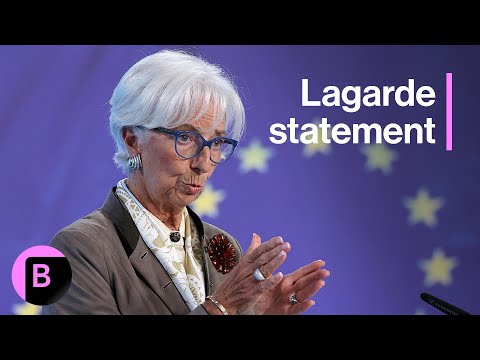
European Central Bank (:) Update / Briefing Transcript
2025-09-11 13:47
Summary of European Central Bank Update / Briefing September 11, 2025 Key Points on the ECB and Economic Outlook ECB Interest Rates and Inflation Projections - The European Central Bank (ECB) decided to keep the three key interest rates unchanged, with inflation currently around the 2% medium-term target [2][11] - Headline inflation is projected to average 2.1% in 2025, 1.7% in 2026, and 1.9% in 2027, while inflation excluding energy and food is expected to average 2.4% in 2025, 1.9% in 2026, and 1.8% in 2027 [2][7] - The economy is projected to grow by 1.2% in 2025, revised up from 0.9% expected in June, with a slight decrease in growth projection for 2026 to 1% [2][4] Economic Resilience and Consumer Spending - The economy grew by 0.7% in cumulative terms over the first half of the year, driven by strong domestic demand [4] - The unemployment rate was reported at 6.2% in July, which is expected to boost consumer spending as people save less of their income [4][6] - Investment is expected to be supported by substantial government spending on infrastructure and defense [5] Risks and Challenges - Risks to economic growth are now considered more balanced, with recent trade agreements reducing uncertainty [8] - Geopolitical tensions, such as the conflict in Ukraine and the Middle East, remain significant sources of uncertainty [8] - The outlook for inflation is uncertain due to the volatile global trade policy environment, with potential for both lower and higher inflation depending on various factors [9] Financial and Monetary Conditions - Short-term market rates have increased, while longer-term rates have remained stable [10] - The average interest rate on new loans to firms decreased to 3.5% in July, with corporate borrowing costs continuing to decline [10] - Growth in loans to firms was reported at 2.8%, and corporate bond issuance rose to 4.1% [10] ECB's Approach to Monetary Policy - The ECB will follow a data-dependent and meeting-by-meeting approach to determine monetary policy stance, without pre-committing to a specific rate path [3][11] - The Governing Council emphasizes the importance of assessing incoming economic and financial data to inform interest rate decisions [3][11] Additional Insights - The ECB is focused on ensuring that inflation stabilizes at the 2% target in the medium term, with a commitment to adjust instruments as necessary [11] - The introduction of a digital euro and the completion of the Savings and Investment Union are highlighted as critical for future economic stability [6] Conclusion - The ECB remains vigilant in monitoring economic conditions and is prepared to adjust its monetary policy as needed to maintain stability and support growth in the euro area [11]
Lagarde comments at ECB press conference
Yahoo Finance· 2025-09-11 13:11
FRANKFURT, Sept 11 (Reuters) - The European Central Bank left interest rates unchanged on Thursday as expected but offered no clues about its next move, even as investors continue to bet that more support will be needed as inflation dips below target next year. Following are highlights of ECB President Christine Lagarde's comments at a news conference after the policy meeting. MORE ON THE BALANCE OF RISKS "If you walk back to June, we had a highly uncertain situation. It was post April 19, sure, but it ...