中美关系
Search documents
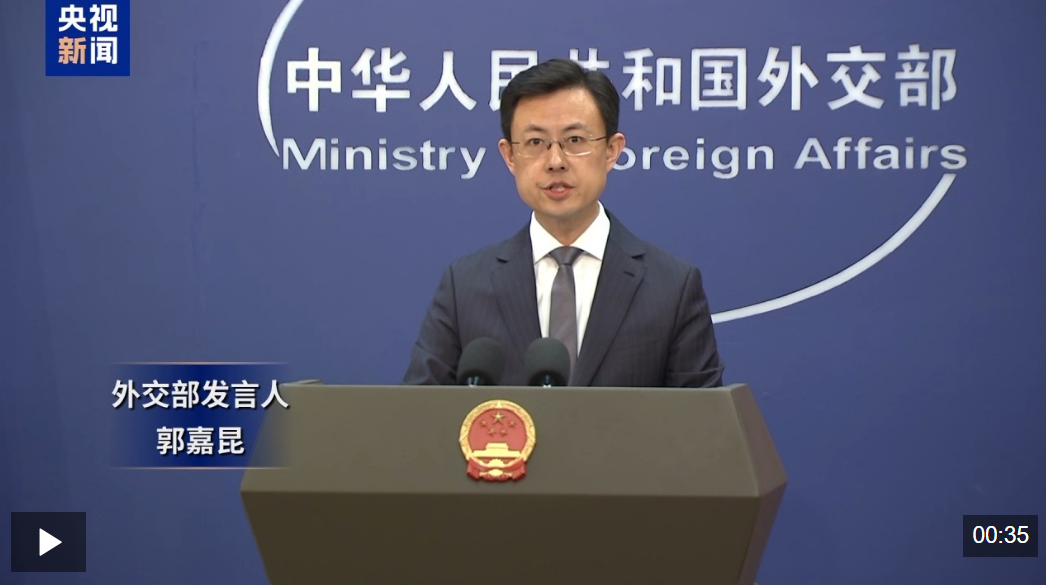
收到邀请,中方将组织代表团访美
券商中国· 2025-11-27 23:29
Group 1 - The core viewpoint of the article emphasizes the positive developments in China-US relations, particularly in the context of business exchanges and cooperation following the recent phone call between President Xi Jinping and President Trump [1][2] - The China Council for the Promotion of International Trade (CCPIT) has organized a series of business exchange activities with the US, including dialogues on health economy and innovation, as well as roundtable discussions in the medical and insurance sectors [1] - There is strong enthusiasm and willingness for cooperation among businesses from both countries, reflecting a shared expectation for stable, healthy, and sustainable development in bilateral relations [1] Group 2 - A Chinese business delegation will visit the US in early December, covering various sectors such as agriculture, machinery, finance, and biomedicine, aiming to enhance communication and cooperation [2] - The visit marks the 50th anniversary of the first semi-official trade delegation from China to the US, which laid a solid foundation for bilateral economic cooperation [2] - The delegation will also visit Canada to engage with local business and political leaders, promoting practical cooperation in the wake of recent high-level meetings between Chinese and Canadian leaders [2]
人民币兑美元汇率升至13个月新高
Sou Hu Cai Jing· 2025-11-27 10:28
Core Viewpoint - The Chinese yuan has strengthened against the US dollar, reaching a 13-month high, driven by expectations of a potential interest rate cut by the Federal Reserve and a more stable outlook for Sino-US relations [2][3][5]. Exchange Rate Movement - Since November 21, the yuan has appreciated from around 7.11 to approximately 7.07 against the dollar, with the central bank's mid-point rate rising to 7.0779 on November 27, the highest since October 14, 2024 [2]. - On November 26, the offshore yuan broke below 7.07, indicating a significant strengthening of the currency [2][3]. Federal Reserve Influence - The market's expectation for a December interest rate cut by the Federal Reserve surged to over 70% following dovish comments from New York Fed President Williams, contributing to the dollar's decline [3]. - The dollar index fell below 100, trading around 99.6, reflecting a broader trend of weakening for the dollar [3]. Sino-US Relations - Optimism regarding the stability of Sino-US relations has contributed to the yuan's strength, as market participants perceive reduced external uncertainties for the Chinese economy [3][5]. Economic Fundamentals - Analysts suggest that previous counter-cyclical policies will support the Chinese economy, making it likely to achieve a GDP growth target of around 5% for the year, which in turn supports the yuan's exchange rate [5][6]. - The yuan's recent appreciation is primarily driven by market forces, with a closer alignment between the central bank's mid-point rate and market prices [5][6]. Corporate Demand for Currency Exchange - Increased corporate demand for currency exchange is seen as a key factor supporting the yuan's exchange rate, particularly as the fourth quarter is a seasonal peak for such demand [6]. Central Bank Actions - The People's Bank of China issued 450 billion yuan in central bank bills in Hong Kong to manage offshore liquidity, which is viewed as a stabilizing measure for the yuan's exchange rate [6]. - Some analysts believe that the central bank's actions are part of a broader strategy to promote the internationalization of the yuan [6]. Future Outlook - Looking ahead, if the Chinese government implements strong stimulus policies, the yuan could continue to appreciate, with predictions suggesting a potential exchange rate of 6.95 by the end of 2026 [7]. - The long-term outlook for the yuan remains positive, supported by domestic economic fundamentals and a favorable external environment [7].
大越期货油脂早报-20251127
Da Yue Qi Huo· 2025-11-27 01:58
Report Summary 1. Report Industry Investment Rating No information provided. 2. Core Views - The prices of oils and fats are oscillating. The domestic fundamentals are loose, and the domestic supply of oils and fats is stable. Sino - US relations are tense, which puts pressure on the price of new US soybeans due to export setbacks. The inventory of Malaysian palm oil is neutral, and demand has improved. Indonesia's B40 policy promotes domestic consumption, and the B50 plan is expected to be implemented in 2026. The domestic fundamentals of oils and fats are neutral, and the import inventory is stable [2][3][4]. - The current main logic revolves around the relatively loose global fundamentals of oils and fats. The main risk is the El Niño weather [5]. 3. Summary by Category Daily Views - **Soybean Oil** - Fundamentals: The MPOB report shows that in August, Malaysian palm oil production decreased by 9.8% month - on - month to 1.62 million tons, exports decreased by 14.74% to 1.49 million tons, and the end - of - month inventory decreased by 2.6% to 1.83 million tons. The report is neutral, with less - than - expected production cuts. Currently, the export data of Malaysian palm oil this month shows a 4% month - on - month increase, and later it will enter the production - reduction season, reducing the supply pressure of palm oil [2]. - Basis: The spot price of soybean oil is 8332, with a basis of 182, indicating that the spot price is higher than the futures price [2]. - Inventory: On September 22, the commercial inventory of soybean oil was 1.18 million tons, an increase of 20,000 tons from the previous period and a 11.7% year - on - year increase [2]. - Disk: The futures price is running below the 20 - day moving average, and the 20 - day moving average is downward [2]. - Main positions: The long positions of the main soybean oil contract have increased [2]. - Expectation: The soybean oil contract Y2601 is expected to oscillate in the range of 7900 - 8300 [2]. - **Palm Oil** - Fundamentals: Similar to soybean oil in terms of the MPOB report. Later, it will enter the production - increase season, increasing the supply of palm oil [3]. - Basis: The spot price of palm oil is 8470, with a basis of 30, indicating that the spot price is higher than the futures price [3]. - Inventory: On September 22, the port inventory of palm oil was 580,000 tons, an increase of 10,000 tons from the previous period and a 34.1% year - on - year decrease [3]. - Disk: The futures price is running below the 20 - day moving average, and the 20 - day moving average is downward [3]. - Main positions: The long positions of the main palm oil contract have increased [3]. - Expectation: The palm oil contract P2601 is expected to oscillate in the range of 8200 - 8600 [3]. - **Rapeseed Oil** - Fundamentals: Similar to soybean oil and palm oil in terms of the MPOB report. Later, it will enter the production - increase season, increasing the supply of palm oil [4]. - Basis: The spot price of rapeseed oil is 10176, with a basis of 358, indicating that the spot price is higher than the futures price [4]. - Inventory: On September 22, the commercial inventory of rapeseed oil was 560,000 tons, an increase of 10,000 tons from the previous period and a 3.2% year - on - year increase [4]. - Disk: The futures price is running above the 20 - day moving average, and the 20 - day moving average is upward [4]. - Main positions: The long positions of the main rapeseed oil contract have increased [4]. - Expectation: The rapeseed oil contract OI2601 is expected to oscillate in the range of 9500 - 9900 [4]. Recent利多利空Analysis - **Likely to be Bullish**: The inventory - to - sales ratio of US soybeans remains around 4%, indicating a tight supply [5]. - **Likely to be Bearish**: The prices of oils and fats are at a relatively high historical level, and the domestic inventory of oils and fats is continuously increasing. The macro - economy is weak, and the expected production of related oils and fats is high [5]. Supply - Related - The report provides historical data charts of import soybean inventory, soybean oil inventory, soybean meal inventory, oil - mill soybean crushing, palm oil inventory, rapeseed oil inventory,菜籽 inventory, and domestic total oil and fat inventory from 2015 - 2025 [6][7][9][11][17][19][21][23]. Demand - Related - The report provides historical data charts of soybean oil apparent consumption and soybean meal apparent consumption from 2015 - 2025 [13][15].
建信期货国债日报-20251127
Jian Xin Qi Huo· 2025-11-27 01:22
Report Information - Report Title: Treasury Bond Daily Report [1] - Date: November 27, 2025 [2] - Research Team: Macro Financial Research Team [4] - Researchers: He Zhuoqiao, Huang Wenxin, Nie Jiayi [3] Industry Investment Rating - Not provided in the report Core Viewpoints - Domestic fundamentals have weakened marginally since mid - year, especially the accelerated decline in the investment sector, which still significantly drags down credit expansion. Monetary policy has started to send signals of easing, and bullish factors for the bond market are accumulating. However, it is difficult for easing to materialize in the short term, and the bond market is in a period of shock and energy accumulation. Attention should be paid to opportunities for bottom - up layout. In the short term, it mainly depends on the capital market and risk - aversion sentiment. After the tax period this week, the capital market may further loosen, which will support the bond market. Although the new regulations on fund sales fees bring uncertain disturbances, the impact is mainly short - term. The downward trend of interest rates remains and the adjustment risk is limited, and the impact from the sentiment side provides a good layout opportunity [11][12] Summary by Directory 1. Market Review and Operation Suggestions a. Market Conditions - Rumors of new public fund regulations, bond fund redemptions leading to short - selling hedging, and the central bank's bond - buying scale being lower than expected, combined with the rebound of the A - share market, caused treasury bond futures to close sharply lower [8] - The yields of major inter - bank interest - bearing bonds across all maturities increased, with the long - end yields rising by about 2bp. As of 16:30, the yield of the 10 - year treasury bond active bond 250016 was reported at 1.8375%, up 1.8bp [9] - The inter - bank capital market was loose, and it was expected to cross the month smoothly. There were 310.5 billion yuan of due funds in the open market, and the central bank injected 213.3 billion yuan, resulting in a net withdrawal of 9.72 billion yuan. The inter - bank capital sentiment index was stable, and the capital market was loosening. The weighted overnight interest rate of inter - bank deposits fell 0.5bp to 1.31%, the 7 - day interest rate rose 2bp to 1.47%, and the medium - and long - term capital was stable. The 1 - year AAA certificate of deposit rate fluctuated narrowly around 1.61% - 1.63% [10] b. Conclusion - Although bullish factors for the bond market are accumulating, it is difficult for easing to materialize in the short term, and the bond market is still in a shock and energy - accumulating period. Attention should be paid to bottom - up layout opportunities. In the short term, as it is in a data vacuum period and important meetings are approaching in December, the market's wait - and - see sentiment towards policies may be strong. After the tax period this week, the capital market may further loosen, which will support the bond market. The new regulations on fund sales fees bring short - term uncertain disturbances, but the downward trend of interest rates remains and the adjustment risk is limited. The impact from the sentiment side provides a good layout opportunity [11][12] 2. Industry News - On the evening of November 24, Chinese President Xi Jinping had a phone call with US President Trump. The two sides emphasized the importance of Sino - US cooperation and China's stance on the Taiwan issue [13] - Six departments including the Ministry of Industry and Information Technology issued the Implementation Plan for Enhancing the Adaptability of Consumer Goods Supply and Demand and Further Promoting Consumption, proposing to accelerate the layout of new fields and tracks, and carry out special activities for the innovation and application of typical cases in key industries [13] - The State Council Information Office will hold a regular policy briefing on November 27. Relevant officials will introduce policies and measures to enhance the adaptability of consumer goods supply and demand and further promote consumption [14] - US President Trump said that his team has made great progress in ending the Russia - Ukraine conflict, and a peace plan is being finalized. Ukrainian officials expect President Zelensky to visit the US in November [14] 3. Data Overview - **Treasury Bond Futures Market**: Data on trading of various treasury bond futures contracts on November 26, including opening price, closing price, settlement price, price change, trading volume, open interest, etc. are provided [6] - **Capital Market**: Information on the inter - bank capital market, including the net withdrawal of funds in the open market, changes in the weighted overnight and 7 - day interest rates of inter - bank deposits, and the stability of medium - and long - term capital [10] - **Derivatives Market**: Information on interest rate swap curves such as Shibor3M and FR007 is provided [36]
中美应共同维护好二战胜利成果(钟声)
Ren Min Ri Bao· 2025-11-26 22:21
Group 1 - The core message emphasizes the importance of maintaining the post-war international order and global peace, highlighting the shared responsibility of China and the U.S. to counter any resurgence of militarism and threats to stability [1][3] - The recent phone call between President Xi Jinping and President Trump is seen as a strategic move to further implement the consensus reached during their meeting in Busan, contributing to the overall stability and positive momentum in China-U.S. relations [1][2] - The cancellation of tariffs and export controls by the U.S. on Chinese goods, along with China's corresponding suspension of countermeasures, illustrates the principle that cooperation benefits both parties while conflict leads to mutual harm [1][2] Group 2 - The current positive trend in China-U.S. relations is attributed to the leadership of both heads of state, emphasizing the need for mutual efforts to maintain this partnership [2] - Taiwan is identified as a core interest for China, with President Xi reiterating that Taiwan's return to China is a crucial part of the post-war international order, which the U.S. acknowledges [2][3] - The communication between the two leaders is deemed significant in light of recent provocations from Japan regarding Taiwan, which raises concerns about Japan's strategic intentions and its implications for regional stability [3]
两通电话,释放了什么信号
大胡子说房· 2025-11-26 09:13
Group 1 - The core discussion points of the recent US-China and US-Japan calls revolve around three main issues: US-China relations, the Taiwan issue, and the Russia-Ukraine conflict [1][2][3] - The statement regarding Taiwan's return to China being an important part of the post-war international order is a notable shift in rhetoric, indicating a timeline for this issue [2][3][6] - The historical context of the Cairo Declaration, which states that territories stolen by Japan from China should be returned, reinforces China's position on Taiwan [7][10][11] Group 2 - The US's response to Japan's aggressive stance on Taiwan is being closely monitored, with Trump's acknowledgment of the importance of the Taiwan issue to China signaling a cautious approach [12][14][20] - The duration of the calls indicates a disparity in engagement, with the US-China call lasting about one hour compared to only 25 minutes for the US-Japan call, suggesting less depth in the latter discussion [25][26][30] - The US's recent arms sale to Japan, totaling approximately $82 million, aims to enhance Japan's capabilities against current and future threats, indicating a strategic alignment against perceived challenges [48][49][51] Group 3 - The ongoing Russia-Ukraine conflict is a priority for the US, with Trump seeking a resolution to focus on long-term challenges, particularly regarding China [33][41][43] - The proposed 28-point plan for resolving the conflict suggests a willingness to compromise, potentially at the expense of Ukraine's interests, highlighting the complexities of international diplomacy [36][44] - The current international climate is described as unstable, with market volatility expected as a result of these geopolitical tensions, emphasizing the need for investors to remain cautious [58][60]
“看多中国”的背后逻辑!独家专访《中国的选择》作者马凯硕,关于西方误读、中国开放与全球新秩序……
聪明投资者· 2025-11-26 07:03
Core Viewpoint - The article discusses the insights of Mahesh Shastri, an Indian scholar and diplomat, on the complexities of Sino-American relations and the importance of understanding cultural differences in global interactions [3][5][20]. Group 1: Understanding Sino-American Relations - Mahesh Shastri emphasizes that many Western misconceptions about China stem from a lack of understanding of different civilizations rather than information gaps [5][20]. - He argues that the Western perspective is often limited to a binary view of progress, failing to recognize that different civilizations can have distinct paths to success [22][24]. - Shastri believes that the future of Sino-American competition will likely be manageable rather than leading to chaotic confrontation [42]. Group 2: Global Economic Dynamics - Shastri points out that 85% of global trade is not directly related to the U.S., indicating that globalization is still ongoing despite geopolitical tensions [6][39]. - He notes that while the dollar remains dominant in global financial transactions, there is a gradual trend of countries reducing their reliance on it [40][41]. - The article highlights that Western capital is pragmatic and will flow to markets that offer better returns, including China, as long as there are no investment sanctions [26][39]. Group 3: China's Economic Strategy - Shastri argues that even if China achieves self-sufficiency in key areas, it should not close off its economy, as historical evidence shows that openness leads to better performance [28][30][32]. - He stresses the importance of maintaining open economic policies to ensure continued prosperity and integration with the global economy [32][46]. - The article suggests that China's commitment to openness aligns with its long-term strategic interests and can enhance its global standing [45][47]. Group 4: Regional Opportunities - Shastri discusses the roles of Southeast Asia and the Middle East in the context of U.S.-China relations, noting that these regions benefit from stable Sino-American ties [33][37]. - He highlights that Southeast Asia has significantly benefited from globalization and foreign investment, with U.S. investments in the region surpassing those in China, Japan, South Korea, and India combined [36][39]. - The article indicates that the restructuring of global supply chains may lead to more resilient business models rather than increased costs and inefficiencies [38][39].
特朗普一通电话之后,高市早苗只有尴尬地沉默 | 京酿馆
Xin Jing Bao· 2025-11-26 04:56
Group 1 - The core point of the article revolves around the recent phone calls between Chinese President Xi Jinping and U.S. President Donald Trump, and between Trump and Japanese Prime Minister Fumio Kishida, highlighting the significance of these communications in the context of U.S.-China relations and regional stability [2][3][7]. - The conversation between Xi and Trump lasted approximately one hour and was described as "very positive," indicating a strategic depth, while the call with Kishida was only 25 minutes, suggesting a more transactional nature [5][6]. - Key topics discussed in the Xi-Trump call included U.S.-China trade, the Russia-Ukraine conflict, and the Taiwan issue, with a notable emphasis on Taiwan in light of Kishida's recent controversial remarks [7][8]. Group 2 - Trump acknowledged China's significant role in World War II and expressed understanding of the importance of the Taiwan issue to China, which may signal a more cautious approach from the U.S. regarding Taiwan [10][15]. - The article suggests that the U.S. may be wary of Japan's role in regional tensions, particularly in light of Kishida's provocative statements, which could jeopardize U.S.-China relations [12][16]. - Trump's recent comments and actions indicate a desire for stable U.S.-China relations, which could impact Japan's strategic positioning and its relationship with the U.S. [15][16].
新能源及有色金属日报:中美关系利好,镍不锈钢价格反弹-20251126
Hua Tai Qi Huo· 2025-11-26 03:05
Report Summary 1. Report Industry Investment Rating No information provided regarding the industry investment rating. 2. Report's Core View - For the nickel market, due to high inventory and a persistent oversupply situation, nickel prices are expected to remain in a low - level oscillation. However, as the current price has reached a 5 - year low, the downward space is relatively limited [1][3]. - For the stainless - steel market, with low demand, high inventory, and a continuously decreasing cost center, stainless - steel prices are also expected to stay in a low - level oscillation. Considering the current price is at a historical low, further decline is expected to be limited [3][4]. 3. Summary by Related Catalogs Nickel Variety - **Market Analysis** - **Futures**: On November 25, 2025, the Shanghai nickel main contract 2601 opened at 115,880 yuan/ton and closed at 116,160 yuan/ton, a 0.75% change from the previous trading day's close. The trading volume was 116,438 (-32,096) lots, and the open interest was 141,215 (-6,339) lots. The contract continued to rebound and closed slightly higher, but the trading volume decreased, indicating market hesitation. Macro factors such as positive signals from China - US leadership communication and dovish signals from Fed officials supported nickel prices [1]. - **Nickel Ore**: The nickel ore market is mainly in a wait - and - see mode with stable prices. In the Philippines, northern mines' shipments are unstable, and the latest tender prices have slightly declined but remain high. The downstream nickel - iron transaction price has dropped to 880 yuan/nickel (including tax at the hatch), leading to a lack of market confidence. Iron plants' profits are affected, and they are cautious in purchasing nickel ore. Some iron plants are considering production cuts. In Indonesia, the November (Phase II) domestic trade benchmark price has dropped by 0.12 - 0.2 US dollars/wet ton, and the current mainstream premium is +26, with a premium range of +25 - 26 [1]. - **Spot**: Jinchuan Group's Shanghai market sales price was 121,270 yuan/ton, an increase of 1,070 yuan/ton from the previous trading day. Due to previous price drops and production cuts by some enterprises, spot supply has tightened, and the spot premiums of various refined nickel brands have mostly increased. The premium of Jinchuan nickel changed by 100 yuan/ton to 4,450 yuan/ton, the premium of imported nickel remained at 500 yuan/ton, and the premium of nickel beans was 2,450 yuan/ton. The previous trading day's Shanghai nickel warehouse receipts were 33,785 (-294) tons, and LME nickel inventory was 253,482 (0) tons [2]. - **Strategy** - **Unilateral**: Mainly conduct range - bound operations. - **Other**: No operations are recommended for inter - period, cross - variety, spot - futures, and options [3]. Stainless - Steel Variety - **Market Analysis** - **Futures**: On November 25, 2025, the stainless - steel main contract 2601 opened at 12,920 yuan/ton and closed at 12,405 yuan/ton. The trading volume was 150,286 (+2,692) lots, and the open interest was 147,237 (-4,171) lots. The contract rose slightly, basically following the trend of Shanghai nickel. The trading volume increased slightly, and market activity improved. Macro factors such as the rising expectation of Fed rate cuts and China's issuance of 1 trillion yuan in national bonds and early release of local bond quotas boosted market confidence and stainless - steel prices [3]. - **Spot**: Driven by the futures market, the spot market has recovered, with some purchasing demand released and increased market transactions. The stainless - steel price in Wuxi market was 12,625 (-50) yuan/ton, and in Foshan market was 12,650 (-50) yuan/ton. The premium of 304/2B was 340 - 490 yuan/ton. The ex - factory tax - included average price of high - nickel pig iron decreased by 2.00 yuan/nickel point to 887.0 yuan/nickel point [3][4]. - **Strategy** - **Unilateral**: Neutral. - **Other**: No operations are recommended for inter - period, cross - variety, spot - futures, and options [4].
瑞达期货锰硅硅铁产业日报-20251125
Rui Da Qi Huo· 2025-11-25 11:15
1. Report Industry Investment Rating - No relevant information provided in the report. 2. Core Viewpoints of the Report - On November 25, the manganese - silicon 2601 contract was reported at 5636, down 0.18%. The inventory is rising rapidly, production is slightly falling from a high level, and inventory has been rising for 8 consecutive weeks. The import manganese ore port inventory at the raw material end increased by 33,000 tons. The iron - water demand is seasonally falling. The short - term direction is to be treated as a weak and oscillating operation [2]. - On November 25, the ferrosilicon 2603 contract was reported at 5448, down 0.58%. Market transactions are mainly for terminal rigid - demand restocking, prices are falling, and this period's inventory has decreased. The short - term direction is to be treated as a weak and oscillating operation [2]. 3. Summary by Related Catalogs 3.1 Futures Market - The closing price of the SM main contract was 5,636 yuan/ton, up 6 yuan; the closing price of the SF main contract was 5,448 yuan/ton, down 8 yuan [2]. - The SM futures contract positions were 716,427 lots, down 2,060 lots; the SF futures contract positions were 446,630 lots, up 10,344 lots [2]. - The net positions of the top 20 in manganese - silicon were - 5,517 lots, up 2,709 lots; the net positions of the top 20 in ferrosilicon were - 17,283 lots, down 1,700 lots [2]. - The SM 5 - 1 month contract spread was 62 yuan/ton, unchanged; the SF 5 - 1 month contract spread was - 16 yuan/ton, down 2 yuan [2]. - The SM warehouse receipts were 21,189, up 392; the SF warehouse receipts were 10,841, up 1,802 [2]. 3.2 Spot Market - The price of Inner Mongolia manganese - silicon FeMn68Si18 was 5,450 yuan/ton, up 30 yuan; the price of Guizhou manganese - silicon FeMn68Si18 was 5,500 yuan/ton; the price of Yunnan manganese - silicon FeMn68Si18 was 5,500 yuan/ton, unchanged [2]. - The price of Inner Mongolia ferrosilicon FeSi75 - B was 5,270 yuan/ton; the price of Qinghai ferrosilicon FeSi75 - B was 5,130 yuan/ton, unchanged; the price of Ningxia ferrosilicon FeSi75 - B was 5,220 yuan/ton, up 20 yuan [2]. - The weekly average of the manganese - silicon index was 5,515.75 yuan/ton, down 63.25 yuan; the SF main contract basis was - 228 yuan/ton, up 28 yuan; the SM main contract basis was - 186 yuan/ton, up 24 yuan [2]. 3.3 Upstream Situation - The price of South African ore: Mn38 block at Tianjin Port was 32 yuan/ton - degree, unchanged; the price of silica (98% in the Northwest) was 210 yuan/ton, unchanged [2]. - The price of Inner Mongolia Wuhai secondary metallurgical coke was 1,300 yuan/ton, unchanged; the price of semi - coke (medium material in Shenmu) was 880 yuan/ton, unchanged [2]. - The weekly manganese ore port inventory was 426.30 tons, unchanged [2]. 3.4 Industry Situation - The weekly manganese - silicon enterprise start - up rate was 39.13%, down 0.46%; the weekly ferrosilicon enterprise start - up rate was 33.81%, down 1.03% [2]. - The weekly manganese - silicon supply was 196,910 tons, down 2,660 tons; the weekly ferrosilicon supply was 108,300 tons, down 800 tons [2]. - The semi - monthly manganese - silicon manufacturer inventory was 363,000 tons, up 13,500 tons; the semi - monthly ferrosilicon manufacturer inventory was 73,050 tons, down 8,310 tons [2]. - The monthly manganese - silicon inventory days of national steel mills was 15.70 days, down 0.23 days; the monthly ferrosilicon inventory days of national steel mills was 15.67 days, up 0.15 days [2]. 3.5 Downstream Situation - The weekly demand for manganese - silicon from five major steel types was 121,407 tons, up 2,818 tons; the weekly demand for ferrosilicon from five major steel types was 19,543 tons, up 469.20 tons [2]. - The weekly blast furnace start - up rate of 247 steel mills was 82.17%, down 0.62%; the weekly blast furnace capacity utilization rate of 247 steel mills was 88.56%, down 0.26% [2]. - The monthly crude steel output was 7,199.70 tons, down 149.31 tons [2]. 3.6 Industry News - UBS expects copper prices to rise next year due to supply shortages caused by continuous disruptions in mine production and strong long - term demand from electrification and clean - energy investments, with a target price of $13,000 in December 2026 [2]. - Hebei's "15th Five - Year Plan" proposes to optimize and upgrade traditional industries, promote the transformation and upgrading of key industries, and improve the competitiveness of Hebei's steel in the global industrial division of labor [2]. 3.7 Profit and Market Pricing - For manganese - silicon, the Inner Mongolia spot profit was - 260 yuan/ton, and the Ningxia spot profit was - 400 yuan/ton. The final November silicon - manganese pricing of HBIS Group was 5,820 yuan/ton, unchanged from the previous month [2]. - For ferrosilicon, the Inner Mongolia spot profit was - 240 yuan/ton, and the Ningxia spot profit was - 470 yuan/ton. The November HBIS 75B ferrosilicon tender pricing was 5,680 yuan/ton, up 20 yuan from the previous round [2].