AI Revolution

Search documents
X @Bloomberg
Bloomberg· 2025-11-07 12:04
Market Trends - The AI revolution is not a primary factor influencing phone purchasing decisions [1]
5 Dividend Stocks Boosted By The AI Revolution
Seeking Alpha· 2025-11-07 11:30
Core Insights - The author transitioned from a traditional financial career to focus on personal finance education through online platforms [1] Group 1: Background and Experience - The author has a background in finance-marketing, holding a bachelor's degree, CFP title, and an MBA in financial services [1] - The author worked in private banking for five years before deciding to pursue a different path [1] Group 2: Career Transition - In 2016, the author traveled across North America and Central America with family, which was a transformative experience [1] - In 2017, the author left the financial industry to help others with personal finance through investing websites [1]



Dan Ives Sees Nasdaq At 30,000 Points, Explaining Why AI Revolution Is Not Bubble: '2-3 Years Left' In Tech Bull Market - Microsoft (NASDAQ:MSFT)
Benzinga· 2025-11-07 08:28
Core Viewpoint - Dan Ives argues that the market is in the early stages of a "Fourth Industrial Revolution" rather than facing an AI-driven tech bubble, suggesting significant growth potential ahead [1][2]. Market Predictions - Ives predicts the NASDAQ could reach 25,000 to 30,000, driven by a "profit wildfire" from AI leaders impacting the broader economy [2]. - He emphasizes that the current market boom is not a bubble, countering bearish sentiments [2]. Earnings and Investment Trends - Strong earnings from companies like Microsoft and Palantir are cited as validation for ongoing market growth [3]. - Ives highlights a "capex super cycle" in technology spending, projecting more investment in the next two years than in the previous decade combined [3]. Cautionary Perspectives - Thomas Shipp expresses caution regarding the sustainability of the current investment trends, questioning the quality of the investments being made [4]. - Gordon Johnson raises concerns about the AI investment landscape, particularly in comparison to China's data center investments [5]. Macroeconomic Environment - Ives sees a favorable macroeconomic environment for stocks, predicting imminent rate cuts from the Federal Reserve and suggesting a tech bull market lasting another two to three years [6]. - He advises investors to explore opportunities beyond the obvious winners, focusing on sectors like cybersecurity and infrastructure for future growth [6]. Investment Options - A list of AI-linked exchange-traded funds (ETFs) is provided for investors to consider, showcasing various performance metrics [7][8][9].



金银多头难发力
Sou Hu Cai Jing· 2025-11-07 07:17
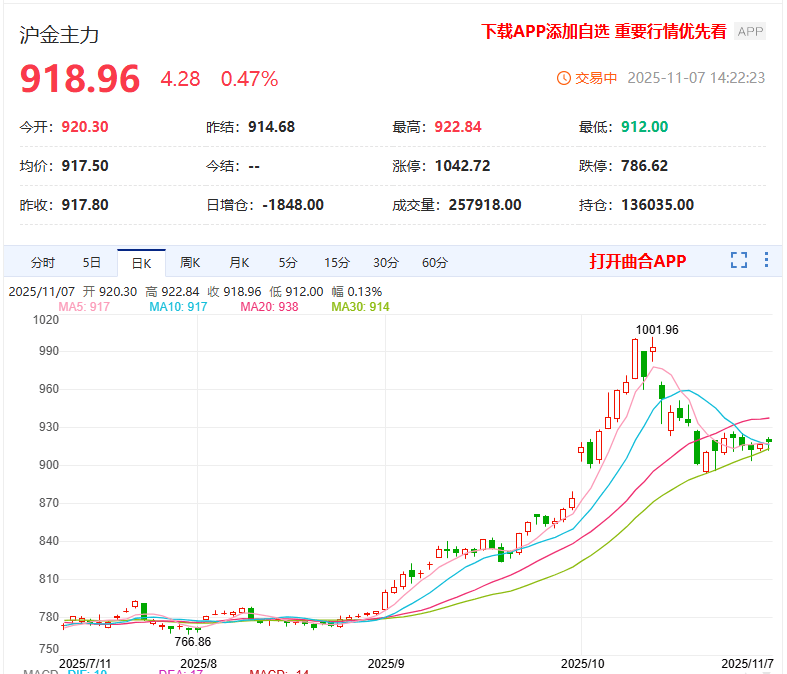
Group 1 - Precious metals prices remained volatile, with COMEX gold futures down 0.20% at $3984.80 per ounce and COMEX silver futures down 0.37% at $47.85 per ounce [1] - The U.S. Department of the Interior's Geological Survey (USGS) released a new critical minerals list, marking the first inclusion of copper, silver, uranium, and potash since 2018 [1] - The U.S. Federal Reserve's direction for a potential rate cut in December remains unclear, with concerns over inflation overshadowing employment issues among committee members [1][2] Group 2 - The ongoing U.S. government shutdown is impacting the economy and job market, leading to mixed signals regarding the Federal Reserve's interest rate decisions [2] - The National Retail Federation (NRF) forecasts that U.S. retailers will hire between 265,000 to 365,000 seasonal workers this holiday season, marking the lowest level in at least 15 years [1] - The Bank of England maintained its interest rate at 4%, with expectations for a rate cut in December increasing [1][2]
Are We In An AI Bubble? - 11/04/25 | Market Sense | Fidelity Investments
Fidelity Investments· 2025-11-05 15:28
Market Performance & Earnings - S&P 500 上市公司第三季度财报季表现强劲,超过一半的公司业绩超出预期,平均超出 5 个百分点 [2][7][8] - 2022 年 10 月开始的牛市已进入第四年,盈利增长是关键驱动因素,继去年盈利增长 11% 之后,预计今年将再次增长 11% [10][11] - Magnificent Seven (Mag Seven) 股票占 S&P 500 盈利增长的 70% 以上,但同时也带来了集中风险,因为它们占 S&P 500 的 36% [24][28] AI & Technology - 市场对大型科技公司在人工智能 (AI) 基础设施上的巨额投资回报率表示担忧,引发了对 AI 估值和潜在泡沫的讨论 [13][14][15] - 嘉宾认为,从长远来看,AI 仍处于早期阶段,可能被低估,但短期内可能存在泡沫,因为技术转型通常伴随周期性调整 [19][20][22] - 嘉宾提出 "DARP" 投资理念,即 "durability at a reasonable price(以合理的价格实现持久性)",强调对公司产品需求、竞争壁垒和估值的评估 [32][36] - AI 可能对数字化业务产生重大影响,特别是那些采用 "per seat subscription model(按席位订阅模式)" 的公司,以及那些产品复杂度较低、可扩展性较差的公司 [40][41] - 生成式 AI,如 ChatGPT,能够以低成本按需生成内容,具有广泛的应用前景,例如个性化电影生成和癌症治疗 [49][50][51][53] - 未来一年,AI 领域值得关注的关键点包括模型是否持续改进、公司能否通过 AI 产品盈利以及企业能否更好地采用 AI 技术 [54][55][56][57] Economic Factors - 嘉宾认为,AI 可能会取代某些工作岗位,特别是信息类工作,但目前 AI 更多地被视为一种智能助手,而不是完全取代人类 [43][45][46] Other Factors - 嘉宾认为,当前最值得关注的是美国最高法院对政府通过《国际紧急经济权力法》(IEEPA) 征收关税的听证会,这可能会对当前的贸易关系产生影响 [59][60]

CoreWeave: The Early Innings Of The AI Revolution
Seeking Alpha· 2025-11-04 12:24
Group 1: Company Overview - CoreWeave (CRWV) has become a significant player in the AI infrastructure sector, providing essential computing power for firms engaged in training and utilizing AI models [1] Group 2: Analyst Insights - The analysis focuses on technology companies, particularly those involved in AI infrastructure, cloud computing, and digital transformation [2] - The investment approach emphasizes understanding business fundamentals and future growth trajectories to identify companies with intrinsic values exceeding their current market values [2]


The Best Dividend Stocks to Buy and Hold Forever
The Motley Fool· 2025-11-04 09:15
Core Insights - Dividend stocks can significantly enhance long-term capital appreciation, with 85% of the S&P 500's cumulative total return from 1960 to 2023 attributed to reinvested dividends [1] Group 1: Importance of Quality in Dividend Stocks - Quality may be more important than yield when selecting dividend stocks, as high-yield stocks often come with increased risk [2] - Investors are encouraged to focus on stocks with a strong track record of earnings and dividend growth consistency rather than just high yields [2] Group 2: Recommended Dividend Stocks - Five high-quality dividend growth stocks recommended for long-term holding include Lowe's, NextEra Energy, Realty Income, Philip Morris International, and United Parcel Service [3] Group 3: Lowe's Companies - Lowe's has raised its dividend for 62 consecutive years, with a current forward dividend yield of 2% [4] - The quarterly payout has increased from $0.28 to $1.20 per share since 2015, representing over 15% annualized growth [6] - The current dividend payout ratio is around 38%, indicating potential for continued aggressive dividend increases [7] Group 4: NextEra Energy - NextEra Energy has raised its dividend for nearly 30 years, currently offering a 2.7% dividend yield [9] - The company's quarterly dividend has nearly tripled since 2015, despite a post-pandemic slump in renewable energy stocks [10] - A recent deal with Google to supply electricity for data centers may bolster long-term growth prospects [10] Group 5: Realty Income - Realty Income has achieved 112 consecutive quarterly dividend increases, equating to 28 years of growth [11] - The stock offers a forward dividend yield of 5.5% and pays dividends monthly, appealing to income-focused investors [12] - Since going public in 1994, Realty Income has generated compound annual total returns of 13.5% and annualized dividend growth of 4.2% [13] Group 6: Philip Morris International - Philip Morris is transitioning towards smoke-free products, which may enhance its future prospects [15] - The company has raised its dividend annually since its 2008 spinoff, currently offering a forward dividend yield of 3.8% [17] Group 7: United Parcel Service - UPS has a forward dividend yield of nearly 7%, but this may indicate dividend uncertainty [18] - The company has a long history of dividend increases, suggesting a commitment to maintaining its dividend growth track record [19] - Cost-saving measures through downsizing and automation could lead to $3.5 billion in annual savings, supporting future dividend security [20]






Penske Automotive Group (NYSE:PAG) FY Conference Transcript
2025-11-04 01:02
Summary of Penske Automotive Group (NYSE:PAG) FY Conference Call Company Overview - **Company**: Penske Automotive Group - **Ticker**: NYSE:PAG - **Shares Outstanding**: 66 million - **Current Share Price**: Approximately $160 - **Market Capitalization**: About $10.7 billion - **Net Debt**: $1.5 billion - **Ownership**: 28.9% of Penske Transportation Solutions - **Total Enterprise Value**: Approximately $10 billion - **Business Segments**: Retail automotive, commercial vehicle dealerships, and energy solutions [1][2] Core Business Insights - **Retail Automotive**: Operates 356 franchises, primarily in premium luxury segments across the U.S., U.K., Germany, Italy, Japan, and Australia [2] - **Commercial Trucks**: Sells around 20,000 commercial trucks annually through 45 dealerships, exclusively Freightliner [2] - **Recent Expansion**: Entered the Australian market with three Porsche dealerships [2] Financial Performance and Projections - **Cash Flow from Tax Deductions**: Estimated additional cash flow of $120 million to $150 million annually from accelerated depreciation on truck purchases, based on $3 billion in annual purchases [3][4] - **Investment in Penske Transportation Solutions**: Total cash invested is $956 million, with $2 billion withdrawn, indicating strong cash flow management [4] - **Flat Performance**: Penske Truck Leasing has seen flat performance this year, with a reduction in the vehicle fleet from 445,000 to 405,000 [5] Market Conditions and Inventory - **Inventory Levels**: Current industry inventory is 2.6 million units, down 35% from pre-pandemic levels. Penske's inventory is well-managed with a 49-day supply in the U.S. [11] - **Luxury Vehicle Market**: Average transaction prices have increased, with new vehicles averaging $60,000 and used vehicles at $40,000, reflecting a shift in consumer financing behavior [13][16] Consumer Behavior and Financing - **Financing Trends**: Increasing number of customers financing vehicles for longer terms (beyond 6-8 years), raising concerns about negative equity situations [14] - **Leasing**: Leasing has decreased from 40% to 32%, but remains a more affordable option for consumers [14] Challenges in Used Vehicle Market - **Low Lease Returns**: The availability of quality used vehicles is a challenge, with a focus on zero to four-year-old cars [23][24] - **Sourcing Strategy**: 84% of vehicles sold are self-sourced, primarily through trade-ins [23] International Operations - **U.K. Market**: Contributes about $9 billion in revenue (35% of total business). Facing challenges due to government policies on EV sales and higher taxes impacting consumer behavior [28][30] - **Chinese Dealerships**: Recently added eight Chinese brands in the U.K. to explore market potential, with limited capital investment [36][37] Parts and Service Business - **Revenue Growth**: Parts and service revenue has increased by 35% compared to 2019, driven by warranty and customer pay services [38] - **Warranty Issues**: Recent recalls (e.g., Toyota and Lexus) are expected to boost service revenue, although they pose brand management challenges [39][41] Conclusion - **Future Outlook**: Anticipates improved performance in the truck leasing segment as market conditions stabilize. The company is well-positioned to capitalize on its diversified business model and strong cash flow management [43]

This is the ‘BIG VALUE' of deregulation, says Fed chair candidate
Youtube· 2025-11-01 00:01
Core Viewpoint - The Federal Reserve is navigating economic challenges with a focus on labor market conditions and inflation data, despite criticisms of its policy approach [1][2][11]. Inflation and Economic Data - Current inflation rates are reported at 3% year-over-year, with core CPI also at 3%, indicating persistent inflation concerns [4][10]. - Grocery prices have increased by 3.2% over the past year, reflecting ongoing public concern about inflation [5]. - The Federal Reserve anticipates inflation will decrease, with forecasts suggesting a return to target levels [10][12]. Policy Decisions - The Federal Reserve is considering cutting policy rates in December, based on data indicating that inflation will eventually decline [11][12]. - There is a belief that tariffs have a minor and temporary effect on inflation, and the Fed should focus on broader economic indicators [3][6][9]. Economic Growth Projections - The Federal Reserve's long-term growth forecast is set at 1.8%, which some analysts argue is overly conservative given current economic policies [13][14]. - There is optimism regarding potential productivity gains from technological advancements, although immediate impacts may not be seen [15][16]. Regulatory Environment - Deregulation is viewed as a means to lower capital costs and stimulate economic growth, paralleling the effects of interest rate cuts [21][22]. - The Federal Reserve staff considers the impact of deregulation and tax incentives when estimating potential GDP growth [20][21].

The AI Revolution Will Make T-Mobile A Growth Stock
Seeking Alpha· 2025-10-30 22:18
Group 1 - T-Mobile's shares are currently trading at an average P/E ratio of around 20, which is considered unfair to the company and the telecommunications industry as a whole [1] Group 2 - The article emphasizes the need for a reevaluation of T-Mobile's valuation in the context of the broader telecommunications sector [1]