Monetary Policy

Search documents
Nordea Bank (NBNK.F) Update / Briefing Transcript
2025-09-03 10:02
Summary of Nordea Economic Outlook Webinar Industry Overview - The webinar discusses the **Nordea Economic Outlook**, focusing on global economic trends, particularly in the U.S. and Europe, and their implications for the Nordic countries [2][32]. Key Points and Arguments Global Economic Trends - **U.S. Trade Agreements**: The uncertainty regarding the global economy has decreased as the U.S. has reached trade agreements with major countries, with the effective U.S. tariff rate expected to stabilize between **15% and 20%** [2][3]. - **Economic Slowdown**: The U.S. economy is anticipated to slow down, while Europe may experience better economic conditions, especially if a peace agreement in Ukraine is reached [3][10]. - **Inflation Control**: Inflation is under control in most countries, but it is expected to rise in the U.S. due to tariff policies, potentially impacting monetary policy [4][11]. Nordic Economic Outlook - **Diverging Growth**: The Nordic countries are experiencing diverging economic paths, with strong growth in Norway and Denmark, while Sweden and Finland are lagging [3][14]. - **Domestic Demand Recovery**: There are good opportunities for a strong recovery in domestic demand across the Nordic countries, despite uncertainties in global trade [4][19]. - **Consumer Confidence**: Consumer confidence in the U.S. is declining, which poses risks to economic growth, while Europe shows signs of stabilization [13][14]. Trade and Exports - **Impact of Tariffs**: The new U.S. tariff regime is expected to have a limited impact on Nordic growth, as these countries are not heavily reliant on the U.S. as an export market [17][18]. - **Export Performance**: Nordic exports to the U.S. have not significantly declined, with Denmark's trade surplus with the U.S. increasing recently [18][19]. Monetary Policy and Financial Markets - **Interest Rate Expectations**: The Federal Reserve is expected to cut rates once, while the European Central Bank is anticipated to halt cuts and may consider hikes in the future [27][28]. - **Bond Yields**: Long-term bond yields are expected to rise, reflecting increasing pressure on financial markets [29][33]. Economic Forecasts - **Global Growth Projections**: The global economy is projected to grow by **3.1%** this year, with the U.S. economy slowing to around **2%** [22][23]. - **Nordic Growth Rates**: Denmark is forecasted to grow by **2.3%** next year, while Sweden is expected to see growth of **2.5%** in 2024 [24][25]. Additional Important Insights - **Fiscal Expansion in Europe**: Fiscal expansion in Europe, particularly in defense and infrastructure, is expected to stimulate growth [10][24]. - **Housing Market Trends**: Rising house prices in Denmark and Norway may boost consumer confidence, while Finland's housing market remains weak [21][22]. - **Volatility in Financial Markets**: Financial markets have shown a significant decrease in volatility since earlier in the year, indicating a more stable outlook [5][32]. This summary encapsulates the key insights from the Nordea Economic Outlook webinar, highlighting the current economic landscape and future expectations for both global and Nordic economies.
X @Bloomberg
Bloomberg· 2025-09-03 02:01
Australia’s economic growth accelerated in the second quarter led by household consumption as easier monetary policy underpinned activity https://t.co/pPmGEkGCI9 ...
The Fed's current model is anti-growth, says Fmr. World Bank President David Malpass
CNBC Television· 2025-09-02 15:44
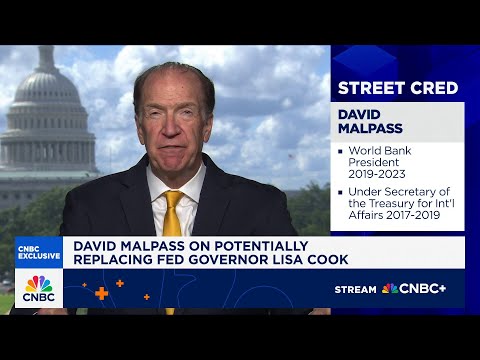
Welcome back. As the president moves to fire Fed Governor Lisa Cook, new reports say he is looking to quickly find a replacement. One of the potential candidates being former World Bank President David Malpass.He joins us now in an exclusive interview. David, it's great to see you. Welcome.>> Hi Sarah. Good to be on. Thanks.>> La last hour we were talking to Alan Blinder who former Federal Reserve vice chair said that it's an assault on independence that that the president is trying to do this to Lisa Cook. ...

Trump vs. The Fed: Who Should Control America’s Money? - Chamath Palihapitiya
All-In Podcast· 2025-09-02 15:00
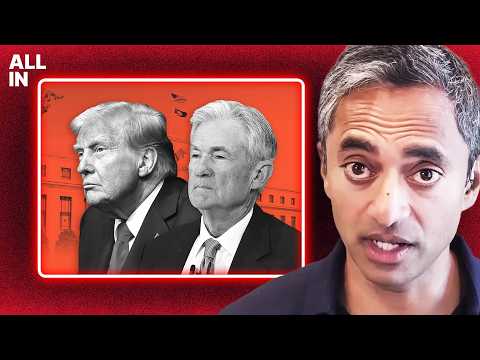
Fed Independence & Political Influence - The financial industry suggests the Federal Reserve is not independent and its appointees are partisan, similar to other government branches [2][3][4][14][17] - The industry questions whether a sitting president should have the authority to remove a Fed governor if their views are misaligned with the electorate's wishes [4] - The industry proposes revisiting the notion of the Fed's independence, considering that many of its functions could be better handled by the Treasury or other entities [17] - The industry acknowledges the 14-year terms for Fed governors are designed to insulate them from political cycles, promoting institutional resilience [17][18][21] Monetary Policy & Data Reliability - The financial sector expresses concern over the Fed's monetary policy decisions, which are based on potentially inaccurate data [6][7][11] - The industry suggests that capital markets and free markets are more effective at achieving price stability than the Fed [8] - The industry highlights the potential for real-time pricing oracles, utilizing blockchain-published economic data, to improve market efficiency [11][12][13] Fed's Role & Responsibilities - The industry questions whether the Fed should continue to act as a lender of last resort, suggesting the Treasury could perform this function more effectively [8] - The industry generally agrees that the Fed can continue its banking supervision and regulation, as well as its role as a payment system and clearing house [9][10] - The industry emphasizes the importance of considering the long-term costs of capital and the US's ability to service its debt when making monetary policy decisions [19][20]
David Sacks: Jerome Powell has been “intensely political” as Fed Chair
All-In Podcast· 2025-09-02 14:27
Monetary Policy & Inflation - The report suggests that in the summer of 2021, when inflation reached 5%, Pal aligned with Biden and Yellen, characterizing it as "transitory," delaying policy changes for 6 months [1] - The analysis indicates that Pal's renomination for a second term by Biden on November 22nd, 2021, was potentially influenced by his adherence to the "transitory" narrative, which he abandoned shortly after on November 30th [2] - The report claims that the "transitory" narrative contributed to an asset bubble in 2021, a 9% inflation rate the following year, and the market crash in 2022 and 2023 [4] Political Influence & Fed Independence - The report implies that Pal's actions were politically motivated, suggesting that contradicting the Biden administration on the "transitory" narrative could have jeopardized his renomination [3] - The analysis points out that Pal initiated a rate-cutting cycle with a 50 basis point cut shortly after Elizabeth Warren urged the Fed to do so, raising questions about political influence [5] - The report highlights perceived hypocrisy in Elizabeth Warren's stance, noting her previous demand for rate cuts when inflation was at 250 basis points (25%) and her current opposition to rate cuts [6]
X @Bloomberg
Bloomberg· 2025-09-02 10:52
Colombia still needs “restrictive” monetary policy to ensure that inflation slows to 3% by next year, bank chief Leonardo Villar said in an interview https://t.co/O7DpN0p5Zh ...
流动性与通胀再审视-中国货币政策立场综述-Asia in Focus_ Liquidity and Inflation Redux – A Roundup of China’s Monetary Policy Stance (Chen)
2025-09-01 03:21
Summary of Key Points from the Conference Call Industry Overview - The focus is on China's monetary policy stance and its implications for liquidity and inflation in the context of the equity market rally driven by liquidity [5][8][29]. Core Insights and Arguments 1. **Monetary Policy and Liquidity**: The People's Bank of China (PBOC) has maintained ample interbank liquidity, contributing to a liquidity-driven equity market rally. M1 growth has significantly increased, indicating reduced deflationary risks [5][8][29]. 2. **M1 Growth Dynamics**: M1 growth accelerated to 5.6% year-over-year in July, up from -3.3% in September of the previous year. This rebound is attributed to a one-off drop in corporate demand deposits and households shifting from time to demand deposits due to lower deposit rates [9][16][24]. 3. **Inflation Outlook**: Despite the rise in M1 growth, the magnitude of reflation may be smaller than historical correlations suggest. PPI deflation is expected to persist into 2026, with PPI inflation not turning positive until early 2027 [9][29]. 4. **Policy Stance**: The PBOC's current monetary policy remains accommodative, but recent communications indicate a less dovish tone, suggesting limited intentions for significant easing measures in the near term. The focus is on balancing financial stability with growth support [29][30]. 5. **Interest Rate Expectations**: The baseline expectation includes a dual cut in Q4, with a 10 basis point policy rate cut and a 50 basis point RRR cut, as year-over-year growth is projected to decelerate sharply towards 4% [29][30]. 6. **Market Implications for Bond Yields**: The fair-value anchor for 10-year China Government Bonds (CGB) yields is projected at 1.8% over the next 12 months, with potential ceilings of 2.2% for 10-year and 2.5% for 30-year CGB yields due to asset-liability management demand [30][36]. 7. **Currency Dynamics**: The USD/CNY exchange rate is expected to reach 7.0 by year-end, driven by a policy push for gradual CNY appreciation and a convergence of onshore and offshore spot rates towards the fixing [6][39]. Additional Important Insights 1. **Fiscal Spending Trends**: Recent fiscal spending has increased year-over-year, which may support domestic demand and inflation, although household deposit reallocations may not necessarily indicate stronger consumption [24][25]. 2. **Regulatory Effects on Deposits**: Regulatory changes affecting banks' interest compensation practices have introduced significant base effects into M1 growth, complicating the sustainability of recent growth rates [16][19]. 3. **Investor Sentiment**: The unusual appreciation bias in the CNY reflects a pre-emptive move by the PBOC to guide the currency stronger, amidst a backdrop of negative carry discouraging long positions in CNY [6][39]. This summary encapsulates the key points discussed in the conference call regarding China's monetary policy, liquidity, inflation, and market implications, providing a comprehensive overview for investors and analysts.
EPS: Earnings-Focused Smart Beta Vehicle That Underdelivers
Seeking Alpha· 2025-09-01 00:14
Group 1 - The article discusses the rising valuations in the market and highlights the quality factor as a focus for investors with lower risk appetites, particularly those with contrarian views on high-performing sectors like technology and AI capital expenditures [1] - Vasily Zyryanov, an individual investor, emphasizes the importance of identifying underpriced equities with strong upside potential and overappreciated companies with inflated valuations, particularly in the energy sector, including oil and gas supermajors and exploration companies [1] - Zyryanov advocates for a comprehensive analysis that includes Free Cash Flow and Return on Capital, suggesting that these metrics provide deeper insights beyond simple profit and sales analysis [1] Group 2 - The article acknowledges that while some growth stocks may warrant their premium valuations, it is crucial for investors to investigate whether the market's current opinions are justified [1]
X @Anthony Pompliano 🌪
Anthony Pompliano 🌪· 2025-08-30 14:24
It is objectively insane that no one knows what the cost of capital is going to be in 3 weeks.Human-driven monetary policy is antiquated and destructive. ...
Chamath: “What does the Fed actually do in 2025?”
All-In Podcast· 2025-08-30 02:52
What does the Fed actually do in 2025. We have an extremely vibrant and complicated and interconnected $130 trillion global economy. It's moving at the speed of light.The Fed gets together once a month, tries to divine what monetary policy, what the money supply should look like based on data that is often incorrect. We see that in the BLS data. We see that in the GDP prints. We see it in all of the inputs.So, I think the real question is there are certain parts of what the Fed does that they can continue t ...