一个中国原则

Search documents
日方称愿解决与中国的紧张关系 外交部回应
证券时报· 2026-03-30 11:08
Core Viewpoint - The article discusses the diplomatic tensions between Japan and China regarding the Taiwan issue, emphasizing the importance of mutual respect and adherence to established agreements in bilateral relations [1][2]. Group 1 - The Taiwan issue is considered an internal matter for China, and the One China principle serves as the political foundation for Sino-Japanese relations [1]. - Dialogue should be based on mutual respect and adherence to consensus, without undermining each other's core interests [1]. - Japan is urged to reflect and correct its stance, adhering to the four political documents between China and Japan and its own commitments to demonstrate sincerity in dialogue [2].


日方称愿解决与中国的外交紧张关系,中方回应
第一财经· 2026-03-30 09:02
Group 1 - The core viewpoint of the article emphasizes that the Taiwan issue is an internal matter for China, and the one-China principle serves as the political foundation for Sino-Japanese relations [1] - The Chinese side calls for dialogue to be based on mutual respect and adherence to consensus, indicating that one cannot demand dialogue while undermining the core interests of the other party [1] - Japan is urged to reflect and correct its stance, adhering to the four political documents between China and Japan and its own commitments, demonstrating sincerity in dialogue through concrete actions [2]

美参议员窜访台湾,中方表态!
中国能源报· 2026-03-30 08:01
Core Viewpoint - The Chinese government firmly opposes official exchanges between the U.S. and Taiwan, urging the U.S. to adhere to the One China principle and the three joint communiqués between China and the U.S. [1] Group 1 - The Chinese government has lodged serious representations to the U.S. regarding the visit of U.S. senators to Taiwan [1] - The Chinese stance on Taiwan issues is consistent and clear, emphasizing the need to maintain sovereignty and territorial integrity [1] - The Chinese government calls for the U.S. to stop any form of official exchanges with Taiwan and to cease sending erroneous signals to "Taiwan independence" forces [1]
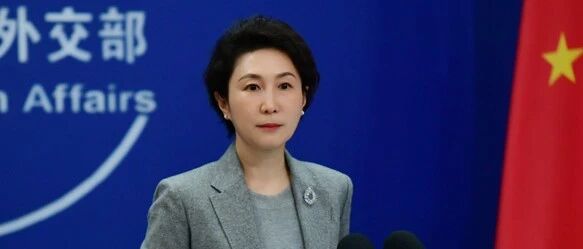
日方称愿意解决与中国的外交紧张关系,中方表态
财联社· 2026-03-30 07:53
Core Viewpoint - The article discusses the diplomatic tensions between Japan and China regarding the Taiwan issue, emphasizing the importance of mutual respect and adherence to agreements in bilateral relations [1]. Group 1: Diplomatic Relations - Japan's ambassador to Brazil expressed a willingness to resolve diplomatic tensions with China concerning Taiwan and aims to stabilize bilateral relations [1]. - The Chinese Foreign Ministry spokesperson highlighted that the Taiwan issue is an internal matter for China and that the one-China principle is the political foundation of Sino-Japanese relations [1]. Group 2: Dialogue and Respect - The spokesperson stated that dialogue should be based on mutual respect and adherence to consensus, indicating that one party should not seek dialogue while undermining the core interests of the other [1]. - The Japanese side is urged to reflect and correct its stance, adhering to the four political documents between China and Japan and its own commitments to demonstrate sincerity in dialogue [1].

特朗普可能在访华后签署美对台军售?中方回应
第一财经· 2026-03-13 08:20
Group 1 - The article reports that a U.S. arms sale plan to Taiwan, including advanced interceptors, is awaiting President Trump's approval, potentially to be signed after his visit to China [2] - China's Ministry of Foreign Affairs has reiterated its strong opposition to U.S. arms sales to Taiwan, emphasizing the need for the U.S. to adhere to the One China principle and the three joint communiqués, particularly the August 17th communiqué [2]
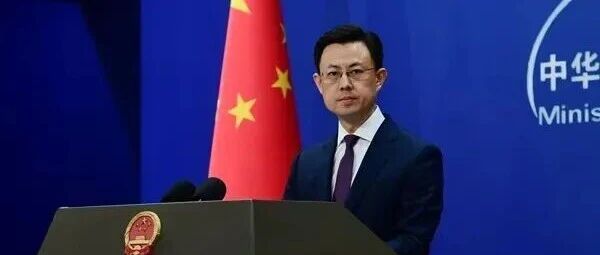
国防部回应日本部署远程导弹
证券时报· 2026-03-11 08:49
Group 1 - The article discusses the recent military actions by the US and Israel against Iran, emphasizing that these actions violate international law and the basic principles of international relations. The Chinese government firmly opposes such violations of sovereignty and calls for an immediate cessation of military actions to return to dialogue and negotiation for peace in the Middle East [2]. - Japan's recent deployment of long-range missiles capable of striking enemy bases is highlighted as a significant shift towards militarization. This move is seen as a threat to regional peace and security, with warnings issued to Japan against any military aggression towards China [2]. - The article addresses Taiwan's military training mission to Central and South America, labeling it as a guise for the Democratic Progressive Party's attempts at independence. It reiterates the one-China principle as the foundation for international relations and warns against any separatist activities [3].
实现祖国完全统一不可阻挡!顺之者昌,逆之者亡
第一财经· 2026-03-08 04:28
Core Viewpoint - The article emphasizes that Taiwan has always been an integral part of China, and any attempts to promote "two Chinas" or "one China, one Taiwan" are destined to fail [5]. Group 1: Taiwan's Status - Taiwan is historically recognized as Chinese territory, and its return to China is seen as a result of the victory in the Anti-Japanese War and World War II [5]. - A series of international legal documents, including the Cairo Declaration, Potsdam Proclamation, and UN General Assembly Resolution 2758, have firmly established Taiwan's status [5]. Group 2: Political Stance - The article criticizes the Democratic Progressive Party's (DPP) insistence on a "Taiwan independence" stance, labeling it as the root cause of instability in the Taiwan Strait [6]. - It asserts that the international community's opposition to "Taiwan independence" and support for the one-China principle is crucial for maintaining peace and stability in the region [6]. Group 3: Core Interests - The Taiwan issue is described as a core interest of China, with a clear red line that should not be crossed [6]. - The article conveys that the historical process of resolving the Taiwan issue and achieving national reunification is unstoppable, with a prevailing consensus in the international community supporting the one-China principle [6].
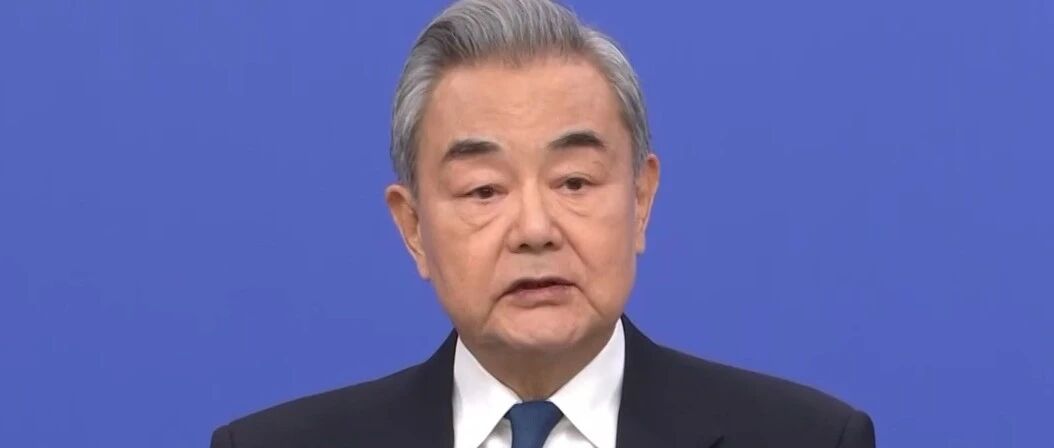
王毅:实现祖国完全统一的历史进程不可阻挡,顺之者昌,逆之者亡
21世纪经济报道· 2026-03-08 03:42
Core Viewpoint - The article emphasizes that Taiwan has always been an integral part of China and cannot be recognized as an independent state. The return of Taiwan to China is framed as a result of historical victories, particularly from World War II, supported by various international legal documents [1][5]. Group 1 - Taiwan is described as a core interest of China, and any attempts to create a "two Chinas" or "one China, one Taiwan" scenario are deemed destined to fail [1]. - The article asserts that the international community has reached a strong consensus on the principle of one China, reinforcing the notion that the resolution of the Taiwan issue and the complete reunification of the country is an unstoppable historical process [1]. - The statement from the Chinese Foreign Minister indicates that any forces attempting to separate Taiwan from China will face severe consequences, highlighting the importance of this issue to national integrity [1].
尼泊尔总统:尼方坚定奉行一个中国原则
Xin Hua She· 2026-02-24 22:58
Core Viewpoint - Nepal's President Baidya reaffirmed the country's commitment to the One China principle and stated that Nepal will not allow any forces to use its territory for anti-China activities, expressing strong support for China's efforts to maintain its core interests [1] Group 1 - Nepal's government maintains a firm stance on the One China principle [1] - The President emphasized the importance of not permitting any anti-China activities on Nepalese soil [1] - There is a clear alignment with China's core interests from the Nepalese leadership [1]
立陶宛总统还嘴硬:不会跪下认错,中方要展现诚意
Xin Lang Cai Jing· 2026-02-21 07:58
Core Viewpoint - Lithuania's leadership is showing mixed signals regarding its relationship with China, with the President maintaining a firm stance on Taiwan while the Prime Minister acknowledges past mistakes in diplomatic relations with China [1][7]. Group 1: Diplomatic Relations - President Nausėda expressed a desire to restore normal diplomatic relations with China while simultaneously seeking to enhance economic cooperation with Taiwan, claiming that the potential for collaboration has not been fully realized since Taiwan established a representative office in Vilnius [3][5]. - The President emphasized that Lithuania's decisions are based on international law and reiterated respect for the One China principle, despite feeling that Lithuania's position has not been adequately understood [5][6]. - The Prime Minister admitted that allowing Taiwan to set up a representative office was a strategic error that led to a significant deterioration in relations with China [7]. Group 2: Economic Cooperation - Nausėda highlighted the laser industry as a key area for cooperation with Taiwan, noting that broader economic collaboration has not met expectations and calling for more concrete commitments from both sides [5][6]. - The President indicated that there is a need for renewed discussions on how to develop economic cooperation effectively, suggesting that both parties should focus on specific commitments rather than mere statements [5][6]. Group 3: Future Prospects - Nausėda stated that if China shows sincerity, there is potential for gradually restoring diplomatic relations, possibly even to ambassadorial level, despite the current tensions stemming from Lithuania's previous actions regarding Taiwan [6][8]. - The Prime Minister's recent comments about reconsidering the name of the Taiwan representative office have been interpreted as a step towards acknowledging past mistakes, contrasting with Nausėda's more defiant rhetoric [7].