
台独分裂

Search documents
实现祖国完全统一不可阻挡!顺之者昌,逆之者亡
第一财经· 2026-03-08 04:28
Core Viewpoint - The article emphasizes that Taiwan has always been an integral part of China, and any attempts to promote "two Chinas" or "one China, one Taiwan" are destined to fail [5]. Group 1: Taiwan's Status - Taiwan is historically recognized as Chinese territory, and its return to China is seen as a result of the victory in the Anti-Japanese War and World War II [5]. - A series of international legal documents, including the Cairo Declaration, Potsdam Proclamation, and UN General Assembly Resolution 2758, have firmly established Taiwan's status [5]. Group 2: Political Stance - The article criticizes the Democratic Progressive Party's (DPP) insistence on a "Taiwan independence" stance, labeling it as the root cause of instability in the Taiwan Strait [6]. - It asserts that the international community's opposition to "Taiwan independence" and support for the one-China principle is crucial for maintaining peace and stability in the region [6]. Group 3: Core Interests - The Taiwan issue is described as a core interest of China, with a clear red line that should not be crossed [6]. - The article conveys that the historical process of resolving the Taiwan issue and achieving national reunification is unstoppable, with a prevailing consensus in the international community supporting the one-China principle [6].

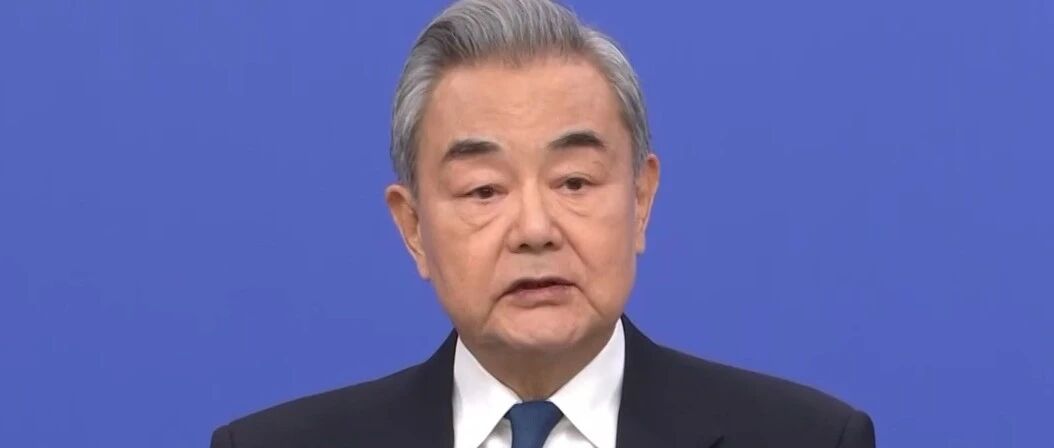
赖清德越恐慌,两岸越要交流
Xin Lang Cai Jing· 2026-02-03 15:40
Core Viewpoint - The article criticizes Lai Ching-te's remarks regarding cross-strait relations and the so-called "second westward advance," suggesting that it is an attempt to mislead the Taiwanese public and create division between Taiwan and mainland China [1][2][3] Group 1: Cross-Strait Relations - The Kuomintang's participation in the forum is framed as a pragmatic response to common concerns of both sides, contrasting with the Democratic Progressive Party's (DPP) negative portrayal [1] - Lai's comments are seen as an attempt to confuse the normal interactions between the two sides with a separatist agenda, which does not reflect the consensus among Taiwanese society that peace and stability are essential for economic prosperity [2] - The article argues that the DPP's labeling of normal economic and cultural exchanges as "political infiltration" is a tactic to instill fear and distract from its governance failures [2] Group 2: Economic and Social Implications - The article highlights the increasing number of Taiwanese visiting the mainland and the growth in cross-strait exchanges, suggesting that these trends contradict the DPP's narrative of "united front" tactics [2] - It emphasizes that the forum serves as a platform for rational dialogue without external influence, which is necessary for addressing differences and building mutual trust [3] - The future of Taiwan is portrayed as dependent on the public breaking free from the DPP's fear-based narrative and recognizing the benefits of a pragmatic approach to cross-strait relations [3]
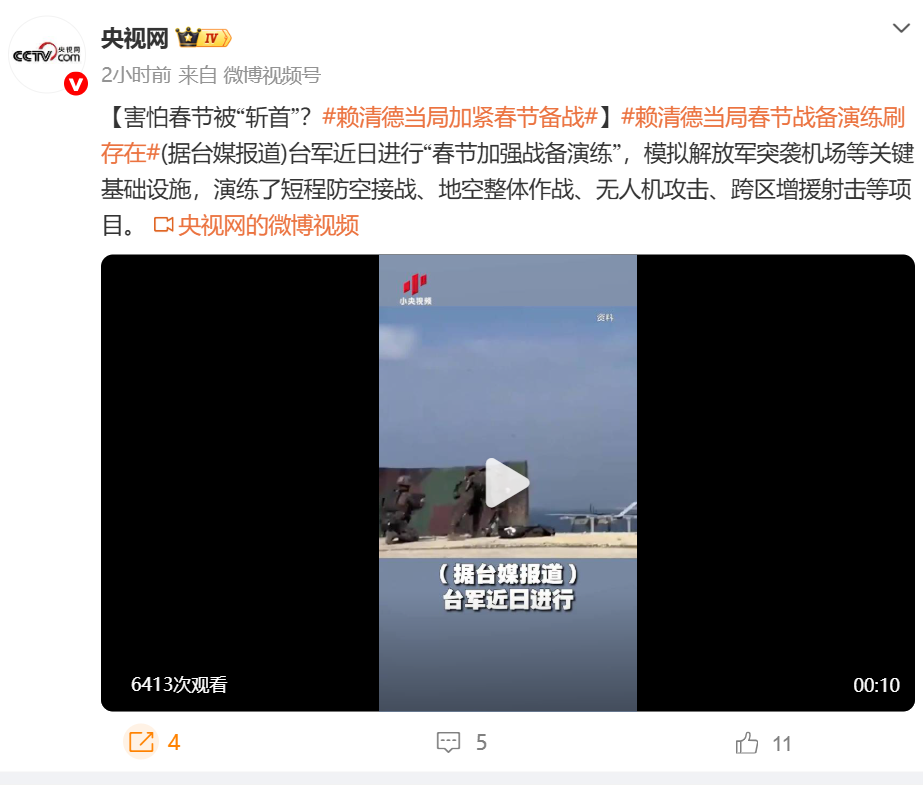
害怕春节被“斩首”?赖清德当局加紧春节备战!模拟解放军突袭机场等关键设施,台军演练短程防空接战、地空整体作战、无人机攻击等
Mei Ri Jing Ji Xin Wen· 2026-01-31 11:11
Group 1 - The core viewpoint of the articles revolves around Taiwan's military preparations in response to perceived threats from mainland China, particularly in light of recent international events involving the U.S. and Venezuela [1][5][7] - Taiwan's military has conducted "Spring Festival enhanced combat readiness drills" simulating attacks on critical infrastructure by the People's Liberation Army (PLA), including short-range air defense and drone attacks [1] - The Taiwanese military's "Wanjun Plan" is designed for emergency leader evacuation, indicating a deep-seated fear within the Democratic Progressive Party (DPP) regarding potential military actions from the mainland [5] Group 2 - The PLA's recent "Mission of Justice-2025" exercise focused on seizing comprehensive control and blocking key areas, highlighting the ongoing military tensions in the region [7] - Commentary suggests that the DPP is particularly concerned about the possibility of a scenario similar to the U.S. actions against Venezuela, fearing that Taiwan could be next [5][7] - The Taiwan Affairs Office spokesperson emphasized that any attempts by "Taiwan independence" forces to cross red lines will be met with decisive measures, reinforcing the seriousness of the situation [9]
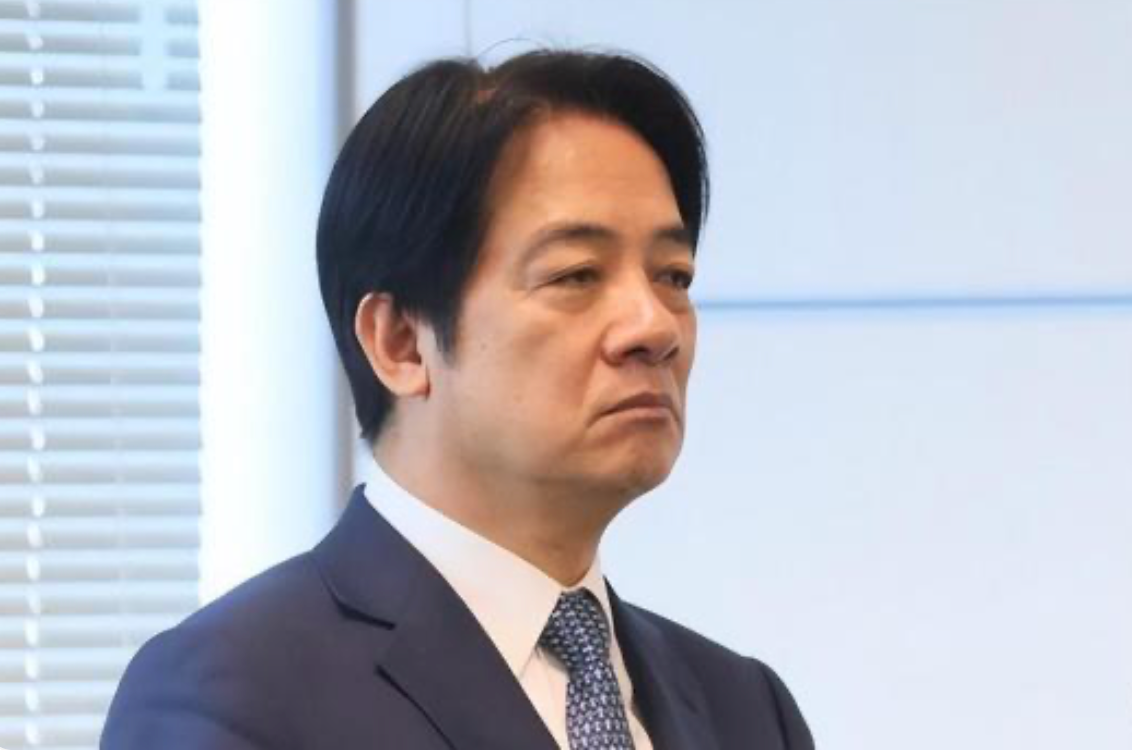
赖清德称上任后企业布局全球 国台办:所谓布局全球不过是出卖台湾同胞的利益福祉
Jing Ji Guan Cha Wang· 2026-01-28 03:25
Core Viewpoint - The spokesperson from the Taiwan Affairs Office commented on the perception of Taiwan as a dangerous region, attributing it to the Democratic Progressive Party's (DPP) insistence on "Taiwan independence" and refusal to acknowledge the "1992 Consensus," which has escalated cross-strait tensions and undermined peace in the Taiwan Strait [1]. Group 1 - The DPP's stance is seen as a provocation that heightens cross-strait confrontation and disrupts stability in the region [1]. - The spokesperson criticized the DPP's claims of economic growth and global business expansion as misleading, suggesting that it comes at the expense of Taiwanese people's interests and the island's key industries [1]. - The DPP is accused of colluding with external forces, which the spokesperson argues compromises Taiwan's technological and talent resources [1].
拒赴弹劾审查会,赖清德被摆“人形立牌”
Xin Lang Cai Jing· 2026-01-21 22:37
Core Viewpoint - The impeachment process against Taiwan's leader Lai Ching-te has been initiated, highlighting significant political tensions and criticisms regarding his governance and handling of democratic processes [1][6]. Group 1: Impeachment Proceedings - The Legislative Yuan has commenced an impeachment review against Lai Ching-te, who chose not to attend the session [1][2]. - The Kuomintang (KMT) and the People's Party criticized Lai's absence, emphasizing the unprecedented nature of a sitting leader facing impeachment [2][3]. - The impeachment requires a majority proposal and a two-thirds resolution from the Legislative Yuan to proceed to the Constitutional Court for review [4]. Group 2: Political Criticism - Lai Ching-te is accused of abusing judicial power to suppress political dissent and failing to address public welfare, leading to a loss of public support [1][2]. - KMT representatives outlined ten allegations against Lai, including his refusal to face the Legislative Yuan and the misuse of judicial authority [3][4]. - Critics argue that Lai's actions reflect a disregard for democratic processes and a failure to engage with the legislative oversight [6][7]. Group 3: Public Sentiment - Public opinion is increasingly critical of Lai's leadership, with accusations of arrogance and neglect of democratic responsibilities [6][7]. - The refusal to attend the impeachment review is seen as an indication of Lai's insecurity and a failure to address public concerns [6][7]. - The situation has been described as a significant moment in Taiwan's constitutional history, with implications for the future of governance on the island [6].
国台办回应岛内首次启动弹劾地区领导人程序:赖清德违背民意、大失民心,必然遭到台湾民众强烈反对
Xin Lang Cai Jing· 2026-01-21 03:07
Core Viewpoint - The article discusses the impeachment proceedings against Lai Ching-te initiated by Taiwan's legislative body, highlighting the public sentiment against him and the accusations of his actions that are perceived as detrimental to the welfare of the people in Taiwan [1] Group 1: Impeachment Proceedings - The Taiwan legislative body has started impeachment procedures against Lai Ching-te, holding two public hearings where various representatives listed his alleged wrongdoings [1] - The public opinion in Taiwan is characterized as a trial against Lai Ching-te, reflecting widespread discontent [1] Group 2: Government Response - The spokesperson for the Taiwan Affairs Office, Peng Qing'en, criticized Lai Ching-te for his persistent stance on "Taiwan independence," claiming it is driven by personal political interests at the expense of public welfare [1] - Lai Ching-te is accused of undermining democracy and freedom, misusing the judiciary to suppress political dissent, and creating a climate of fear, referred to as "green terror" [1] - The actions of Lai Ching-te are said to violate public sentiment and have led to a significant loss of support among the Taiwanese populace [1]
台媒:台立法机构确认“赖清德弹劾案”议程
Xin Lang Cai Jing· 2026-01-13 09:25
Group 1 - The Legislative Yuan in Taiwan has initiated impeachment proceedings against Lai Ching-te, with public hearings scheduled for January 14 and 15, 2026, and a review meeting on January 21 and 22, 2026 [1][3] - The impeachment proposal was passed by a coalition of the Kuomintang (KMT) and the Taiwan People's Party, despite opposition from the Democratic Progressive Party (DPP) [3][4] - A significant public response has been noted, with over 8.17 million signatures collected in support of the impeachment, surpassing the target of 5.586 million votes Lai received in the 2024 election [4] Group 2 - The Legislative Yuan's impeachment process requires a proposal from more than half of the representatives and a two-thirds majority for approval, with a total of 113 representatives [4] - The KMT holds 52 seats, the DPP has 51, the Taiwan People's Party has 8, and there are 2 independents in the Legislative Yuan [4] - The Taiwan Affairs Office criticized Lai Ching-te for his stance on Taiwan independence and alleged misuse of judicial power against political opponents, indicating a significant political divide [5]
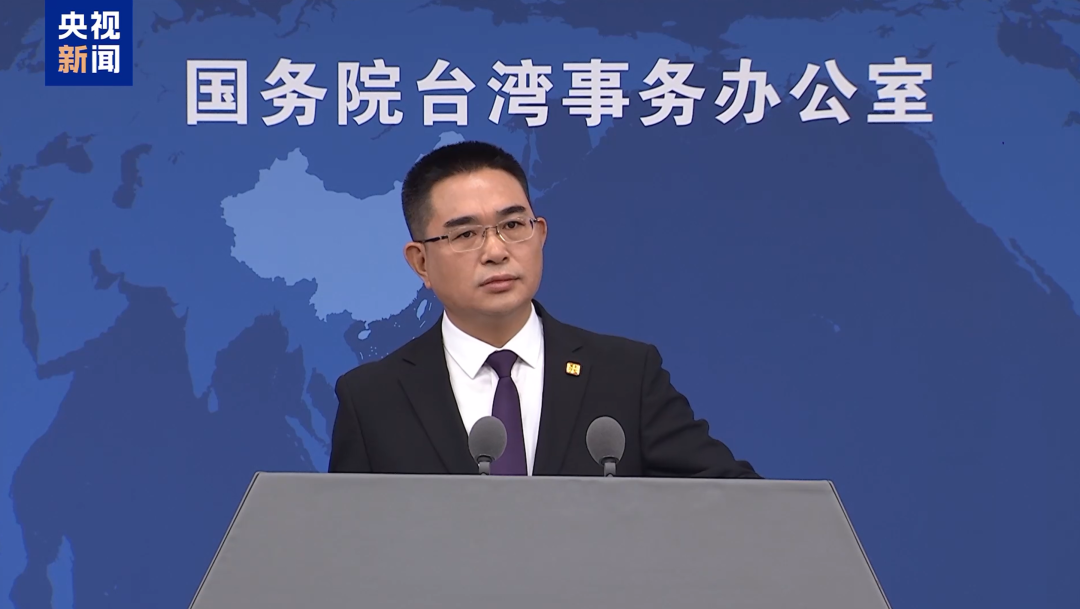
岛内担忧大陆仿照美国强掳马杜罗做法对台采取行动,国台办回应:如果“台独”分裂势力铤而走险、触碰红线,我们必将迎头痛击
Mei Ri Jing Ji Xin Wen· 2026-01-07 05:48
Core Viewpoint - The spokesperson emphasizes that 2025 will be a pivotal year for cross-strait relations and national reunification, aiming to overcome obstacles posed by the Democratic Progressive Party (DPP) and enhance exchanges and cooperation between the two sides [3][4]. Group 1: Cross-Strait Relations - The government aims to break the DPP's obstruction and expand exchanges and cooperation across various fields, promoting closer ties between the people of both sides [3]. - High-quality development of cross-strait integration demonstration zones will be prioritized, with new policies to deepen integration being introduced [3]. - The government firmly opposes "Taiwan independence" and foreign interference, asserting the need to protect the common homeland of the Chinese nation [3]. Group 2: DPP's Actions and Public Sentiment - The DPP's persistent stance on "Taiwan independence" is seen as a significant threat to peace and stability in the Taiwan Strait, harming the common interests of both sides [4]. - Recent polls indicate over 52% of the Taiwanese public is dissatisfied with the DPP's governance, reflecting a disconnect between the DPP's actions and public sentiment [5]. - The DPP's actions are criticized for exacerbating social divisions and undermining Taiwan's economic advantages, which contradicts mainstream public opinion [5]. Group 3: Public Opinion on Conflict - A significant portion of the Taiwanese population, over 60%, is unwilling to engage in conflict, recognizing that "Taiwan independence" could lead to war [6]. - The spokesperson calls for unity among Taiwanese compatriots to oppose "Taiwan independence" and work towards peace and stability in the Taiwan Strait [6]. Group 4: Legal Actions Against "Taiwan Independence" Advocates - The government has designated Liu Shifang and Zheng Yingyao as "stubborn elements" of "Taiwan independence" and will impose legal sanctions against them, including travel bans and restrictions on business dealings in mainland China [7]. - Chen Shuyi, identified as a "green judicial enforcer," will also face lifelong accountability for her actions against those supporting cross-strait exchanges [8].
岛内对赖清德不满意度连续半年超五成 国台办:漠视民生发展,不得人心
Jing Ji Guan Cha Wang· 2026-01-07 03:41
Core Viewpoint - The recent poll indicates that over 52% of the population in Taiwan is dissatisfied with Lai Ching-te's administration, with dissatisfaction exceeding 50% for six consecutive months [1] Group 1: Government Actions - The spokesperson Chen Binhua criticized Lai Ching-te's government for intensifying the promotion of "Taiwan independence" and provoking tensions across the Taiwan Strait [1] - The administration is accused of obstructing cross-strait exchanges and manipulating anti-China sentiments while suppressing political dissent [1] - The government is said to be creating a "green terror" environment, exacerbating social divisions within Taiwan [1] Group 2: Economic Impact - Lai Ching-te's policies are viewed as detrimental to Taiwan's economic interests, particularly through the push for economic "decoupling" from the mainland, which is believed to undermine Taiwan's competitive industries [1] - The administration's actions are characterized as prioritizing political gains over the welfare of the Taiwanese people and businesses, leading to a negative impact on local enterprises and public well-being [1]
台海巡部门称大陆海警“侵扰”罔顾航行安全 国台办回应
Xin Lang Cai Jing· 2025-12-31 10:40
Group 1 - The core viewpoint of the articles emphasizes the ongoing tensions between the mainland and Taiwan, particularly regarding maritime law enforcement and accusations of smuggling activities [1][2] - The Fujian Coast Guard conducted law enforcement patrols near Kinmen, which Taiwan's authorities claim poses significant risks to navigation safety [1] - The spokesperson for the Taiwan Affairs Office, Zhang Han, asserts that the patrols are intended to maintain order in the waters and ensure the safety of fishermen from both sides [1] Group 2 - Zhang Han criticized the Democratic Progressive Party (DPP) for ignoring the historical context of cross-strait fishing activities and accused them of creating risks for navigation through their actions against mainland fishermen [1][2] - The mainland's Public Security Bureau issued a bounty for information on Taiwanese individuals involved in smuggling activities, which Taiwan's authorities claim is an overreach of jurisdiction [1] - The DPP's recent requirement for 12,000 mainland spouses in Taiwan to submit proof of residency has been condemned by Zhang Han as a violation of family stability and an abuse of power [2]