一带一路科技合作

Search documents
科技“携手并肩”人才“有来有往”
Xin Lang Cai Jing· 2025-12-25 22:29
Core Viewpoint - The "Double Thousand" plan aims to implement over 1,000 technology cooperation projects and promote exchanges for over 1,000 young scientists from Belt and Road Initiative countries by 2030 [1][2] Group 1: Objectives - The plan focuses on establishing 1,000 technology cooperation projects that support collaboration between innovation entities in Sichuan and Chongqing with partners from Belt and Road countries, covering the entire chain from basic research to technology breakthroughs [1][2] - It aims to facilitate the dual transformation of technological achievements, allowing advanced applicable technologies to "go out" and overseas quality results to be "brought in" for incubation [1][4] Group 2: Implementation Strategy - Sichuan and Chongqing have formed a working group for the "Double Thousand" plan, establishing regular consultation mechanisms and committing to an annual investment of 80 million yuan [3] - The cooperation strategy will be tailored to the specific conditions of Belt and Road countries, employing a "one country, one policy" approach to ensure practical and efficient collaboration [3][4] Group 3: Key Initiatives - The plan includes the establishment of international technology achievement transformation projects to support both the export of Chengdu-Chongqing results and the import of overseas achievements [4] - The integration of talent exchange and project layout will be prioritized, moving away from traditional methods of defining projects before identifying personnel [4]
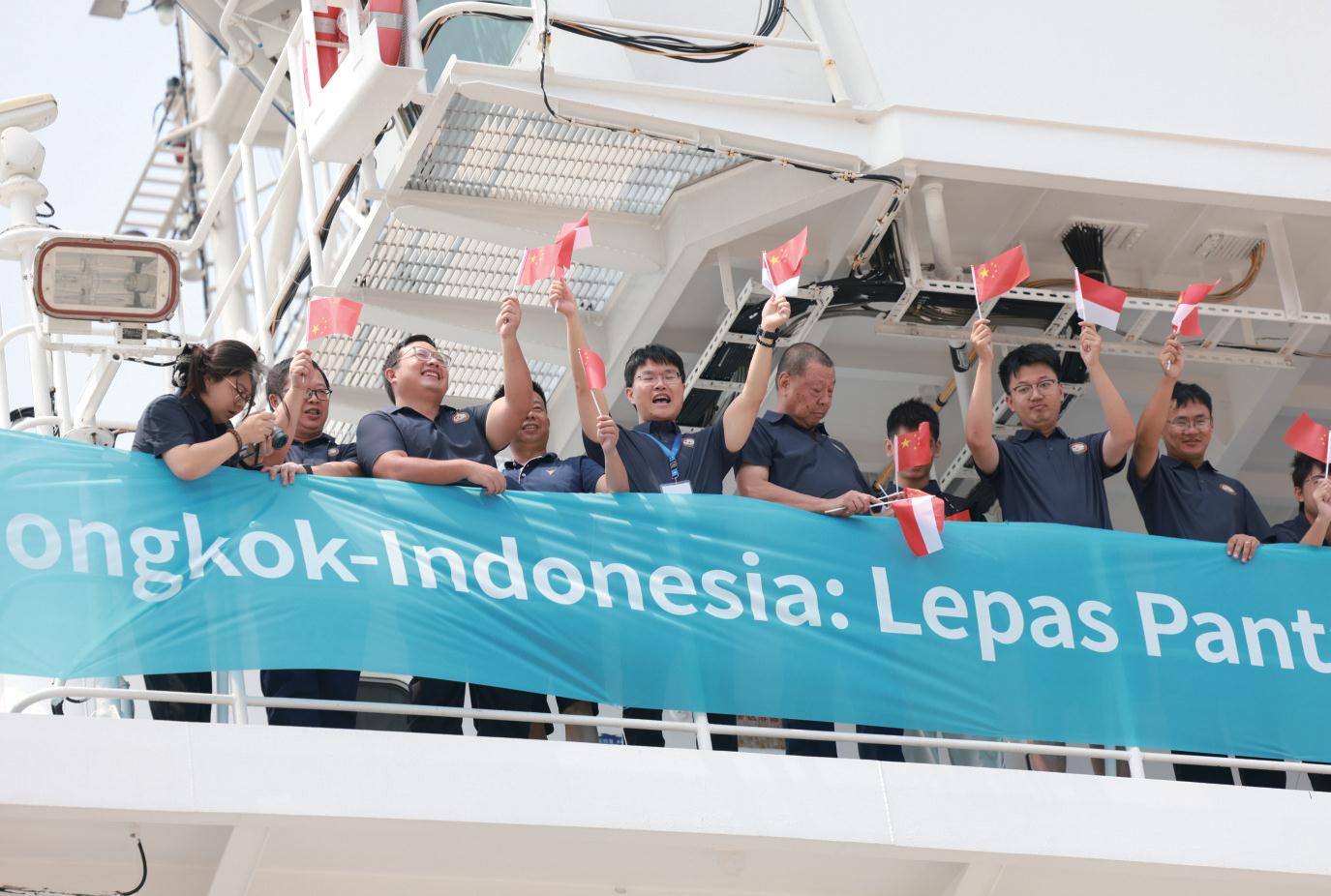
中国-印度尼西亚地质和地球物理联合科学考察航次启航
Zhong Guo Zi Ran Zi Yuan Bao· 2025-08-13 01:51
Core Points - The China-Indonesia geological and geophysical joint scientific expedition has commenced, marking a significant collaboration in marine science between the two countries [2][3] - The expedition is organized by the Second Institute of Oceanography and involves 15 Chinese scientists and 12 Indonesian scientists aboard the "Jiageng" research vessel [2] - The focus of the expedition is on the deep structure of the Java subduction zone, conducting explorations such as underwater seismic and electromagnetic surveys [2] Summary by Categories Collaboration and Partnerships - The collaboration between the Second Institute of Oceanography and Indonesian institutions has a long history, with previous agreements signed for marine science cooperation [3] - This joint expedition represents a critical step from framework cooperation to practical implementation, enhancing scientific collaboration [3] Scientific Objectives - The expedition aims to investigate the deep structure, dynamic evolution, and geological characteristics of the lithosphere in the Java Sea area [2] - The results of the expedition are expected to contribute to the development of plate convergence theory and provide technological support for marine earthquake and tsunami disaster warning [2]