三九

Search documents
今天进四九了
Bei Jing Wan Bao· 2026-01-17 00:32
Group 1 - The core viewpoint of the article highlights that the cold weather during the "Four Nine" period will be significantly harsher than that of "Three Nine" [1] - A strong cold air mass is expected to impact most regions of China from January 17 to 21, with temperatures dropping by an average of 10°C [1] - In areas such as the Huai River basin and the middle and lower reaches of the Yangtze River, the cumulative temperature drop may exceed 20°C, leading to rapid freezing conditions in cities like Zhengzhou, Wuhan, Nanjing, and Hefei [1] Group 2 - The article notes that from January 19 to 20, there will be widespread rain and snow, causing a stark contrast in temperature perception from previously warm conditions to damp and cold [1] - The significant temperature drop and accompanying weather changes necessitate that individuals take precautions to stay warm [1]
后天就是四九了
Bei Jing Ri Bao Ke Hu Duan· 2026-01-15 06:04
Core Viewpoint - The article discusses the unusual weather patterns in China, highlighting a significant warming trend during the "San Jiu" period, which is typically the coldest time of the year, and anticipates a sharp temperature drop as the "Si Jiu" period approaches [1] Weather Analysis - A large-scale warming has been observed across China, with temperatures in many regions feeling more like spring than winter during the "San Jiu" period [1] - The winter front has reached southern China, with areas typically without winter transitioning from autumn to spring [1] - The warming trend is expected to continue for the next couple of days, with cities like Nanjing, Hefei, Wuhan, Hangzhou, and Changsha experiencing maximum temperatures exceeding 20°C, potentially breaking mid-January records [1] Upcoming Weather Changes - Starting from January 17, a strong cold air mass will impact most of China, leading to a general temperature drop of 10°C [1] - In the Huai River basin and the middle and lower reaches of the Yangtze River, the cumulative temperature drop may exceed 20°C, with cities like Zhengzhou, Wuhan, Nanjing, and Hefei facing rapid cooling [1] - Rain and snow are expected from January 19 to 20, causing a stark contrast in weather conditions from the previous warmth to a damp and cold environment [1]
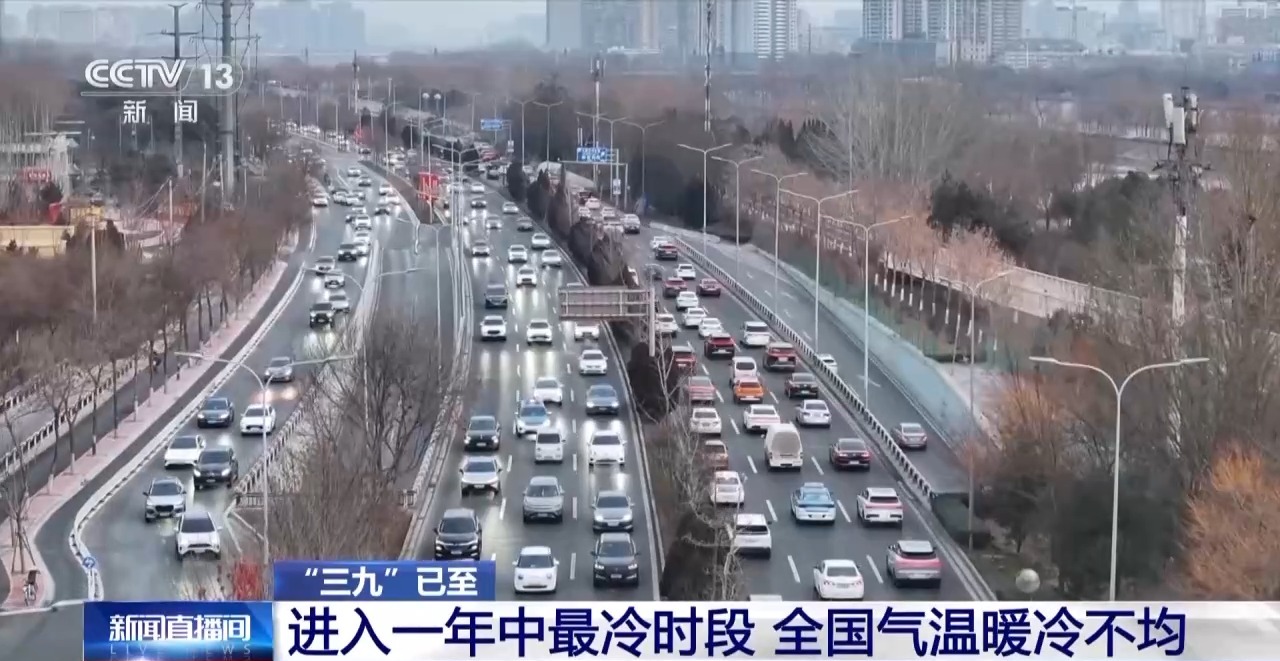
“三九”已至 进入一年最冷时段 我国气温有啥特点?专家解析
Yang Shi Xin Wen· 2026-01-08 06:59
Core Viewpoint - The current winter season in China is experiencing unusual warmth during the traditionally cold "San Jiu" period, with significant regional temperature variations observed across the country [1][3]. Group 1: Temperature Trends - The "San Jiu" period, typically the coldest time of the year, is expected to see overall higher temperatures this year, with many regions experiencing temperatures up to 2°C above the historical average [1][3]. - Historical data from 1991 to 2020 indicates that the coldest average temperature during "San Jiu" is -5.15°C, but this year, the temperature distribution will be uneven, with some areas like Inner Mongolia and Northeast China experiencing drops exceeding 10°C [3][5]. Group 2: Day-Night Temperature Variation - This year's "San Jiu" period is characterized by significant day-night temperature contrasts, particularly in southern regions where daytime highs may approach or exceed 20°C, while nighttime lows could drop below historical averages [5][7]. - The temperature difference between day and night in areas like Jiangnan could exceed 10°C, with some locations experiencing differences greater than 15°C, highlighting the stark contrast in temperature [5]. Group 3: Regional Weather Differences - Northern regions are expected to experience frequent cold air activity, leading to strong winds and snowfall, while southern areas will have warm days but cold nights, necessitating public awareness of weather changes [7].