
气温偏高

Search documents
3月最高气温或达28℃
Xin Lang Cai Jing· 2026-02-24 20:22
Core Viewpoint - Chengdu has officially entered spring as of February 13, 2025, which is 18 days earlier than the average spring onset date of March 3, marking the fourth earliest occurrence since 2000 [1] Temperature and Climate Data - The winter of 2025 in Chengdu lasted for 88 days, which is 6 days shorter than the average of 94 days [1] - The average temperature during the winter of 2025 reached 7.8°C, slightly higher than the historical average of 7.4°C [1] - The total sunshine hours for winter 2025 were 274.6 hours, significantly higher than the historical average of 136.3 hours, ranking first since 2000 [1] - The cumulative precipitation for winter 2025 was 11.1 millimeters, which is considerably lower than the historical average of 28.9 millimeters, ranking second lowest since 2000 [1] Upcoming Weather Forecast - The average temperature in Chengdu for March is expected to be 13.5°C, which is 0.9°C higher than the historical average of 12.6°C [1] - The maximum daily temperature in March could reach around 28°C, with total precipitation expected to be 35 millimeters, which is 30% higher than the historical average of 27.2 millimeters [1]
春节假期大部地区气温偏高
Xin Lang Cai Jing· 2026-02-13 17:28
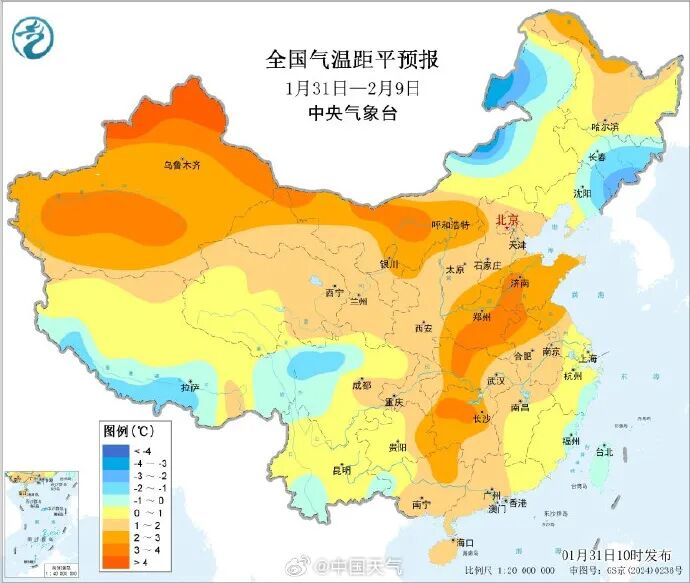
Core Viewpoint - The Central Meteorological Administration forecasts that during the Spring Festival holiday (February 15 to 23), most regions in China will experience temperatures 1°C to 3°C higher than the same period in previous years, with significant temperature fluctuations and precipitation expected at both the beginning and end of the holiday period [1][2]. Group 1: Weather Forecast - The forecast indicates that during the early part of the holiday (February 15-16), cold air will affect the central and eastern regions, leading to a temperature drop of 4°C to 8°C, with some areas in Jianghuai and Jiangnan experiencing drops of 10°C to 12°C [1]. - Rainfall is expected in the eastern regions, with small to moderate rain in Jianghuai, Jianghan, Jiangnan, South China, and eastern Southwest regions, and localized heavy rain or thunderstorms in northern Jiangnan [1]. - The latter part of the holiday (February 21-23) will also see a temperature drop of 4°C to 8°C in most areas north of the Yangtze River, with some regions experiencing drops exceeding 10°C, accompanied by 4 to 6 level north winds [1]. Group 2: Visibility and Safety Alerts - On the nights of February 15 and 16, visibility will be severely reduced in several coastal areas, including the Qiongzhou Strait and parts of Guangdong, with dense fog expected [1]. - The Central Meteorological Administration advises the public to plan accordingly for travel during the holiday, especially considering the potential for slippery road conditions due to rain and snow, and to stay informed about maritime conditions due to fog [2]. - High fire risk levels are noted in the forest areas of South China and Southwest regions, emphasizing the need for caution regarding fire safety [2].
升温!成都限时“春天体验卡”上线
Xin Lang Cai Jing· 2026-01-31 13:19
Group 1 - The average temperature in Chengdu for January 2026 is 6.6°C, which is 0.8°C higher than the historical average of 5.8°C [2] - The total precipitation in January is 2.3mm, significantly lower than the historical average of 9.0mm, indicating a 70% decrease [2] - The weather has been characterized by weak cold air influence, with calm or light winds and frequent temperature inversions during the early morning and evening [2] Group 2 - The perceived coldness despite higher average temperatures is attributed to high humidity, which accelerates heat loss from the body, making it feel 3°C colder than the actual temperature [2][3] - In southern regions like Chengdu, relative humidity often exceeds 70%, which significantly affects the perceived temperature [3] - The forecast for early February indicates a gradual temperature increase, with average temperatures expected to be 8.5°C, 0.4°C higher than the historical average of 8.1°C [6] Group 3 - The upcoming weather forecast for Chengdu shows stable conditions with cloudy weather and no significant rainfall or cold air impacts expected [6] - The highest temperatures in the Sichuan Basin are projected to reach around 20°C in the next ten days [6] - The weather during the period of the beginning of spring (February 4-17) is expected to be relatively stable with weak cold air influence [6]

广东大部气温逐渐回升,比常年同期明显偏高!局部有零星小雨
Nan Fang Du Shi Bao· 2026-01-12 07:47
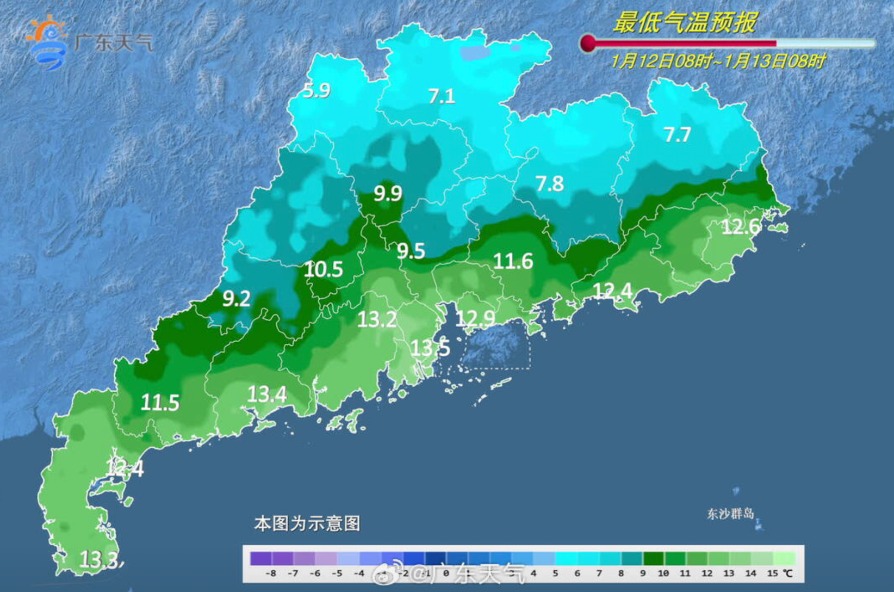
Core Viewpoint - The weather in Guangdong is expected to gradually warm up, with temperatures significantly higher than the historical average for this time of year [1][3]. Weather Forecast Summary - On January 13, most areas in Guangdong will experience cloudy to sunny weather, with light fog in the western regions during early morning and evening. The minimum temperatures are forecasted to be between 5-8°C in northern areas, 13-15°C in southern coastal areas, and 9-12°C in other regions [3]. - On January 14, the western regions will transition from sunny to cloudy with isolated light rain, while most other areas will remain sunny to partly cloudy. Minimum temperatures will range from 7-9°C in northern areas, 13-16°C in southern coastal areas, and 10-12°C in other regions [3]. - On January 15, southern coastal and western Pearl River Delta areas will see cloudy to overcast conditions with scattered light rain, while most other areas will remain cloudy. Minimum temperatures are expected to be 9-11°C in northern areas, 16-19°C in southern coastal areas, and 12-15°C in other regions [3]. - The temperature in South China is projected to be significantly higher than the historical average, particularly in the Huanghuai to Jiangnan regions, where maximum temperatures may exceed the average by more than 10°C [3].
三九首日我国多地偏暖,专家解析气温分布不均
Bei Ke Cai Jing· 2026-01-08 07:06
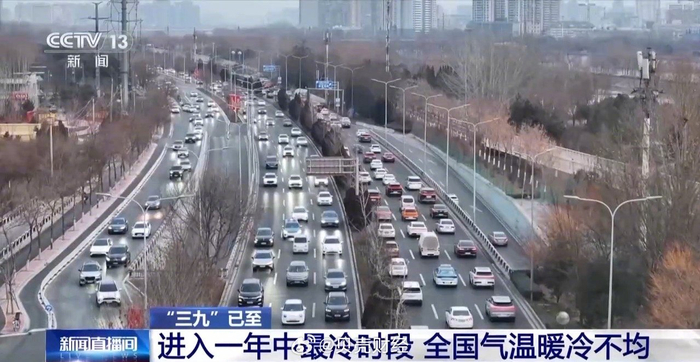
Core Viewpoint - The article discusses the unusual warm weather in China during the "San Jiu" period, which is typically the coldest time of the year, and questions whether this warm trend will continue [1] Summary by Relevant Sections Temperature Trends - The "San Jiu" period marks the coldest time of the year in China, with historical data indicating an average national temperature of -5.15°C during this time from 1991 to 2020 [1] - This year, the overall temperature during the "San Jiu" period is expected to remain above average, indicating a warmer winter compared to historical norms [1] Regional Variations - There is a notable disparity in temperature across different regions; areas such as eastern Inner Mongolia and Northeast China have experienced temperature drops exceeding 10°C due to cold air influences, while regions from North China to Jiangnan are experiencing warmer conditions [1]
“三九”已至 进入一年最冷时段 我国气温有啥特点?专家解析
Yang Shi Xin Wen· 2026-01-08 06:59
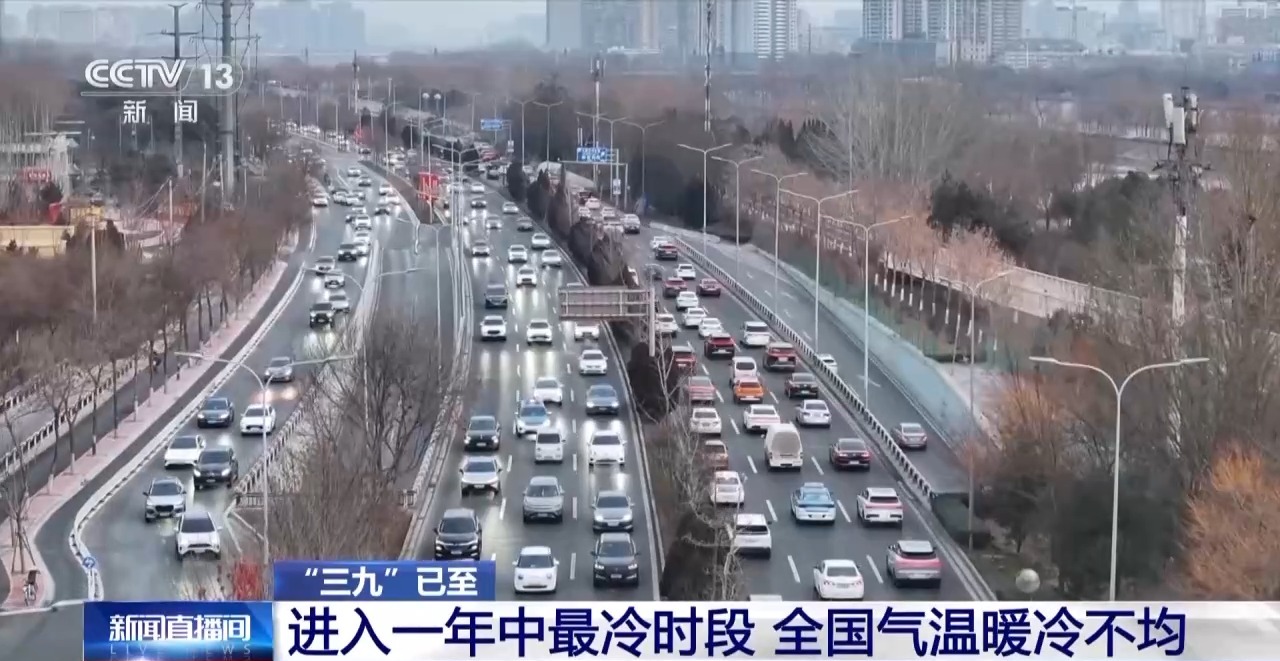
Core Viewpoint - The current winter season in China is experiencing unusual warmth during the traditionally cold "San Jiu" period, with significant regional temperature variations observed across the country [1][3]. Group 1: Temperature Trends - The "San Jiu" period, typically the coldest time of the year, is expected to see overall higher temperatures this year, with many regions experiencing temperatures up to 2°C above the historical average [1][3]. - Historical data from 1991 to 2020 indicates that the coldest average temperature during "San Jiu" is -5.15°C, but this year, the temperature distribution will be uneven, with some areas like Inner Mongolia and Northeast China experiencing drops exceeding 10°C [3][5]. Group 2: Day-Night Temperature Variation - This year's "San Jiu" period is characterized by significant day-night temperature contrasts, particularly in southern regions where daytime highs may approach or exceed 20°C, while nighttime lows could drop below historical averages [5][7]. - The temperature difference between day and night in areas like Jiangnan could exceed 10°C, with some locations experiencing differences greater than 15°C, highlighting the stark contrast in temperature [5]. Group 3: Regional Weather Differences - Northern regions are expected to experience frequent cold air activity, leading to strong winds and snowfall, while southern areas will have warm days but cold nights, necessitating public awareness of weather changes [7].
11月中国平均气温较常年同期偏高0.9℃
Zhong Guo Xin Wen Wang· 2025-12-03 06:11
Group 1 - In November, the average temperature in China was 4.2℃, which is 0.9℃ higher than the same period in previous years [1] - There were three cold air processes affecting China in November, which is 1.3 times less than the average for the same period [1] - A nationwide cold wave occurred from November 17 to 19, causing significant temperature drops in Northeast China and most of the central and eastern regions, with the maximum drop exceeding 14℃ in 11 national stations [1] Group 2 - Looking ahead, it is expected that three cold air masses will influence China in the next ten days, but their overall intensity will be weak, with less precipitation and higher overall temperatures [1] - In December, temperatures in the northeastern region's central and northern parts, eastern Inner Mongolia, and northern Xinjiang are expected to be lower than the same period in previous years, while most other areas will have temperatures close to or higher than the historical average [1] - The southern agricultural regions may face risks of frost damage, and preparations for wind and cold resistance in agricultural and livestock facilities are advised [2]
今年“三秋”期间河南大部降水偏多
Zheng Zhou Ri Bao· 2025-09-23 00:54
Core Viewpoint - The weather forecast for the 2025 "Three Autumns" period in Henan province indicates above-average rainfall and higher temperatures, necessitating precautions against the impact of rainy weather on autumn grain maturation and harvesting [1] Summary by Relevant Sections Weather Trends - The average rainfall during the main flood season (June to August) was 303 millimeters, which is 20% less than the historical average, while the average temperature was 28.8°C, 2.4°C higher than the historical average, marking the highest level since 1961 [1] - The characteristics observed include weak rainfall but strong heat, prolonged high temperatures, and significant periodic meteorological drought [1] Recent Rainfall Patterns - Since September, significant autumn rain patterns have emerged, with a total rainfall of 212 millimeters, which is 2.4 times more than the historical average for the same period, representing the highest value since 1961 [1] Upcoming Weather Forecast - The provincial meteorological station predicts that from September 22 to 23, most areas north of the Huai River will experience above-average rainfall, while other counties will be close to the historical average [1] - Rainfall events are expected to occur from September 26 to 28, with thunderstorms and localized moderate rain in the western and southern regions [1] - The forecast for early to mid-October indicates light to moderate rain across most areas, with specific rain events expected on October 2 to 3 and from October 4 to 6 [1]